


























Views
Downloads

Sounds in Order Phonics Worksheet | Printable Preschool
Paste this activity's link or code into your existing LMS (Google Classroom, Canvas, Teams, Schoology, Moodle, etc.).
Students can open and work on the activity right away, with no student login required.
You'll still be able to track student progress and results from your teacher account.
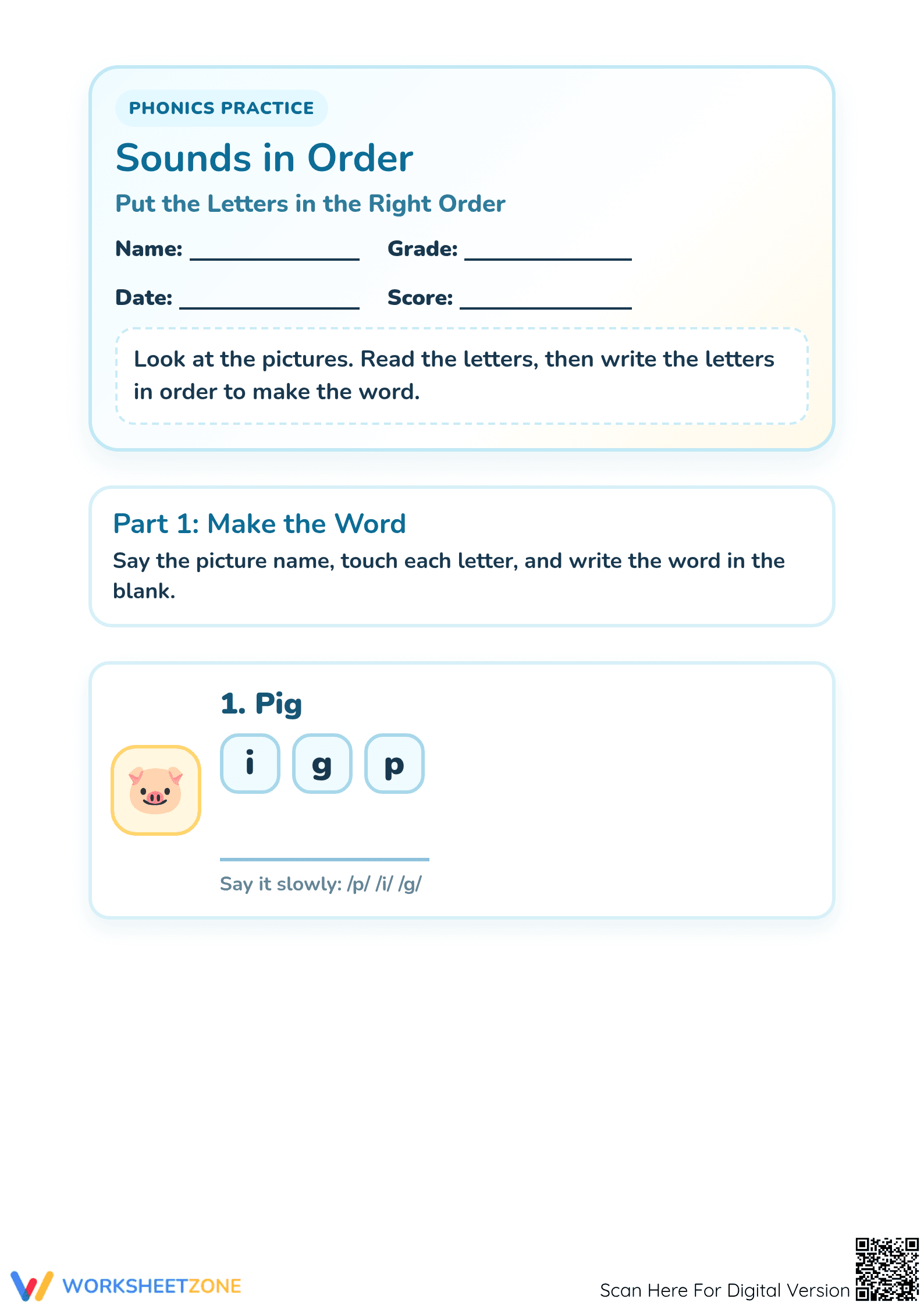
Mastering the relationship between letters and sounds is the cornerstone of early literacy. This phonemic awareness worksheet provides preschool learners with targeted practice in letter-sound correspondence and basic spelling. By ordering letters to form familiar CVC words, students bridge the gap between spoken sounds and written symbols, ensuring a solid foundation for reading success.
At a Glance
- Grade: Preschool · Subject: English Language Arts
- Standard:
CCSS.ELA-LITERACY.RF.K.2.D— Isolate and pronounce the initial, medial vowel, and final sounds in words- Skill Focus: Phoneme Segmentation and Letter Ordering
- Format: 4 pages · 8 problems · Answer key included · PDF
- Best For: Small group literacy centers or independent phonics practice
- Time: 15–20 minutes
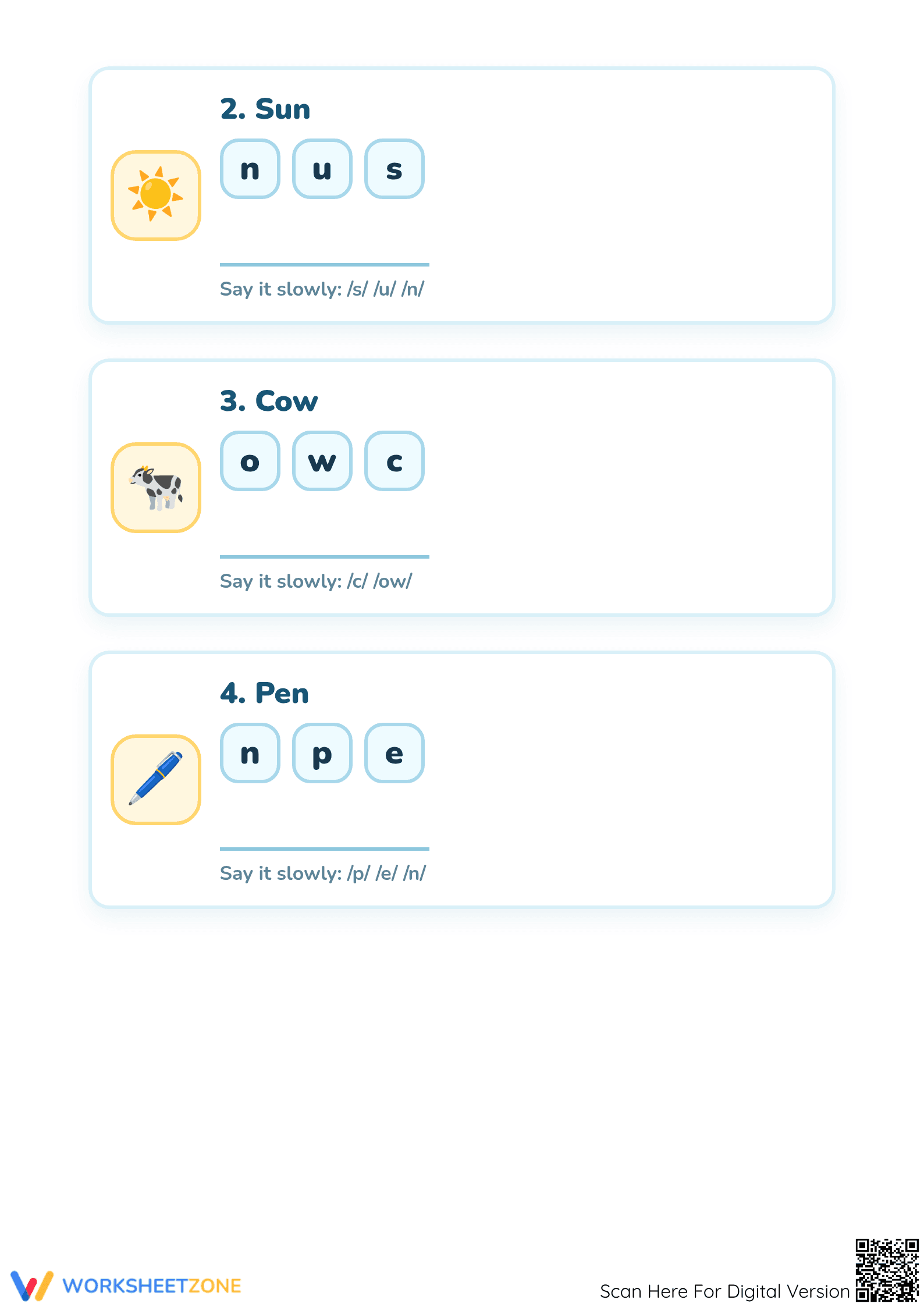
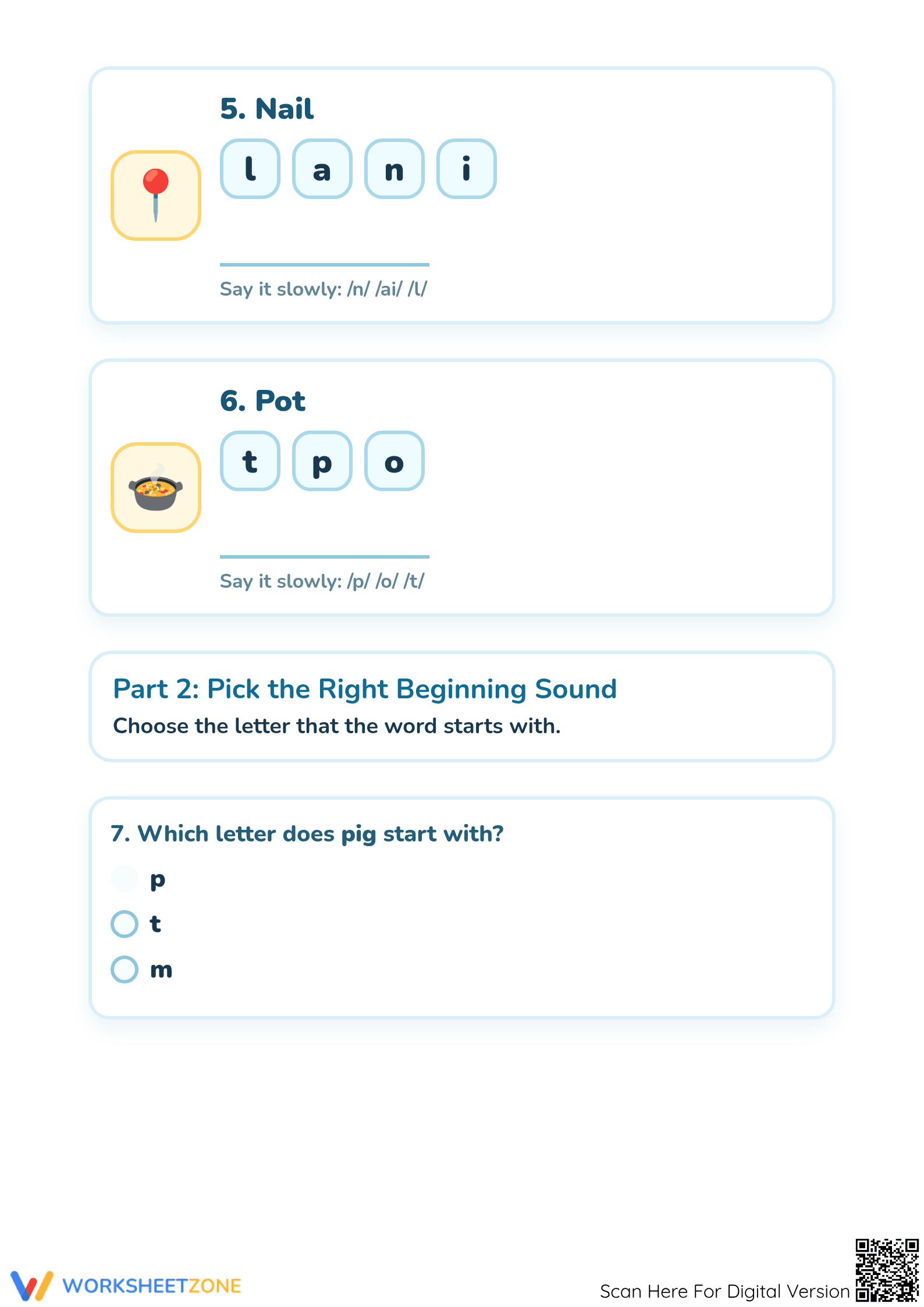
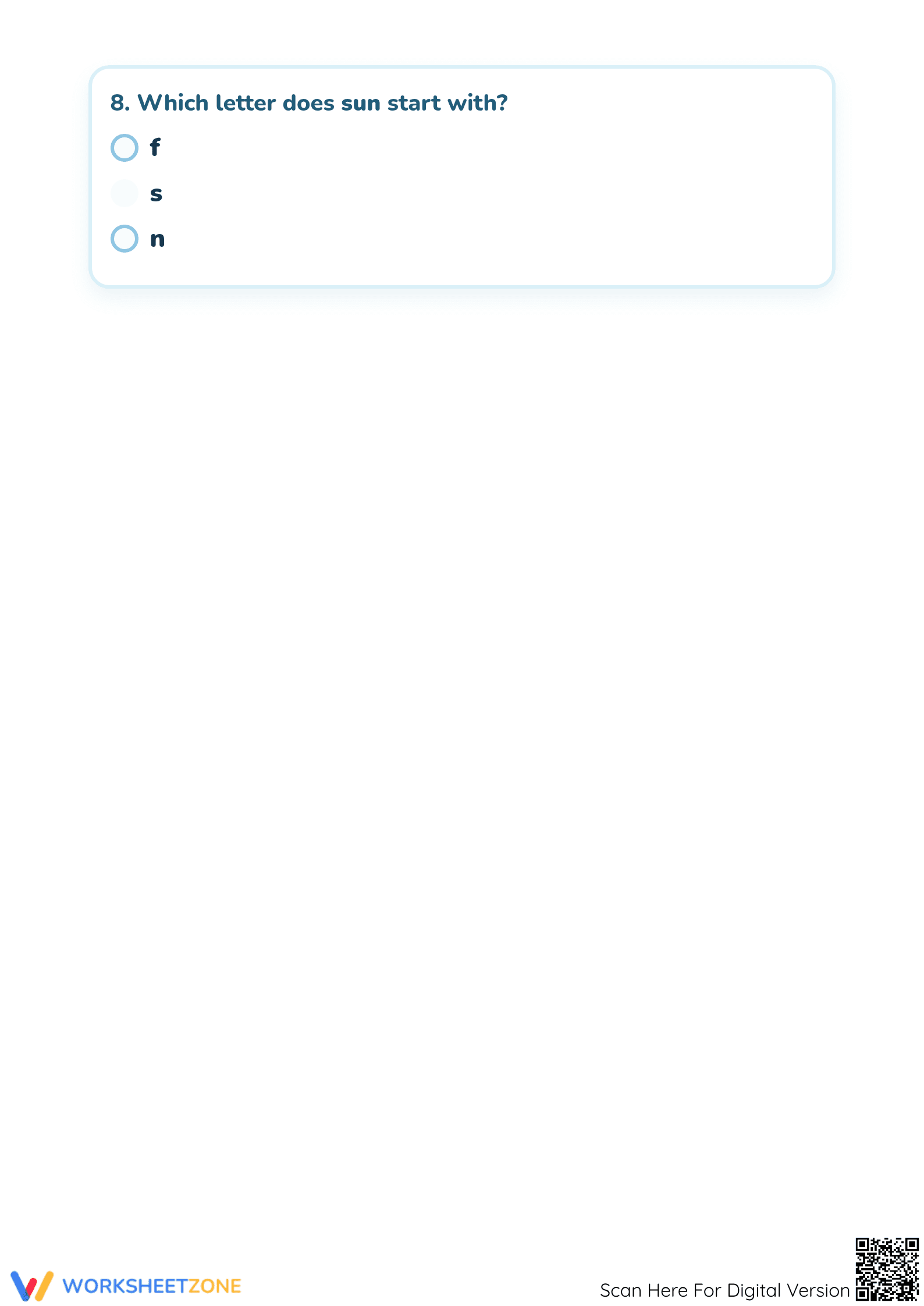
This comprehensive four-page PDF includes eight high-signal phonics tasks. The first section challenges students to unscramble letters for six common words like pig, sun, and pen, guided by clear visual prompts and phoneme breakdowns. The second section focuses on initial sound identification through multiple-choice questions. A full answer key ensures immediate feedback and easy teacher grading.
Skill Progression
- Guided Practice: The initial tasks provide clear visual icons and specific phoneme cues to help students map sounds to the provided letters in a controlled environment.
- Supported Practice: As students move through the spelling items, they apply their knowledge of vowel placement and consonant sounds with decreasing external scaffolding.
- Independent Practice: The final pages shift to sound identification, requiring them to isolate the beginning phoneme without the support of letter banks.
This approach follows the gradual release of responsibility model, ensuring young learners build confidence as they tackle foundational spelling tasks.
Standards Alignment
This resource is directly aligned with CCSS.ELA-LITERACY.RF.K.2.D, which requires students to isolate and pronounce individual sounds in three-phoneme words. It also supports CCSS.ELA-LITERACY.RF.K.3.A by reinforcing the primary sound for each consonant. Both standard codes can be copied directly into lesson plans, IEP goals, or district curriculum mapping tools to ensure instructional coherence and compliance.
How to Use It
Use this worksheet during the practice phase of a phonics lesson after introducing CVC word structures. It works effectively in a literacy station where students can use whisper phones to say the sounds slowly as they write. For a formative assessment, observe if students can identify the medial vowel sound correctly in the spelling tasks. Expected completion time is 15 to 20 minutes.
Who It's For
This activity is designed for preschool and pre-kindergarten students who are beginning to recognize letter names and sounds. It provides excellent remediation for kindergarten students who require additional support with phoneme segmentation. Pair this resource with a physical word wall or a letter-tile activity to provide a multi-sensory learning experience that reinforces orthographic mapping.
Effective phonics instruction in early childhood requires a systematic approach to phonemic awareness and the alphabetic principle. Research from EdReports 2024 emphasizes that high-quality instructional materials must provide explicit opportunities for students to practice mapping phonemes to graphemes in a structured environment. This worksheet fulfills that requirement by requiring students to not only identify sounds but to physically order the corresponding letters to construct meaning. By focusing on CVC words like sun and pen, the resource aligns with the Science of Reading findings that suggest early mastery of consonant-vowel-consonant patterns is the most reliable predictor of future reading fluency. The inclusion of visual cues and auditory prompts allows students to engage with the material at multiple cognitive levels, facilitating the transition from oral language to literacy. Educators can use the standard code CCSS.ELA-LITERACY.RF.K.2.D to track progress toward foundational benchmarks.


