




























Views
Downloads
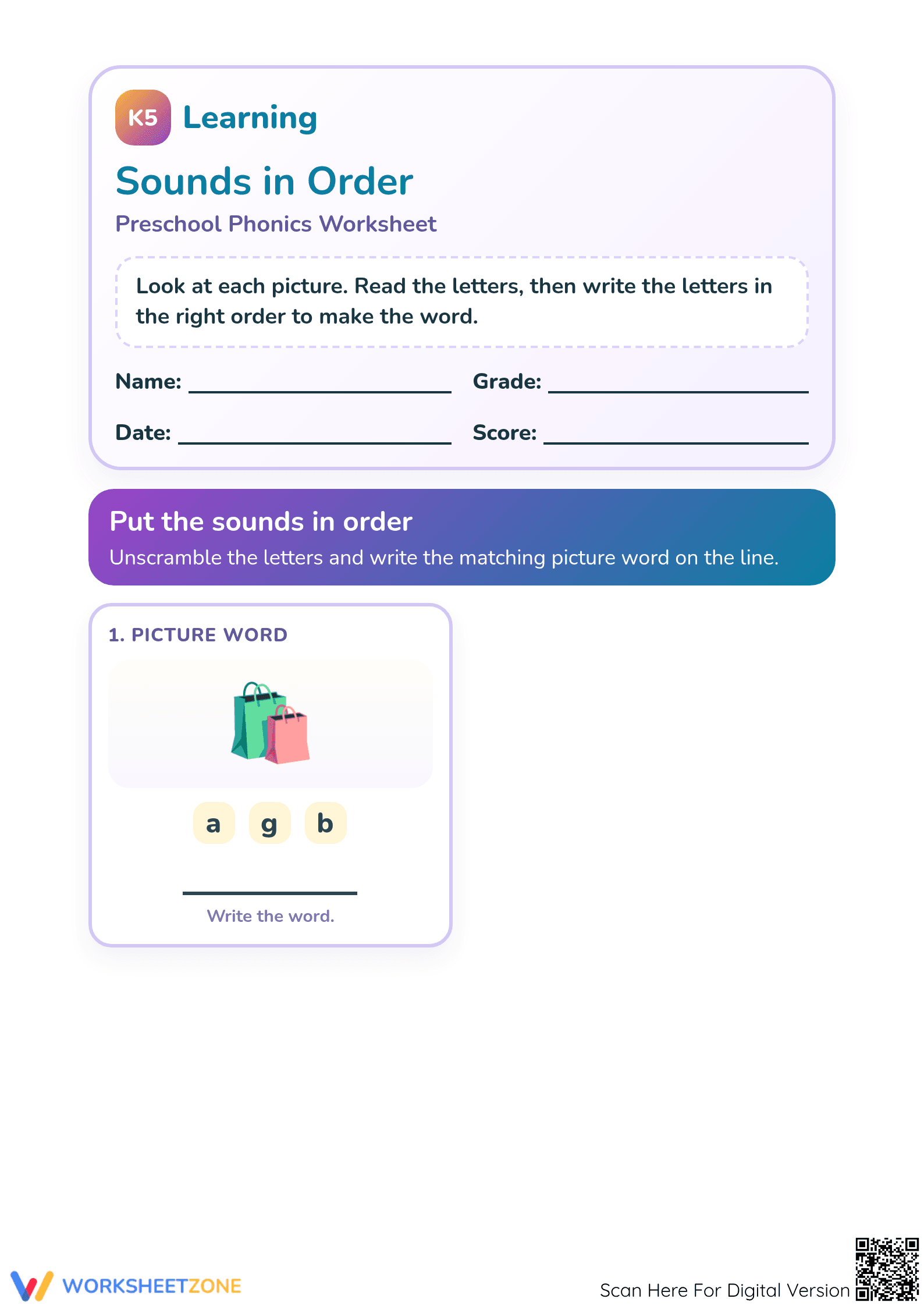
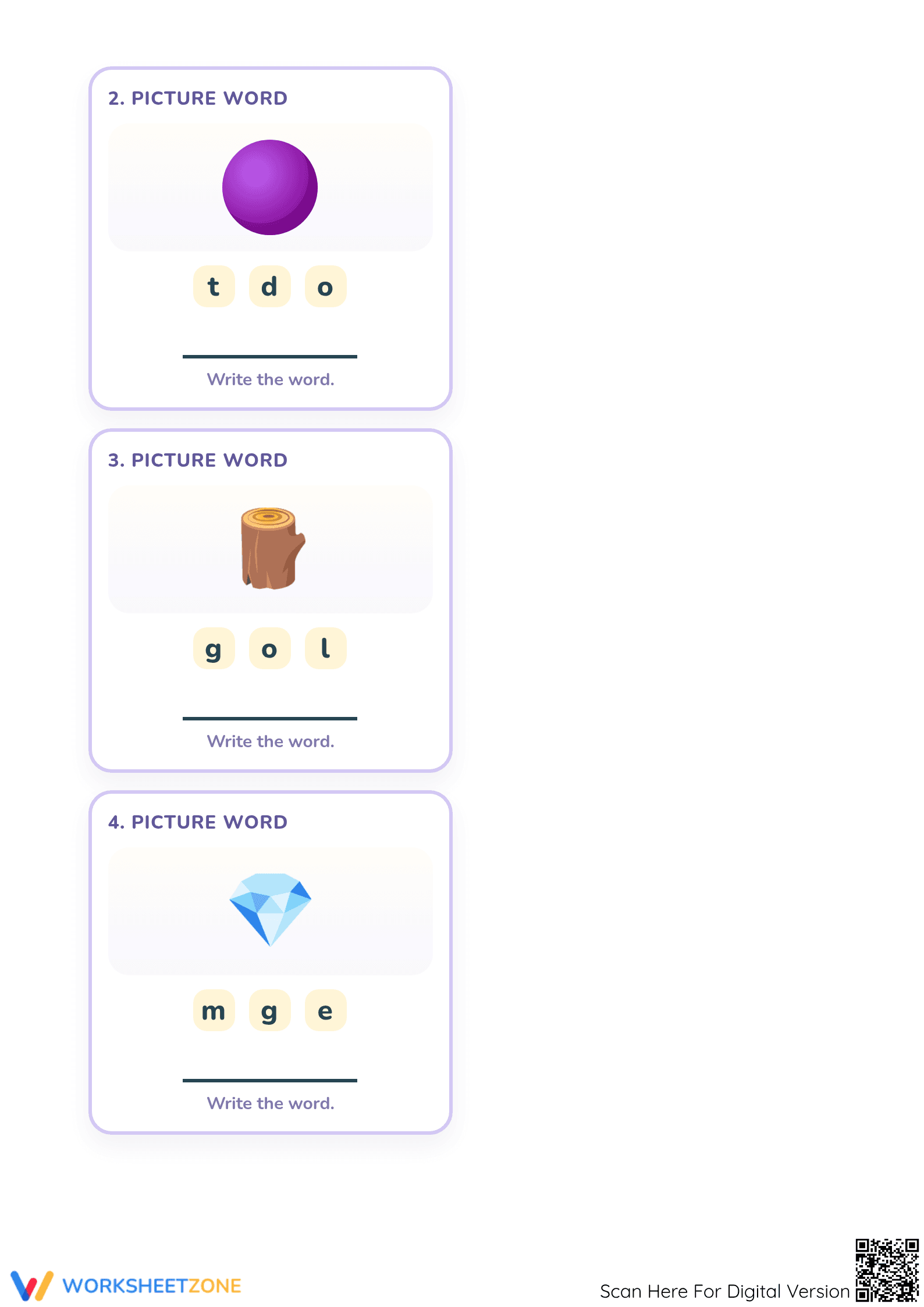
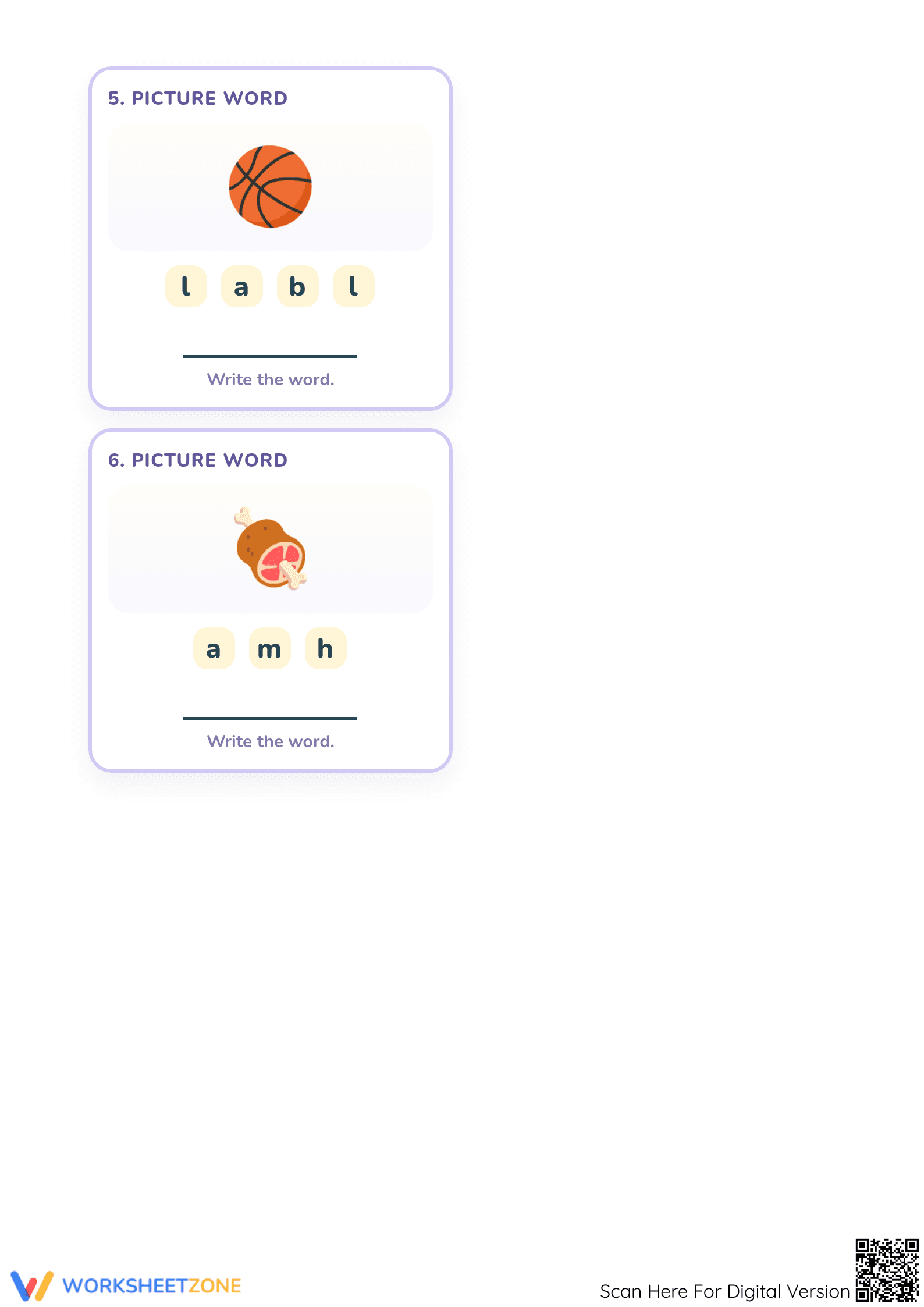

Essential Preschool Ready: Sounds in Order 4 Phonics Worksheet

Paste this activity's link or code into your existing LMS (Google Classroom, Canvas, Teams, Schoology, Moodle, etc.).
Students can open and work on the activity right away, with no student login required.
You'll still be able to track student progress and results from your teacher account.
Decoding is the cornerstone of early literacy development. The Sounds in Order 4 worksheet provides a structured environment where preschoolers can practice phoneme-grapheme mapping. By identifying familiar images and unscrambling the corresponding letters, students build the foundational skills necessary for reading and writing CVC words with confidence and accuracy.
At a Glance
- Grade: Preschool · Subject: ELA
- Standard:
CCSS.ELA-LITERACY.RF.K.3.A— Produce the primary sound for each consonant and recognize letter-sound correspondences- Skill Focus: Phonemic Awareness & Letter Ordering
- Format: 3 pages · 6 problems · Answer key included · PDF
- Best For: Morning work or phonics literacy centers
- Time: 10–15 minutes
What's Inside: This three-page PDF resource contains six distinct phonics tasks designed for the youngest learners. Each page features high-quality illustrations of common objects: bags, dots, logs, gems, basketballs, and ham. Below each image, students find scrambled letter tiles that they must reorder to correctly spell the word. A clear writing line is provided for each answer, and a full answer key is included to facilitate immediate feedback and self-correction.
Zero-Prep Workflow
- Print: Simply open the PDF and print the three pages in color or grayscale. No laminating or cutting is required for immediate use (30 seconds).
- Distribute: Hand out the worksheets during small group instruction or literacy centers. Provide pencils and perhaps letter magnets for additional tactile support (30 seconds).
- Review: Use the provided answer key to quickly check student work or allow for self-correction during independent practice sessions (1 minute).
Standards Alignment
This resource is aligned with CCSS.ELA-LITERACY.RF.K.3.A: Demonstrate basic knowledge of one-to-one letter-sound correspondences by producing the primary sound or many of the most frequent sounds for each consonant. This worksheet supports this standard by requiring students to recognize and order letters based on their phonetic sounds in simple words. Both standard codes can be copied directly into lesson plans, IEP goals, or district curriculum mapping tools.
How to Use It
Literacy Centers: Place these pages in a "Word Work" station. Encourage students to say the sound of each letter aloud as they write the word on the line to reinforce the auditory-visual connection. This activity is a perfect fit for before or during direct instruction on consonant blending. Formative Assessment Tip: Observe how students approach the unscrambling process. If a student consistently places the vowel in the wrong position, it indicates a need for targeted instruction on medial vowel sounds. Expected completion time is 10 to 15 minutes.
Who It's For
This resource is designed for preschool and early kindergarten students who are beginning to blend sounds. It is particularly effective for English Language Learners (ELLs) who benefit from the visual support provided by the clear picture prompts. For best results, pair this worksheet with a phonics anchor chart or a short reading passage featuring high-frequency CVC words to provide a complete instructional experience.
Research from RAND AIRS 2024 indicates that multisensory phonics instruction, which integrates visual cues with letter manipulation, significantly accelerates phonemic awareness in early learners. This worksheet utilizes high-frequency CVC and CVCC words such as "bag," "dot," and "ball" to ground abstract sounds in concrete imagery. By requiring students to unscramble letters to match a picture, the resource enforces the orthographic mapping process necessary for reading fluency. This approach aligns with the standard CCSS.ELA-LITERACY.RF.K.3.A, focusing on the production of primary sounds for each consonant. Structured practice in letter ordering provides the scaffolding needed for preschoolers to transition from letter recognition to word construction. Teachers can use these tasks to identify gaps in vowel sound identification or final consonant blending, making it a valuable tool for early intervention and classroom-wide literacy development.


