


























Views
Downloads

Animal Habitats Sorting — Printable Grade K Worksheet
Paste this activity's link or code into your existing LMS (Google Classroom, Canvas, Teams, Schoology, Moodle, etc.).
Students can open and work on the activity right away, with no student login required.
You'll still be able to track student progress and results from your teacher account.
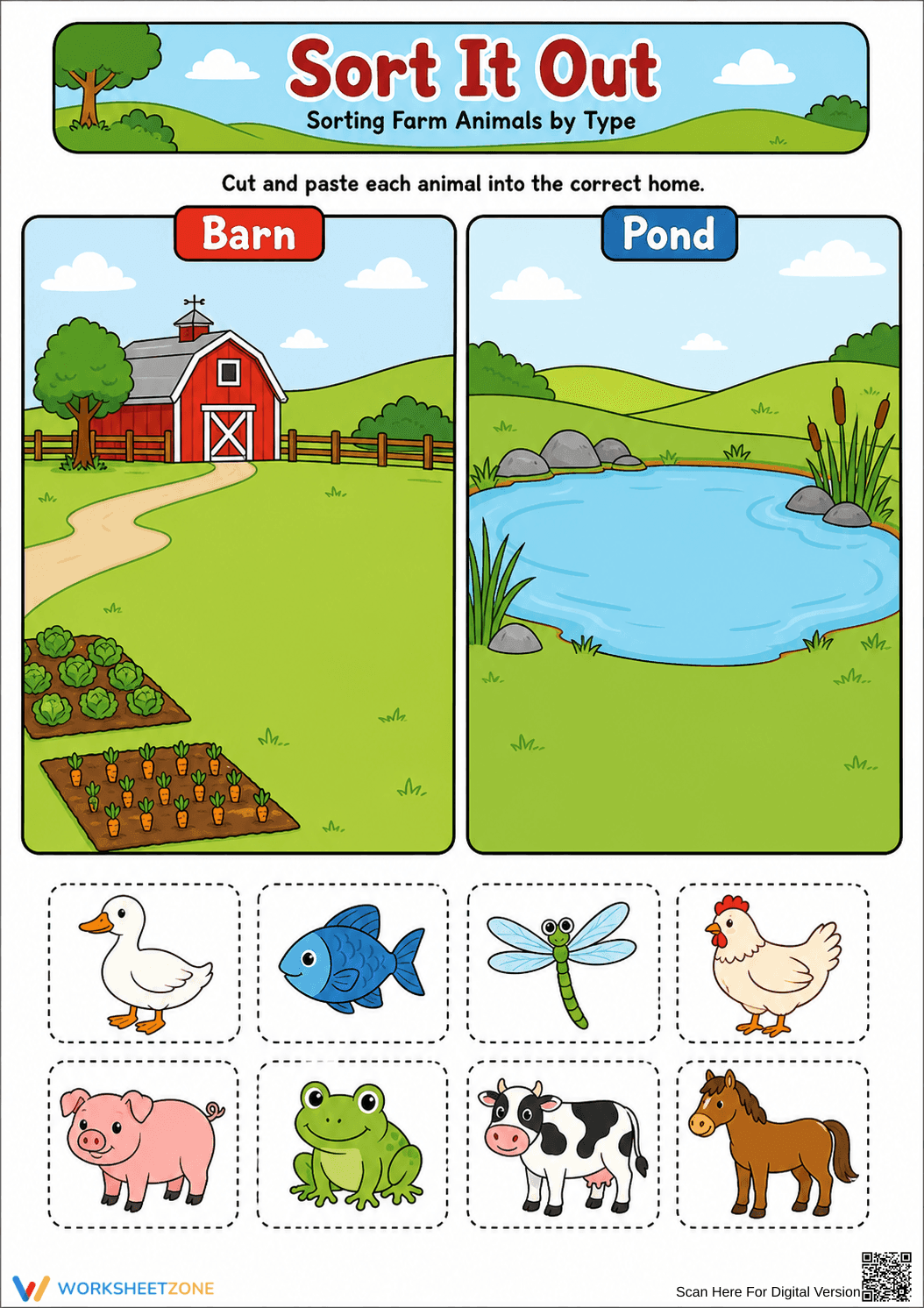
This animal habitats sorting worksheet helps early learners classify living things by their environment. Students practice fine motor skills by cutting out animal illustrations and pasting them into the correct habitat category, either a barn or a pond. This hands-on activity builds foundational science and data organization skills.
At a Glance
- Grade: K · Subject: Science
- Standard:
CCSS.MATH.CONTENT.K.MD.B.3— Classify objects into given categories and count them.- Skill Focus: Sorting animals by habitat
- Format: 2 pages · 8 problems · PDF
- Best For: Independent practice centers
- Time: 15–20 minutes
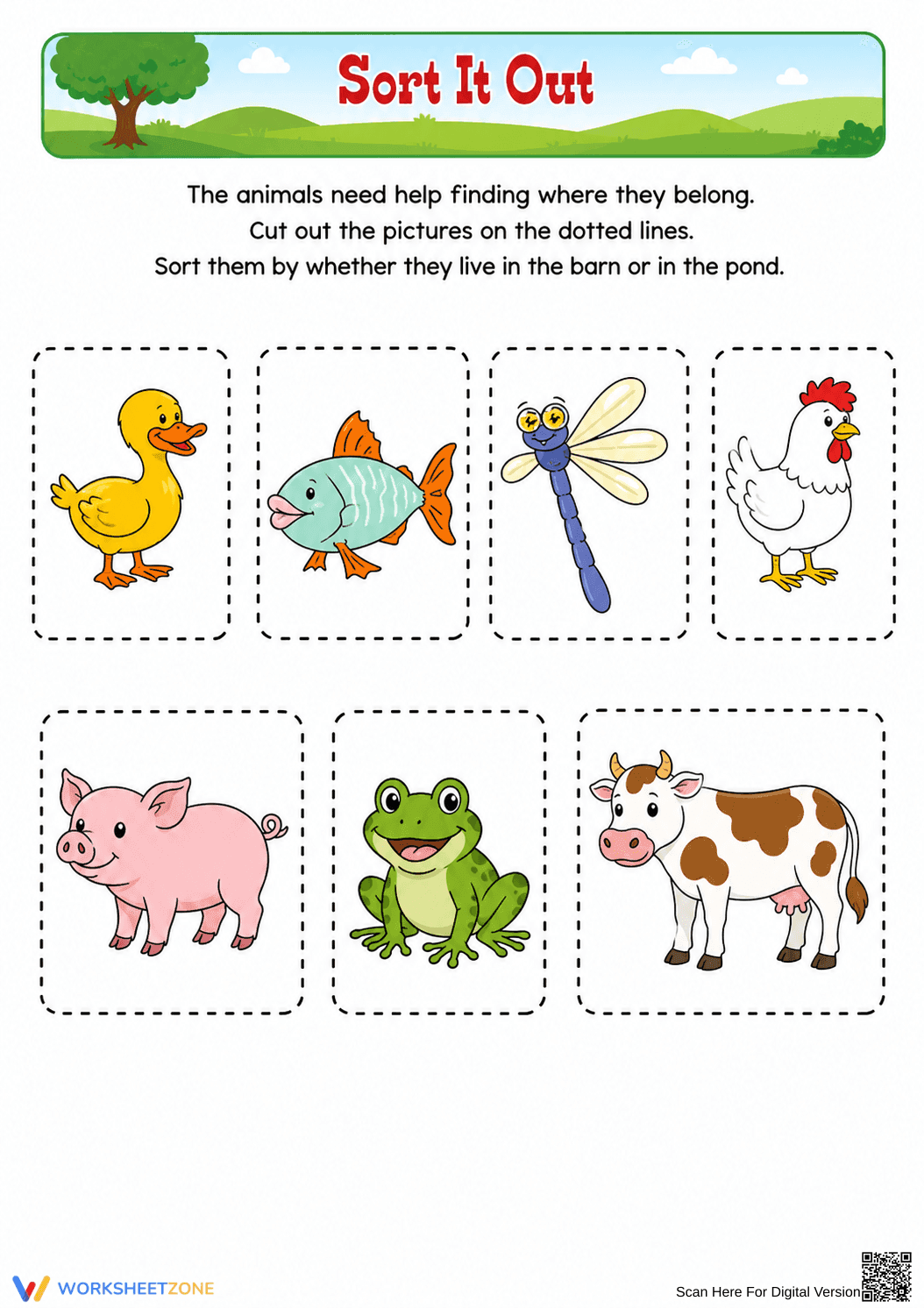
This resource includes two pages for early learners. The activity features a sorting mat divided into a barn scene and a pond environment. Students will find eight animal cards, including a cow, pig, duck, and frog, outlined with dotted lines to guide scissor use. Clear visual boundaries make it easy for young students to understand where each animal belongs.
Designed for immediate classroom implementation:
- Print (1 minute): Generate the two-page PDF and make copies for your class. No special materials are required beyond standard scissors and glue sticks.
- Distribute (1 minute): Hand out the sorting mats and animal cards to students at their desks or center tables.
- Review (3 minutes): Briefly identify each animal as a class to ensure vocabulary comprehension before students begin cutting.
With under two minutes of total teacher prep time, this activity is an excellent addition to emergency sub plans or spontaneous science centers.
This activity aligns with CCSS.MATH.CONTENT.K.MD.B.3: Classify objects into given categories; count the numbers of objects in each category and sort the categories by count. While primarily a science concept, the act of grouping the eight animals into two distinct sets builds essential early math logic. Both standard codes can be copied directly into lesson plans, IEP goals, or district curriculum mapping tools.
Deploy this sorting activity during your morning science block after reading a picture book about farm life. It serves as an excellent independent center task while the teacher works with small reading groups. Alternatively, use it as a formative assessment tool at the end of a habitats unit. As students work, observe their sorting choices to quickly gauge their understanding of basic animal needs and environments. Expect most kindergarteners to complete the cutting, sorting, and pasting within 15 to 20 minutes.
This resource is ideal for kindergarten and preschool students developing basic classification skills. The bold, simple illustrations provide strong visual scaffolds for English Language Learners and students receiving special education support. Pair this worksheet with a whole-class anchor chart detailing the characteristics of water and land animals to reinforce the concepts before independent practice.
Integrating hands-on classification tasks into early childhood education enhances cognitive development. According to Fisher & Frey (2014), providing students with interactive, manipulative-based learning opportunities increases engagement and retention of foundational concepts. This worksheet directly supports CCSS.MATH.CONTENT.K.MD.B.3 by requiring students to classify objects into given categories and count them. By physically moving animal cards into the correct habitat zones, young learners bridge the gap between abstract scientific concepts and concrete understanding. The tactile nature of cutting and pasting reinforces fine motor skills necessary for early writing. Structured sorting activities ensure students build the critical thinking frameworks required for advanced data organization in later grades.


