


























Views
Downloads

Grade 1 Sort the Shapes — Printable No-Prep Worksheet
Paste this activity's link or code into your existing LMS (Google Classroom, Canvas, Teams, Schoology, Moodle, etc.).
Students can open and work on the activity right away, with no student login required.
You'll still be able to track student progress and results from your teacher account.
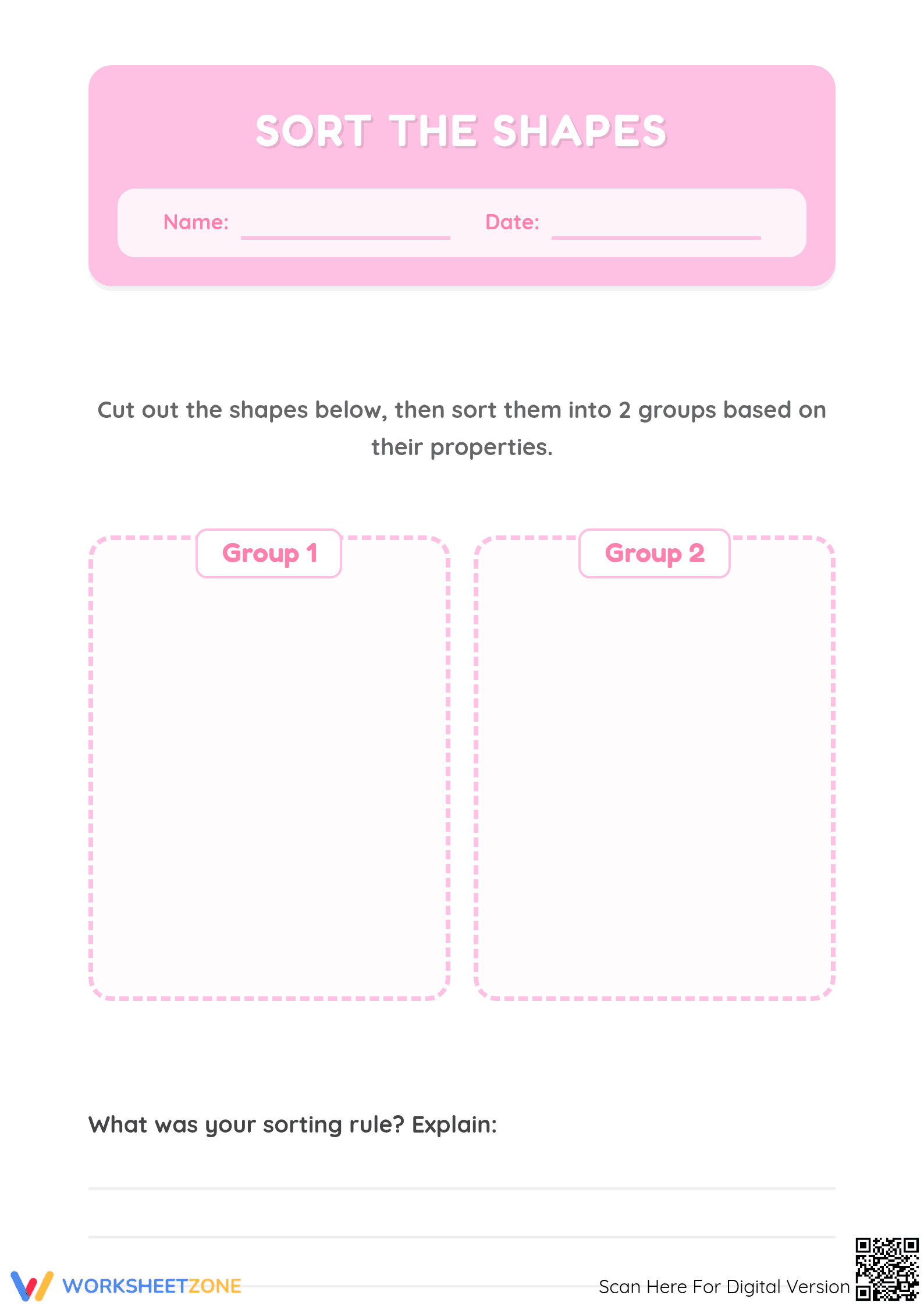
This Grade 1 geometry resource helps students identify and categorize two-dimensional figures based on their defining attributes. By physically manipulating shapes, learners bridge the gap between abstract geometric concepts and concrete identification. This activity ensures students focus on properties like side count and vertices rather than just orientation or size.
At a Glance
- Grade: 1 · Subject: Math
- Standard:
CCSS.MATH.CONTENT.1.G.A.1— Distinguish between defining attributes versus non-defining attributes to build and draw shapes- Skill Focus: 2D Shape Classification
- Format: 2 pages · 8 shapes · Answer key included · PDF
- Best For: Small group math centers and rotations
- Time: 15–20 minutes
What's Inside
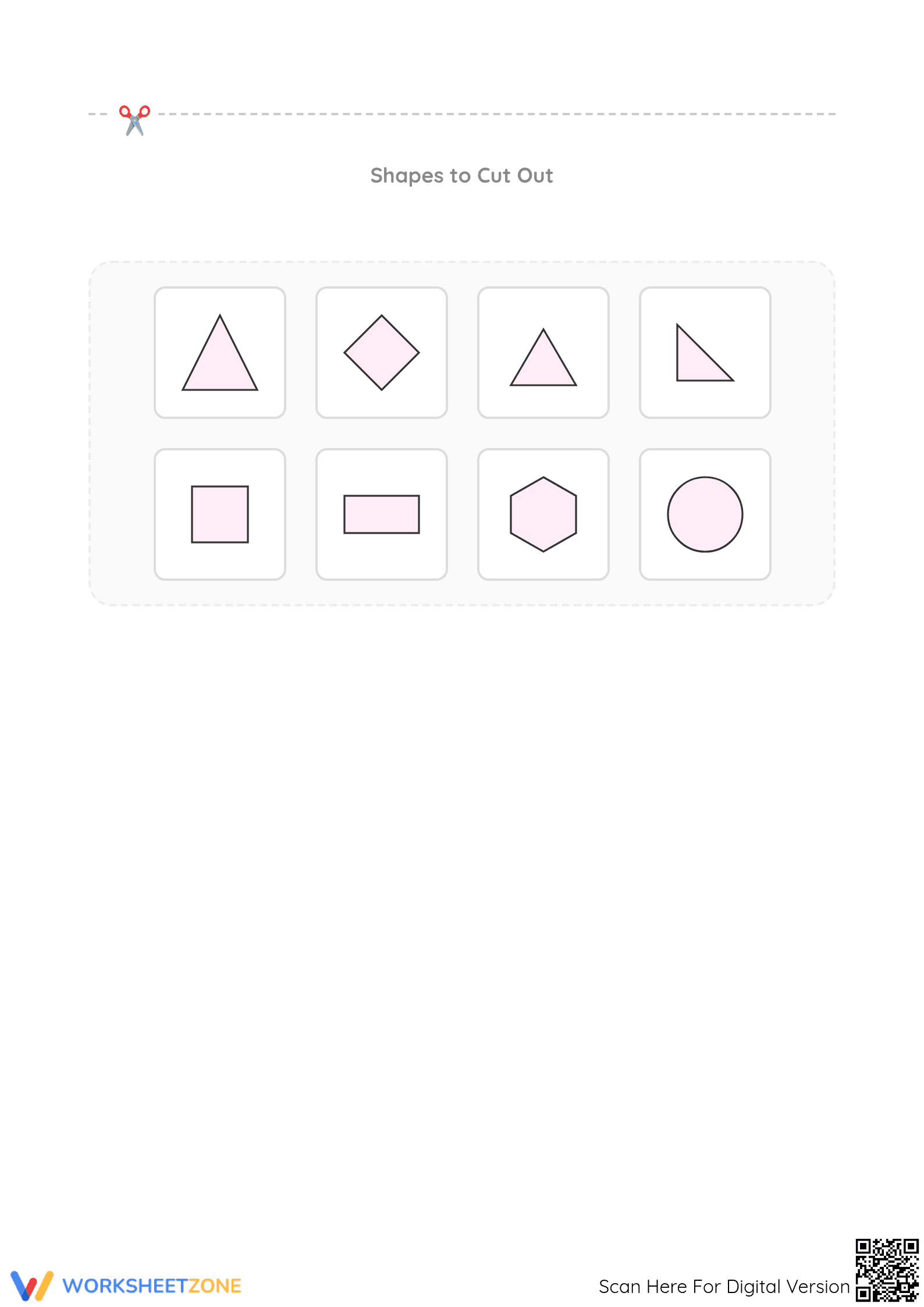
Inside this PDF, you will find a primary sorting mat and a secondary page featuring eight distinct shapes for cutting. The shape set includes triangles, quadrilaterals, a hexagon, and a circle, providing a diverse range of properties to analyze. The design incorporates a critical thinking prompt at the bottom, requiring students to articulate their sorting logic in writing.
Zero-Prep Workflow
The zero-prep workflow for this activity is designed for maximum classroom efficiency:
- Print: Print the two pages for each student or pair in under 30 seconds.
- Distribute: Hand out materials and allow students to cut and arrange the shapes based on properties (12 minutes).
- Review: Conduct a quick peer review or gallery walk to discuss different sorting strategies used (5 minutes).
This entire process requires under two minutes of teacher preparation time, making it ideal for sub plans.
Standards Alignment
This worksheet is directly aligned with CCSS.MATH.CONTENT.1.G.A.1, which focuses on distinguishing between defining and non-defining attributes. It also supports the Kindergarten standard CCSS.MATH.CONTENT.K.MD.B.3 regarding classification into categories. Both standard codes can be copied directly into lesson plans, IEP goals, or district curriculum mapping tools.
How to Use It
Use this worksheet during the independent practice phase of a lesson on polygon attributes to assess mastery. It also serves as an excellent formative assessment tool; observe whether students group shapes by side count or by more complex properties like right angles. The expected completion time ranges from 15 to 20 minutes, making it an ideal "quick-check" activity.
Who It's For
This resource is designed for first-grade students but is highly effective for Kindergarten enrichment or second-grade review. It supports English Language Learners by providing clear visual representations of geometric figures. For best results, pair this worksheet with a set of plastic pattern blocks or a classroom anchor chart detailing the names and properties of common 2D shapes.
According to the RAND AIRS 2024 report on instructional materials, hands-on sorting tasks are vital for developing spatial reasoning and foundational geometric literacy in early childhood education. This worksheet leverages the CCSS.MATH.CONTENT.1.G.A.1 standard to move students beyond simple shape recognition toward an analytical understanding of geometric properties. By requiring students to distinguish between defining attributes versus non-defining attributes, the activity promotes higher-order thinking as defined by recent educational frameworks. The inclusion of a written explanation component aligns with evidence-based practices for integrating literacy within mathematics instruction. Research from ScienceDirect indicates that tactile activities like cutting and pasting significantly improve retention of geometric vocabulary compared to passive identification tasks. Educators can utilize this structured practice to identify misconceptions about non-defining attributes, such as shape orientation or size, which often hinder mathematical progression. This worksheet provides a measurable data point for tracking progress toward essential geometry benchmarks.


