


























Views
Downloads

Essential Solid Liquid and Gas Worksheet | Grade 2 Science
Paste this activity's link or code into your existing LMS (Google Classroom, Canvas, Teams, Schoology, Moodle, etc.).
Students can open and work on the activity right away, with no student login required.
You'll still be able to track student progress and results from your teacher account.
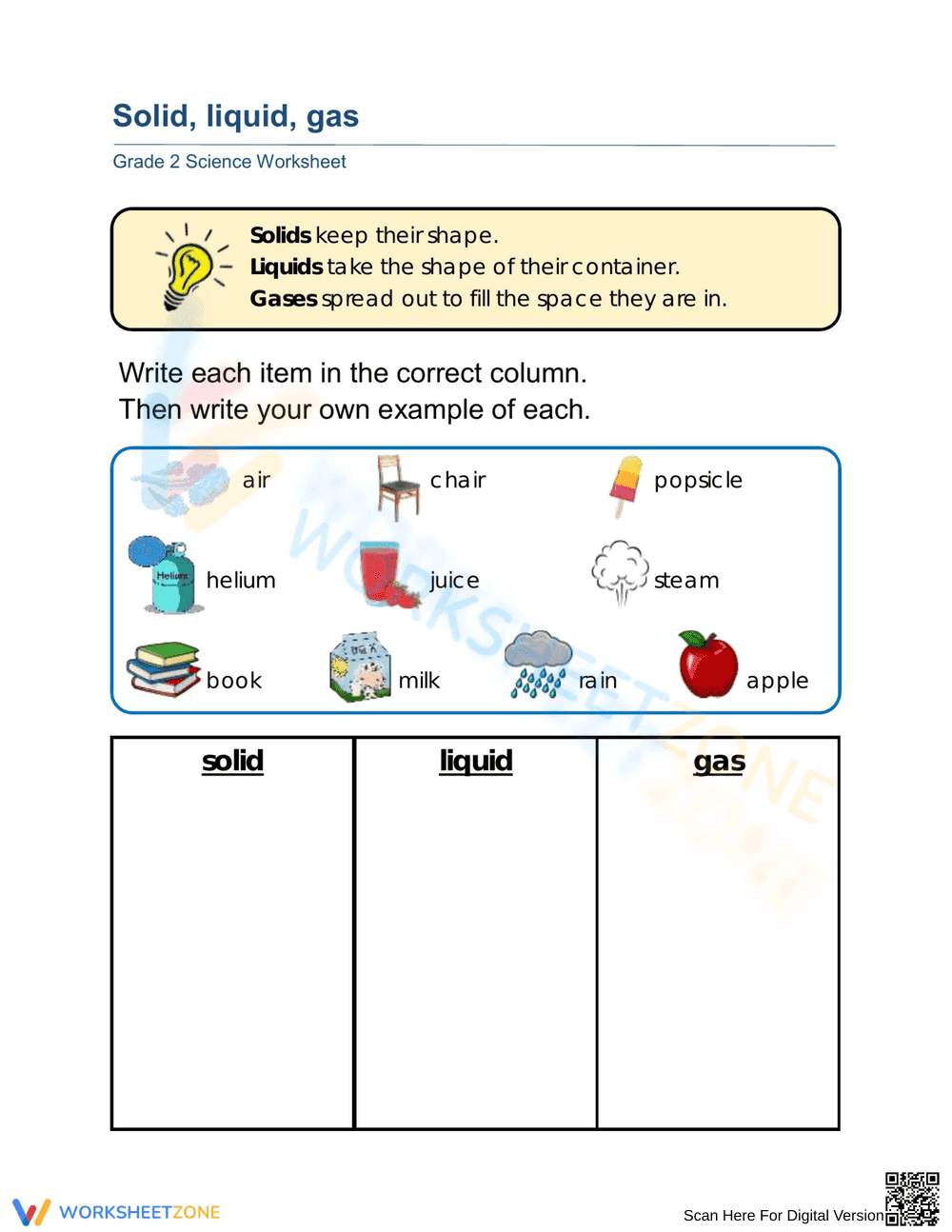
This Grade 2 Science worksheet offers a direct path for students to master the classification of matter. By identifying the observable properties of solids, liquids, and gases, learners build a concrete foundation for physical science. This resource helps students distinguish between states of matter using real-world examples like air, juice, and steam.
At a Glance
- Grade: 2 · Subject: Science
- Standard:
2-PS1-1— Classify different kinds of materials by their observable properties- Skill Focus: States of Matter Identification
- Format: 2 pages · 13 problems · Answer key included · PDF
- Best For: Independent practice or formative assessment
- Time: 15–20 minutes
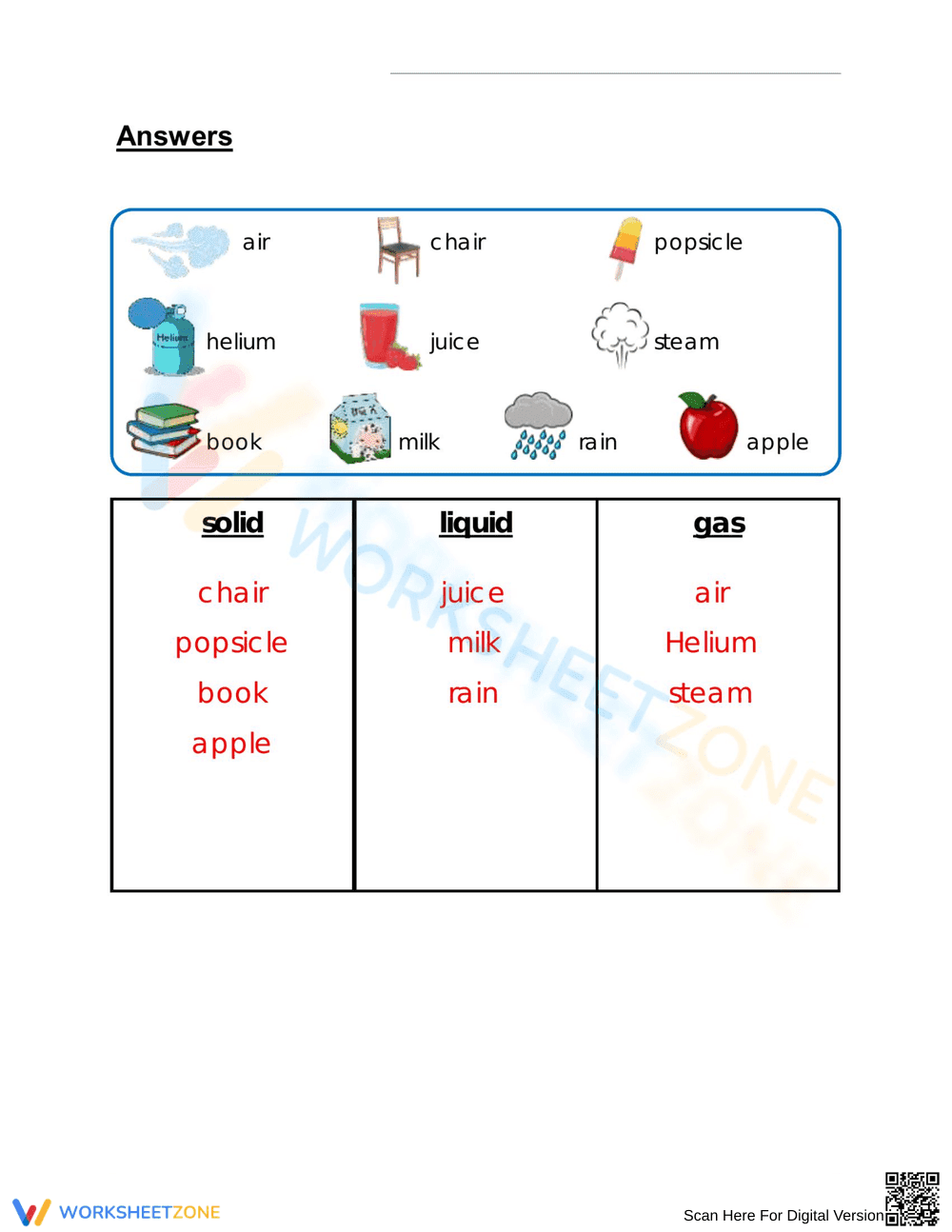
What's Inside: The worksheet defines how solids, liquids, and gases behave based on their shape and volume. Below, 10 items—including helium, milk, and a popsicle—challenge students to apply these definitions. A sorting chart provides structure, followed by an extension where students generate original examples. A complete answer key is included for rapid grading.
Zero-Prep Workflow: This resource is designed for high-efficiency classroom management. First, print the student page (30 seconds). Second, distribute to students for a 15-minute independent session. Third, display the provided answer key for quick self-correction. Total teacher prep time is under two minutes, making it an ideal choice for sub plans or morning work.
Standards Alignment: This resource is strictly aligned to the Next Generation Science Standard 2-PS1-1. This standard requires students to classify different kinds of materials by their observable properties. By focusing on shape-retention and container-dependency, this worksheet directly addresses the DCI PS1.A. This standard code can be copied directly into lesson plans or curriculum mapping tools.
How to Use It: Deploy this worksheet during the "independent practice" phase of a physical science lesson. It serves as a bridge between hands-on exploration and formal assessment. For a formative assessment tip, observe whether students correctly categorize "steam" and "helium," as gaseous states often represent the highest cognitive hurdle for second graders. Expect completion within 20 minutes.
Who It's For: This activity is tailored for Grade 2 students but works well for Grade 1 enrichment or Grade 3 review. The inclusion of clear text labels and familiar objects makes it accessible for English Language Learners (ELLs) requiring visual scaffolds. It pairs naturally with a states-of-matter anchor chart or a reading passage about the water cycle.
Scientific literacy in early childhood depends on the ability to categorize the physical world into logical schemas. According to Fisher & Frey (2014), the use of graphic organizers—such as the sorting chart used here—is a critical component of the "gradual release of responsibility" model, allowing students to move from guided definitions to independent classification. This worksheet specifically targets 2-PS1-1 by forcing students to evaluate materials based on their volume and shape stability, which are the primary observable properties at the primary level. By providing a mix of household objects and atmospheric elements like air and steam, the task count of 13 problems ensures enough repetition to solidify the concept without causing cognitive fatigue. The inclusion of an open-ended "write your own example" section raises the task from simple identification to active knowledge construction, a key metric in modern science education frameworks like the NAEP science assessment guidelines.


