


























Views
Downloads

Subject-Verb Agreement Worksheet | Grade 1 Printable
Paste this activity's link or code into your existing LMS (Google Classroom, Canvas, Teams, Schoology, Moodle, etc.).
Students can open and work on the activity right away, with no student login required.
You'll still be able to track student progress and results from your teacher account.
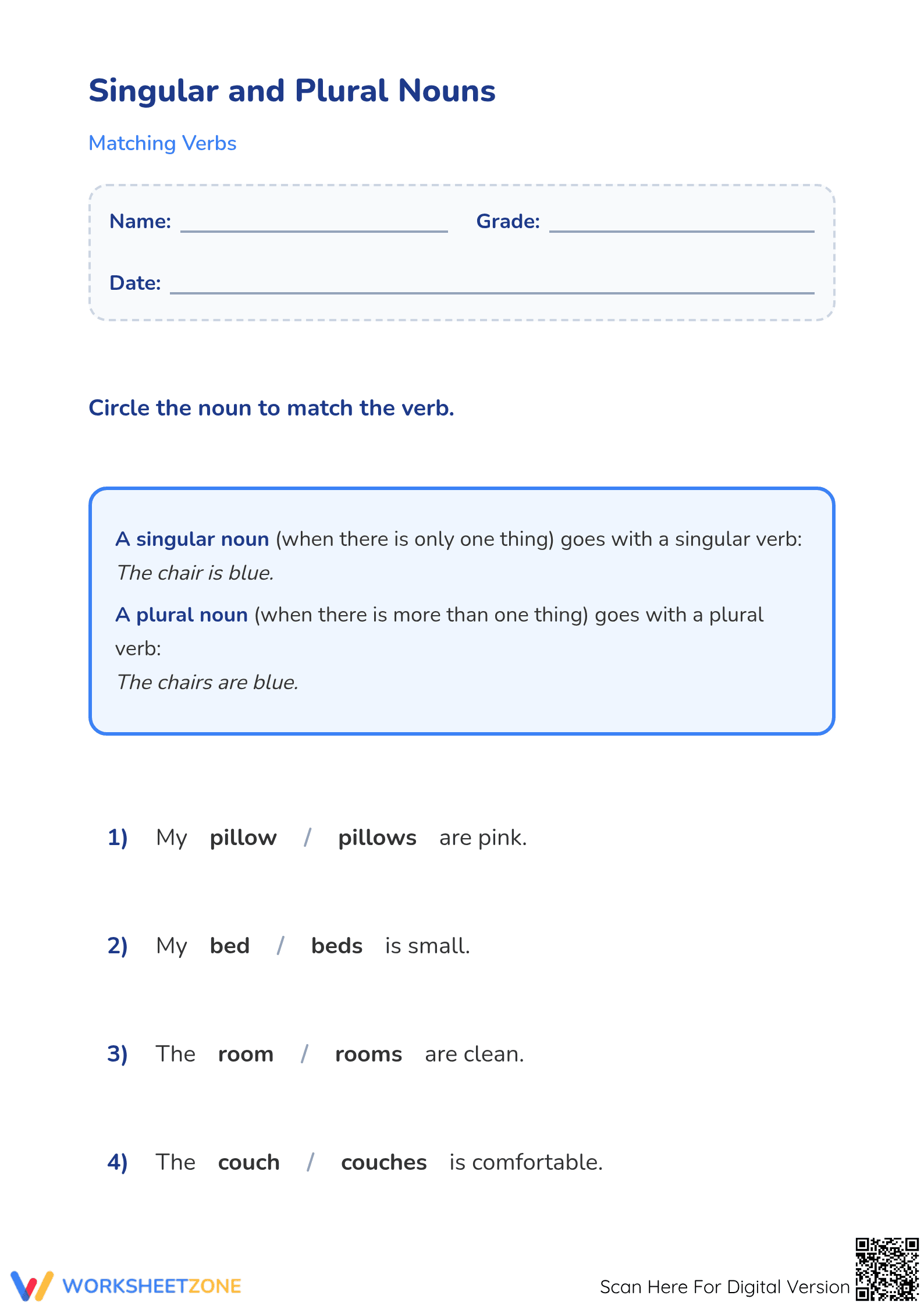
This Grade 1 grammar worksheet helps students master subject-verb agreement by selecting the correct singular or plural noun to complete a sentence. By practicing this fundamental language skill, early readers and writers learn how to construct grammatically correct sentences, ensuring their written communication is clear and accurate.
At a Glance
- Grade: 1 · Subject: ELA
- Standard:
CCSS.ELA-LITERACY.L.1.1.C— Use singular and plural nouns with matching verbs- Skill Focus: Subject-Verb Agreement
- Format: 3 pages · 15 problems · Answer key included · PDF
- Best For: Independent practice and grammar review
- Time: 15–20 minutes
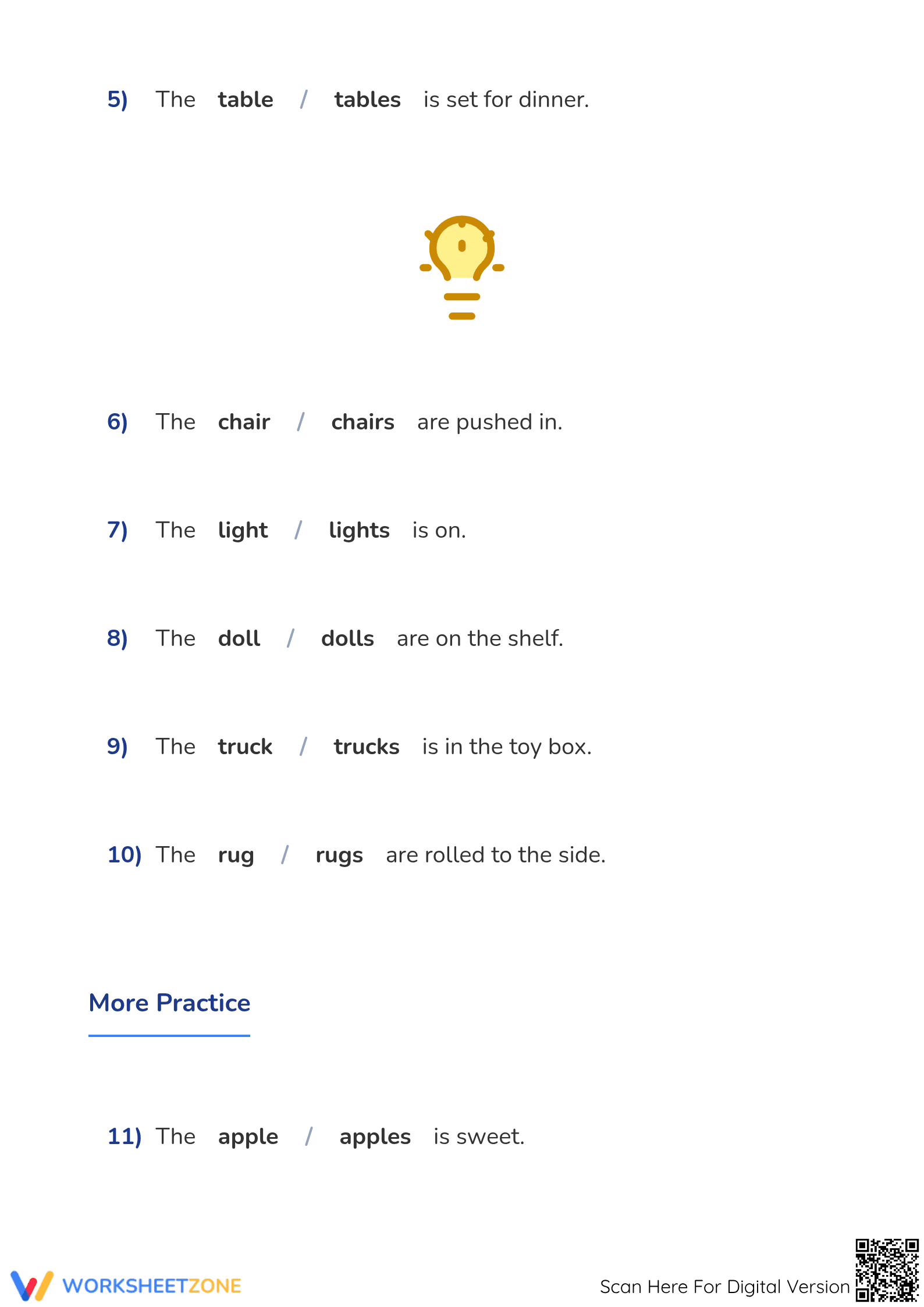
Inside this comprehensive resource, educators will find a three-page activity featuring an instructional reference box and 15 sentence-completion tasks. The worksheet begins with a clear, student-friendly explanation of how singular and plural nouns pair with corresponding verbs, complete with examples. Students then read sentences and circle the correct noun form to match the given verb. A complete answer key is provided for quick grading.
- Guided practice: The activity opens with an instructional box that models the grammar rule, showing exactly how singular and plural nouns change the sentence structure.
- Supported practice: Problems 1 through 10 offer straightforward, familiar vocabulary words to help students apply the rule with confidence.
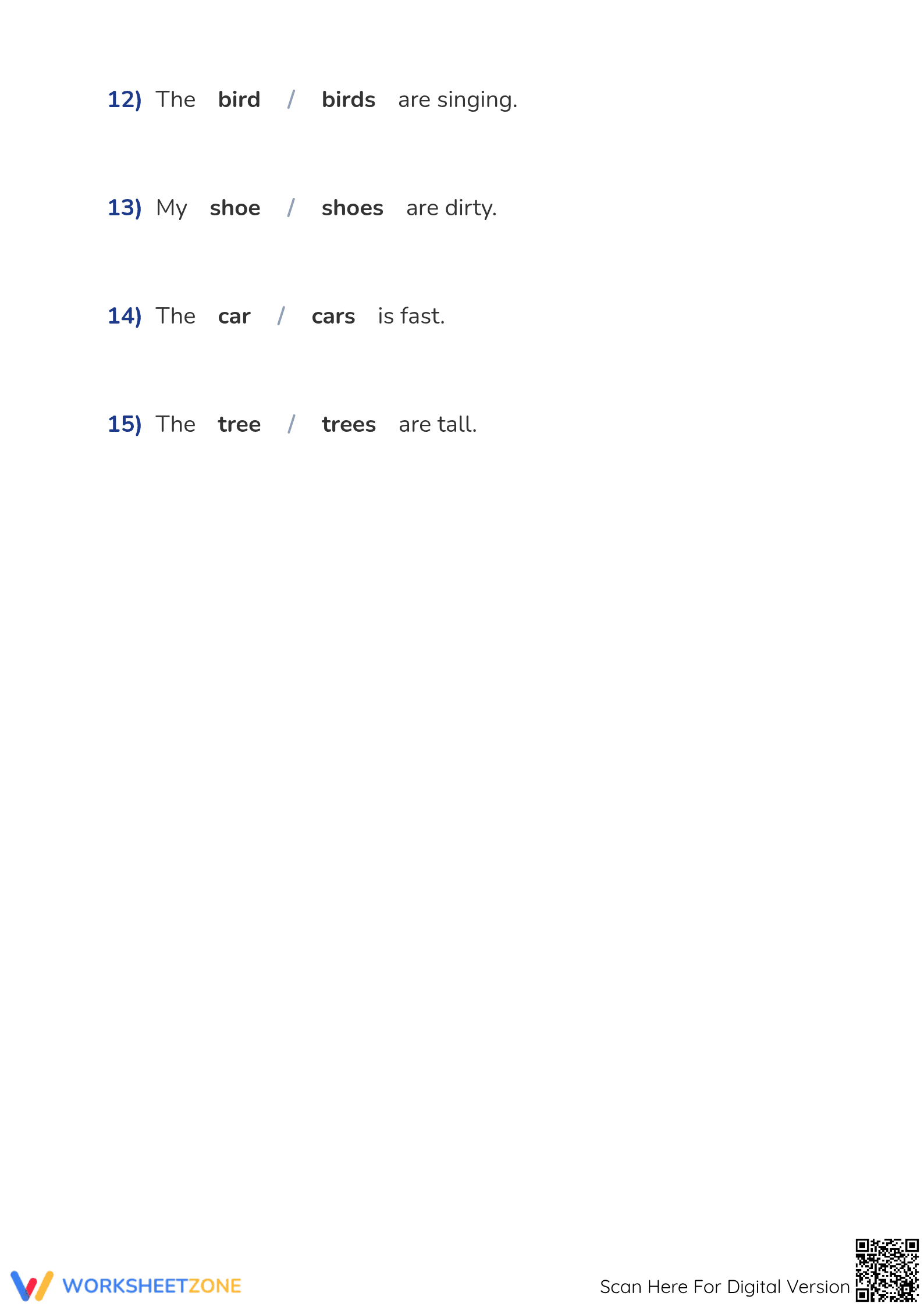
- Independent practice: The "More Practice" section (problems 11 through 15) reinforces the concept, ensuring students can independently identify the correct noun form without relying heavily on the initial examples.
This gradual-release approach follows the proven I Do, We Do, You Do instructional model, building student independence step by step.
Aligned to primary standard CCSS.ELA-LITERACY.L.1.1.C: Use singular and plural nouns with matching verbs in basic sentences. This foundational grammar standard ensures students understand the mechanics of sentence building. Both standard codes can be copied directly into lesson plans, IEP goals, or district curriculum mapping tools.
This resource is highly versatile for first-grade classrooms. Use it as an independent practice activity immediately following direct instruction on nouns and verbs, or assign it as a focused morning work task. As a formative assessment tip, observe whether students are looking at the verb (e.g., "is" vs. "are") before making their noun selection; this indicates true comprehension of the grammar rule rather than guessing. Expected completion time is 15 to 20 minutes.
This worksheet is designed for first-grade students developing their foundational language skills. It is easily differentiated for emerging readers by reading the sentences aloud while they identify the correct noun. For optimal results, pair this activity with an anchor chart detailing the differences between "is" and "are" to provide an extra layer of visual support.
Mastering grammar rules in early elementary school is a critical stepping stone for reading comprehension and writing fluency. Standard CCSS.ELA-LITERACY.L.1.1.C requires students to use singular and plural nouns with matching verbs, a skill that directly impacts their ability to construct meaningful text. According to Fisher & Frey (2014), explicit grammar instruction combined with targeted, structured practice significantly improves students' syntactic awareness and overall literacy development. When young learners understand how words interact within a sentence, they become more confident readers who can decode complex texts with greater ease. This worksheet provides the exact type of focused repetition needed to solidify these essential language mechanics, ensuring students build a strong foundation for future academic success.


