


























Views
Downloads

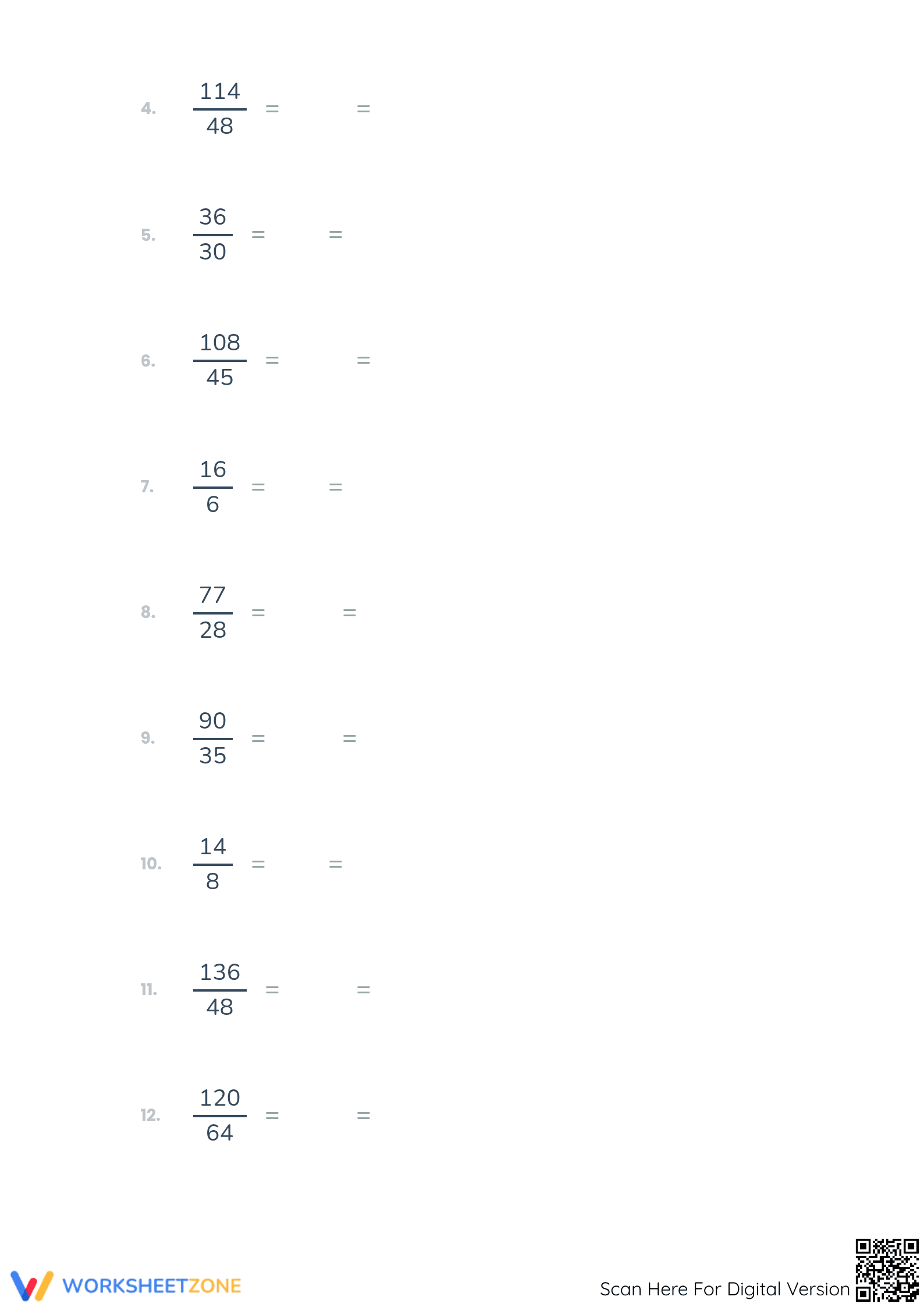


Essential Simplify Improper Fractions Worksheet | Grade 4-5
Paste this activity's link or code into your existing LMS (Google Classroom, Canvas, Teams, Schoology, Moodle, etc.).
Students can open and work on the activity right away, with no student login required.
You'll still be able to track student progress and results from your teacher account.
Transforming abstract improper fractions into manageable mixed numbers is a foundational skill for upper elementary mathematics. This comprehensive worksheet provides students with the structured practice necessary to master the division-based logic required for fraction conversion. By connecting visual number lines to procedural tasks and real-world word problems, learners develop a deep conceptual understanding of fraction values.
At a Glance
- Grade: 4–5 · Subject: Math
- Standard:
CCSS.MATH.CONTENT.4.NF.B.3— Convert improper fractions to mixed numbers using division-based simplification- Skill Focus: Fraction simplification and conversion
- Format: 4 pages · 24 problems · Answer key included · PDF
- Best For: Independent practice or substitute plans
- Time: 35–45 minutes
This four-page instructional resource features 24 carefully sequenced problems designed to build confidence. The worksheet begins with a visual number line anchor to clarify the relationship between fractions and whole numbers. It then moves into 15 basic simplification tasks, three multi-step word problems involving baking and gardening scenarios, and concludes with six advanced conversion challenges. A complete answer key is included for immediate feedback.
Designed for maximum teacher efficiency, this resource follows a strict zero-prep workflow. Step 1: Print the four-page PDF in under 30 seconds. Step 2: Distribute to students for a 35-minute instructional block. Step 3: Review the final answers using the provided key in less than two minutes. This streamlined approach makes the worksheet an ideal choice for emergency substitute plans or busy Friday morning review sessions.
This worksheet aligns directly with CCSS.MATH.CONTENT.4.NF.B.3, which requires students to understand fractions as a sum of unit fractions and perform conversions between improper and mixed forms. By requiring students to simplify to lowest terms before converting, the tasks also support standard CCSS.MATH.CONTENT.4.NF.A.1. Both standard codes can be copied directly into lesson plans, IEP goals, or district curriculum mapping tools.
Use this worksheet as a formative assessment after initial direct instruction on fraction division. A helpful observation tip: watch for students who struggle with the remainder; this often indicates a need for more direct modeling of the division process. The expected completion time for the full 24-problem set is approximately 40 minutes, making it a perfect fit for a standard math period.
The resource is optimized for 4th and 5th-grade students who have already mastered basic multiplication and division facts. It provides natural differentiation through the "Real-World Applications" section, which challenges high-performing students to apply their skills to contextual word problems. This worksheet pairs exceptionally well with an anchor chart displaying common fraction-to-mixed-number conversions for extra support.
The CCSS.MATH.CONTENT.4.NF.B.3 standard emphasizes the conceptual leap from viewing fractions as parts of a whole to understanding them as values on a number line that can exceed one. This worksheet bridges that gap by requiring students to convert improper fractions into mixed numbers through the art of division and simplification. According to Fisher & Frey (2014), the efficacy of math instruction is significantly enhanced when students move from guided scaffolds, such as the number line provided on page one, to independent application in contextualized word problems. By integrating 24 distinct tasks that range from procedural fluency to real-world application, this resource ensures that learners internalize the logic behind the conversion process rather than merely memorizing steps. The inclusion of an answer key further supports the gradual release of responsibility, allowing for self-correction and metacognitive growth. This citation-ready summary highlights the worksheet's alignment with evidence-based practices in math education.


