


























Views
Downloads

Grade 3 Simple Machines — Printable No-Prep Worksheet
Paste this activity's link or code into your existing LMS (Google Classroom, Canvas, Teams, Schoology, Moodle, etc.).
Students can open and work on the activity right away, with no student login required.
You'll still be able to track student progress and results from your teacher account.
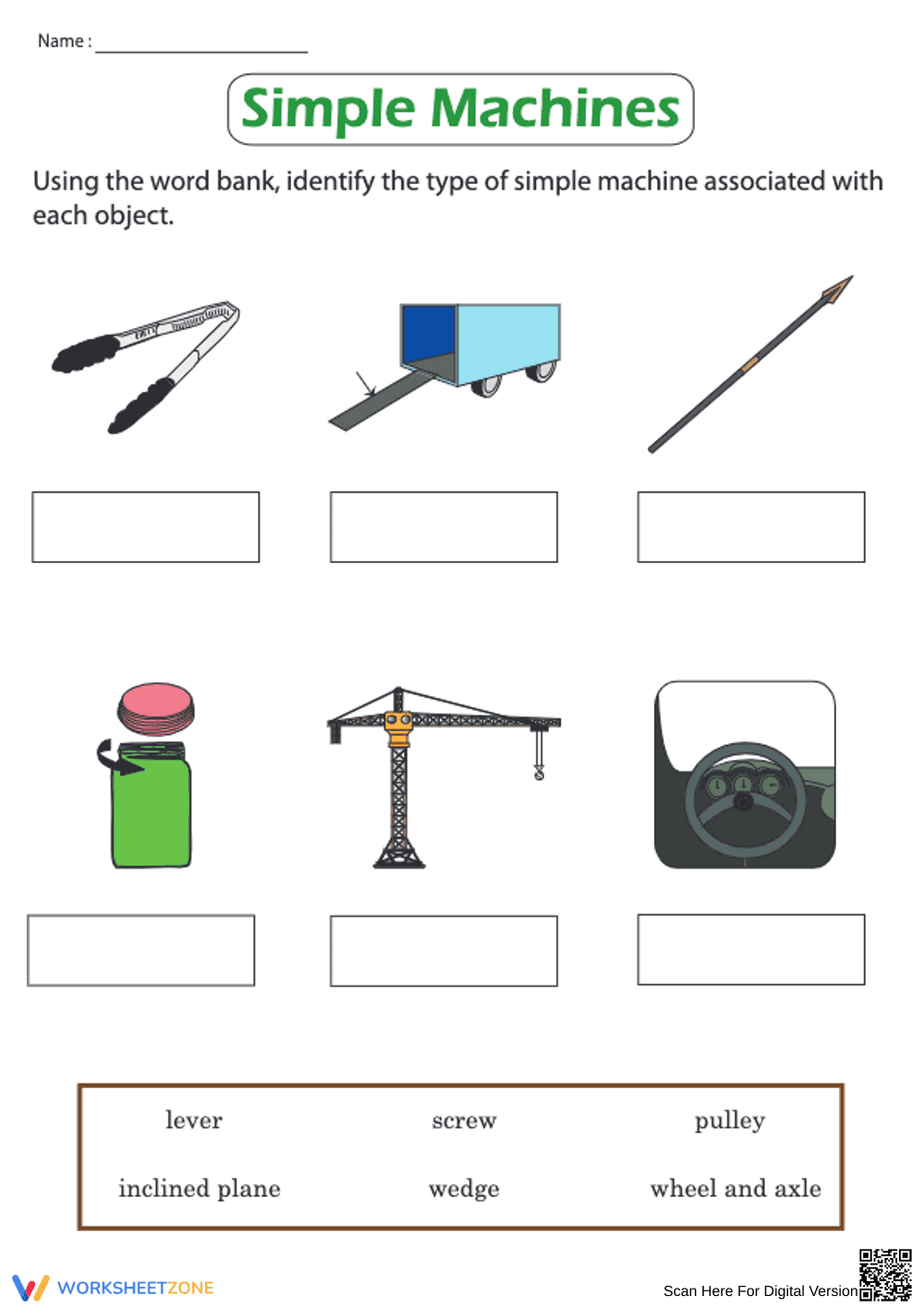
Master the fundamentals of mechanics with this focused simple machines identification worksheet. Designed for third-grade students, this resource helps learners recognize how everyday objects function as mechanical tools. By connecting visual examples to scientific terminology, students build a concrete understanding of how forces and motion work in the real world.
At a Glance
- Grade: 3 · Subject: Science
- Standard:
3-PS2-1— Plan investigations to provide evidence of the effects of forces on motion- Skill Focus: Identifying and labeling simple machines
- Format: 2 pages · 6 problems · Answer key included · PDF
- Best For: Formative assessment of elementary physical science
- Time: 10–15 minutes
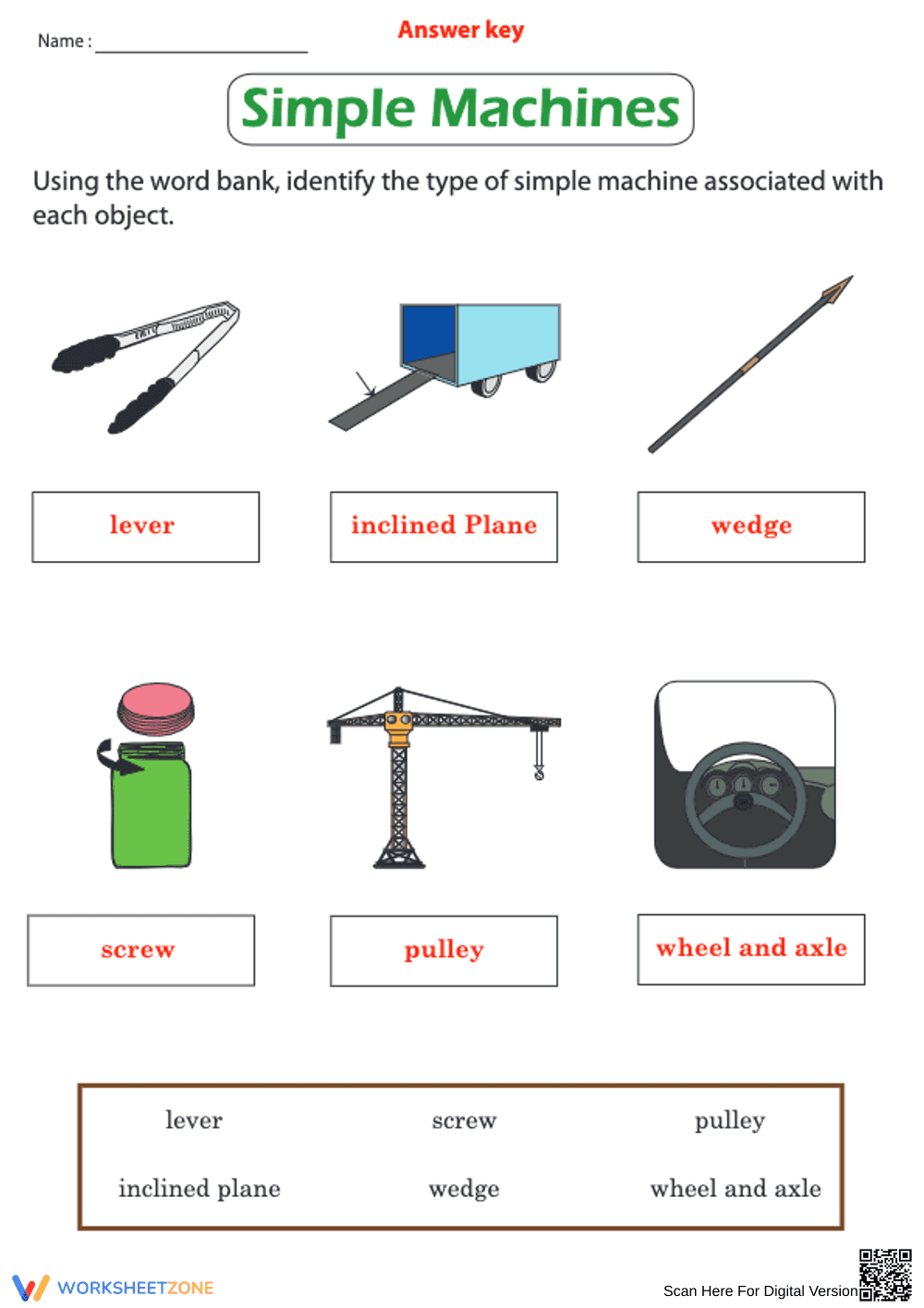
This resource features a high-quality single-page student worksheet containing six distinct visual prompts representing each category of simple machines. Students use a provided word bank to label objects such as tongs, ramps, and pulleys. The package includes a full-color answer key to facilitate rapid grading or student self-checking during independent work periods, ensuring learners receive immediate feedback on their scientific classification skills.
Zero-Prep Workflow
Teachers can implement this zero-prep workflow in under two minutes to maximize instructional time. First, print the single-page PDF, which takes approximately 30 seconds for a standard class set. Second, distribute the sheets to students for use as a quick bell-ringer or warm-up activity. Finally, review the answers as a whole group using the provided answer key. This streamlined process makes it an ideal choice for emergency substitute plans or sudden schedule transitions.
Standards Alignment
This worksheet aligns with 3-PS2-1, focusing on how balanced and unbalanced forces affect the motion of objects. Students analyze tools that change the direction or magnitude of a force, a core concept in physical science curricula. The standard code can be copied directly into lesson plans, IEP goals, or district curriculum mapping tools to ensure instructional alignment and documentation for administrative reporting.
How to Use It
Use this as a formative assessment after an introductory lesson on mechanics. Observe students as they distinguish between a screw and a wedge, noting any misconceptions about circular versus inclined motion. This observation provides valuable data for small-group intervention. Expect most students to complete the labeling tasks in 10–15 minutes, making it a perfect tool for a quick check for understanding or an exit ticket.
Who It's For
This worksheet is primary for third-grade science students but works effectively for fourth-grade review sessions. Differentiation is supported through the included word bank, providing necessary scaffolding for English Language Learners and students needing additional literacy support. For an extended activity, pair this with a physical scavenger hunt where students find these six simple machines in their classroom or playground environment.
Research from RAND AIRS 2024 emphasizes that visual identification of scientific concepts is critical for long-term retention in early elementary grades. By linking abstract categories like inclined planes to familiar objects like truck ramps, students bridge the gap between vocabulary and real-world application. ScienceDirect TpT Analysis suggests that worksheets utilizing word banks significantly reduce cognitive load during the initial stages of skill acquisition, allowing students to focus on conceptual accuracy rather than spelling. This 3-PS2-1 aligned resource provides the essential practice needed to master mechanical identification. The inclusion of an answer key further supports immediate feedback, which Fisher & Frey (2014) identify as a key component of the gradual release of responsibility model in science instruction, ensuring students move toward mastery with confidence.


