




























Views
Downloads


Essential Simple Machines Worksheet | Grade 1 Science

Paste this activity's link or code into your existing LMS (Google Classroom, Canvas, Teams, Schoology, Moodle, etc.).
Students can open and work on the activity right away, with no student login required.
You'll still be able to track student progress and results from your teacher account.
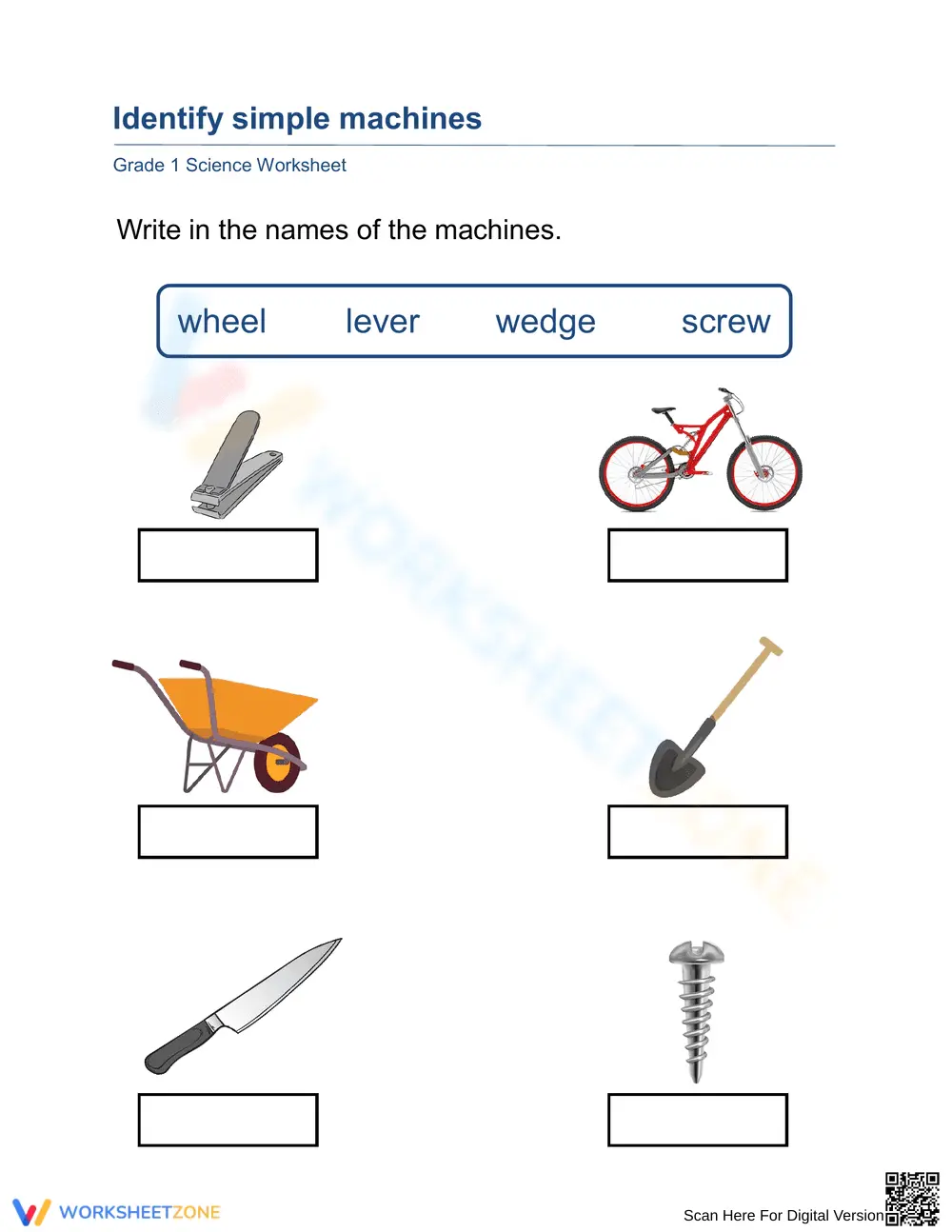
Identifying simple machines is a foundational skill in primary science that helps students understand the mechanical world around them. This Grade 1 worksheet provides a visual way for young learners to connect scientific vocabulary with everyday items. By labeling images of common tools, students internalize the functions of wheels, screws, levers, and wedges, leading to improved scientific literacy and observation.
At a Glance
- Grade: 1 · Subject: Science
- Standard:
K-2-ETS1-1— Observe and gather information about tools that solve simple problems- Skill Focus: Simple Machine Identification
- Format: 2 pages · 6 problems · Answer key included · PDF
- Best For: Independent science centers and sub plans
- Time: 10–15 minutes
What's Inside
This resource consists of two PDF pages, including the worksheet and a comprehensive answer key for immediate feedback. It features a clear word bank and six recognizable illustrations of objects like a nail clipper and wheelbarrow. Each illustration has a dedicated response box, making it easy for first graders to record their answers clearly and accurately.
Zero-Prep Workflow
The zero-prep workflow is designed for maximum classroom efficiency. Teachers simply print the worksheet and distribute it to students. Because the instructions are self-explanatory and a word bank is provided, students can begin working immediately without heavy teacher guidance. This makes it an ideal solution for sub plans, morning work, or quick science transitions.
Standards Alignment
Aligned with NGSS K-2-ETS1-1, students make observations about tools designed to solve human problems. Identifying how these machines function meets core requirements for physical science and engineering design at the primary level. This standard code can be copied directly into lesson plans, IEP goals, or district curriculum mapping tools to ensure educational compliance.
How to Use It
Use this worksheet during a 5E science lesson to reinforce machine types after an initial demonstration. For a formative assessment tip, observe students as they categorize the wheelbarrow; their focus on different mechanical parts reveals their current level of understanding. Expect students to complete these tasks within 10 to 15 minutes during independent seatwork or centers.
Who It's For
This resource is tailored for Grade 1 students but also works for Kindergarten enrichment or Grade 2 review. The visual nature of the tasks is excellent for English Language Learners and students needing visual support. Pair this worksheet with a scavenger hunt where students look for real-world examples of the machines they labeled on the page.
According to the Fisher & Frey (2014) framework for gradual release of responsibility, the use of visual scaffolds such as this simple machines worksheet is critical for early elementary science literacy. By providing a clear word bank containing essential vocabulary—wheel, screw, lever, and wedge—students are able to bridge the gap between abstract physical science concepts and tangible, everyday objects like bicycles and shovels. This Grade 1 resource aligns with standard K-2-ETS1-1, which emphasizes making observations and gathering information about tools that solve human problems. Research indicates that early exposure to mechanical principles through visual identification tasks significantly improves long-term retention of STEM concepts. The worksheet provides six distinct tasks that require students to categorize objects based on their mechanical function, fostering the development of critical thinking and observational skills necessary for future engineering challenges. This vetted science tool provides structured practice that is both accessible for young learners and cognitively demanding.


