


























1 / 4
0
Views
0
Downloads

0.0
0
Save
0 Likes
Share
Advanced Simple Machines: Complex Systems
0 Views
0 Downloads
Paste this activity's link or code into your existing LMS (Google Classroom, Canvas, Teams, Schoology, Moodle, etc.).
Students can open and work on the activity right away, with no student login required.
You'll still be able to track student progress and results from your teacher account.
Information
Description
What It Is:
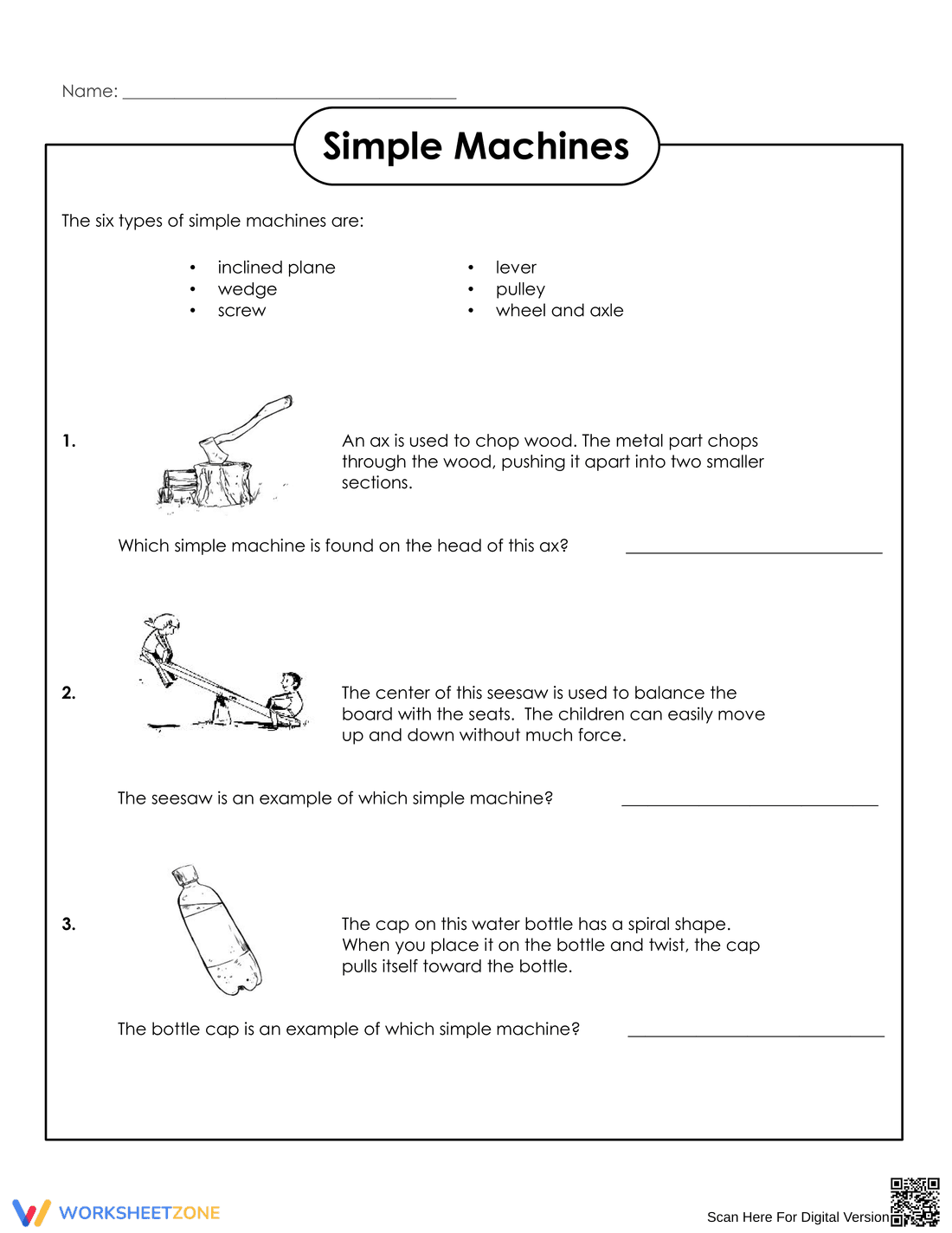
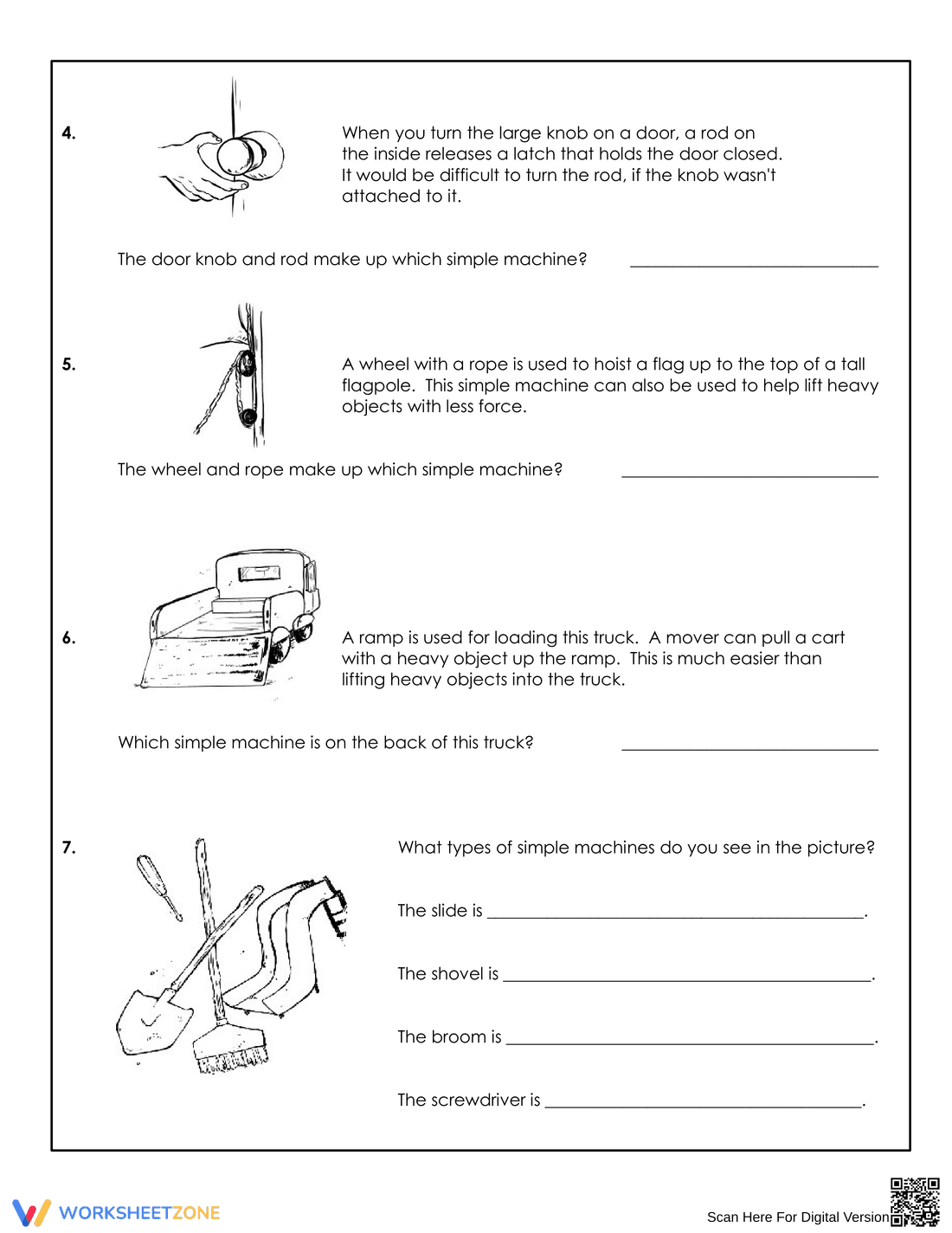
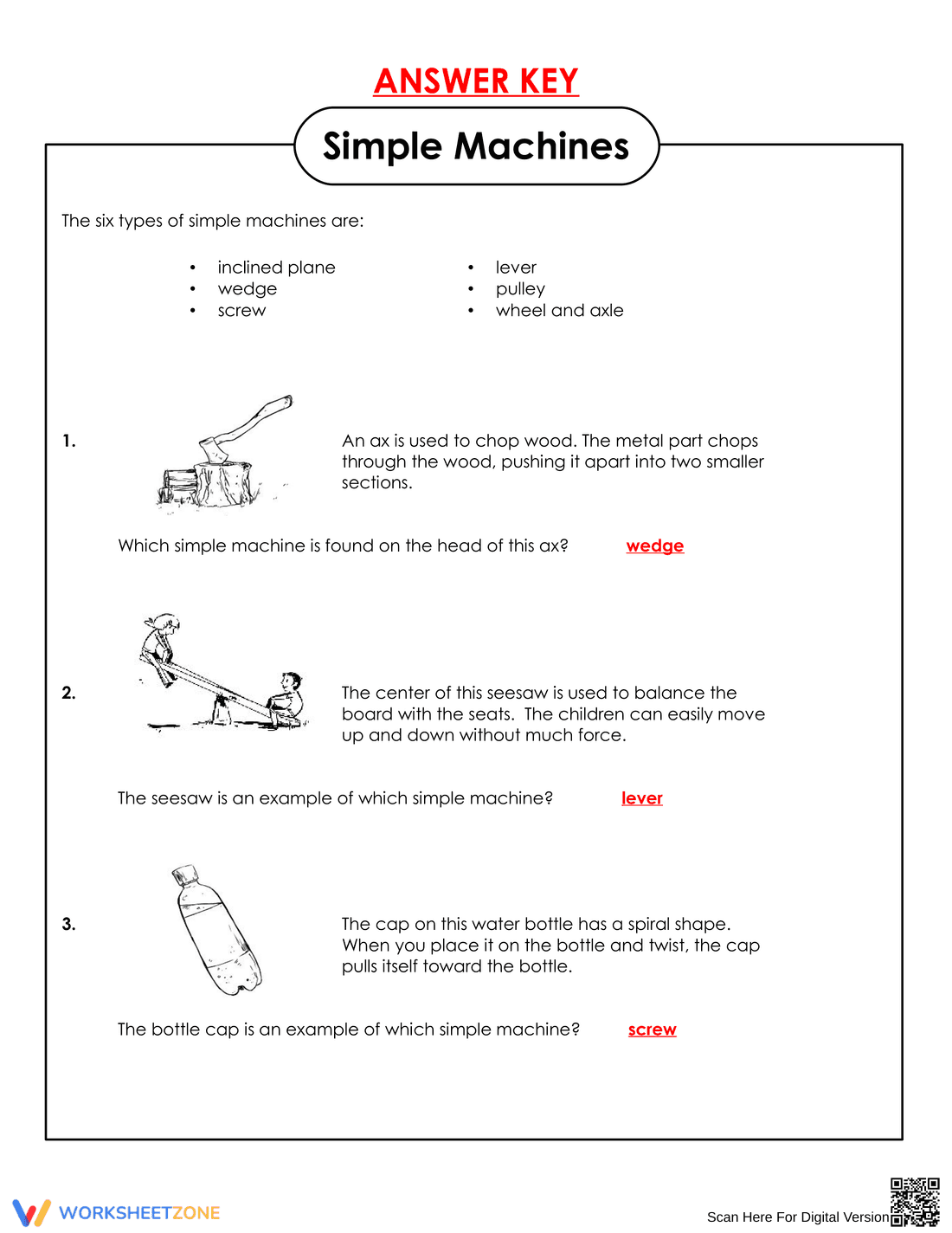
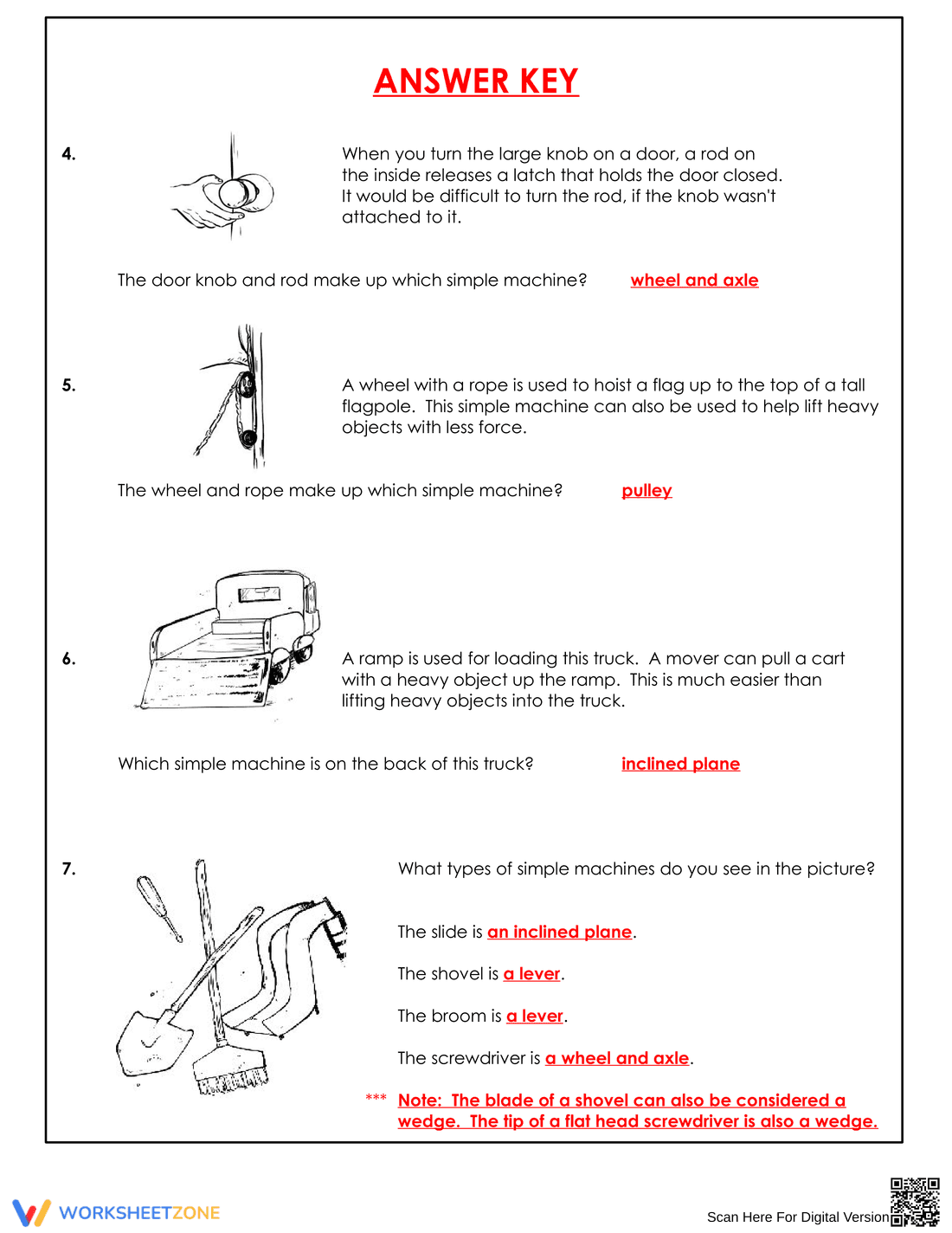
This is an educational worksheet focusing on simple machines. It lists the six types of simple machines: inclined plane, wedge, screw, lever, pulley, and wheel and axle. It then presents three scenarios with images: an axe chopping wood, a seesaw, and a water bottle with a cap. Each scenario includes a short description and a question asking which simple machine is being exemplified.
Grade Level Suitability:
This worksheet is suitable for grades 2-4. The concepts are introductory and the language is simple. The visual aids (pictures) also make it appropriate for younger learners.
Why Use It:
This worksheet reinforces understanding of simple machines by relating them to real-world examples. It helps students identify and classify different simple machines based on their function. It encourages critical thinking and problem-solving skills.
How to Use It:
Students should first read the list of simple machines. Then, for each scenario, they should read the description, examine the image, and write the name of the simple machine being used on the provided line.
Target Users:
This worksheet is designed for elementary school students learning about simple machines. It can be used in the classroom or as a homework assignment. It is also suitable for homeschooling environments.
This is an educational worksheet focusing on simple machines. It lists the six types of simple machines: inclined plane, wedge, screw, lever, pulley, and wheel and axle. It then presents three scenarios with images: an axe chopping wood, a seesaw, and a water bottle with a cap. Each scenario includes a short description and a question asking which simple machine is being exemplified.
Grade Level Suitability:
This worksheet is suitable for grades 2-4. The concepts are introductory and the language is simple. The visual aids (pictures) also make it appropriate for younger learners.
Why Use It:
This worksheet reinforces understanding of simple machines by relating them to real-world examples. It helps students identify and classify different simple machines based on their function. It encourages critical thinking and problem-solving skills.
How to Use It:
Students should first read the list of simple machines. Then, for each scenario, they should read the description, examine the image, and write the name of the simple machine being used on the provided line.
Target Users:
This worksheet is designed for elementary school students learning about simple machines. It can be used in the classroom or as a homework assignment. It is also suitable for homeschooling environments.


