


























Views
Downloads
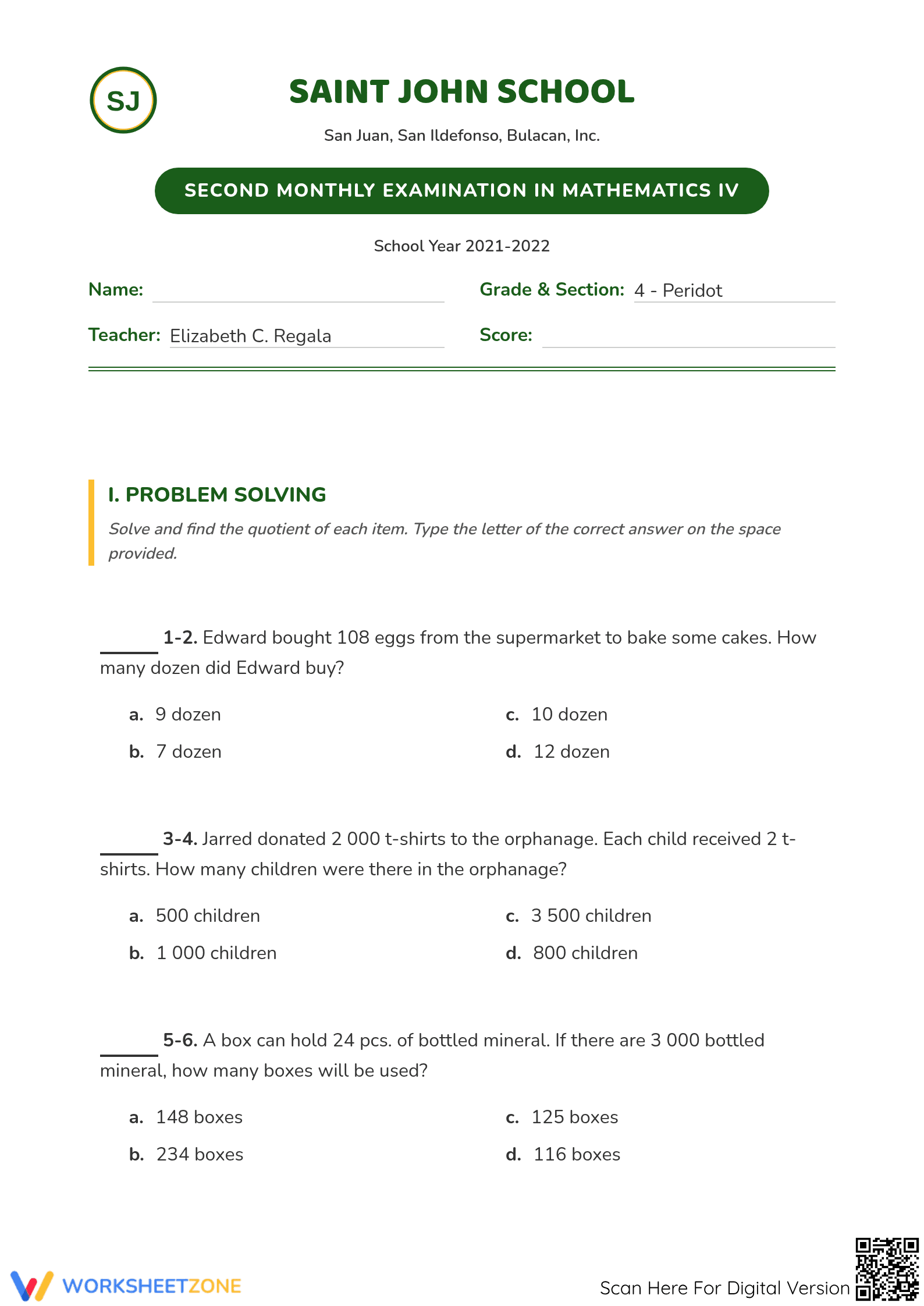
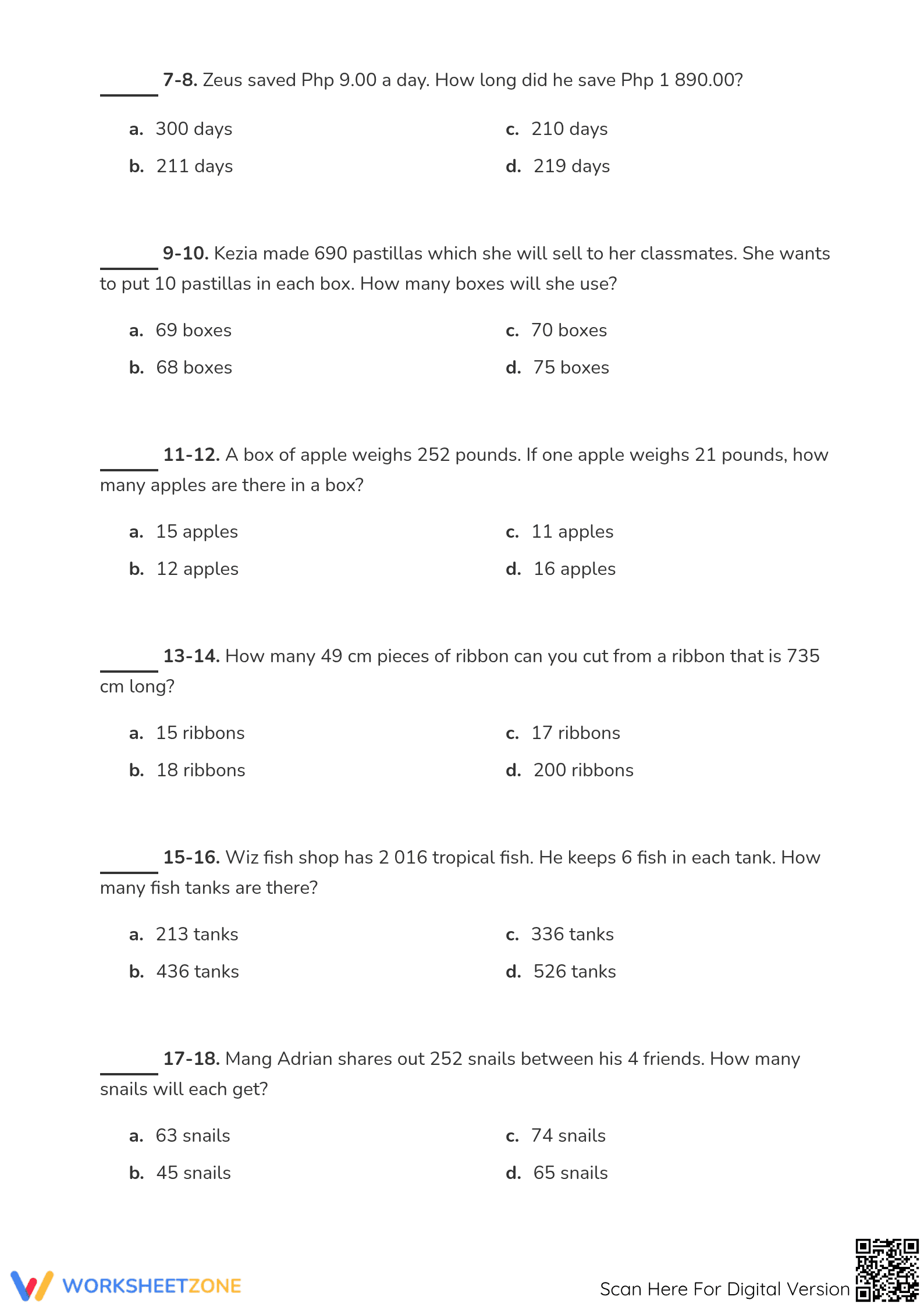
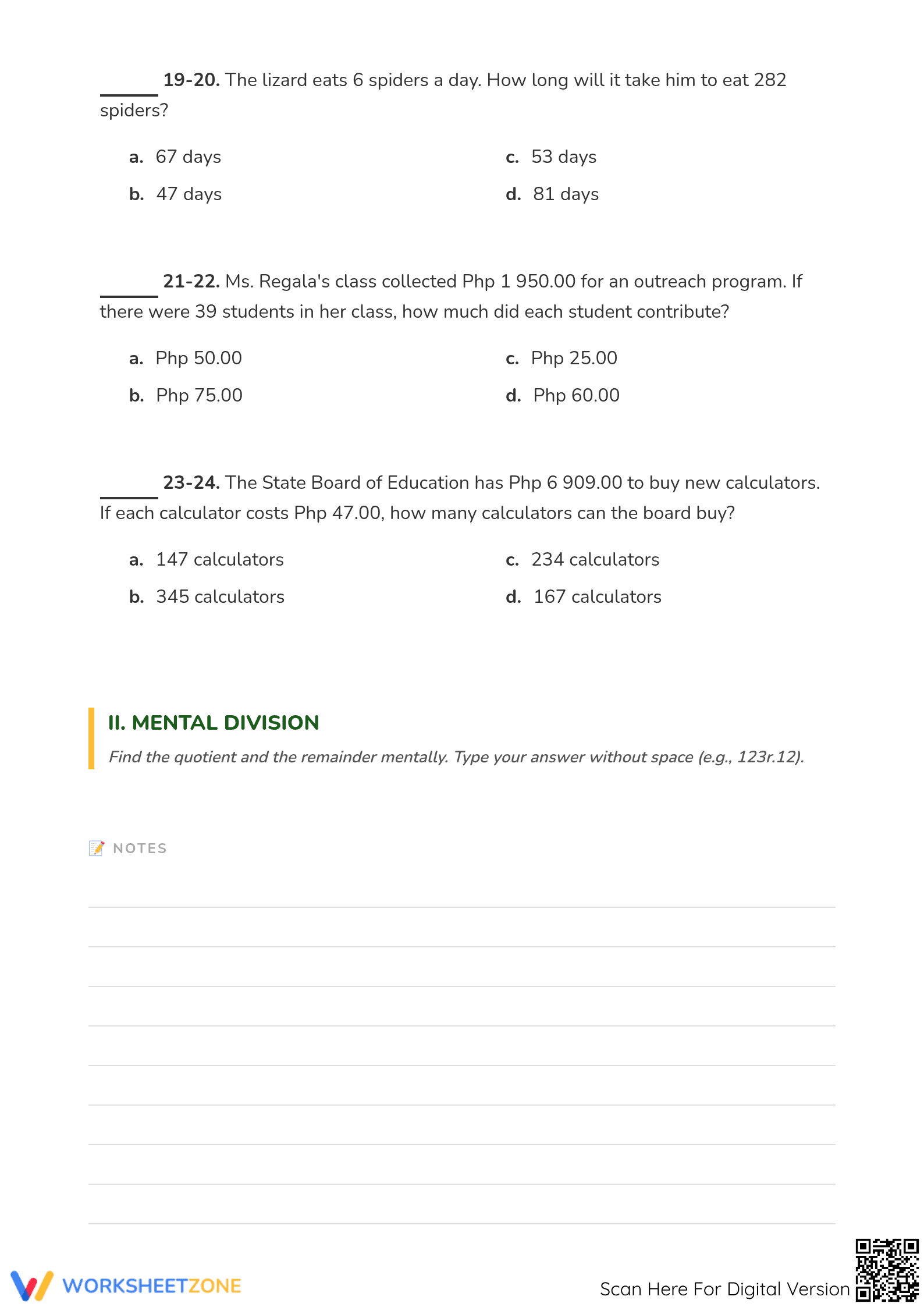
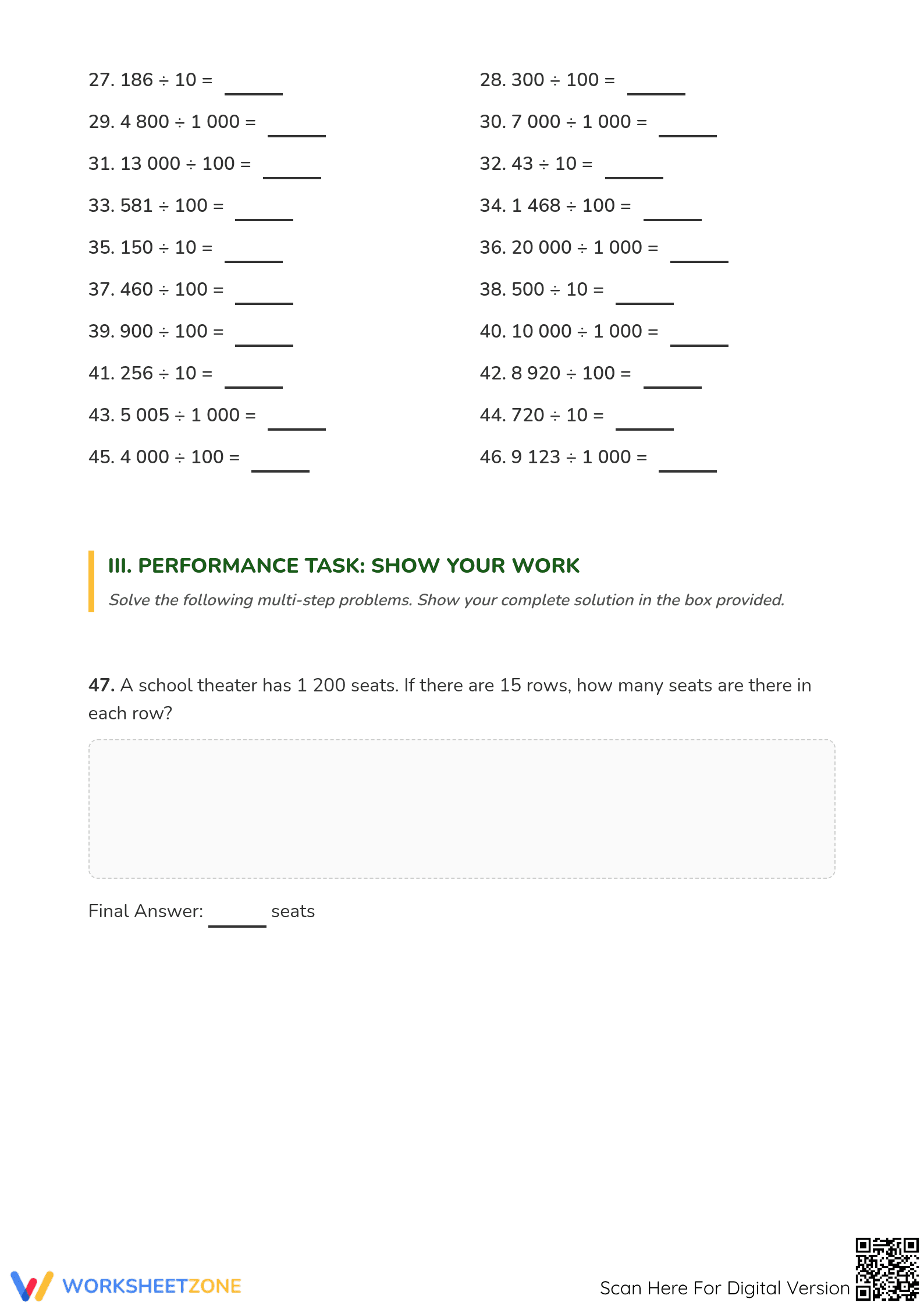
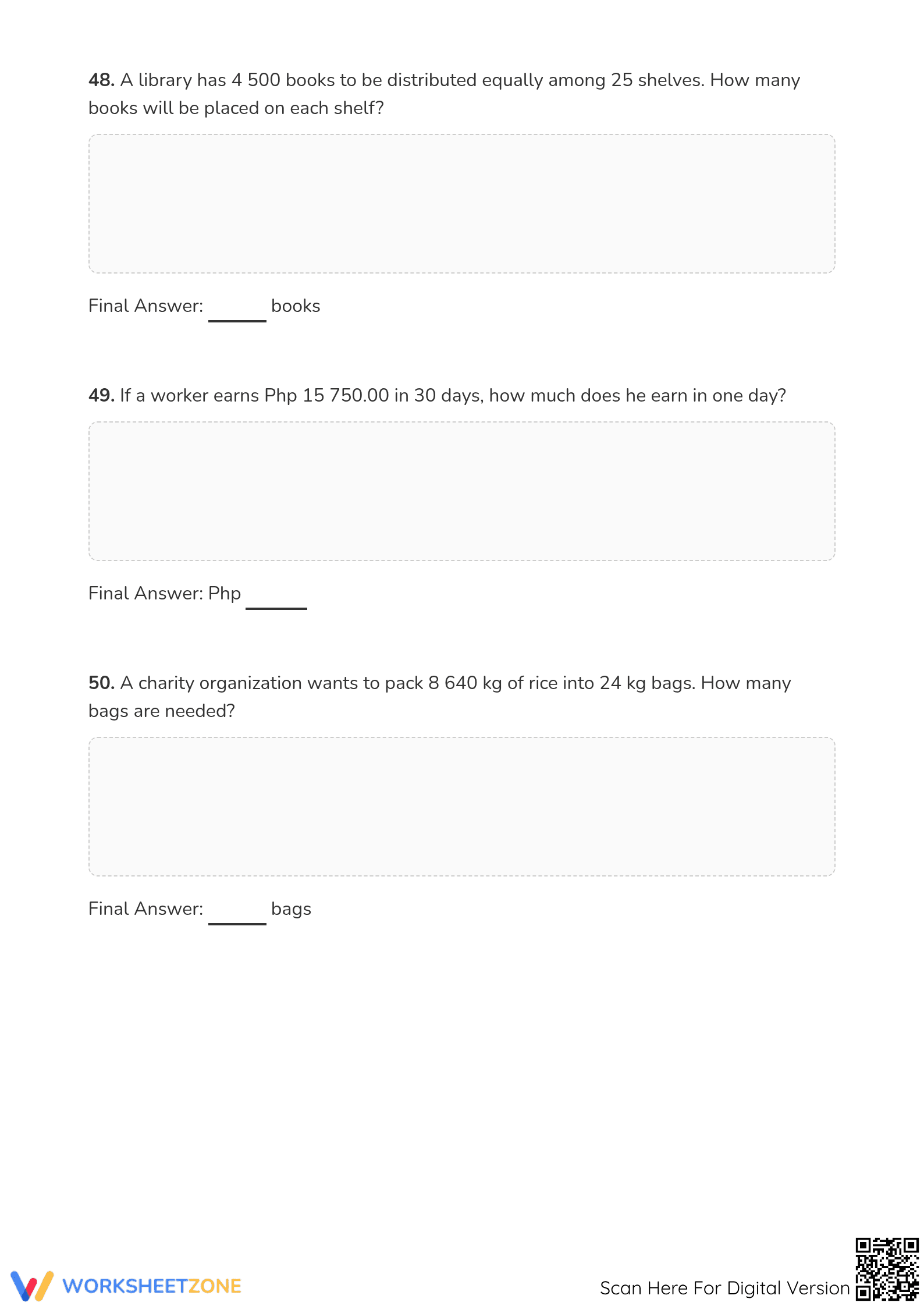

Grade 4 Math Exam Worksheet: CCSS.MATH.CONTENT.4.NBT.B.6 Aligned
Paste this activity's link or code into your existing LMS (Google Classroom, Canvas, Teams, Schoology, Moodle, etc.).
Students can open and work on the activity right away, with no student login required.
You'll still be able to track student progress and results from your teacher account.
This comprehensive Grade 4 math exam provides a complete assessment of key number operations and problem-solving skills. Students will work through 29 problems covering division, multiplication, algebraic thinking, and geometry. It's a proven tool for measuring student understanding of core fourth-grade math concepts at the mid-year point.
At a Glance
- Grade: 4 · Subject: Math
- Standard:
CCSS.MATH.CONTENT.4.NBT.B.6— Find whole-number quotients and remainders with multi-digit dividends.- Skill Focus: Monthly Math Exam (Mixed Operations)
- Format: 3 pages · 29 problems · Answer key included · PDF
- Best For: Mid-term assessment, unit review, test prep
- Time: 40–50 minutes
What's Inside
This resource contains a three-page printable math exam for Grade 4, comprising 29 distinct questions. The tasks are grouped into six sections (A-F), covering a range of problem types from single-step division and multiplication to multi-step word problems and calculating area. A complete two-page answer key is provided for efficient grading.
Evidence of Mastery
This exam serves as a robust tool for gathering evidence of student mastery. While no formal rubric is included, the worksheet's structure allows for clear data collection on specific skills. Teachers can map student performance on Section B (division) directly to CCSS.MATH.CONTENT.4.NBT.B.6, while Section E (word problems) aligns with CCSS.MATH.CONTENT.4.OA.A.3. Scores from this exam can be entered directly into gradebooks or used to inform IEP progress notes and parent-teacher discussions.
Standards Alignment
This exam is primarily aligned with the Common Core State Standard CCSS.MATH.CONTENT.4.NBT.B.6, which requires students to find whole-number quotients and remainders with up to four-digit dividends and one-digit divisors. The worksheet also provides practice for the supporting standard CCSS.MATH.CONTENT.4.OA.A.3, which involves solving multistep word problems using the four operations. Both standard codes can be copied directly into lesson plans, IEP goals, or district curriculum mapping tools.
How to Use It
Administer this worksheet as a summative assessment after completing units on division and multiplication, likely as a second-monthly or quarterly exam. It can also function as a diagnostic tool at mid-year to identify areas needing re-teaching. For formative assessment, circulate as students work on the word problems in Section E, observing their strategies for deconstructing multi-step problems. Expect students to complete the exam in 40 to 50 minutes.
Who It's For
This exam is designed for a general education Grade 4 classroom. The clear instructions and variety of problem types make it accessible for most students. For learners needing support, consider allowing the use of a multiplication chart. This assessment pairs well with a preceding in-class review session or a hands-on lesson using base-ten blocks to model division.
Evaluating student proficiency in multi-digit operations is a critical checkpoint in elementary mathematics, directly supporting future success in algebra. This Grade 4 assessment aligns with CCSS.MATH.CONTENT.4.NBT.B.6, focusing on division and related operational skills. Research consistently shows that periodic, curriculum-aligned assessments are more effective for tracking student growth than infrequent high-stakes testing. A comprehensive analysis by RAND AIRS (2024) highlighted the importance of using assessment tools that incorporate varied problem formats, including both procedural fluency tasks and application-based word problems, to gain a complete picture of student understanding. This exam provides that balance, offering a reliable instrument for teachers to measure progress, identify learning gaps, and make data-informed instructional decisions without adding undue testing pressure. Its structure reflects best practices for formative and summative evaluation in the modern math classroom.


