


























1 / 2
0
Views
0
Downloads

0.0
0
Save
0 Likes
Scientific Method Experiment Sheet
0 Views
0 Downloads
Paste this activity's link or code into your existing LMS (Google Classroom, Canvas, Teams, Schoology, Moodle, etc.).
Students can open and work on the activity right away, with no student login required.
You'll still be able to track student progress and results from your teacher account.
Information
Description
What It Is:
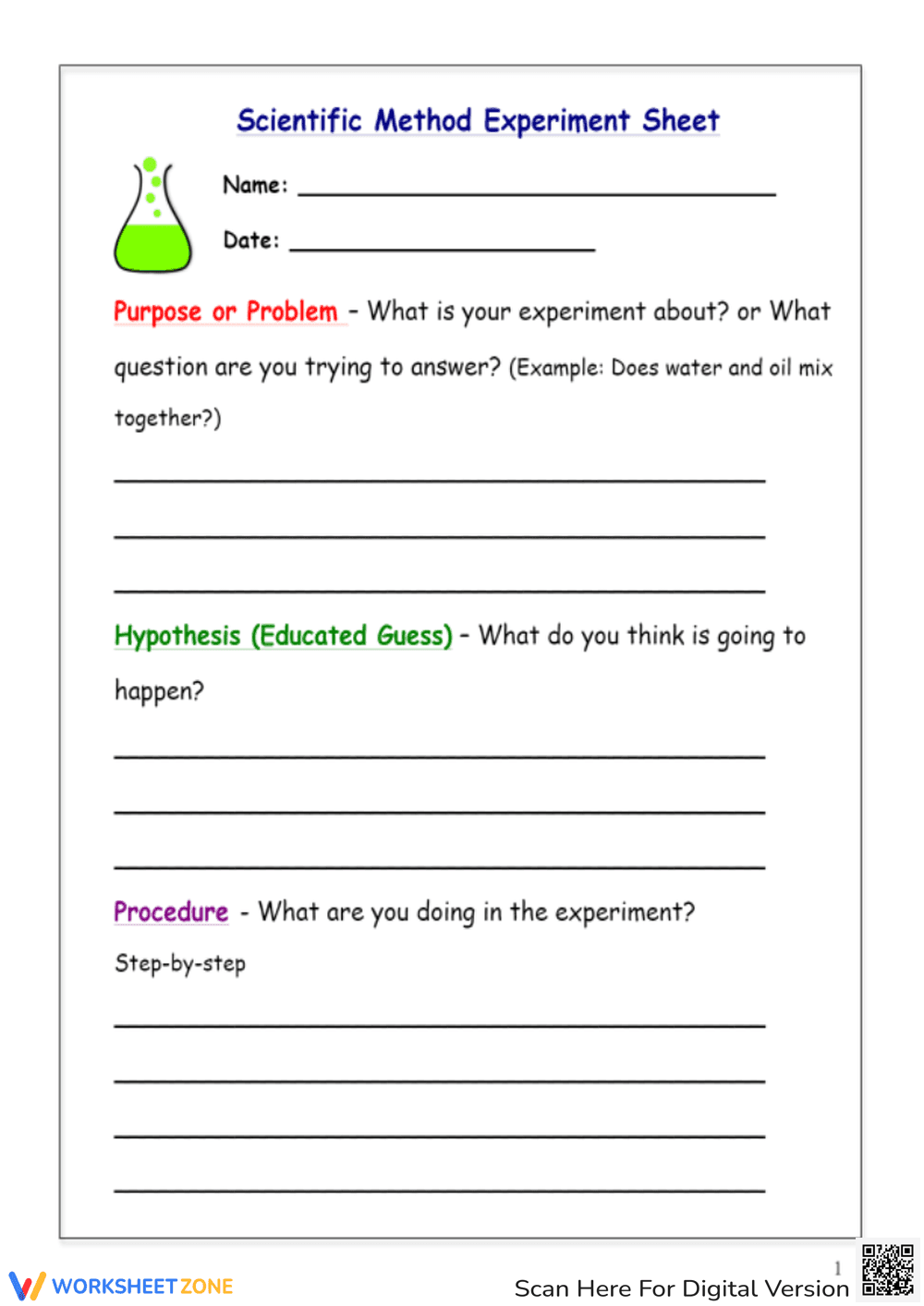
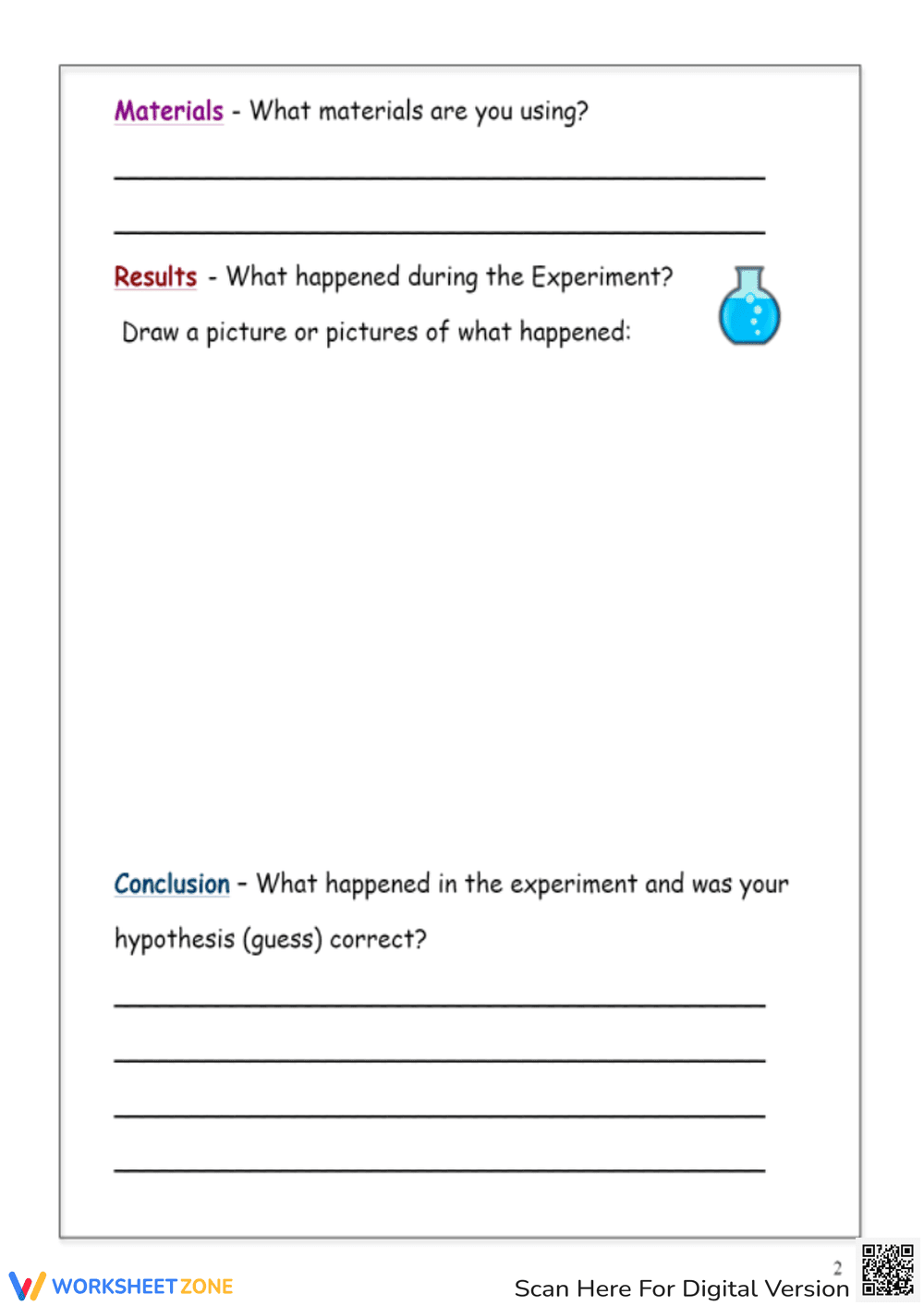
This is a 'Scientific Method Experiment Sheet' worksheet. It includes spaces for the student's name and date, and prompts for the experiment's purpose or problem (with an example: 'Does water and oil mix together?'), the hypothesis (educated guess), and the procedure (step-by-step). It provides lines for students to write their answers.
Grade Level Suitability:
This worksheet is suitable for grades 3-6. The concepts are introduced in a simple, age-appropriate manner, and the prompts guide students through the basic steps of the scientific method. The example provided makes it accessible for younger learners.
Why Use It:
This worksheet helps students learn and apply the scientific method in a structured way. It encourages them to think critically about the purpose of their experiment, make predictions (hypothesis), and document their experimental process.
How to Use It:
First, have the student fill in their name and the date. Then, guide them to define the purpose or problem of their experiment. Next, have them formulate a hypothesis, or educated guess, about what will happen. Finally, instruct them to write out the step-by-step procedure they will follow in their experiment.
Target Users:
This worksheet is designed for elementary and middle school students who are learning about the scientific method and conducting science experiments. It is also beneficial for teachers looking for a simple and effective tool to guide students through the experimental process.
This is a 'Scientific Method Experiment Sheet' worksheet. It includes spaces for the student's name and date, and prompts for the experiment's purpose or problem (with an example: 'Does water and oil mix together?'), the hypothesis (educated guess), and the procedure (step-by-step). It provides lines for students to write their answers.
Grade Level Suitability:
This worksheet is suitable for grades 3-6. The concepts are introduced in a simple, age-appropriate manner, and the prompts guide students through the basic steps of the scientific method. The example provided makes it accessible for younger learners.
Why Use It:
This worksheet helps students learn and apply the scientific method in a structured way. It encourages them to think critically about the purpose of their experiment, make predictions (hypothesis), and document their experimental process.
How to Use It:
First, have the student fill in their name and the date. Then, guide them to define the purpose or problem of their experiment. Next, have them formulate a hypothesis, or educated guess, about what will happen. Finally, instruct them to write out the step-by-step procedure they will follow in their experiment.
Target Users:
This worksheet is designed for elementary and middle school students who are learning about the scientific method and conducting science experiments. It is also beneficial for teachers looking for a simple and effective tool to guide students through the experimental process.


