


























1 / 6
0
Views
0
Downloads


0.0
0
Save
0 Likes
Explore Science Macromolecules Worksheet
0 Views
0 Downloads
Paste this activity's link or code into your existing LMS (Google Classroom, Canvas, Teams, Schoology, Moodle, etc.).
Students can open and work on the activity right away, with no student login required.
You'll still be able to track student progress and results from your teacher account.
Information
Description
What It Is:
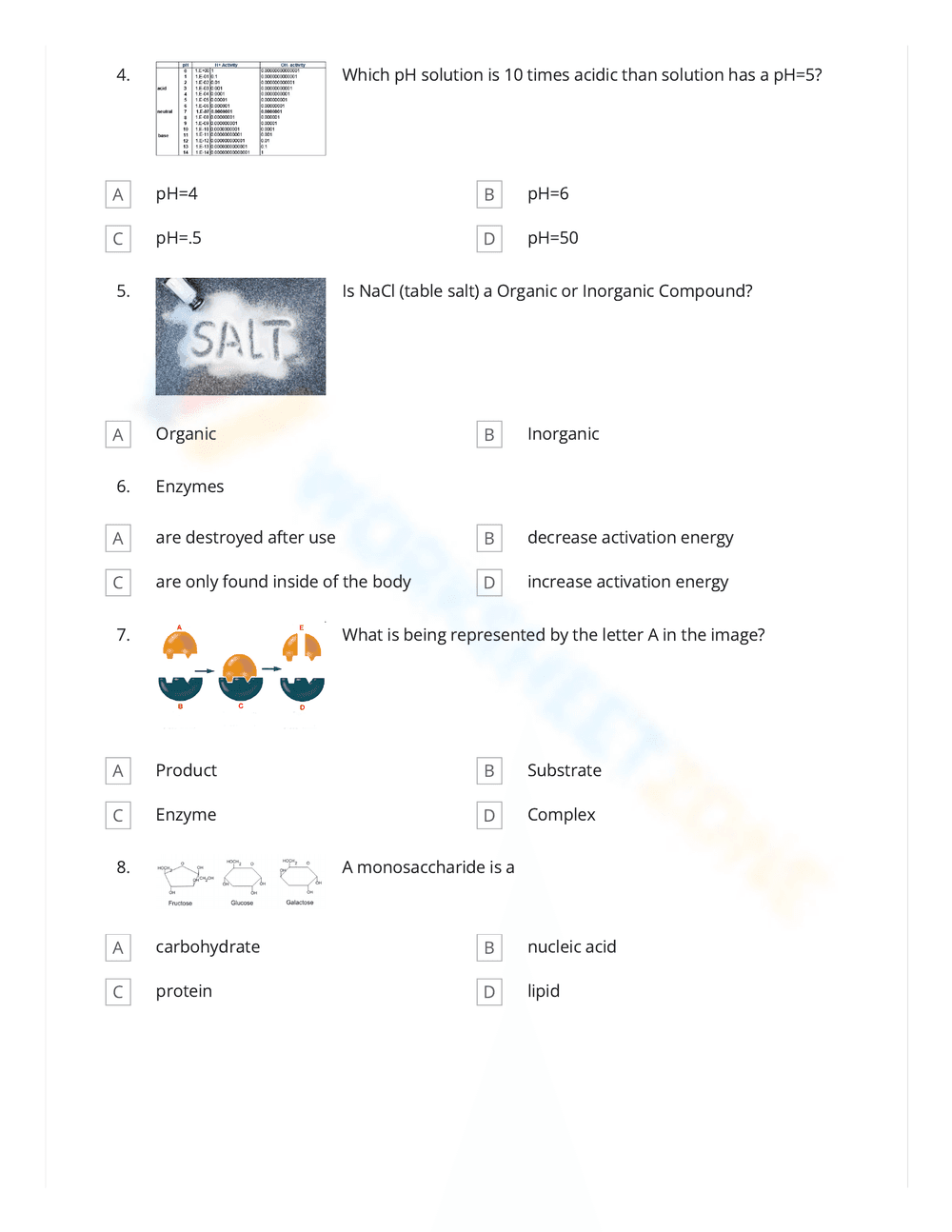
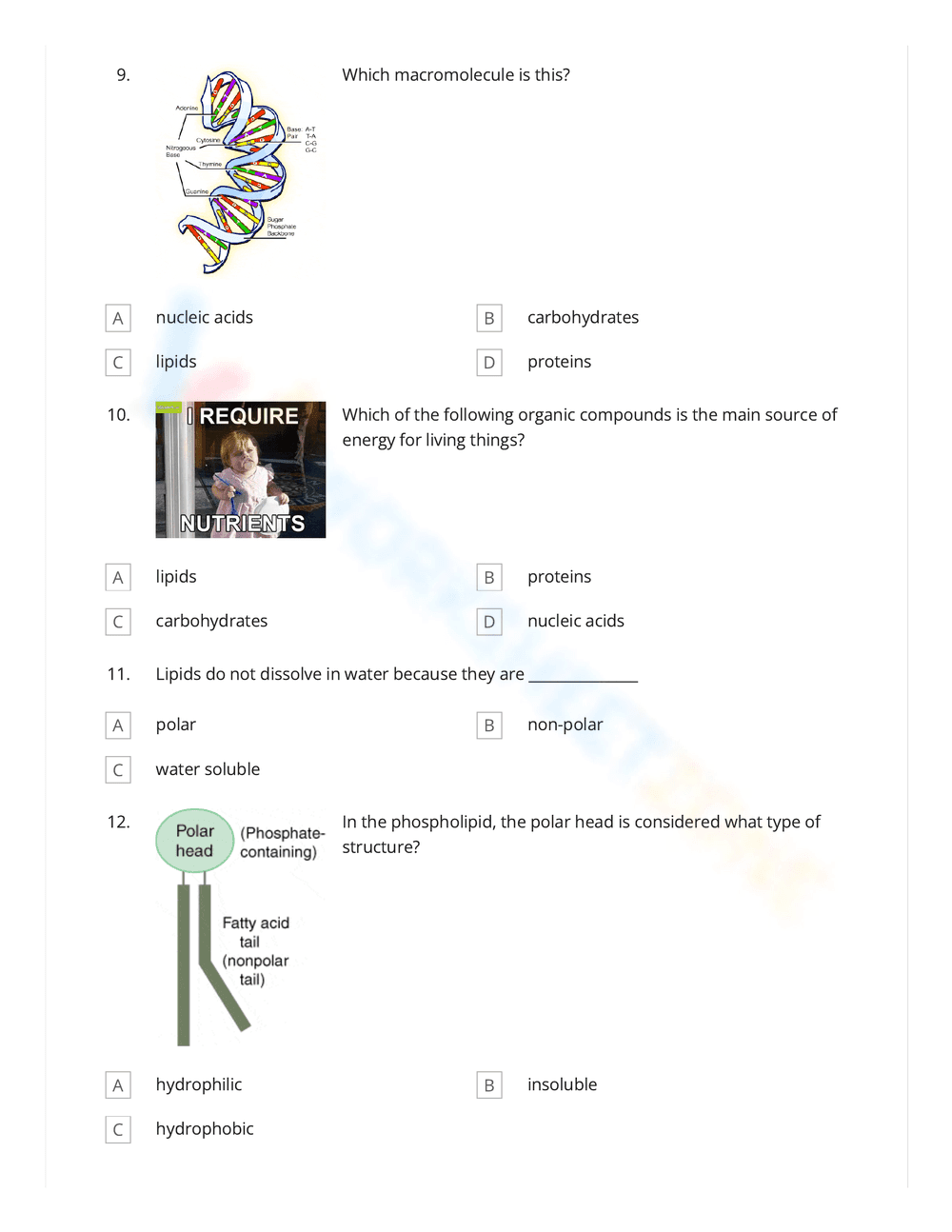
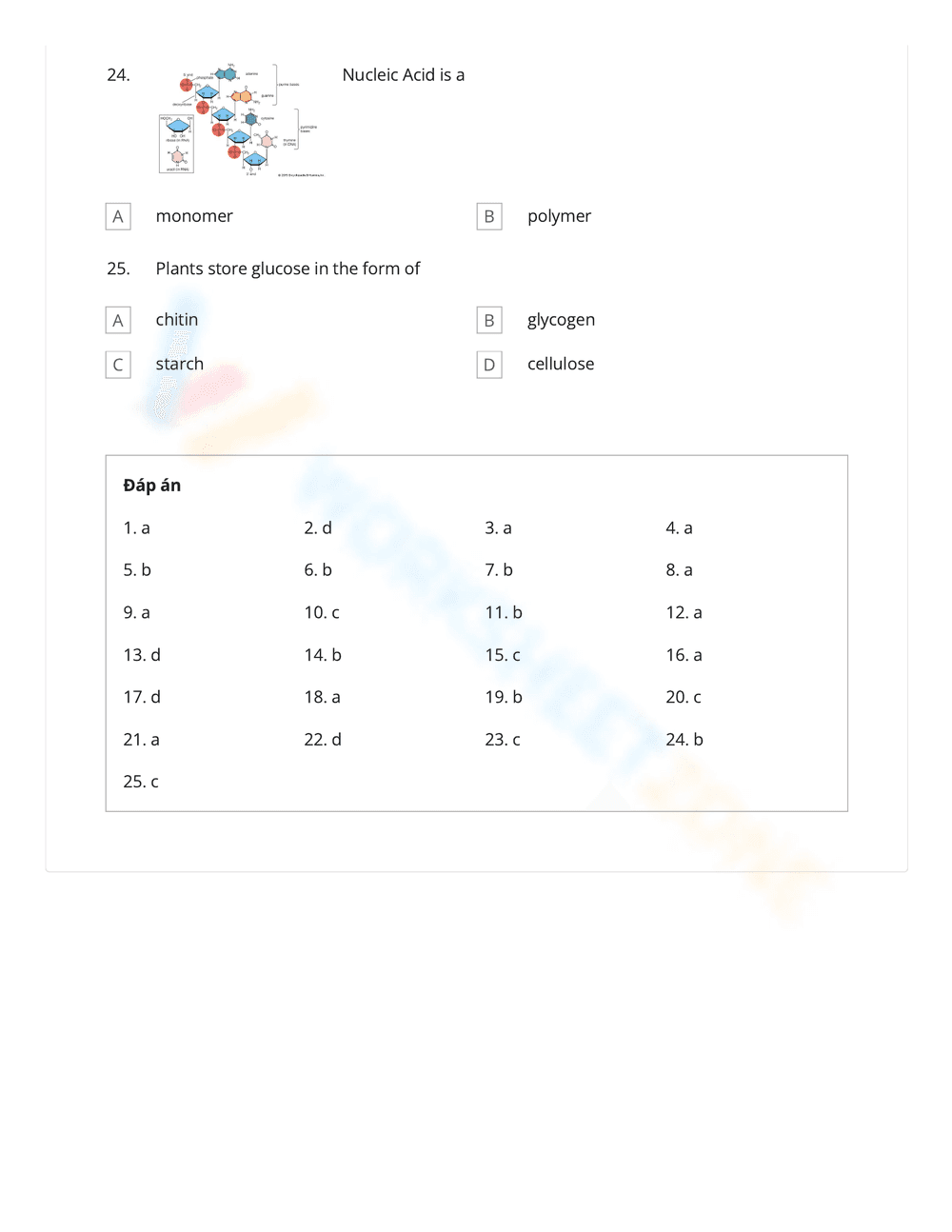
This is a science worksheet focusing on macromolecules. It features multiple-choice questions about DNA, RNA, protein supplements, lipids, carbohydrates, amino acids, and types of reactions (exothermic, endothermic). The first question includes an image of a DNA double helix.
Grade Level Suitability:
This worksheet is suitable for high school (Grades 9-12), specifically for biology or chemistry classes. The content covers complex concepts like macromolecules and biochemical reactions typically taught at the high school level.
Why Use It:
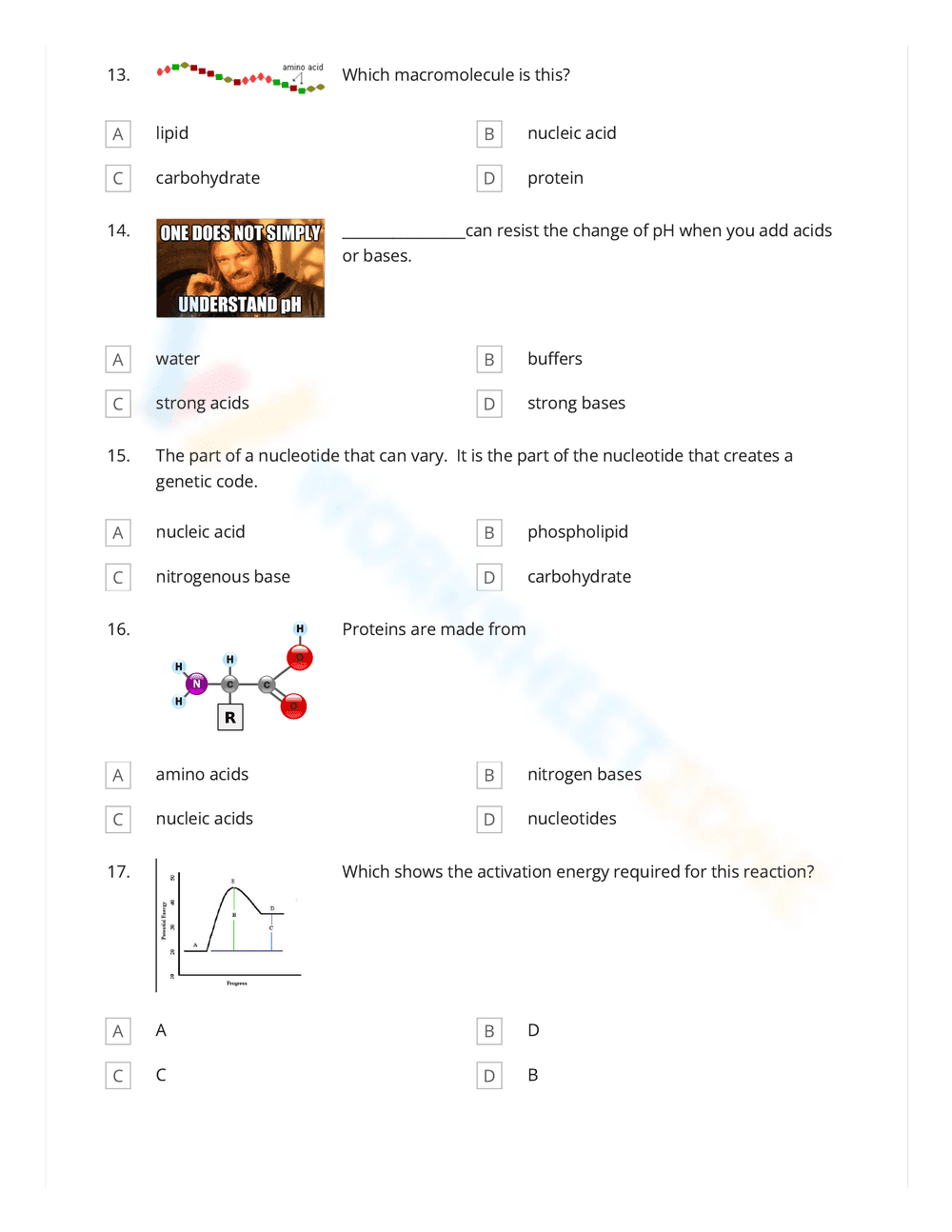
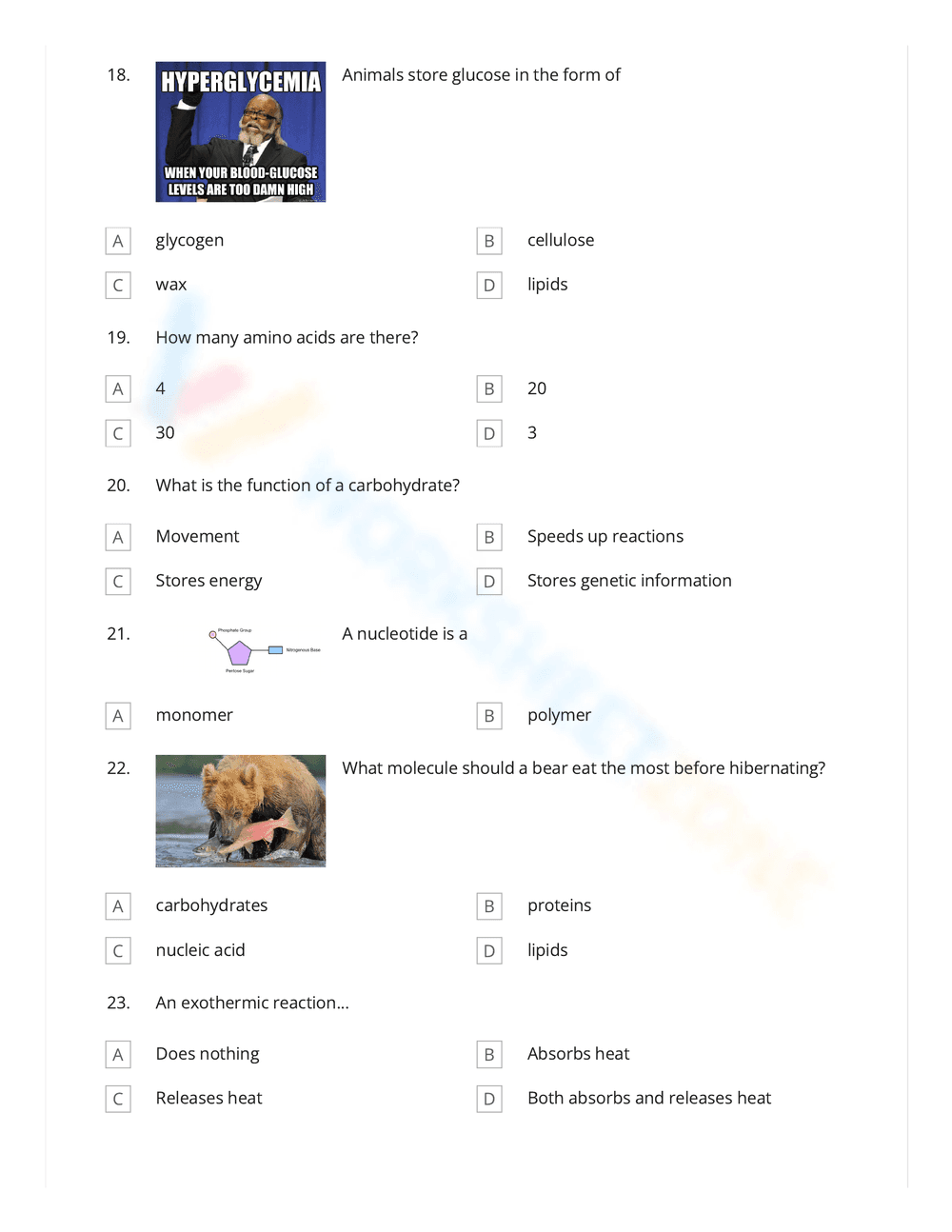
This worksheet helps students to review and reinforce their understanding of macromolecules and their functions. It tests their knowledge of DNA structure, the role of different biomolecules in the body, and the identification of reaction types based on energy diagrams.
How to Use It:
Students should read each question carefully and select the best answer from the multiple-choice options. The worksheet can be used for in-class practice, homework, or as a quiz to assess student comprehension of macromolecules.
Target Users:
The target users are high school students in biology or chemistry classes, as well as teachers looking for supplemental materials to teach and assess understanding of macromolecule concepts.
This is a science worksheet focusing on macromolecules. It features multiple-choice questions about DNA, RNA, protein supplements, lipids, carbohydrates, amino acids, and types of reactions (exothermic, endothermic). The first question includes an image of a DNA double helix.
Grade Level Suitability:
This worksheet is suitable for high school (Grades 9-12), specifically for biology or chemistry classes. The content covers complex concepts like macromolecules and biochemical reactions typically taught at the high school level.
Why Use It:
This worksheet helps students to review and reinforce their understanding of macromolecules and their functions. It tests their knowledge of DNA structure, the role of different biomolecules in the body, and the identification of reaction types based on energy diagrams.
How to Use It:
Students should read each question carefully and select the best answer from the multiple-choice options. The worksheet can be used for in-class practice, homework, or as a quiz to assess student comprehension of macromolecules.
Target Users:
The target users are high school students in biology or chemistry classes, as well as teachers looking for supplemental materials to teach and assess understanding of macromolecule concepts.


