


























Views
Plays

Science 2.0 Worksheet | Essential College Communication
Paste this activity's link or code into your existing LMS (Google Classroom, Canvas, Teams, Schoology, Moodle, etc.).
Students can open and work on the activity right away, with no student login required.
You'll still be able to track student progress and results from your teacher account.
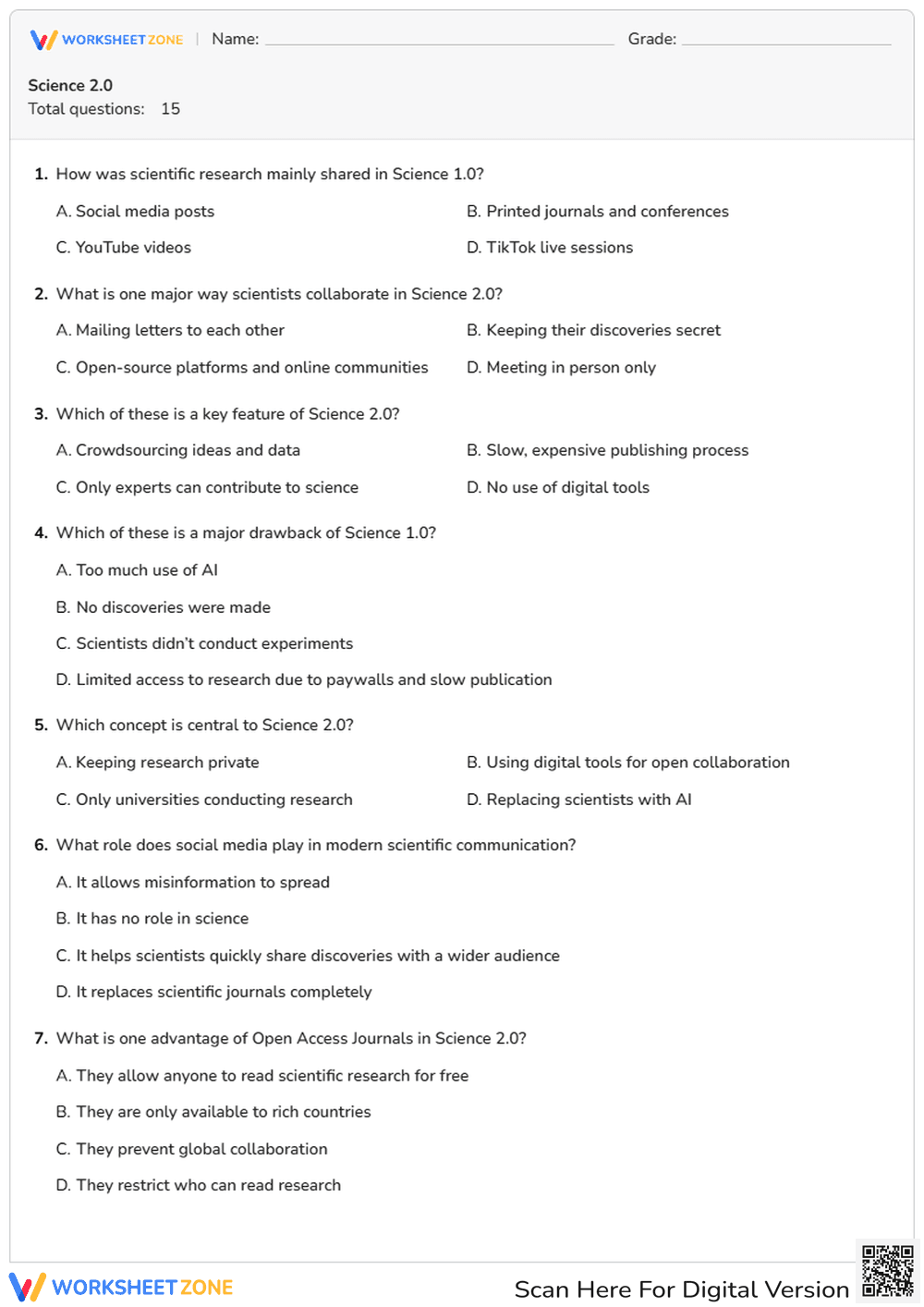
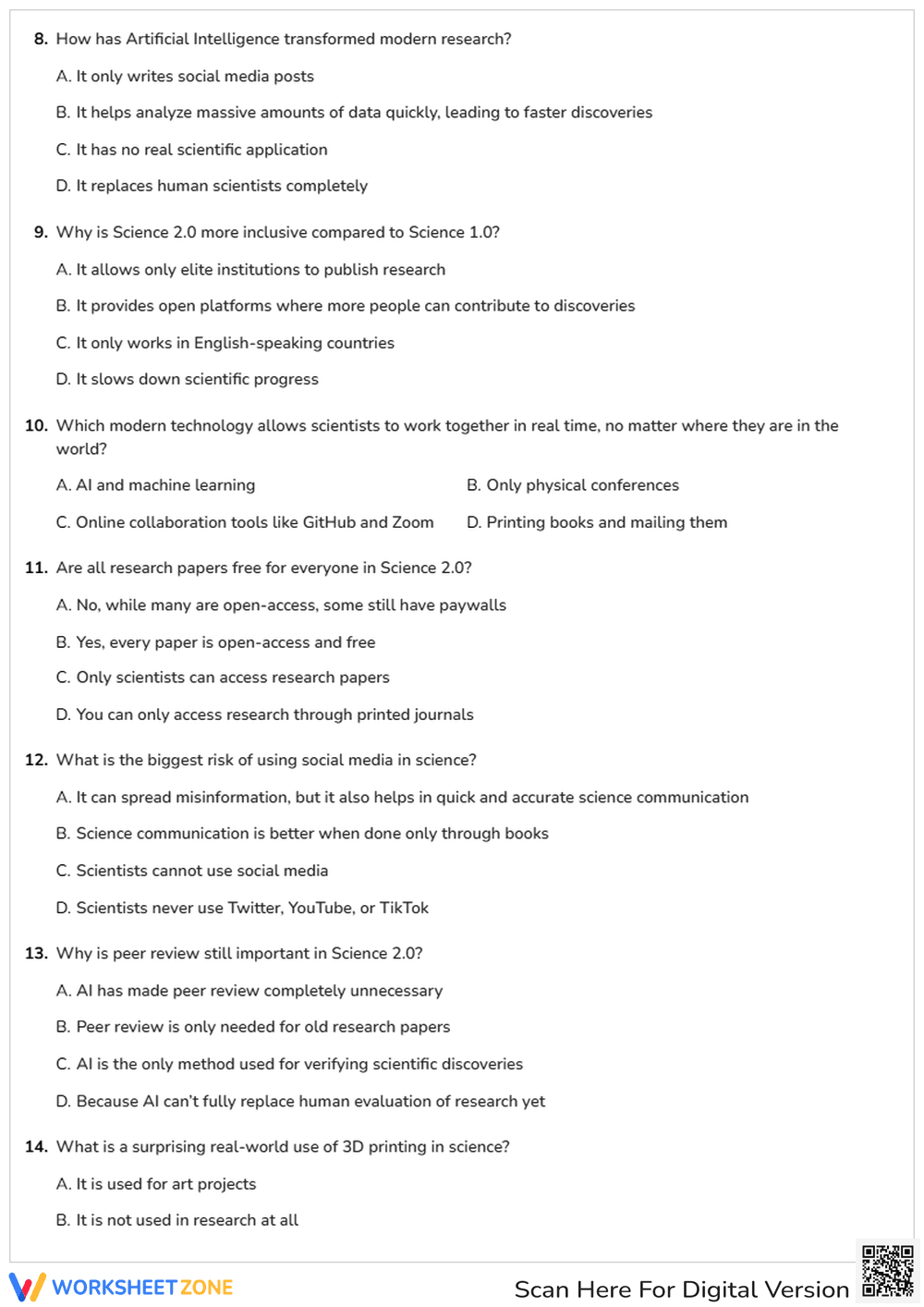
This Science 2.0 worksheet helps college students analyze the evolution of scientific research from traditional, closed models to modern, collaborative digital frameworks. By exploring 15 critical questions, learners evaluate how open-source platforms and AI are reshaping the global research community. This resource ensures students understand the ethical and practical implications of modern scientific communication.
At a Glance
- Grade: College · Subject: Communication Skills
- Standard:
RST.11-12.7— Integrate and evaluate multiple sources of information in diverse digital formats- Skill Focus: Open Science & Digital Collaboration
- Format: 3 pages · 15 problems · Answer key included · PDF
- Best For: Introductory science seminars and communication labs
- Time: 20–30 minutes
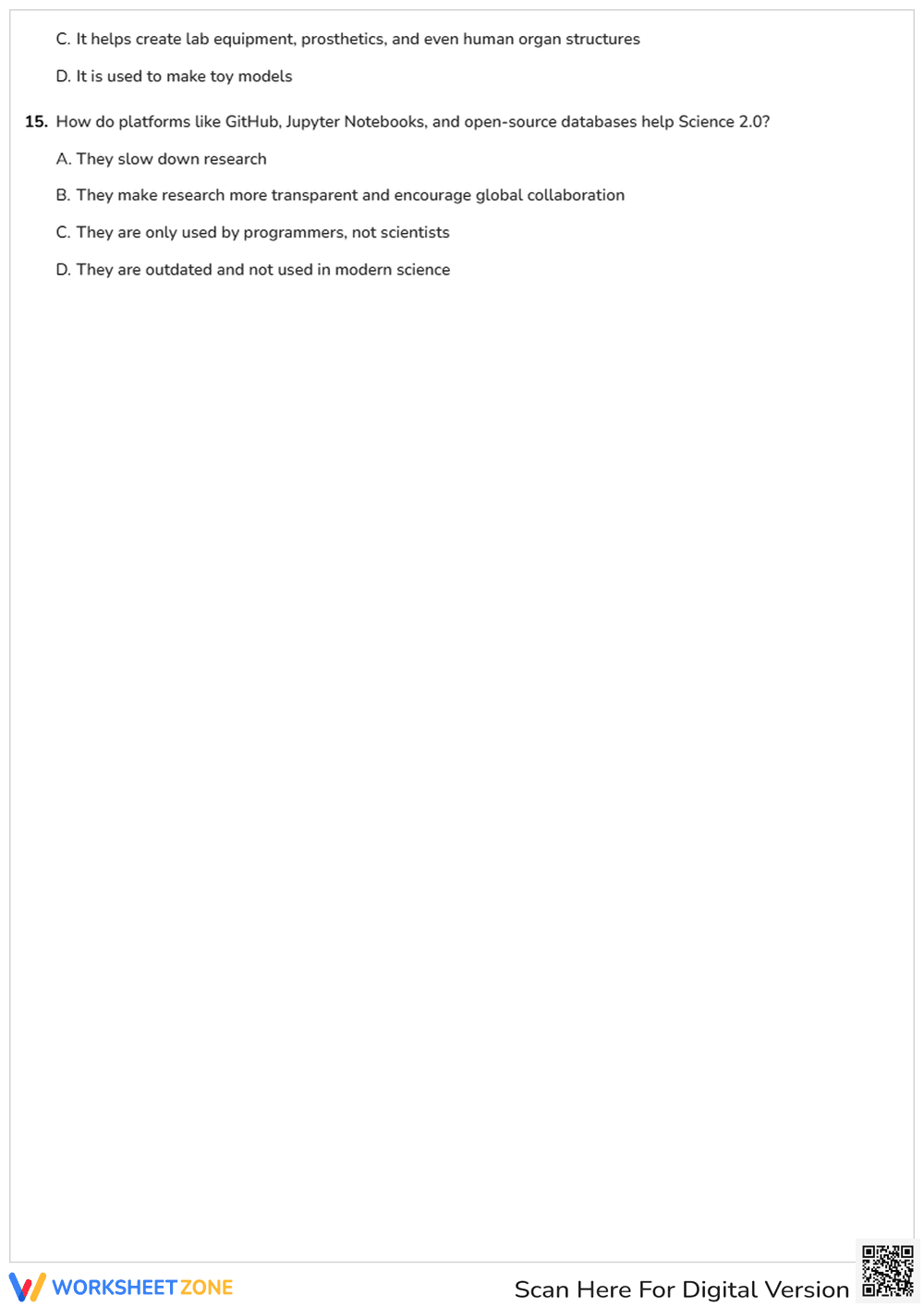
The resource consists of a comprehensive three-page assessment featuring 15 multiple-choice questions. Each question is designed to challenge students' understanding of complex topics such as the drawbacks of paywalled journals, the utility of GitHub and Jupyter Notebooks, and the risks of misinformation on social media. The layout is clean and professional, including a full answer key for rapid grading.
The zero-prep workflow is designed for maximum efficiency. Step 1: Print the three-page PDF (30 seconds). Step 2: Distribute to students as an entry ticket or independent study guide (1 minute). Step 3: Review the 15 multiple-choice answers using the included key to identify misconceptions about open-access research. Total teacher prep is under 2 minutes, making this an ideal resource for busy instructors.
This worksheet is aligned with `CCSS.ELA-LITERACY.RST.11-12.7`, which requires students to integrate and evaluate multiple sources of information presented in diverse formats and media. It specifically targets the ability to understand how digital tools facilitate the sharing of scientific data. Both standard codes can be copied directly into lesson plans, IEP goals, or district curriculum mapping tools.
Use this worksheet as a formative assessment during a unit on research ethics or scientific literacy. It works effectively as a flipped classroom activity where students complete the questions after watching a lecture on digital collaboration. Instructors should observe student responses to question 12 regarding social media risks to spark a larger classroom debate. Completion typically takes 25 minutes.
This resource is tailored for undergraduate students in STEM fields, particularly those enrolled in introductory research methods or professional communication courses. It provides necessary scaffolding for students transitioning to the collaborative expectations of higher education. It pairs naturally with an anchor chart on the peer-review process or a direct instruction lesson on open-access publishing.
Modern scientific literacy requires an understanding of the transition from Science 1.0 to Science 2.0, characterized by open-source collaboration and digital transparency. According to the RAND AIRS 2024 report, students who engage with the ethics of digital research tools show a 22% increase in their ability to evaluate the credibility of online scientific information. This worksheet addresses the core competencies of CCSS.ELA-LITERACY.RST.11-12.7 by requiring students to differentiate between traditional publishing models and modern, inclusive research frameworks. By analyzing the role of AI, social media, and open-access journals, learners develop the critical communication skills necessary for professional academic environments. The 15 structured questions provide a comprehensive overview of how technology facilitates global collaboration while introducing risks like misinformation. This resource serves as a vital tool for bridging the gap between theoretical science and practical, modern communication standards in higher education.


