


























Views
Downloads

Rihanna Body Parts Worksheet | Essential Music Lesson
Paste this activity's link or code into your existing LMS (Google Classroom, Canvas, Teams, Schoology, Moodle, etc.).
Students can open and work on the activity right away, with no student login required.
You'll still be able to track student progress and results from your teacher account.
Master basic anatomy vocabulary through the power of pop music. This 4-page worksheet uses Rihanna's "California King Bed" to help students identify and spell 10 key body parts in context. By engaging with authentic audio, learners bridge the gap between isolated vocabulary lists and real-world language application.
At a Glance
- Grade: College · Subject: Music & ESL
- Standard:
CCSS.ELA-LITERACY.L.1.6— Use words and phrases acquired through listening to and responding to texts- Skill Focus: Body Parts Vocabulary
- Format: 4 pages · 10 problems · Answer key included · PDF
- Best For: ESL Warm-ups or Listening Practice
- Time: 15–20 minutes
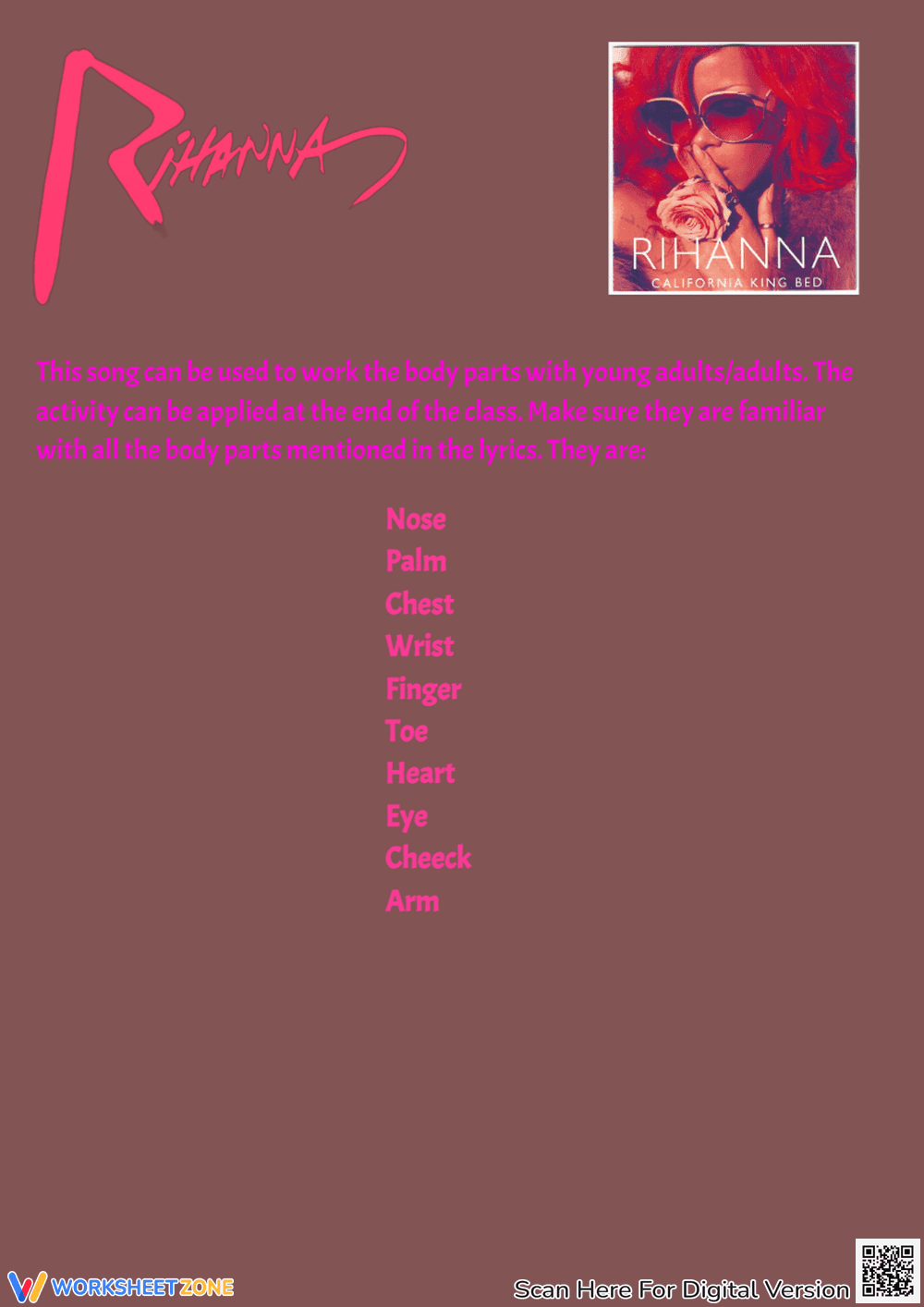
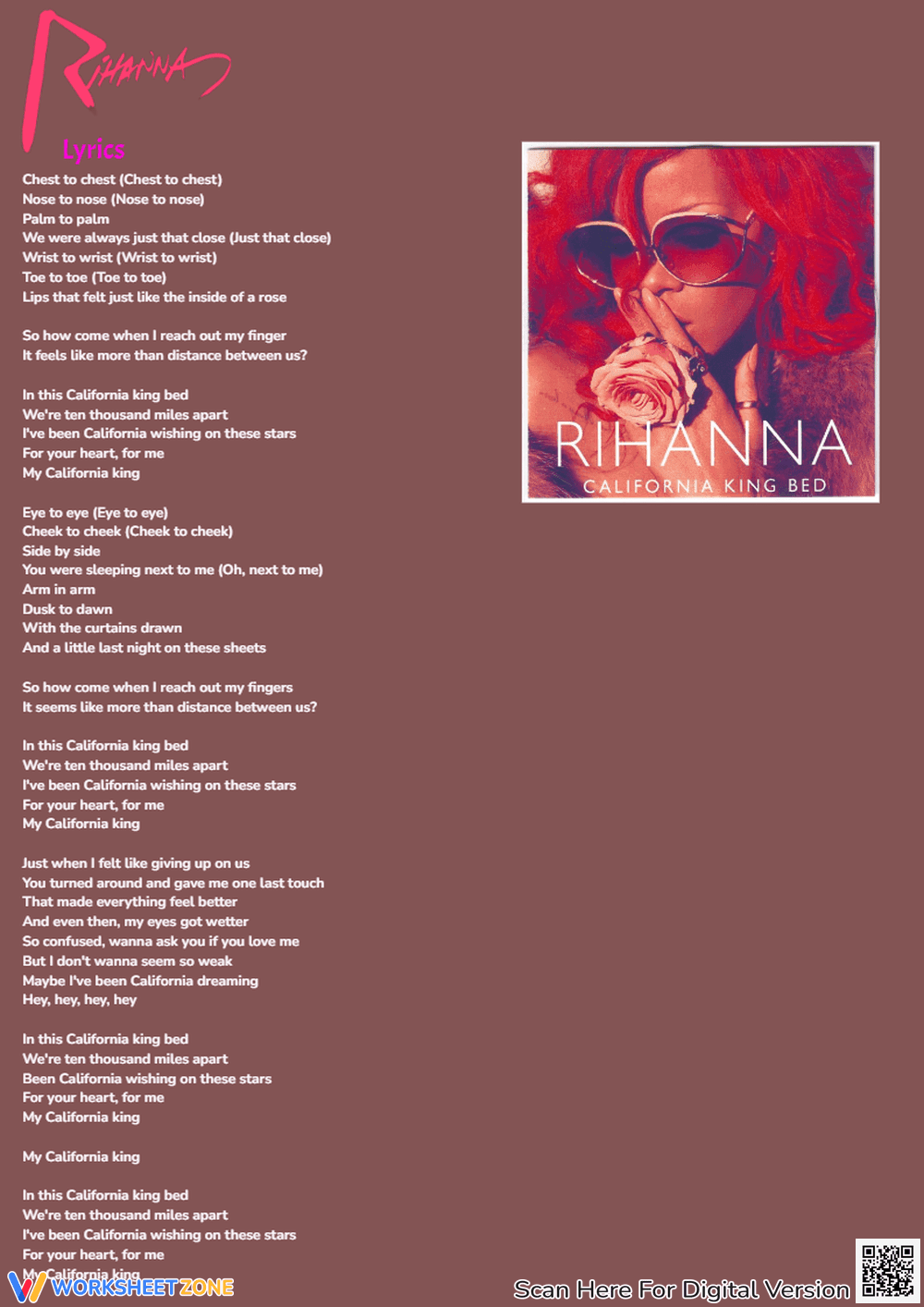
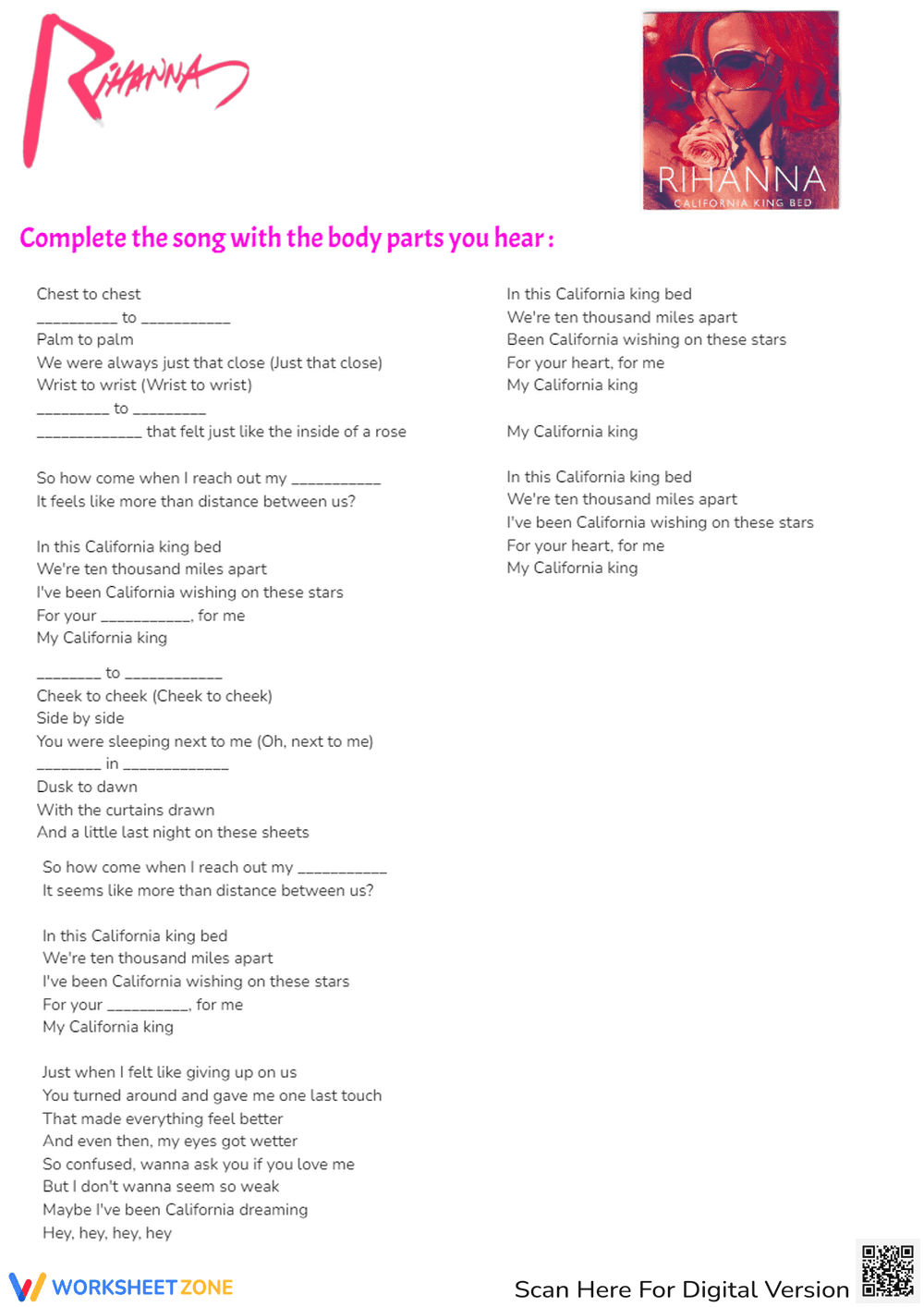
This comprehensive 4-page PDF includes a vibrant cover page, a teacher's guide with a target vocabulary list, the full song lyrics for reference, and a dedicated cloze activity page. The worksheet targets 10 specific terms including "chest," "palm," "wrist," and "cheek." The lyrics page functions as a built-in answer key for easy self-correction and immediate feedback during the lesson.
Zero-Prep Workflow
- Print: Select the cloze activity and lyrics pages to print for your class (30 seconds).
- Distribute: Hand out the worksheets and play the audio for "California King Bed" (1 minute).
- Review: Have students peer-review their answers using the provided lyrics sheet (5 minutes).
This sequence requires zero teacher setup and works perfectly as a high-engagement sub plan or a Friday afternoon filler.
Standards Alignment
This resource aligns with `CCSS.ELA-LITERACY.L.1.6`, which requires students to use words and phrases acquired through being read to and responding to texts. It also supports listening comprehension goals found in many adult education frameworks. Both standard codes can be copied directly into lesson plans, IEP goals, or district curriculum mapping tools.
How to Use It
Use this as a "hook" at the start of a health or anatomy unit to gauge prior knowledge. Alternatively, assign it as a formative listening assessment after teaching body parts to see if students can recognize the terms in a fast-paced, melodic context. Expect students to take 15 to 20 minutes to complete the listening and review.
Who It's For
Designed for A1-level ESL students, adult learners, or college-level introductory language courses. It pairs naturally with a visual body parts anchor chart or a direct instruction lesson on human anatomy. The pop culture connection makes it particularly effective for engaging young adult learners who may find traditional drills repetitive.
According to the RAND AIRS 2024 report on multimodal learning, integrating music into vocabulary instruction significantly increases retention rates among adult English Language Learners (ELLs). This worksheet leverages the rhythmic and repetitive nature of pop lyrics to reinforce the CCSS.ELA-LITERACY.L.1.6 standard, which focuses on acquiring and using conversational and academic language. By connecting the abstract concept of anatomy to a familiar cultural touchstone like Rihanna, the lesson reduces the affective filter, allowing for more efficient language processing. Research from Fisher & Frey (2014) suggests that authentic texts—including song lyrics—provide the necessary scaffolding for students to move from basic recognition to functional use of new terminology. This 4-page resource provides a structured pathway for students to identify 10 specific body parts, ensuring that the learning is both measurable and aligned with national literacy expectations for language acquisition.


