


























Views
Downloads

Essential Angles and Arithmetic Worksheet | Grade 4-5 Ready
Paste this activity's link or code into your existing LMS (Google Classroom, Canvas, Teams, Schoology, Moodle, etc.).
Students can open and work on the activity right away, with no student login required.
You'll still be able to track student progress and results from your teacher account.
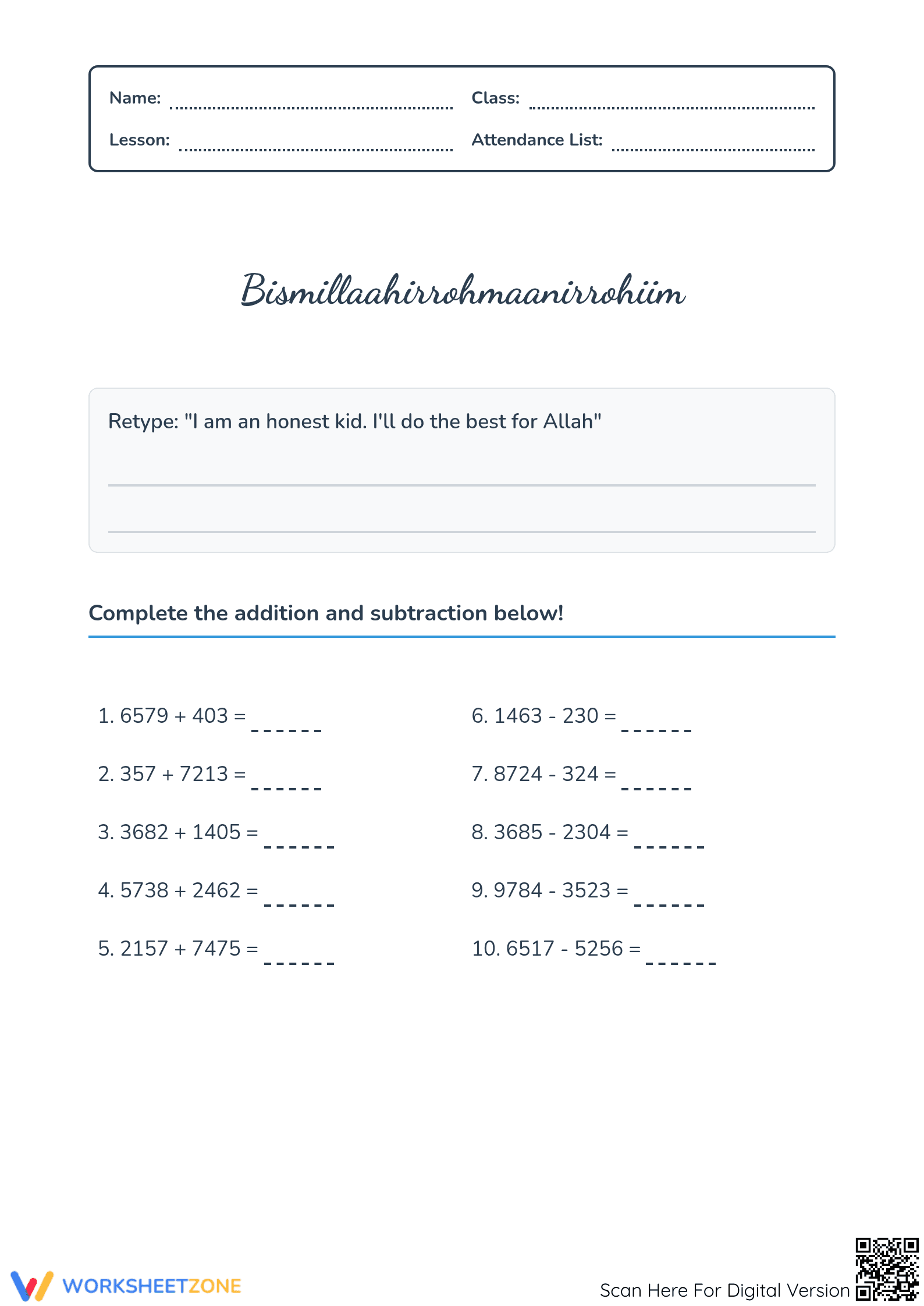
This Grade 4-5 math worksheet provides a comprehensive review of geometric principles and multi-digit arithmetic. Students practice measuring angles using a protractor and classifying them as acute, obtuse, or right. By combining geometry with foundational addition and subtraction, this resource ensures students maintain computational fluency while mastering new spatial concepts.
At a Glance
- Grade: 4-5 · Subject: Math
- Standard:
CCSS.MATH.CONTENT.4.MD.C.6— Measure angles in whole-number degrees using a protractor- Skill Focus: Angle Classification & Arithmetic
- Format: 3 pages · 19 problems · Answer key included · PDF
- Best For: Mid-unit review or formative assessment
- Time: 25–35 minutes
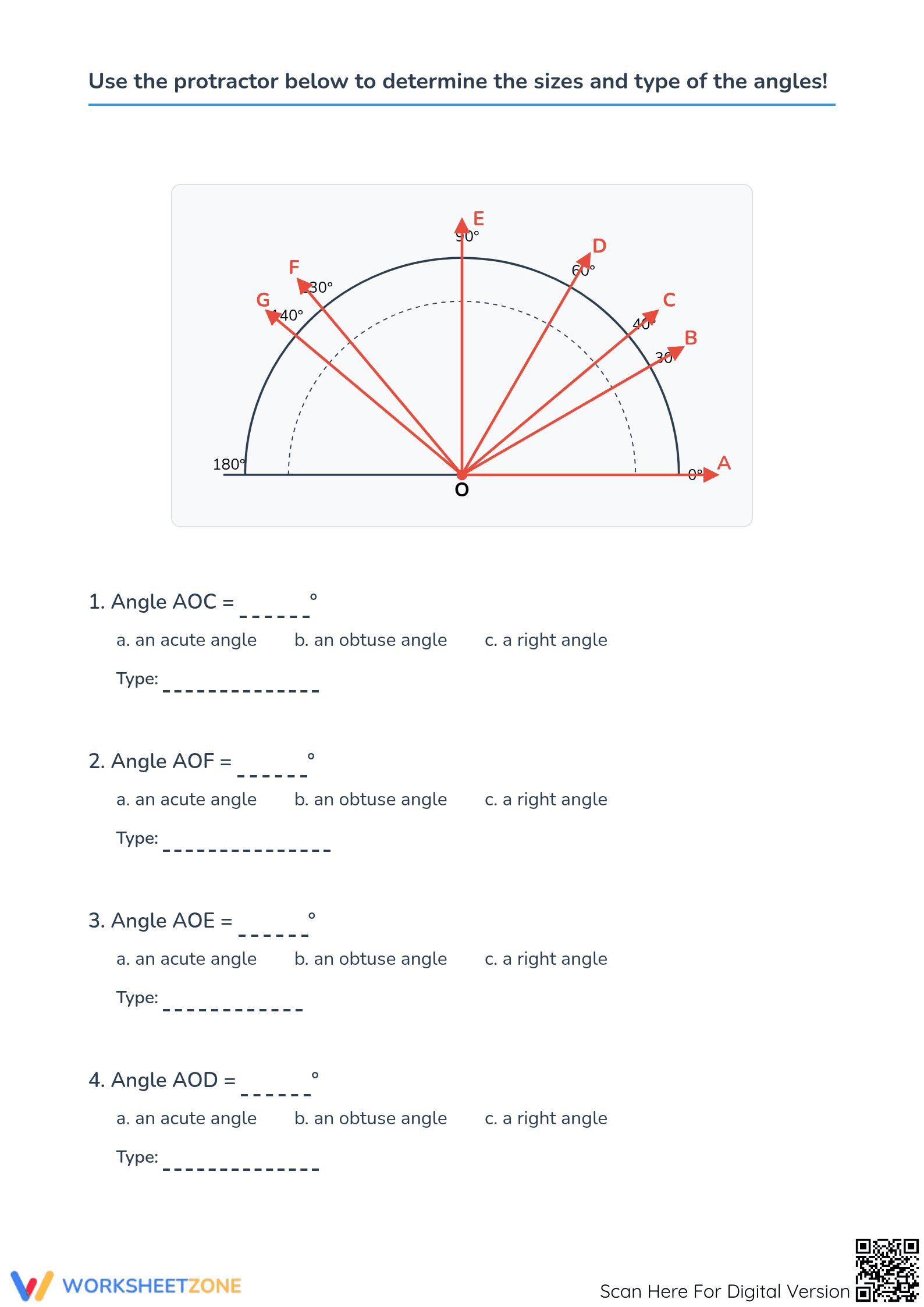
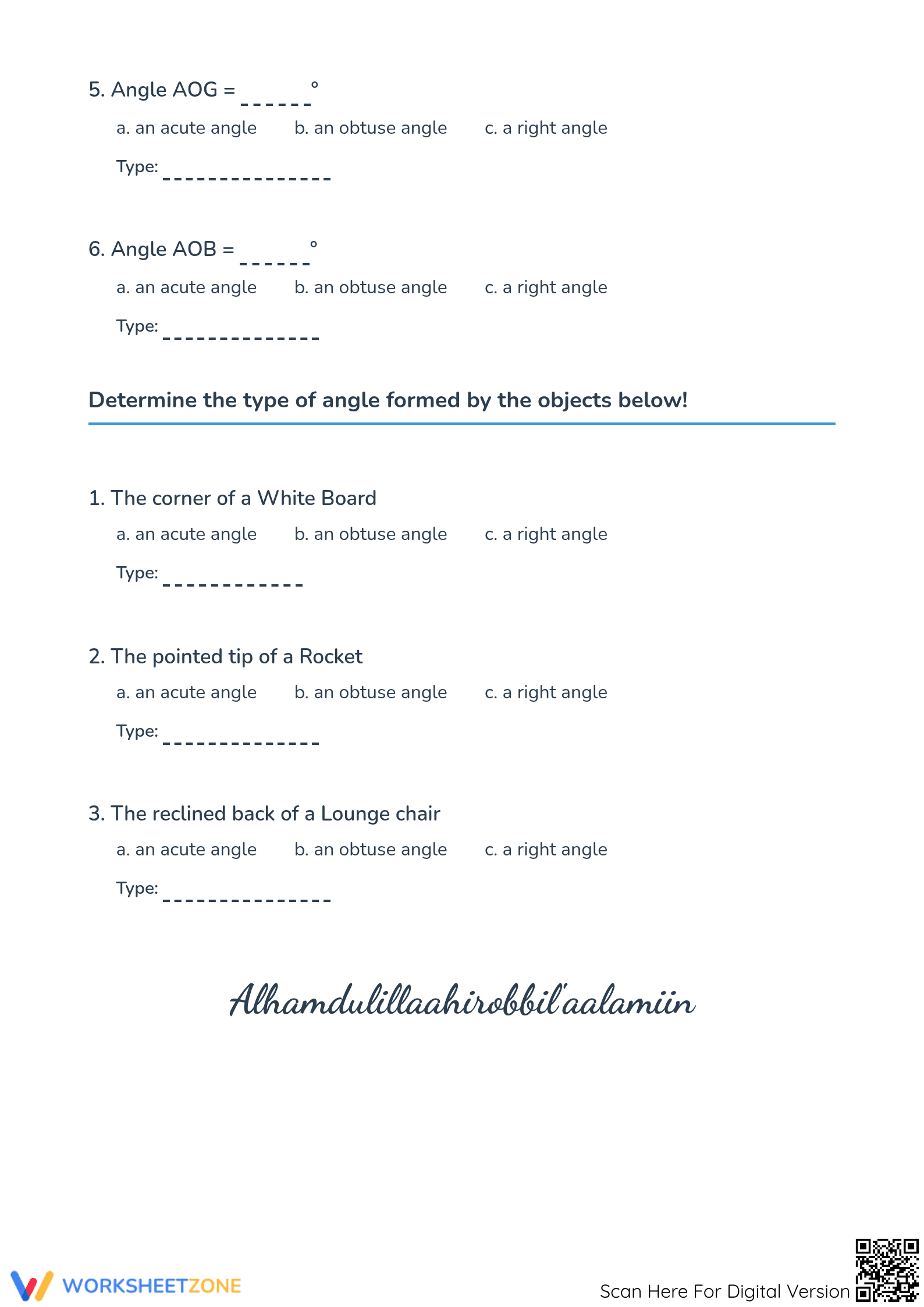
This 3-page PDF contains 19 distinct tasks designed for upper elementary learners. The first page features 10 multi-digit addition and subtraction problems to sharpen calculation skills. The second and third pages transition to geometry, utilizing a clear protractor diagram for 6 angle measurement tasks. Finally, 3 real-world application questions ask students to identify angle types in everyday objects like whiteboards and rocket tips. A complete answer key is provided for rapid grading.
Zero-Prep Workflow
- Print: Select the 3-page PDF and print enough copies for your class in under 30 seconds.
- Distribute: Hand out the worksheets as a quiet independent practice activity or a structured sub plan.
- Review: Use the included answer key to review results or allow students to self-correct during a whole-group wrap-up.
Total teacher preparation time is targeted at under 2 minutes, making this an ideal resource for busy mornings or unexpected schedule changes.
The primary focus is CCSS.MATH.CONTENT.4.MD.C.6, which requires students to measure angles in whole-number degrees using a protractor. It also supports CCSS.MATH.CONTENT.4.G.A.1 by asking students to identify right, acute, and obtuse angles. Both standard codes can be copied directly into lesson plans, IEP goals, or district curriculum mapping tools.
Use this worksheet during the independent practice phase of a lesson on geometry. It serves as an excellent formative assessment to check if students can correctly align a protractor's vertex. Alternatively, assign it as a review station activity to reinforce arithmetic skills alongside geometry. Expect students to complete the full set in 25 to 35 minutes depending on their protractor proficiency.
This resource is tailored for Grade 4 and Grade 5 students who are transitioning from basic shape recognition to precise geometric measurement. It is particularly helpful for students requiring a refresher on multi-digit operations. Pair this with a physical protractor and an anchor chart illustrating angle types for maximum instructional impact.
This worksheet aligns with the instructional shifts identified in the RAND AIRS 2024 report, which emphasizes the integration of procedural fluency and conceptual understanding in mathematics. By requiring students to perform multi-digit arithmetic alongside protractor-based geometry, the resource addresses the need for distributed practice of foundational skills. The inclusion of real-world objects for angle classification supports the development of spatial reasoning, a key predictor of later success in STEM fields. Research from Fisher & Frey (2014) suggests that such structured practice, moving from abstract calculation to applied measurement, facilitates the transition to independent mastery. The standard CCSS.MATH.CONTENT.4.MD.C.6 is explicitly targeted through the use of a visual protractor model, ensuring that students can accurately determine angle sizes in whole-number degrees. This evidence-based approach provides a reliable tool for teachers to assess student progress toward state-mandated geometry benchmarks.


