


























Views
Plays

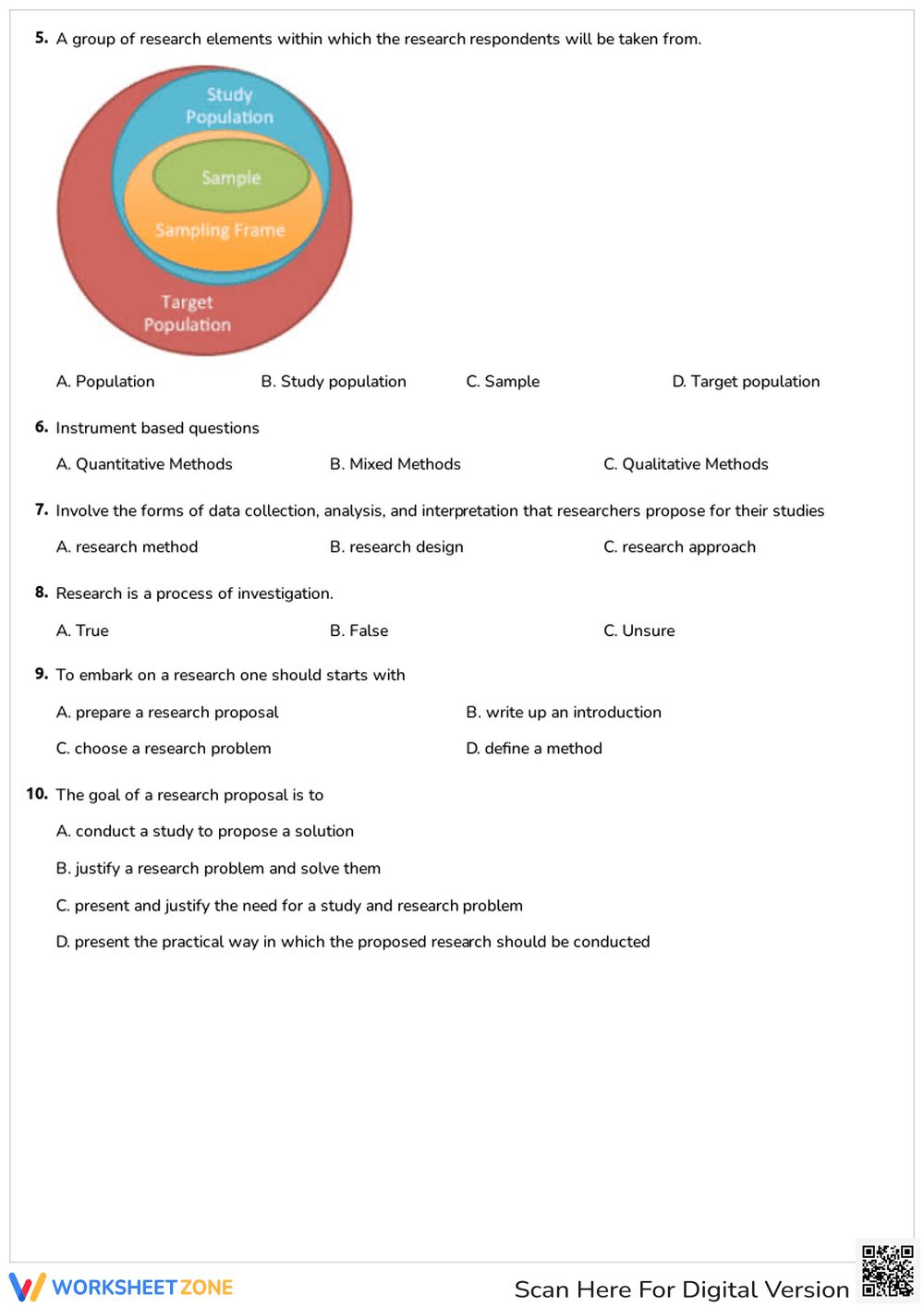

Essential Research Approach Worksheet | Grade 11-12
Paste this activity's link or code into your existing LMS (Google Classroom, Canvas, Teams, Schoology, Moodle, etc.).
Students can open and work on the activity right away, with no student login required.
You'll still be able to track student progress and results from your teacher account.
This Grade 11-12 research methodology worksheet provides a comprehensive review of the fundamental principles of academic inquiry. Students will demonstrate their understanding of sampling techniques, research designs, and data collection methods through a series of targeted questions. This activity helps learners transition from passive consumers of information to active researchers capable of structuring investigations.
At a Glance
- Grade: 11-12 · Subject: Social Studies
- Standard:
CCSS.ELA-LITERACY.W.11-12.7— Conduct research projects to answer questions or solve problems.- Skill Focus: Research Methodology
- Format: 2 pages · 10 problems · Answer key included · PDF
- Best For: High school research unit assessment
- Time: 20–30 minutes
Inside this 2-page PDF, you will find 10 high-quality multiple-choice questions designed to challenge upper-level high school students. The worksheet features task types like definition matching, scenario analysis, and diagram interpretation. Key concepts covered include random sampling, ethnography, quantitative methods, and the structural components of a research proposal. A full answer key is included to facilitate quick grading or student self-correction.
Skill Progression
- Guided identification: Students recognize core definitions of research design and sampling through initial multiple-choice questions.
- Supported application: Utilizing visual diagrams to help students distinguish between study populations and target populations.
- Independent evaluation: Learners determine the goals of a research proposal and the correct starting point for an investigation.
This scaffolded approach ensures that learners move from basic recall to a conceptual understanding of how to structure a formal inquiry using the gradual release model.
Standards Alignment
This resource is primarily aligned with `CCSS.ELA-LITERACY.W.11-12.7`, which requires students to conduct short as well as more sustained research projects to answer a question or solve a problem. It specifically addresses the prerequisite knowledge of research design and methodology needed to synthesize multiple sources. Additionally, it supports standards related to informational text analysis by requiring students to interpret complex diagrams. These codes can be copied directly into lesson plans or curriculum mapping tools.
How to Use It
Use this worksheet as a formative assessment at the conclusion of an introductory unit on research methods. It is effective when assigned before students draft research proposals, as it highlights common misconceptions. Teachers can use student responses to the visual diagram to gauge understanding of nested data sets. Expected completion time is 20 to 30 minutes.
Who It's For
This resource is designed for Grade 11 and 12 students, particularly those enrolled in AP Research, Sociology, or advanced English Composition courses. It is highly effective for students who require a structured review of academic vocabulary before engaging in independent fieldwork. Pair this worksheet with a sample research paper or an anchor chart on qualitative versus quantitative data to provide a complete instructional experience.
This resource aligns with CCSS.ELA-LITERACY.W.11-12.7, focusing on the foundational knowledge required for students to conduct sustained research projects. By identifying sampling methods like random sampling and understanding the nuances of ethnography versus case studies, students build the conceptual framework necessary for academic inquiry. The gradual release of responsibility in complex tasks—moving from identifying research terms to applying them in a proposal context—is vital for student mastery of disciplinary literacy. This worksheet provides 10 targeted questions that bridge the gap between theoretical methodology and practical application. It ensures that learners can distinguish between quantitative methods and qualitative approaches, a critical skill for post-secondary readiness. Visual aids, such as the population sampling diagram, support dual coding and enhance retention of abstract social science concepts. Educators can use this tool to verify that students have the prerequisite vocabulary to embark on independent investigations.


