


























Views
Downloads

Grade 2 Renewable Resources — Printable No-Prep Worksheet
Paste this activity's link or code into your existing LMS (Google Classroom, Canvas, Teams, Schoology, Moodle, etc.).
Students can open and work on the activity right away, with no student login required.
You'll still be able to track student progress and results from your teacher account.
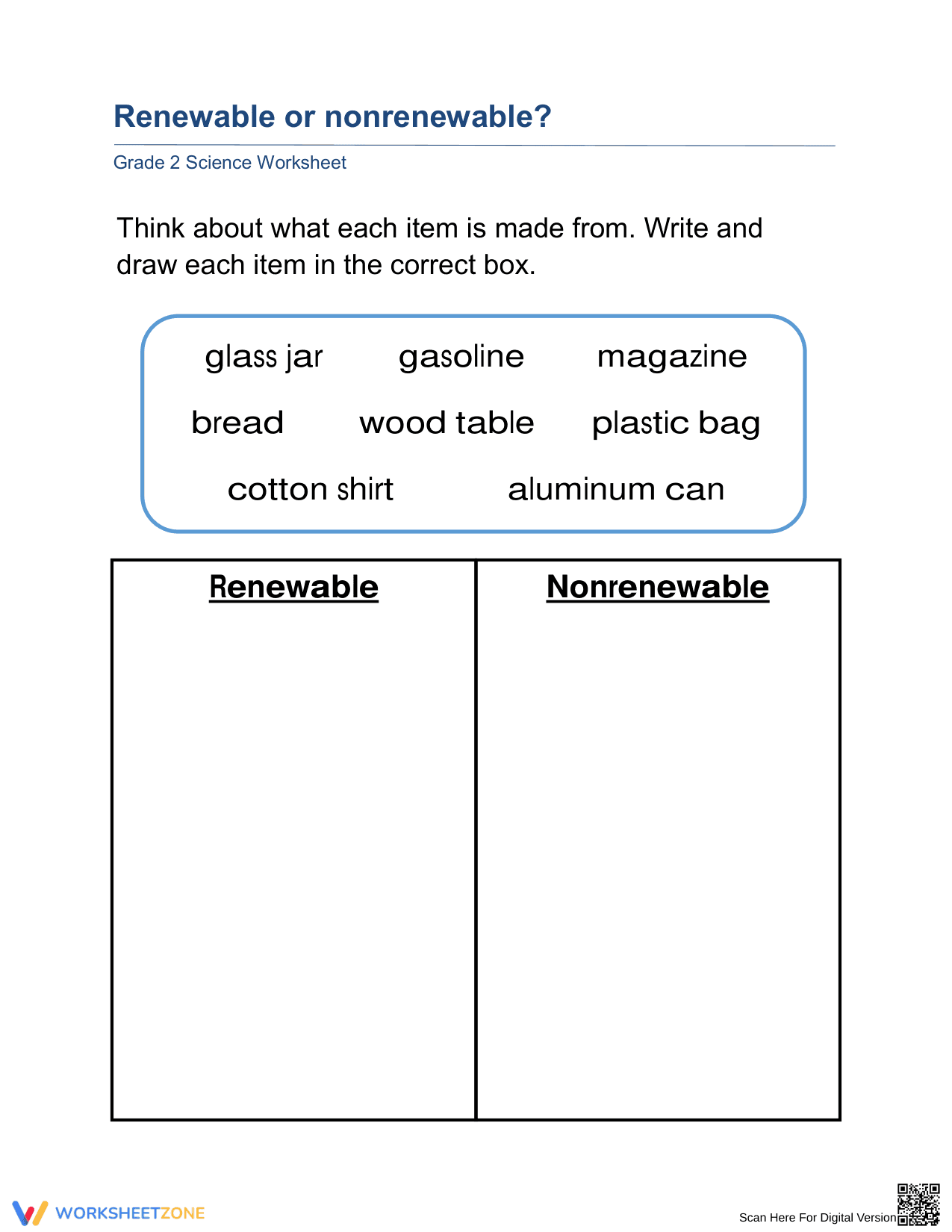
This science worksheet provides Grade 2 students with focused practice in classifying common items as renewable or nonrenewable resources. Through a simple cut-and-paste or drawing activity, learners will categorize eight familiar objects, building foundational knowledge of Earth's materials and the impact of human use. It’s a clear, direct introduction to environmental science concepts.
At a Glance
- Grade: 2 · Subject: Science
- Standard:
K-ESS3-3— Communicate solutions to reduce human impact on the environment.- Skill Focus: Classifying renewable and nonrenewable resources
- Format: 2 pages · 1 sorting task · Answer key included · PDF
- Best For: Independent practice or a science center activity.
- Time: 15–20 minutes
What's Inside
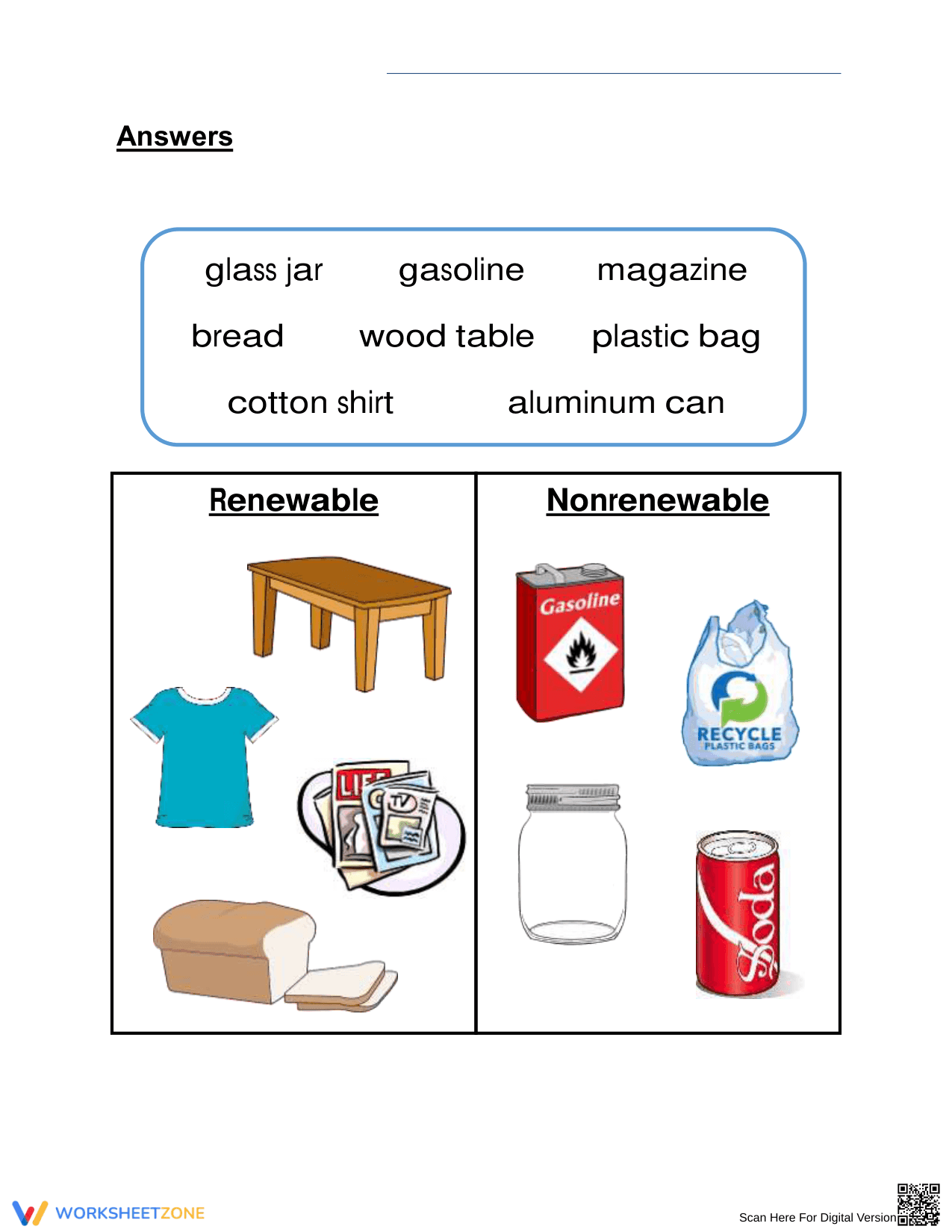
This resource includes a two-page PDF. The first page is the student worksheet, featuring a word bank of eight items and a two-column chart for sorting. The second page provides a complete, visual answer key showing each item correctly placed, perfect for quick review.
Zero-Prep Workflow
Designed for the busy classroom, this worksheet follows a simple, efficient workflow.
- Print (1 minute): Run a single-page copy for each student, plus one answer key.
- Distribute (2 minutes): Students only need a pencil and crayons. Explain they will write and draw each of the eight items in the correct column.
- Review (5 minutes): Use the clear visual answer key for whole-class review or student self-correction.
Total prep time is under two minutes, making it ideal for a sub plan or a quick science center.
Standards Alignment
This worksheet provides foundational knowledge for understanding human impact on Earth's systems, aligning with NGSS. The primary standard supported is K-ESS3-3, which involves communicating solutions to reduce human environmental impact. Understanding the difference between renewable and nonrenewable resources is a critical first step for this. Both standard codes can be copied directly into lesson plans or curriculum maps.
How to Use It
Use this worksheet as a pre-assessment before a lesson on natural resources or as independent practice after. For a formative check, circulate as students work and listen to their reasoning for placing items like "magazine" or "glass jar," which can spark discussion about material origins. The activity should take about 15-20 minutes to complete.
Who It's For
Designed for second-grade students, the clear layout makes it accessible for most learners. For students needing support, complete the first two items as a class. This worksheet pairs perfectly with a classroom anchor chart defining and giving examples of renewable and nonrenewable resources.
This Grade 2 sorting activity builds essential vocabulary and conceptual understanding required by science standards like NGSS K-ESS3-3. By having students classify resources as either renewable or nonrenewable, the worksheet provides a concrete entry point into the complex topic of human-environment interaction. This skill is foundational for developing the environmental literacy that enables students to propose evidence-based solutions to local problems. According to research on science education, early and repeated exposure to core concepts is crucial for long-term retention and application (Fisher & Frey, 2014). This simple classification task serves as a practical, hands-on tool for introducing students to the finite nature of some resources and the sustainable potential of others, preparing them for more advanced analysis in later grades.


