


























Views
Downloads
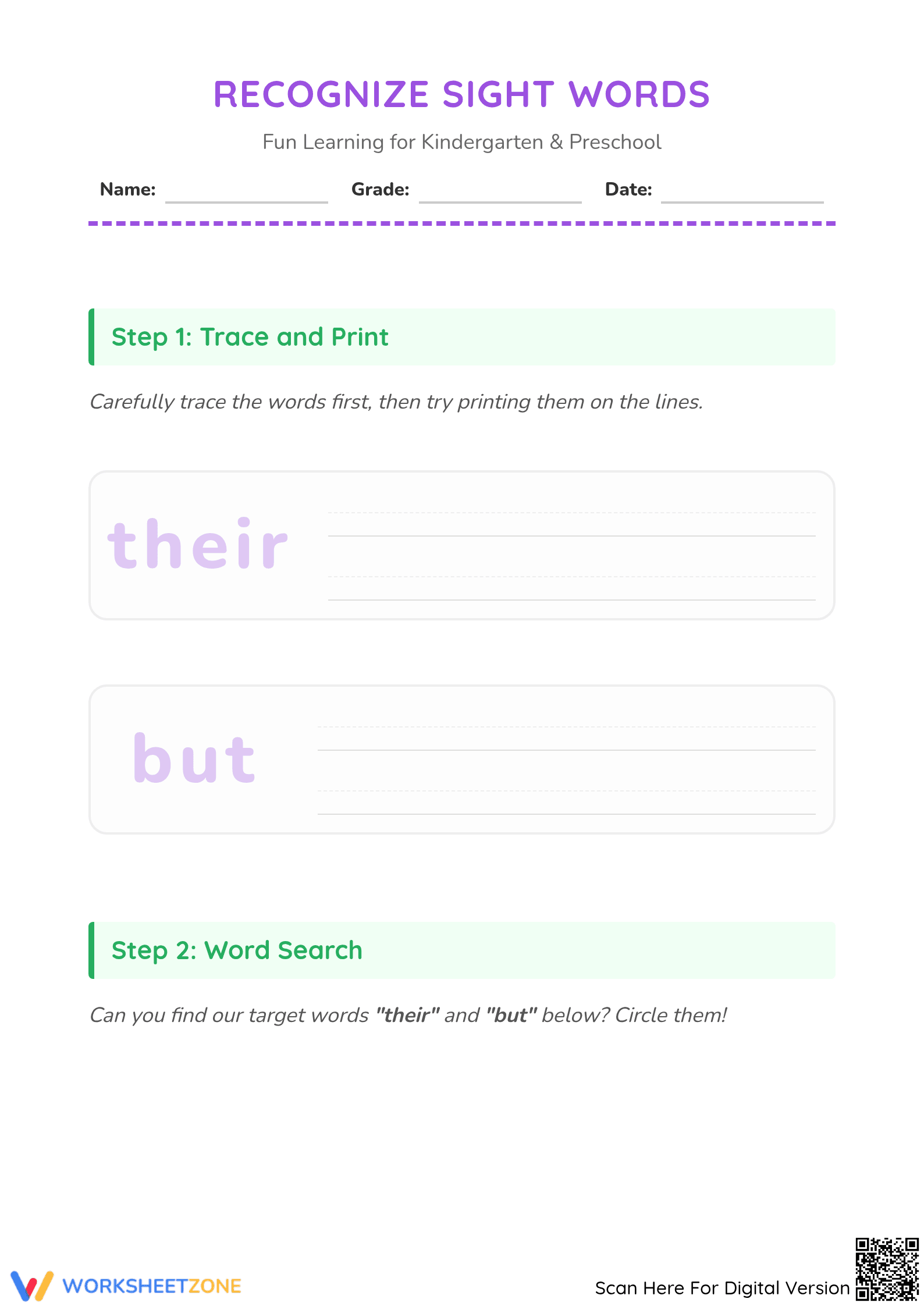
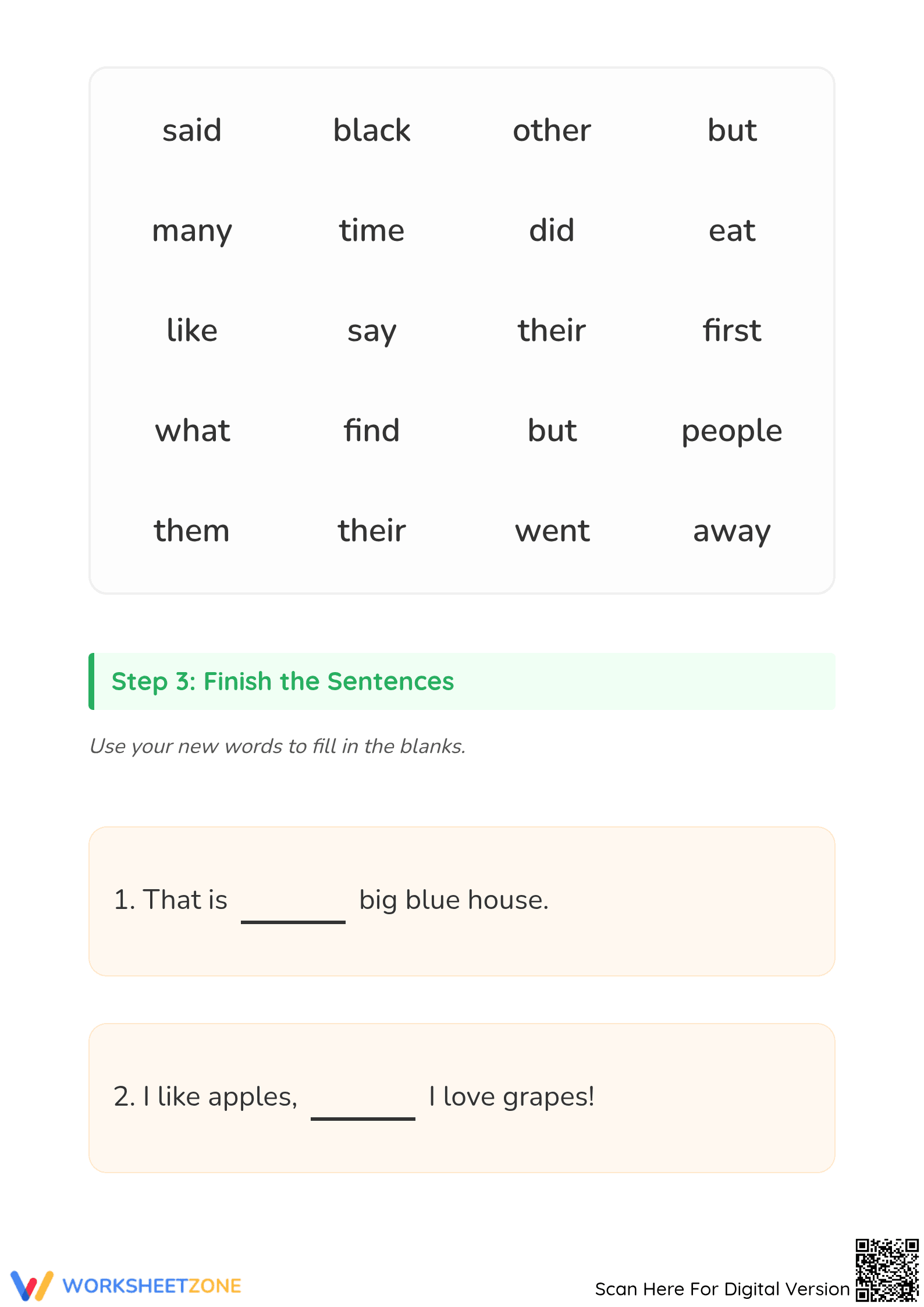
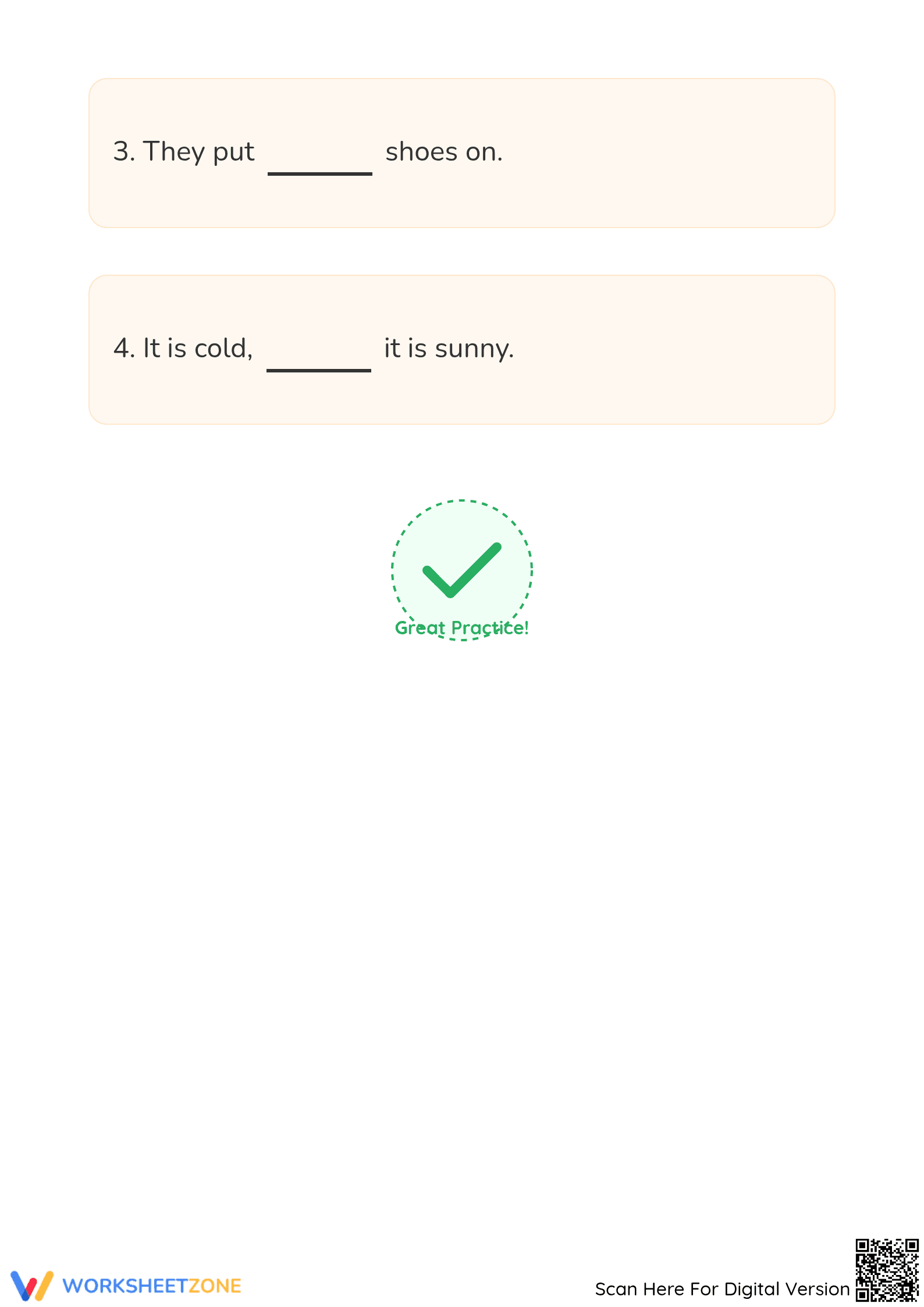

Essential Sight Words Worksheet | Grade K Printable
Paste this activity's link or code into your existing LMS (Google Classroom, Canvas, Teams, Schoology, Moodle, etc.).
Students can open and work on the activity right away, with no student login required.
You'll still be able to track student progress and results from your teacher account.
Mastering high-frequency words is a foundational step for early readers. This Kindergarten ELA worksheet provides targeted practice for the sight words "their" and "but" to ensure students recognize them instantly without sounding them out. Through a three-step progression of tracing, searching, and applying, learners develop the visual memory and context-clue skills necessary for reading fluency.
At a Glance
At a Glance
- Grade: Kindergarten · Subject: ELA
- Standard:
CCSS.ELA-LITERACY.RF.K.3.C— Read common high-frequency words by sight- Skill Focus: High-frequency sight word recognition and usage
- Format: 3 pages · 11 problems · Answer key included · PDF
- Best For: Daily morning work or literacy centers
- Time: 15–20 minutes
What's Inside
This 3-page PDF is structured to support early learners with clear, uncluttered layouts and large fonts. It includes three distinct instructional sections: a tracing and printing zone for letter formation, a word search grid to build scanning accuracy, and a sentence completion section for contextual application. A comprehensive answer key is provided to facilitate quick grading or student self-correction.
Zero-Prep Workflow
The zero-prep workflow is designed for busy educators. First, print the three pages (30 seconds) and distribute them to your students. Second, allow 15 minutes for tracing and searching. Finally, review the sentence completion answers (2 minutes) to check for comprehension. Total teacher preparation time is under 2 minutes. This makes it an ideal choice for emergency sub plans or quick literacy rotations.
Standards Alignment
This resource is directly aligned to standard `CCSS.ELA-LITERACY.RF.K.3.C`, which requires students to read common high-frequency words by sight. By focusing specifically on "their" and "but," the worksheet supports the mastery of words that do not always follow standard phonetic rules. This standard code can be copied directly into lesson plans, IEP goals, or district curriculum mapping tools.
How to Use It
Use this worksheet as a morning warm-up after introducing the target words on a word wall. During the word search phase, observe students to see if they are scanning left-to-right or if they are identifying word shapes; this provides immediate formative data on their visual processing. Expected completion time ranges from 15 to 20 minutes depending on the student's fine motor speed.
Who It's For
This resource is ideal for Kindergarten students and advanced Preschoolers who are beginning their journey with high-frequency texts. It provides scaffolding for English Language Learners (ELLs) by providing sentence context for homophones like "their." Pair this worksheet with a shared reading of a "big book" or a sight word anchor chart to reinforce the target vocabulary.
According to RAND AIRS 2024, systematic introduction of high-frequency words like "their" and "but" reduces cognitive load during early reading, allowing students to focus on decoding complex vocabulary. This worksheet adheres to sight word automaticity by providing 11 opportunities for students to interact with standard `CCSS.ELA-LITERACY.RF.K.3.C`. Research from Fisher & Frey (2014) emphasizes that gradual release—moving from guided tracing to independent application—is the most effective way to cement orthographic mapping. By utilizing this printable resource, educators ensure students meet kindergarten benchmarks for reading foundational skills through a classroom-ready, research-aligned framework. The inclusion of multiple modalities, including tactile tracing and visual searching, mirrors NAEP recommendations for multi-sensory literacy instruction in early childhood settings. This approach ensures that learners are not just memorizing word shapes but are integrating them into their active reading and writing vocabularies for long-term success.


