


























Views
Downloads

Essential Sight Words Worksheet | Kindergarten ELA Ready
Paste this activity's link or code into your existing LMS (Google Classroom, Canvas, Teams, Schoology, Moodle, etc.).
Students can open and work on the activity right away, with no student login required.
You'll still be able to track student progress and results from your teacher account.
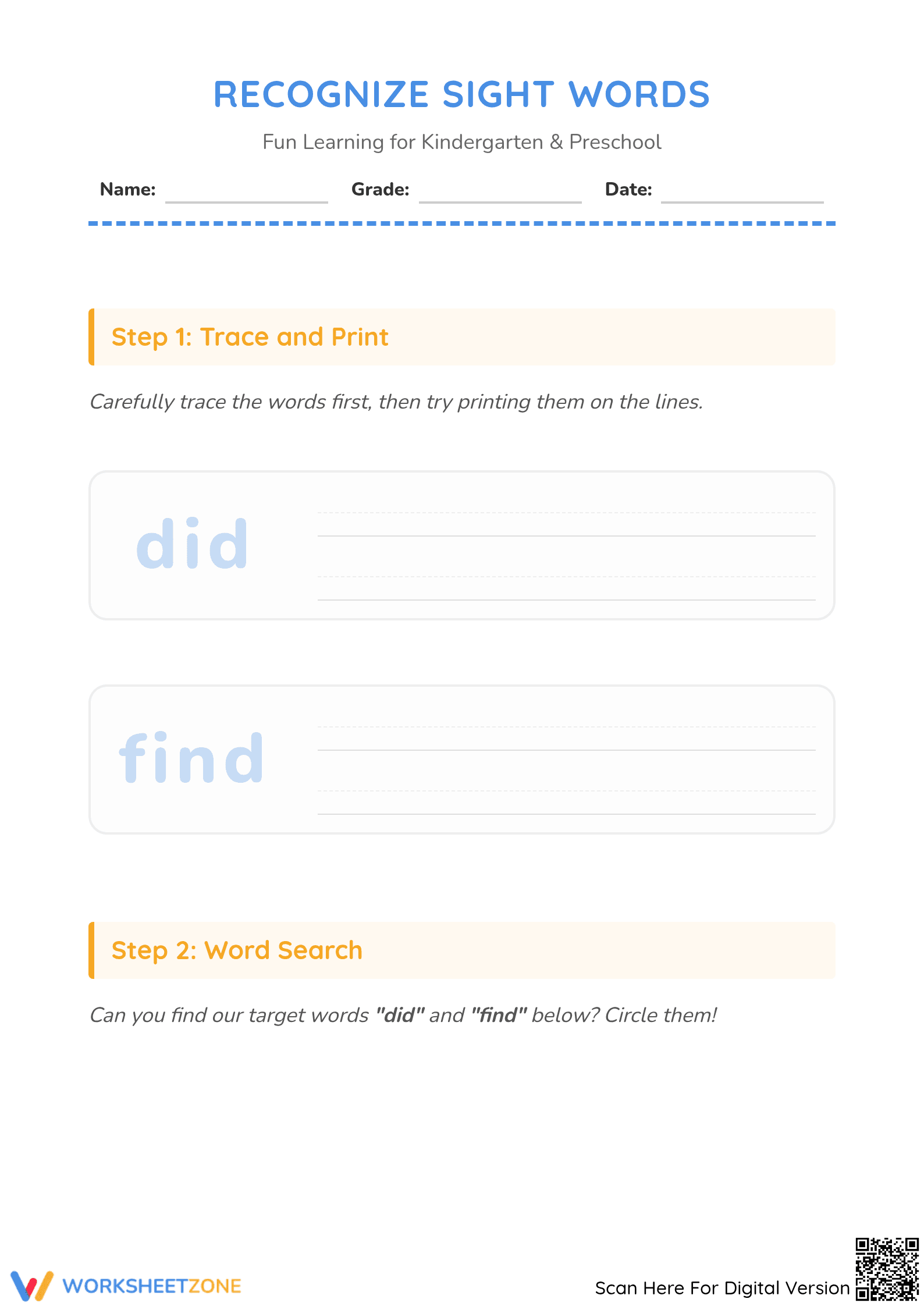
Developing automaticity with high-frequency words is a foundational pillar of early literacy. This three-page sight words worksheet provides focused practice for 'did' and 'find,' helping Kindergarten students move from decoding to instant recognition. By engaging in multiple modalities—tracing, searching, and application—students solidify their mapping of these essential vocabulary terms.
At a Glance
- Grade: Kindergarten · Subject: ELA
- Standard:
CCSS.ELA-LITERACY.RF.K.3.C— Read common high-frequency words by sight- Skill Focus: Sight words 'did' and 'find'
- Format: 3 pages · 10 tasks · Answer key included · PDF
- Best For: Literacy centers and morning work
- Time: 15–20 minutes
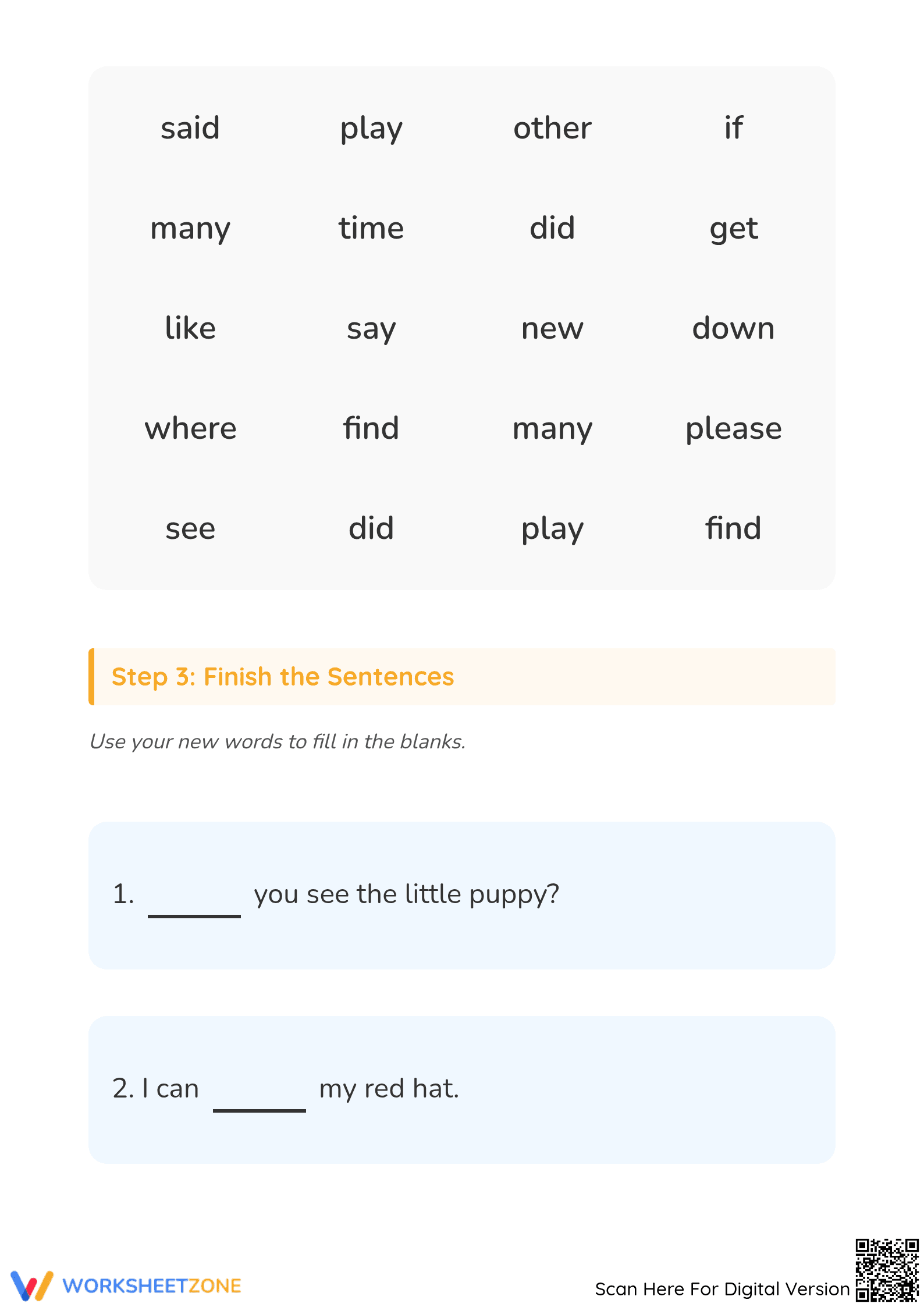
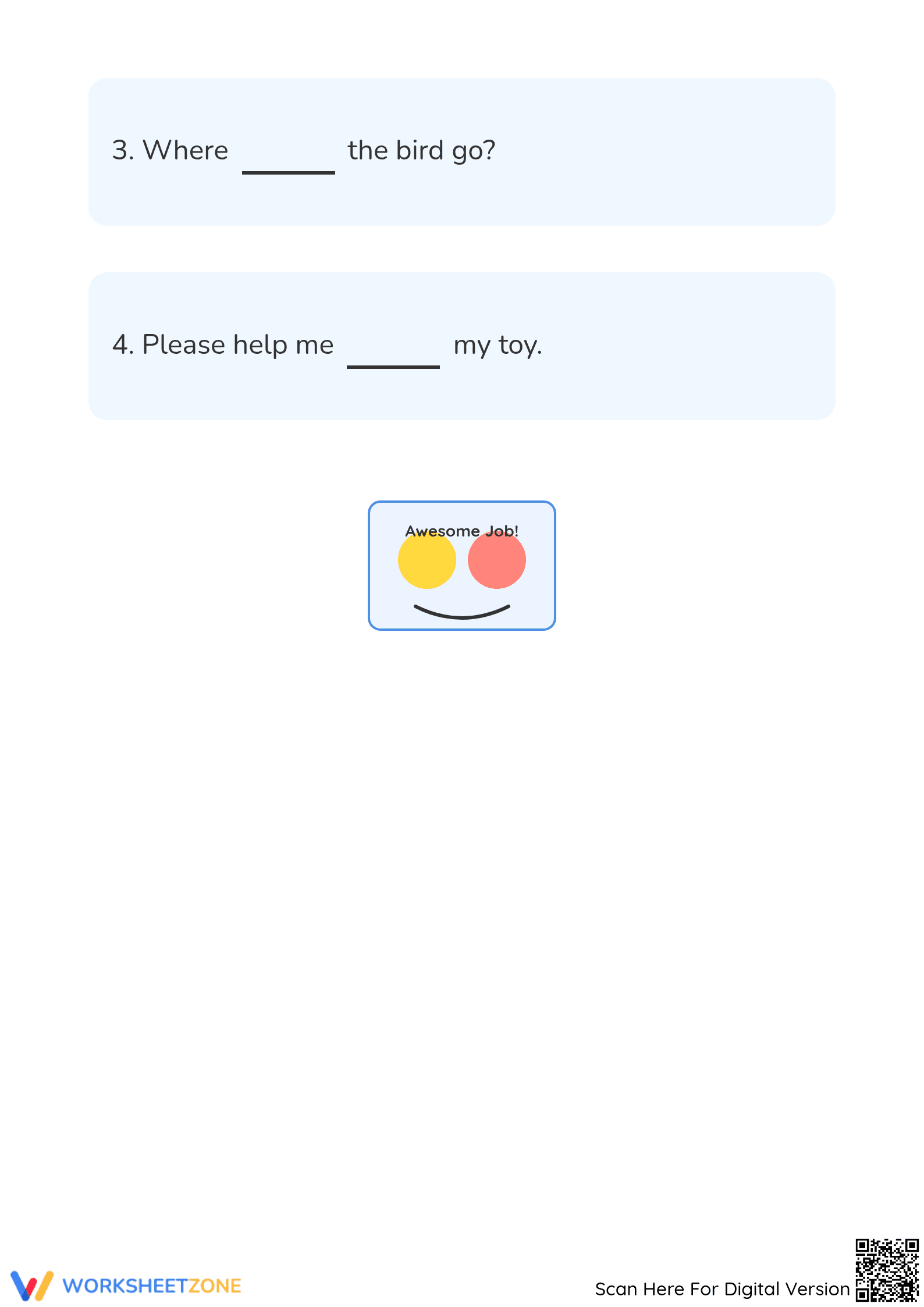
This comprehensive printable features a three-step progression across three pages. The resource includes tracing and printing blocks for 'did' and 'find,' a word search grid for visual discrimination, and four targeted cloze sentences. The clean layout reduces cognitive load, while the answer key ensures immediate feedback is available for teachers or parents.
Zero-Prep Workflow
This resource is designed for immediate classroom utility with a total teacher prep time of under two minutes. Simply print the PDF and distribute. The clear 'Step 1, 2, 3' headers allow students to work independently, making it an ideal choice for emergency sub plans or quiet transitions. Reviewing work takes seconds using the provided visual answer key.
Standards Alignment
This worksheet is strictly aligned with `CCSS.ELA-LITERACY.RF.K.3.C`, which requires students to read common high-frequency words by sight. By isolating 'did' and 'find,' this activity supports the development of the 'sight' vocabulary necessary for fluent reading. Both standard codes can be copied directly into lesson plans, IEP goals, or district curriculum mapping tools.
How to Use It
Incorporate this into your daily literacy block during independent station rotations. As students search, observe scanning patterns; students who struggle may benefit from using a highlighter. Alternatively, use the sentence portion as a quick formative assessment to check recognition in a functional context. Completion time typically ranges from 15 to 20 minutes.
Who It's For
This resource is tailored for Kindergarten and advanced Preschool learners beginning their sight word journey. The scaffolding makes it accessible for English Language Learners (ELL) needing visual reinforcement. This worksheet pairs naturally with a sight word anchor chart or a decodable reader that features 'did' and 'find' in the narrative text.
Research from the RAND AIRS 2024 study emphasizes that repeated exposure to high-frequency words is critical for transition from phonological awareness to reading fluency. This sight words worksheet employs the 'trace-search-apply' methodology, which aligns with evidence-based practices for orthographic mapping. By requiring students to identify 'did' and 'find' in isolation, write them, and locate them within a grid, the task strengthens neural pathways associated with recognition. Mastery of the CCSS.ELA-LITERACY.RF.K.3.C standard through structured practice is a predictor of later reading comprehension success. Analysts at NAEP have noted that consistent use of high-quality, focused practice materials can mitigate early literacy gaps by ensuring students achieve word-level automaticity. This resource provides the repetition to move these words into long-term memory, enabling students to focus cognitive energy on meaning-making rather than decoding.


