


























Views
Downloads

Kindergarten Sight Words — Printable No-Prep Worksheet
Paste this activity's link or code into your existing LMS (Google Classroom, Canvas, Teams, Schoology, Moodle, etc.).
Students can open and work on the activity right away, with no student login required.
You'll still be able to track student progress and results from your teacher account.
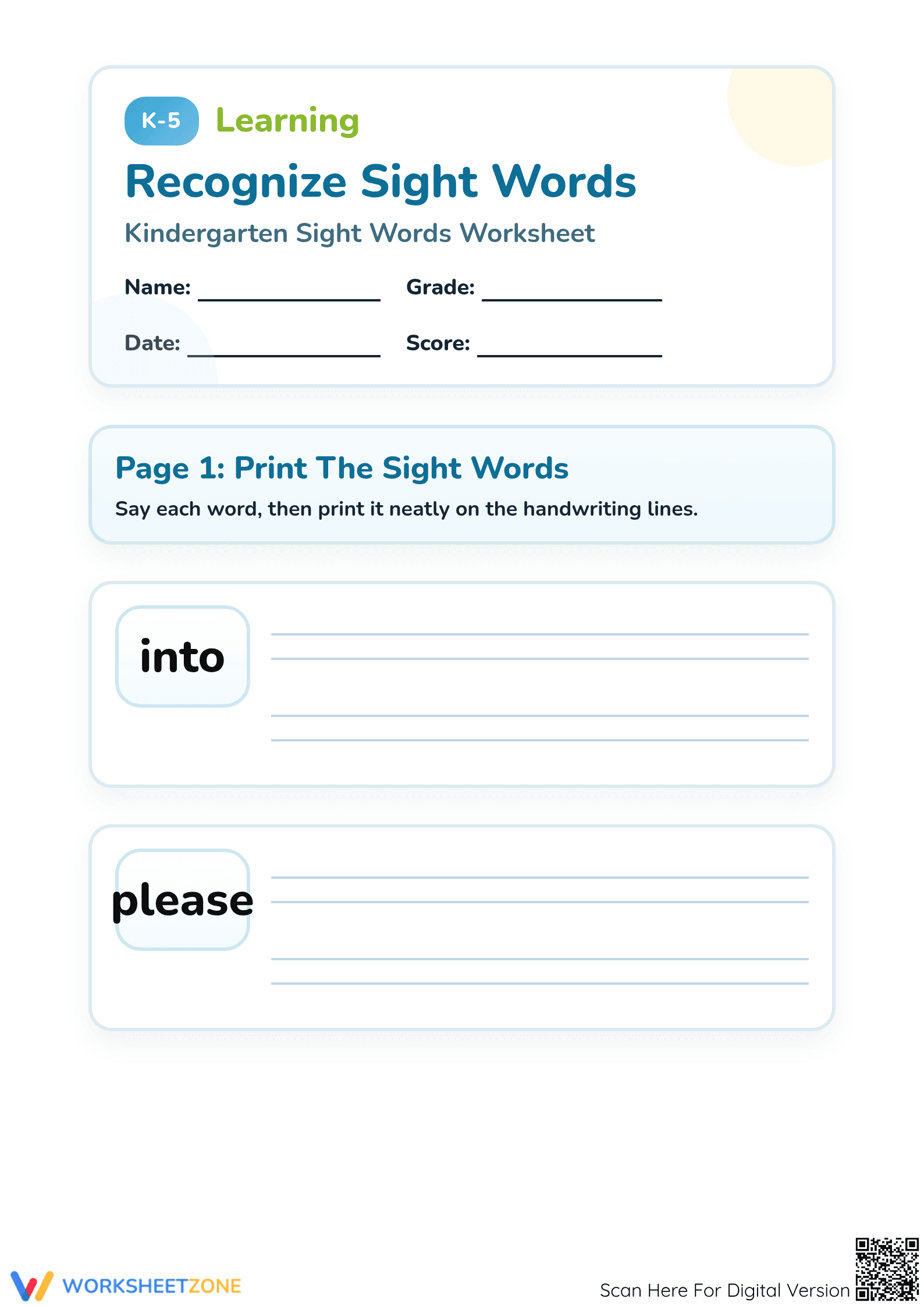
This Kindergarten sight words worksheet helps young learners build reading fluency by combining handwriting practice with visual identification tasks. Students learn to recognize and write high-frequency words such as "into," "please," and "pretty," ensuring they can identify these essential terms instantly without sounding them out. It provides a structured path toward early literacy mastery.
At a Glance
- Grade: Kindergarten · Subject: ELA
- Standard:
RF.K.3.C— Read common high-frequency words by sight (e.g., the, of, to, you, she, my)- Skill Focus: High-frequency word recognition and printing
- Format: 3 pages · 6 problems · Answer key included · PDF
- Best For: Daily morning work or literacy centers
- Time: 15–20 minutes
What's Inside
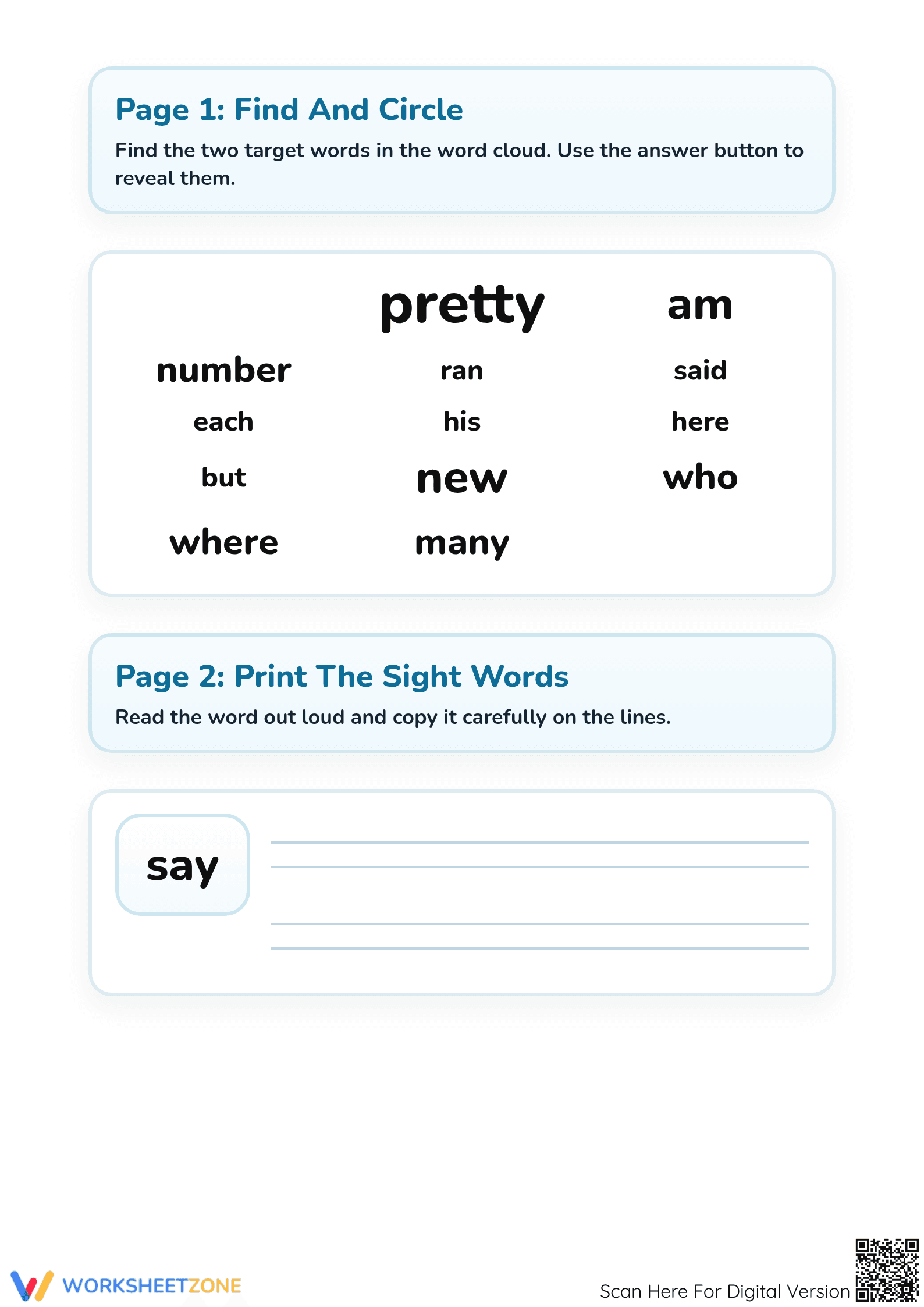
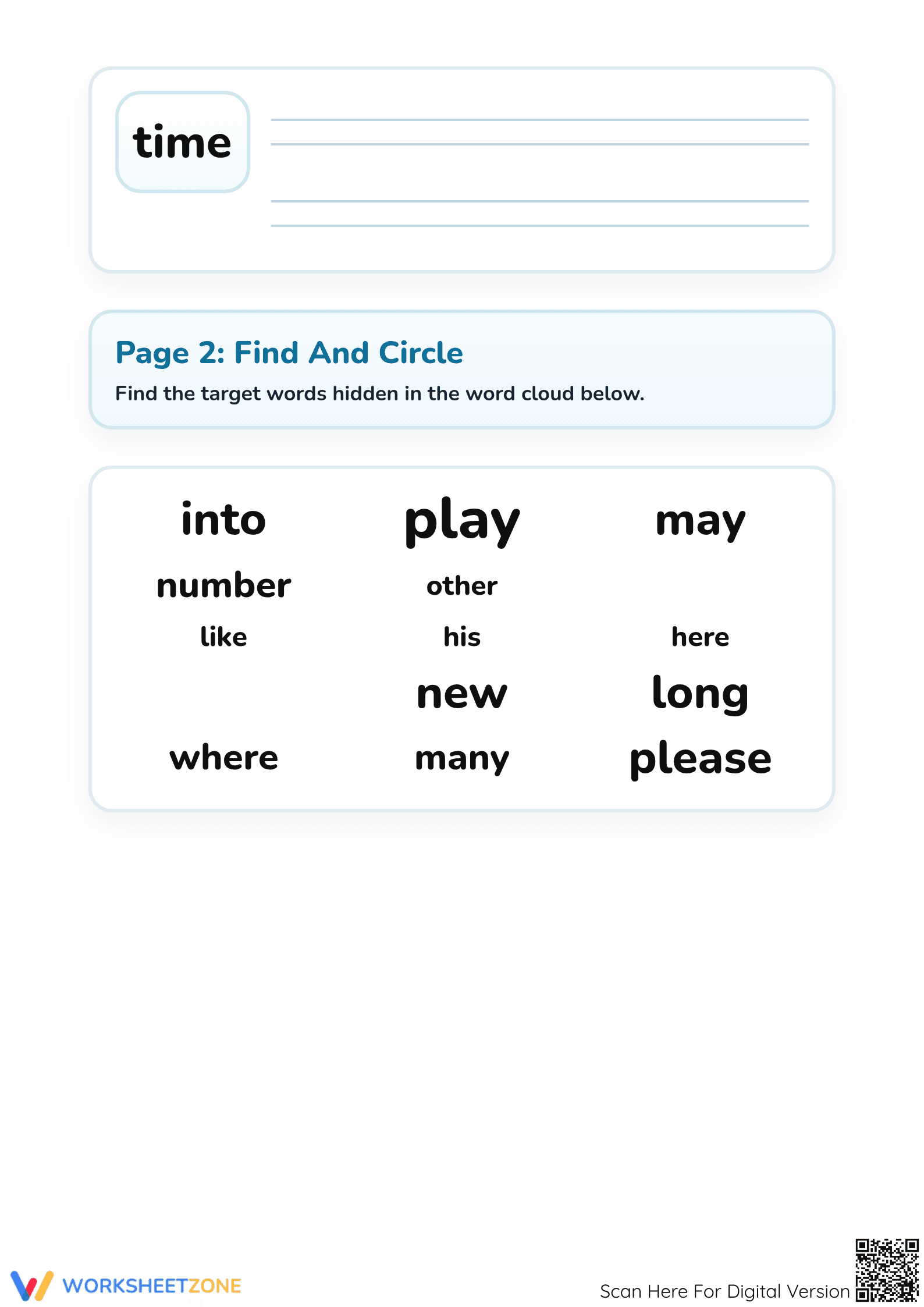
The three-page PDF features a clean, student-friendly layout designed to minimize distractions. Page one introduces handwriting practice for specific sight words using primary-ruled lines. The subsequent pages mix "Find and Circle" word cloud activities with additional printing tasks to keep students engaged while building fine motor and visual discrimination skills.
Zero-Prep Workflow
The zero-prep design allows teachers to implement this resource in under two minutes. First, print the desired pages. Second, distribute copies with pencils and crayons for the identification tasks. Third, use the provided answer key to review word accuracy and letter formation. This workflow makes it an ideal choice for substitute folders or schedule gaps.
Standards Alignment
This resource aligns with CCSS.ELA-LITERACY.RF.K.3.C: "Read common high-frequency words by sight." By requiring students to both write and find words within a visual field, the worksheet reinforces orthographic mapping necessary for automaticity. The inclusion of common kindergarten terms ensures students practice vocabulary they encounter frequently in reading. Both standard codes can be copied directly into lesson plans.
How to Use It
Use this worksheet during small-group centers to provide targeted support for word automaticity. Teachers can observe pencil grip and letter formation during printing, offering immediate feedback. Alternatively, assign it as a fast-finisher activity for students who complete primary tasks early. The "Find and Circle" component serves as a rewarding, low-stress challenge that reinforces essential reading skills.
Who It's For
This resource is tailored for Kindergarten students and advanced preschoolers beginning their reading journey. It serves as an effective tool for English Language Learners who need repetitive exposure to high-frequency vocabulary. Differentiation is built into the task variety, supporting both kinesthetic learners through writing and visual learners through identification. It pairs naturally with leveled passages or anchor charts.
The ability to recognize high-frequency words automatically is a foundational component of reading fluency and overall comprehension. According to the RAND AIRS 2024 report on early childhood literacy, students who achieve automaticity with sight words in Kindergarten demonstrate significantly higher reading trajectories in subsequent grades. This worksheet targets CCSS.ELA-LITERACY.RF.K.3.C by integrating tactile writing exercises with visual identification tasks, a multi-modal approach supported by research into orthographic mapping. By moving beyond simple rote memorization to active engagement with the word's structure and appearance, learners build the cognitive pathways required for "sight" recognition. Teachers can utilize the included six tasks across three pages to gather formative data on student progress. The zero-prep format ensures that instructional time remains focused on student outcomes rather than administrative setup, aligning with evidence-based practices for maximizing classroom efficiency in early elementary settings.


