


























Views
Downloads

Printable Sight Word Recognition Worksheet | Kindergarten
Paste this activity's link or code into your existing LMS (Google Classroom, Canvas, Teams, Schoology, Moodle, etc.).
Students can open and work on the activity right away, with no student login required.
You'll still be able to track student progress and results from your teacher account.
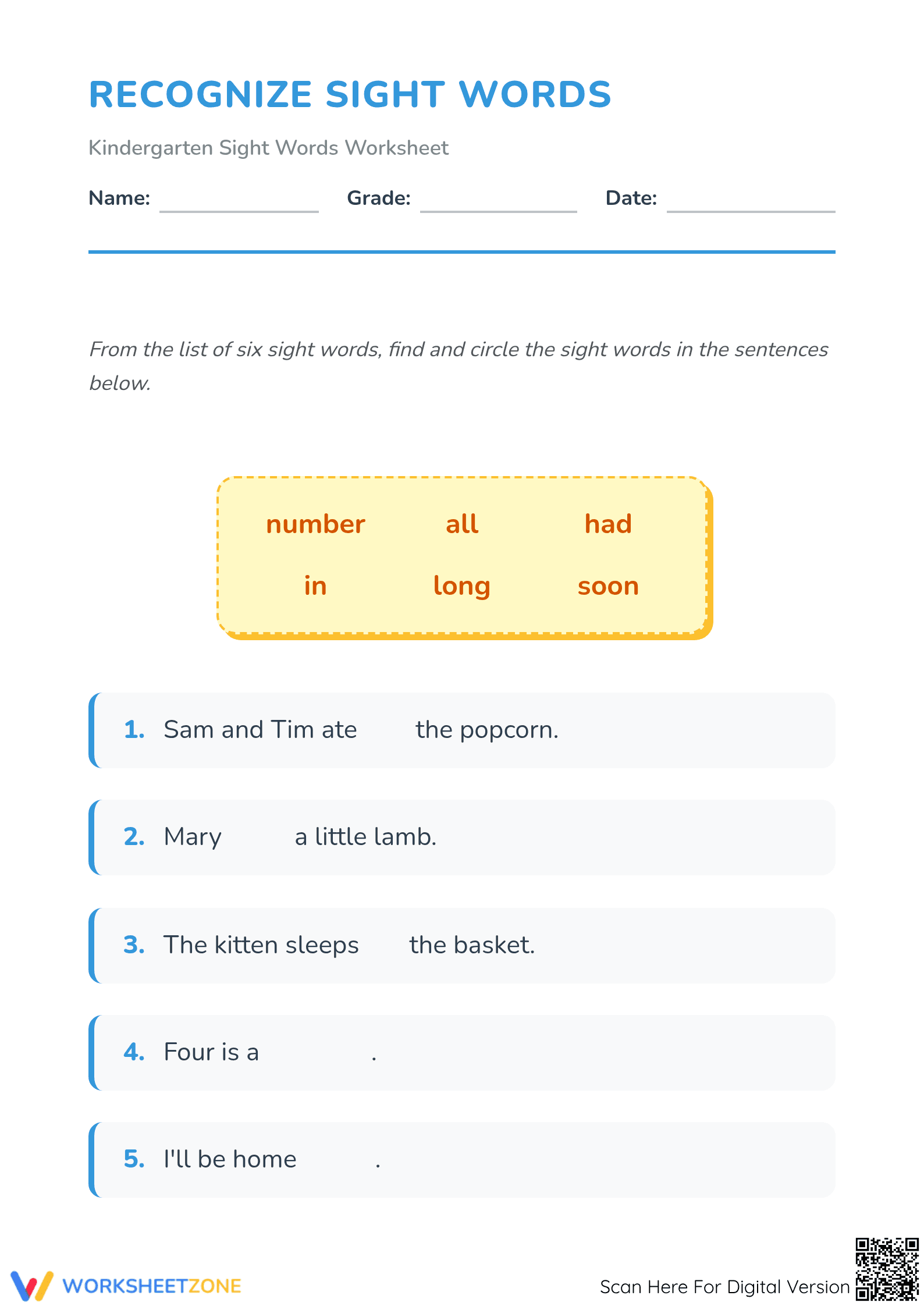
This Kindergarten sight word worksheet helps early readers identify high-frequency words within the context of simple sentences. By finding and circling specific words like "number," "all," and "soon," students build the automaticity required for fluent reading. This resource ensures learners move beyond phonetic decoding to instant recognition of essential vocabulary.
At a Glance
- Grade: Kindergarten · Subject: ELA
- Standard:
CCSS.ELA-LITERACY.RF.K.3.C— Read common high-frequency words by sight- Skill Focus: Sight Word Recognition
- Format: 3 pages · 15 problems · Answer key included · PDF
- Best For: Daily literacy centers and morning work
- Time: 15–20 minutes
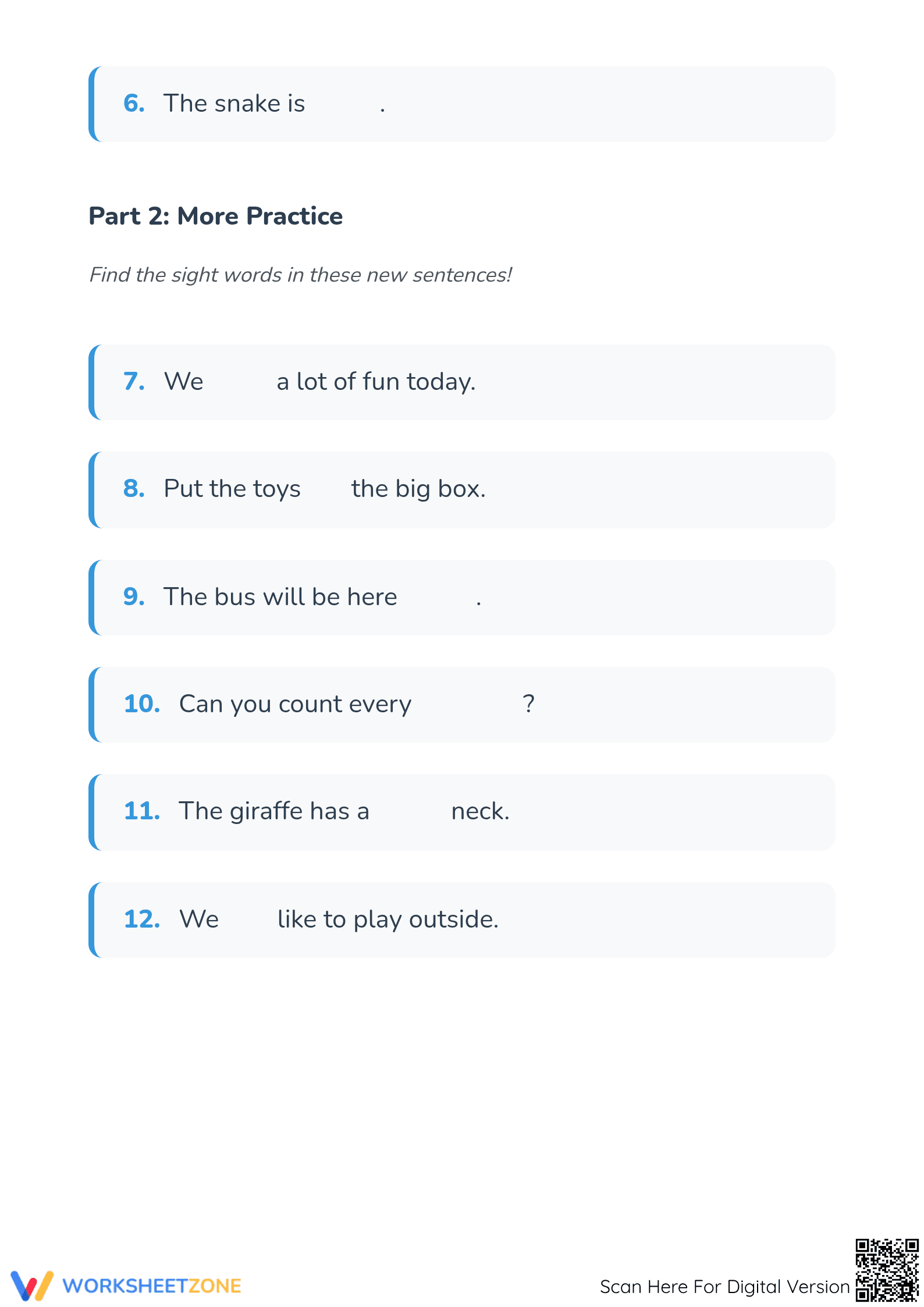
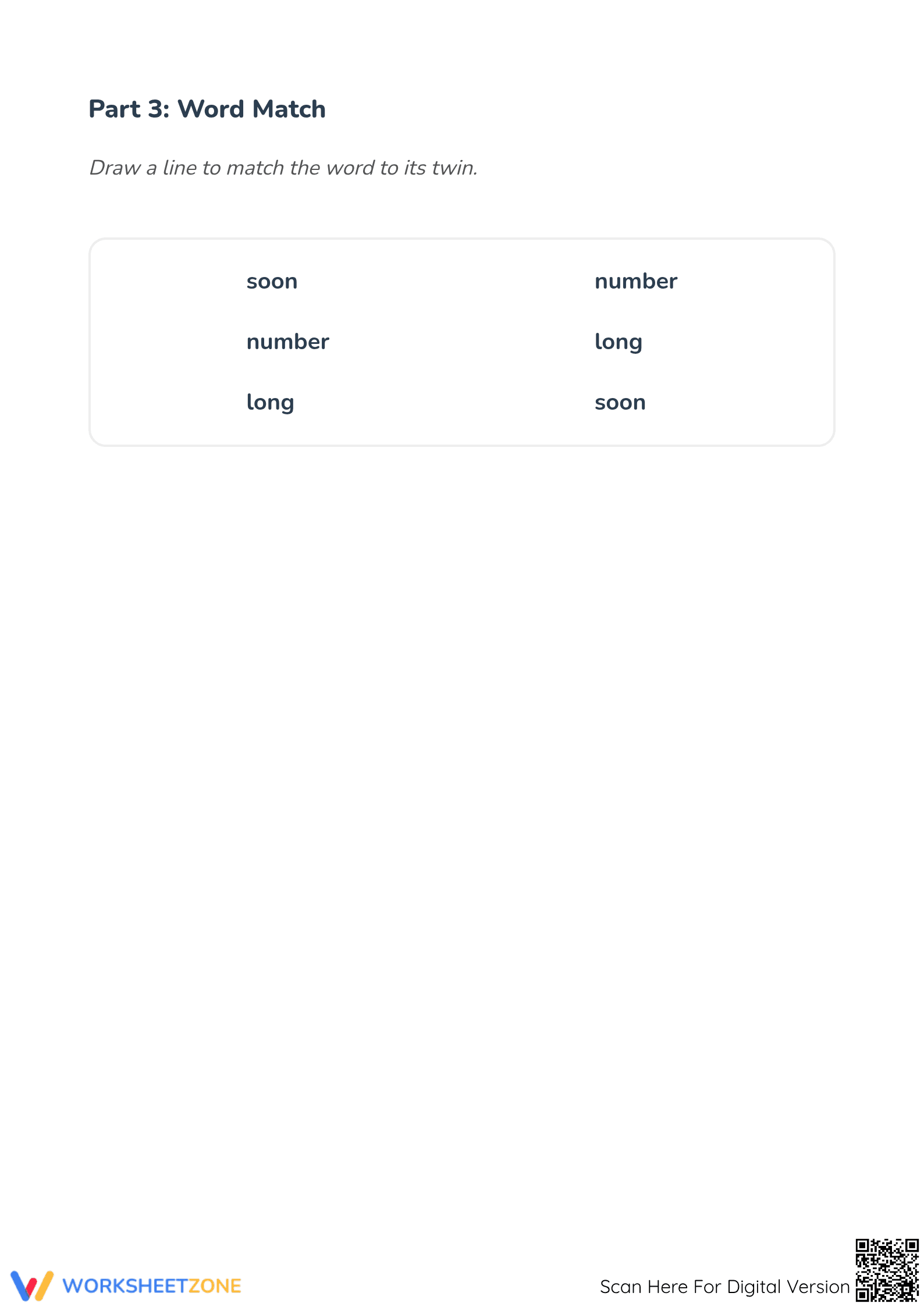
Inside this 3-page PDF, you will find 12 sentence-completion tasks where students must locate a target sight word from a provided word bank. The third page features a "Word Match" activity to reinforce visual word-form memory. A comprehensive answer key is included to facilitate quick grading or student self-correction during independent work time.
Skill Progression
- Guided Identification: Students begin by referencing a clear word bank containing six target words, providing a visual anchor for the tasks ahead.
- Supported Practice: Learners apply their knowledge through 12 distinct sentences, identifying the target words in a variety of syntactic positions.
- Independent Practice: The final matching activity requires students to recognize word twins without sentence context, solidifying visual memory.
This worksheet follows a gradual-release model, moving from bank-supported identification to contextual recognition and finally to isolated word matching.
Standards Alignment
This resource is primarily aligned to CCSS.ELA-LITERACY.RF.K.3.C: "Read common high-frequency words by sight (e.g., the, of, to, you, she, my, is, are, do, does)." It also supports foundational reading fluency by placing these words within simple, decodable sentences. Both standard codes can be copied directly into lesson plans, IEP goals, or district curriculum mapping tools.
How to Use It
Use this worksheet during your literacy block after introducing the target words on an anchor chart or word wall. It works exceptionally well as a formative assessment to see which students can distinguish similar word shapes, such as "long" and "soon," within a sentence. Expect students to complete the three pages in approximately 15 to 20 minutes during center rotations.
Who It's For
This is designed for Kindergarten students and advanced Preschoolers who are beginning their reading journey. It is also ideal for English Language Learners (ELLs) who need repetitive exposure to high-frequency vocabulary in a low-stakes format. Pair this with a sight word hunt in a favorite classroom picture book for a complete instructional experience.
High-frequency word recognition is a cornerstone of early literacy development, as noted in the RAND AIRS 2024 report on foundational reading skills. This worksheet targets CCSS.ELA-LITERACY.RF.K.3.C by requiring students to identify words like "number," "long," and "soon" within varied sentence structures. Research from Fisher & Frey (2014) emphasizes that sight recognition—the ability to identify a word in under 250 milliseconds—is essential for reducing cognitive load during complex reading tasks. By providing 15 distinct opportunities for identification and matching, this resource helps bridge the gap between isolated word study and contextual reading. The inclusion of a word bank provides necessary scaffolding for emerging readers, ensuring they can successfully navigate the 3-page layout. This systematic approach to vocabulary acquisition is a proven method for improving overall reading fluency and comprehension in early childhood education settings.


