


























Views
Downloads

Kindergarten Sight Words — Printable No-Prep Worksheet
Paste this activity's link or code into your existing LMS (Google Classroom, Canvas, Teams, Schoology, Moodle, etc.).
Students can open and work on the activity right away, with no student login required.
You'll still be able to track student progress and results from your teacher account.
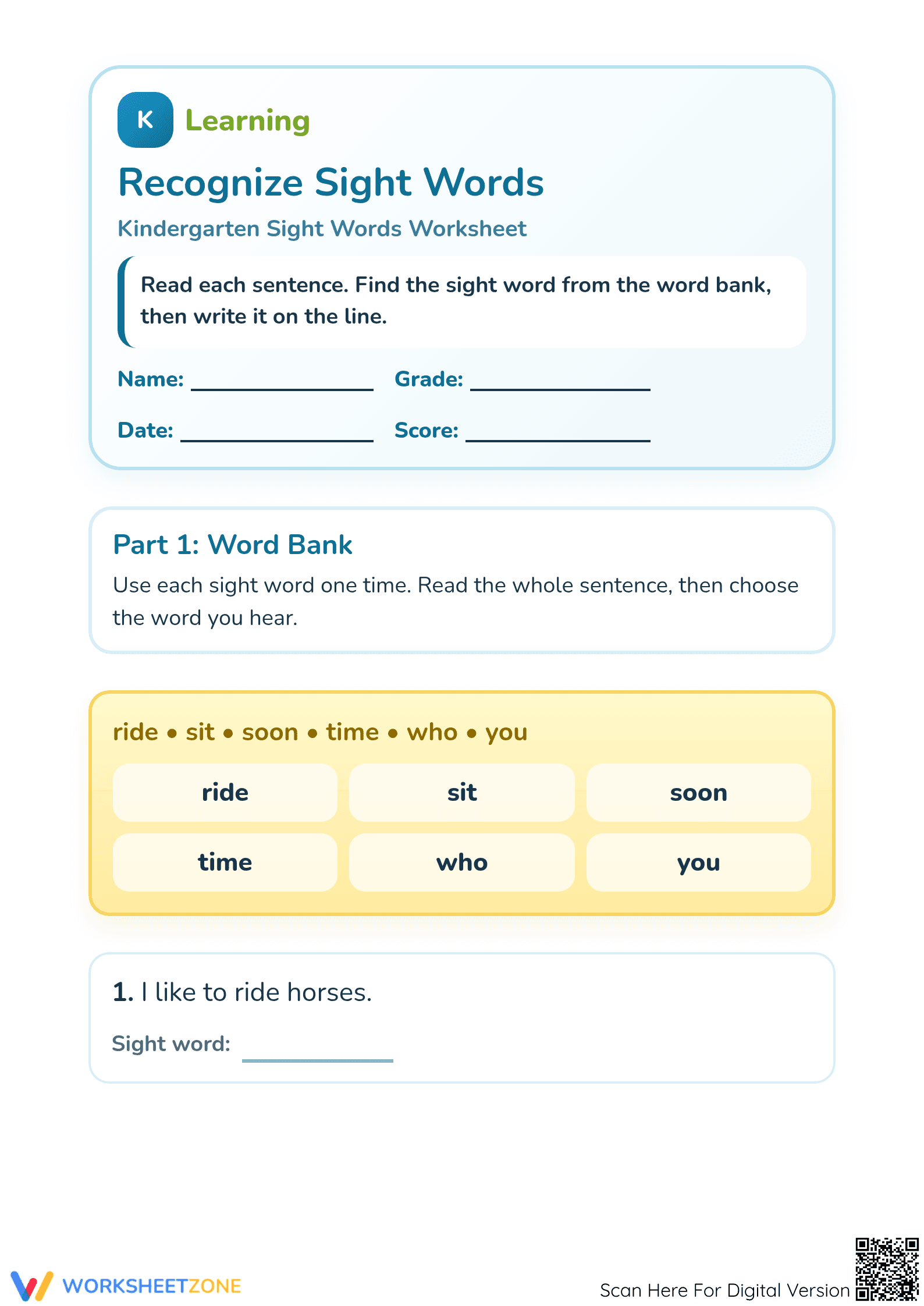
Help early learners master high-frequency vocabulary with this comprehensive Kindergarten sight word packet. This resource ensures students recognize and use common words within complete sentences, bridging the gap between isolated recognition and fluent reading. By identifying words in context, children build the confidence needed for literacy success.
At a Glance
- Grade: Kindergarten · Subject: English Language Arts
- Standard:
CCSS.ELA-LITERACY.RF.K.3.C— Read common high-frequency words by sight like ride, soon, and you- Skill Focus: High-frequency word recognition and contextual usage
- Format: 3 pages · 9 problems · Answer key included · PDF
- Best For: Kindergarten literacy centers and independent practice
- Time: 15–20 minutes
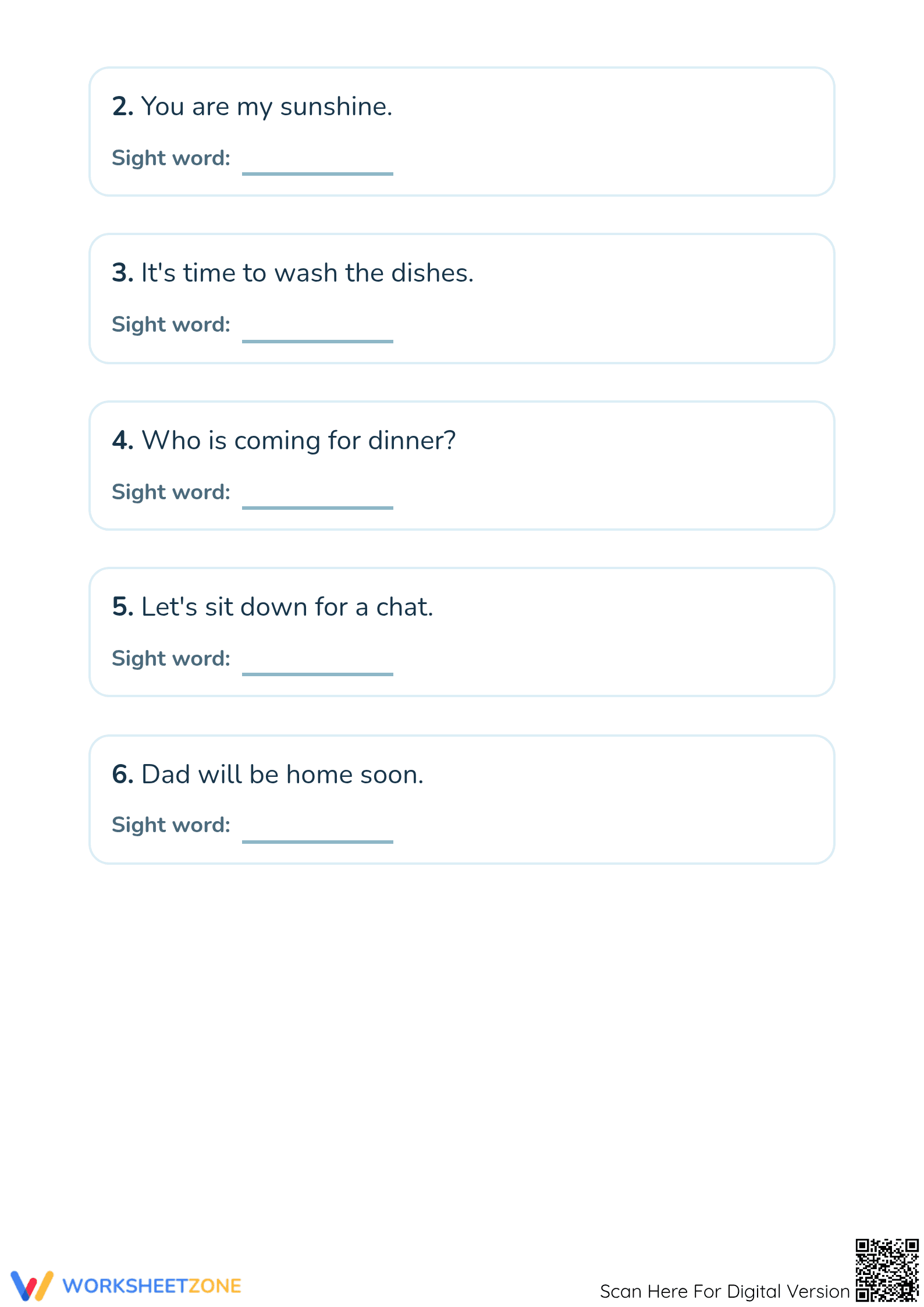
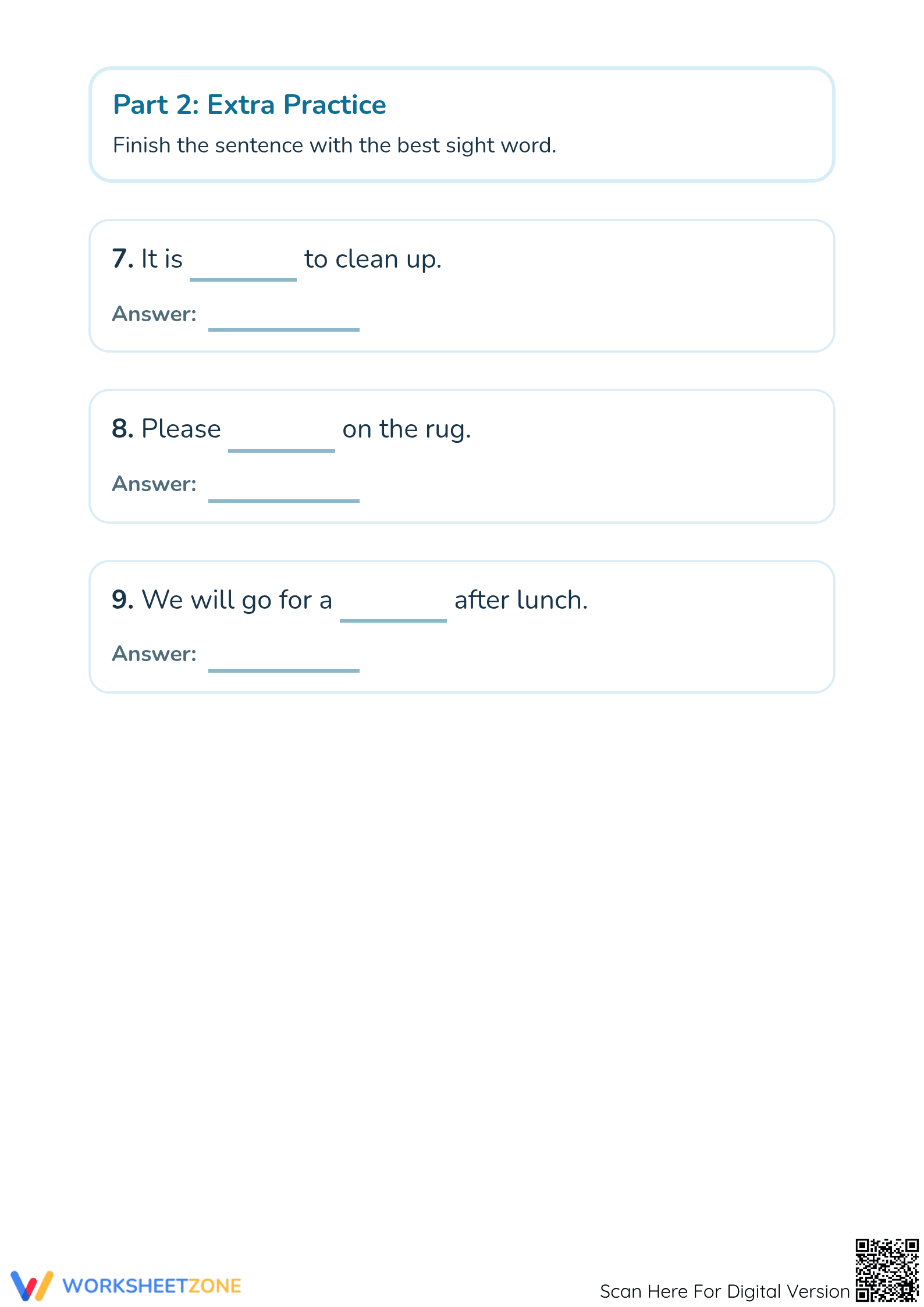
This three-page packet includes a "Word Bank" section and an "Extra Practice" segment. The first part features six sentences where students find sight words from a list—ride, sit, soon, time, who, and you—and transcribe them. The second part challenges students to choose the best word to complete sentences, reinforcing comprehension.
Teachers can implement this resource with minimal investment. Print the PDF for your class in sixty seconds. Distribute packets; clear instructions and word banks allow students to begin without complex explanations. Review work using the included answer key in under two minutes to provide instant feedback on sight word mastery.
This worksheet is primarily aligned with CCSS.ELA-LITERACY.RF.K.3.C: "Read common high-frequency words by sight (e.g., the, of, to, you, she, my, is, are, do, does)." It also supports early writing standards by encouraging accurate word transcription. Both standard codes can be copied directly into lesson plans, IEP goals, or district curriculum mapping tools.
Use this during your literacy block as a "Must-Do" activity after introducing new words. It serves as a formative assessment; observe if students locate words in the bank to gauge visual scanning skills. Alternatively, keep copies for sub plans; the self-contained word bank makes it a reliable independent task. Completion takes roughly twenty minutes.
This resource is designed for Kindergarten but suits Preschoolers or First Graders needing remedial support. It pairs naturally with sight word flashcards or classroom word walls. For students requiring help, consider highlighting sight words in the sentences to provide a visual anchor for their transcription task.
Effective early literacy instruction depends on the rapid acquisition of high-frequency words, which account for a significant percentage of all printed text. This resource aligns with CCSS.ELA-LITERACY.RF.K.3.C by requiring students to identify and write common words like "time" and "who" within authentic sentence structures. Unlike isolated drill methods, contextual practice helps children internalize the syntactic roles these words play in English. According to the RAND AIRS 2024 report, structured independent practice with immediate visual scaffolds—such as the word bank provided here—significantly improves word retention in emerging readers. By providing nine distinct opportunities for application, this worksheet ensures that students move beyond rote memorization toward functional literacy. Teachers can use these pages to document progress in word recognition, which is a foundational metric for NAEP reading readiness benchmarks. The clear layout and scaffolded sentence frames make this an essential tool for any evidence-based Kindergarten reading curriculum.


