


























Views
Downloads

Printable Kindergarten Sight Words Worksheet | RF.K.3.C
Paste this activity's link or code into your existing LMS (Google Classroom, Canvas, Teams, Schoology, Moodle, etc.).
Students can open and work on the activity right away, with no student login required.
You'll still be able to track student progress and results from your teacher account.
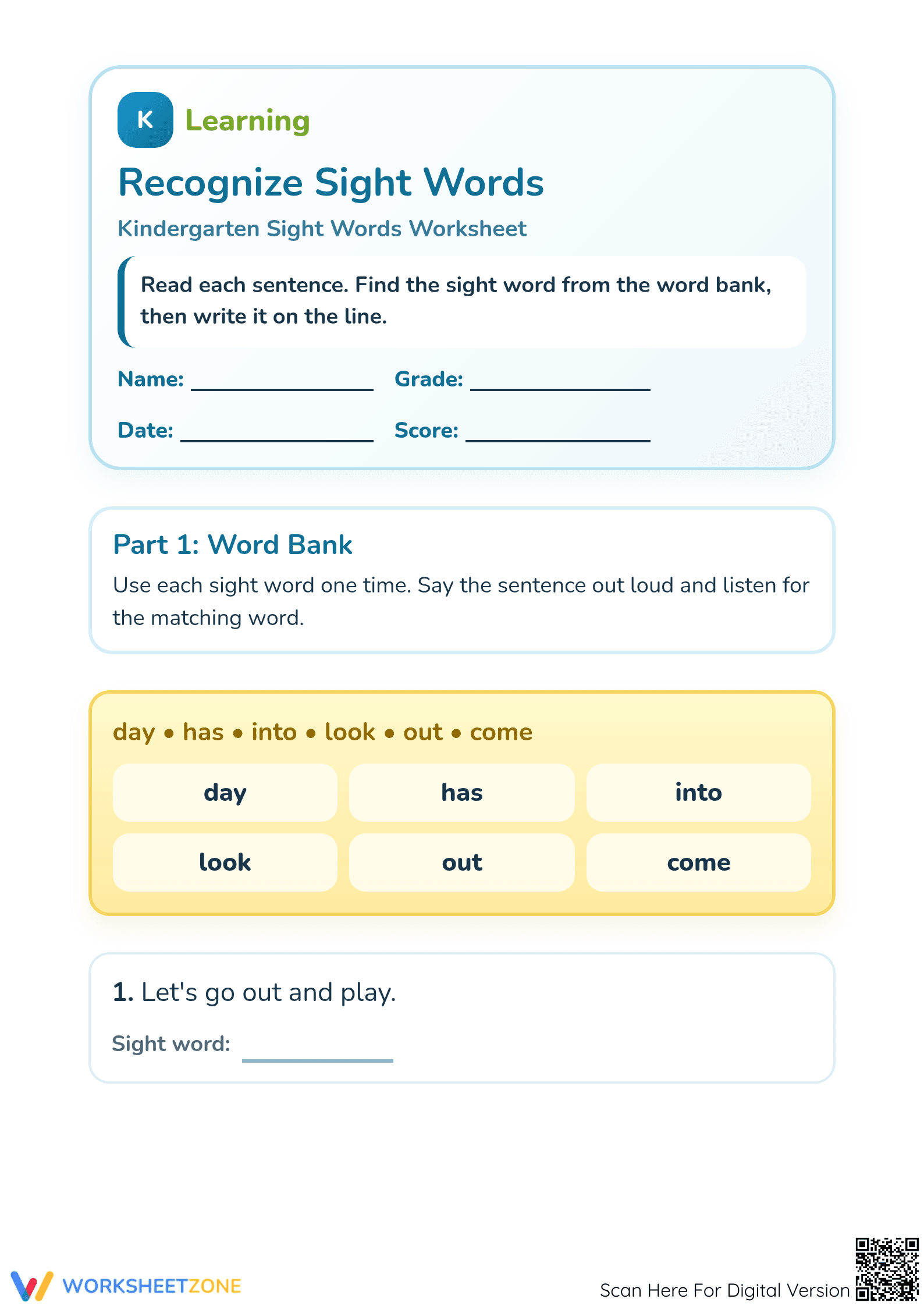
This Kindergarten ELA worksheet helps young learners master essential high-frequency words through structured identification and application. Students practice recognizing and writing sight words from a word bank to complete sentences, ensuring they can identify common words automatically. This foundational activity builds the reading fluency and confidence required for early literacy success and independent reading.
At a Glance
- Grade: Kindergarten · Subject: ELA
- Standard:
CCSS.ELA-LITERACY.RF.K.3.C— Read common high-frequency words by sight- Skill Focus: High-frequency sight word recognition
- Format: 3 pages · 9 problems · Answer key included · PDF
- Best For: Early literacy centers and morning work
- Time: 15–20 minutes
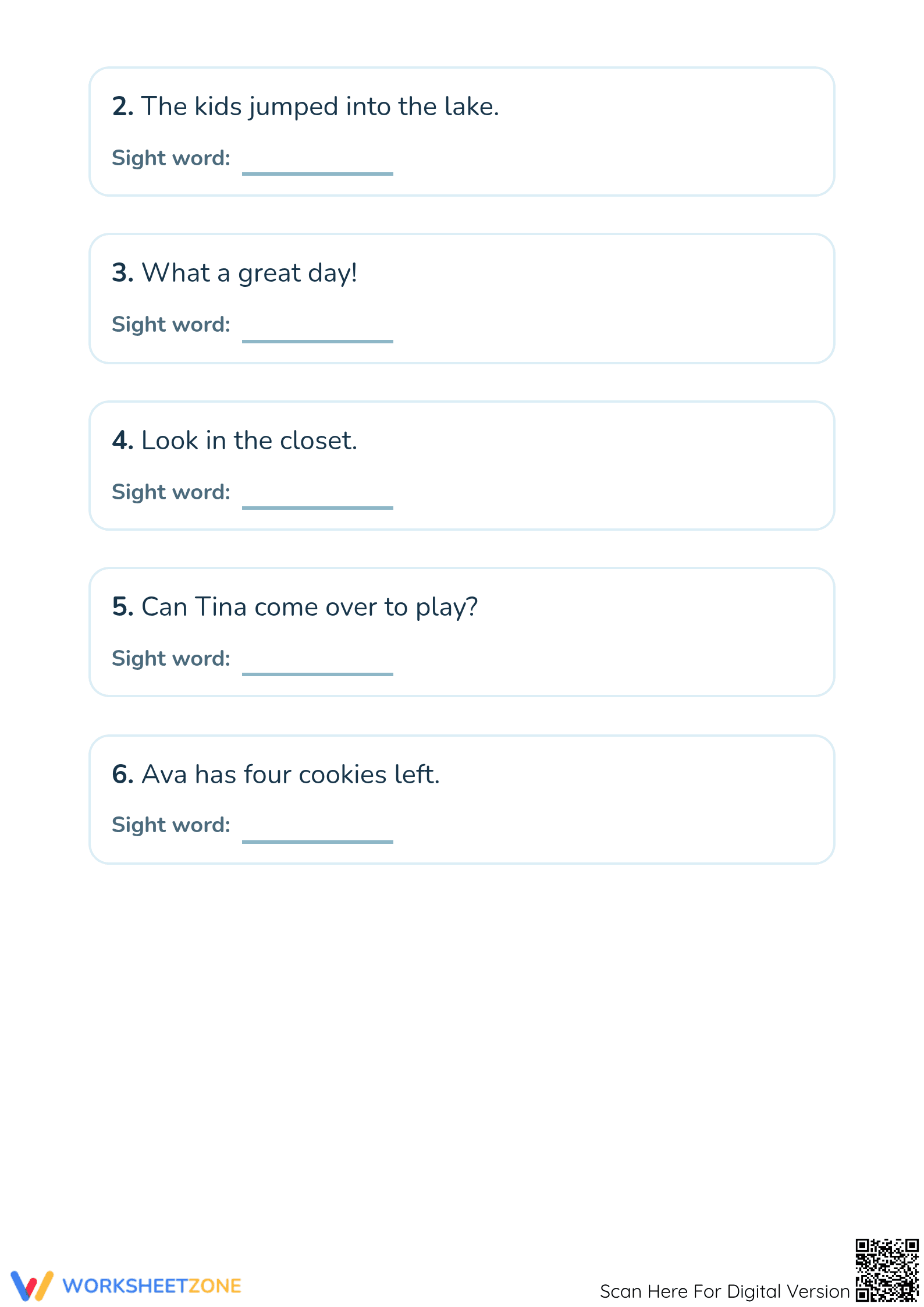
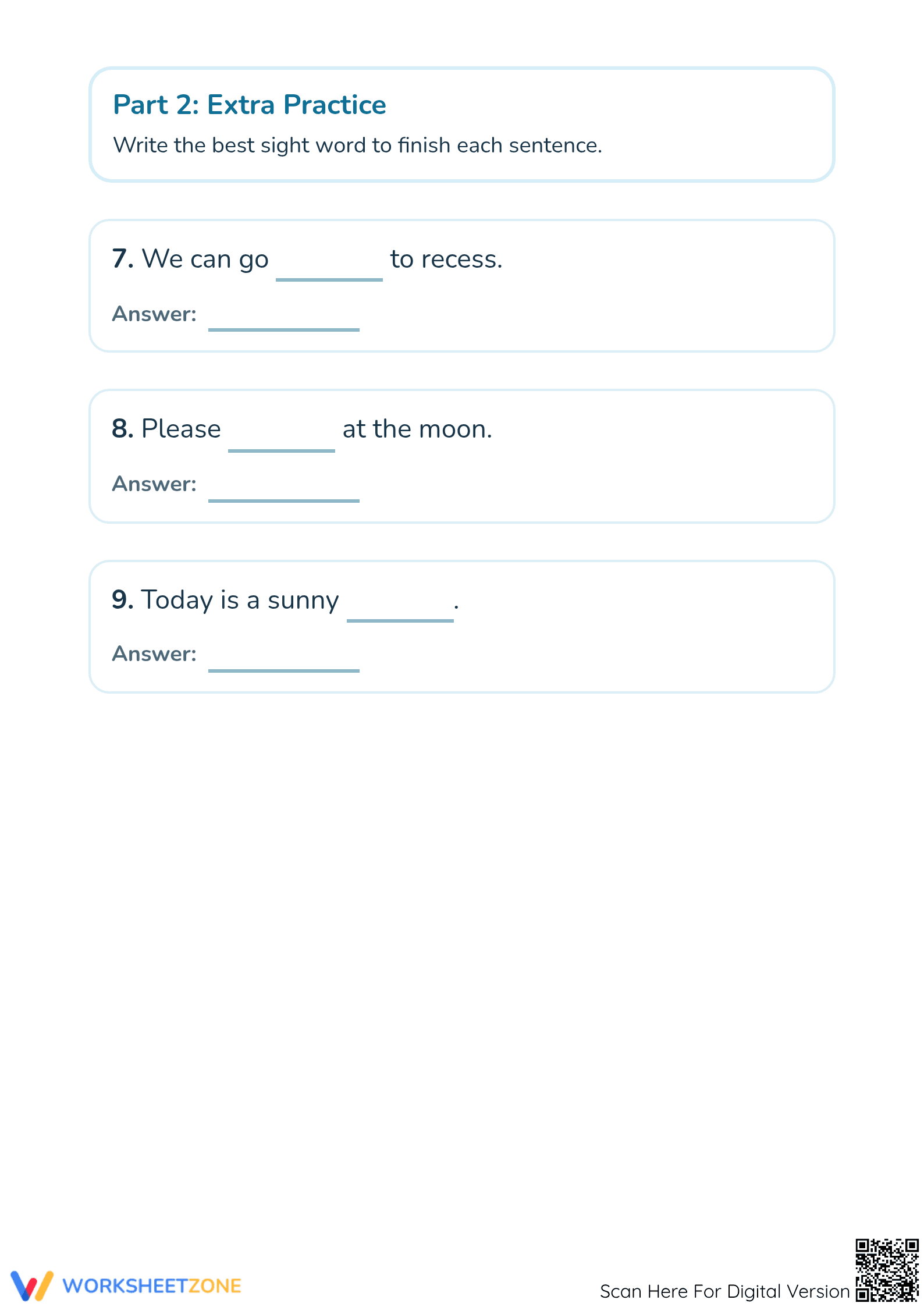
This three-page PDF resource features a clear, student-friendly layout designed for early readers. It includes a word bank with six target words (day, has, into, look, out, come), six sentence-level identification tasks, and three application problems in the "Extra Practice" section. A comprehensive answer key is provided to facilitate quick grading or student self-correction during independent work time.
The zero-prep design allows teachers to implement this activity in under two minutes. Simply print the three pages, distribute them to students, and review the completed work using the included key. The self-explanatory instructions and word bank support student independence, making this an ideal resource for substitute plans, homework assignments, or quiet work during small-group reading rotations.
This worksheet is strictly aligned to CCSS.ELA-LITERACY.RF.K.3.C, which requires students to read common high-frequency words by sight. By focusing on six specific words within contextual sentences, the activity provides the repeated exposure necessary for automaticity. This standard code can be copied directly into lesson plans, IEP goals, or district curriculum mapping tools to track early literacy progress.
Use this worksheet as a formative assessment during direct instruction to gauge which students have mastered these specific high-frequency words. It is particularly effective when assigned after a "Word Wall" introduction. Teachers should observe whether students refer back to the word bank or identify words immediately, as this indicates their level of word recognition automaticity. Expected completion is 15-20 minutes.
This resource is designed for Kindergarten students but serves as an excellent intervention tool for Preschoolers or first graders needing additional literacy support. It pairs naturally with sight word flashcards or any early reader passage containing the target words. The large font and clear spacing accommodate developing fine motor skills and support students with visual processing needs.
The mastery of high-frequency words is a critical milestone in early literacy, as these "sight words" often do not follow standard phonetic rules. Research from Fisher & Frey (2014) emphasizes that automaticity in word recognition allows young readers to shift their cognitive resources from decoding to comprehension. This worksheet supports CCSS.ELA-LITERACY.RF.K.3.C by providing the structured, contextual practice required to move words from short-term memory to long-term sight recognition. By engaging with words like "come" and "into" within full sentences, students learn to perceive word units rapidly, which is a key predictor of future reading fluency and overall academic success in the primary grades.


