


























Views
Downloads

Kindergarten Sight Words Worksheet | Essential Printable
Paste this activity's link or code into your existing LMS (Google Classroom, Canvas, Teams, Schoology, Moodle, etc.).
Students can open and work on the activity right away, with no student login required.
You'll still be able to track student progress and results from your teacher account.
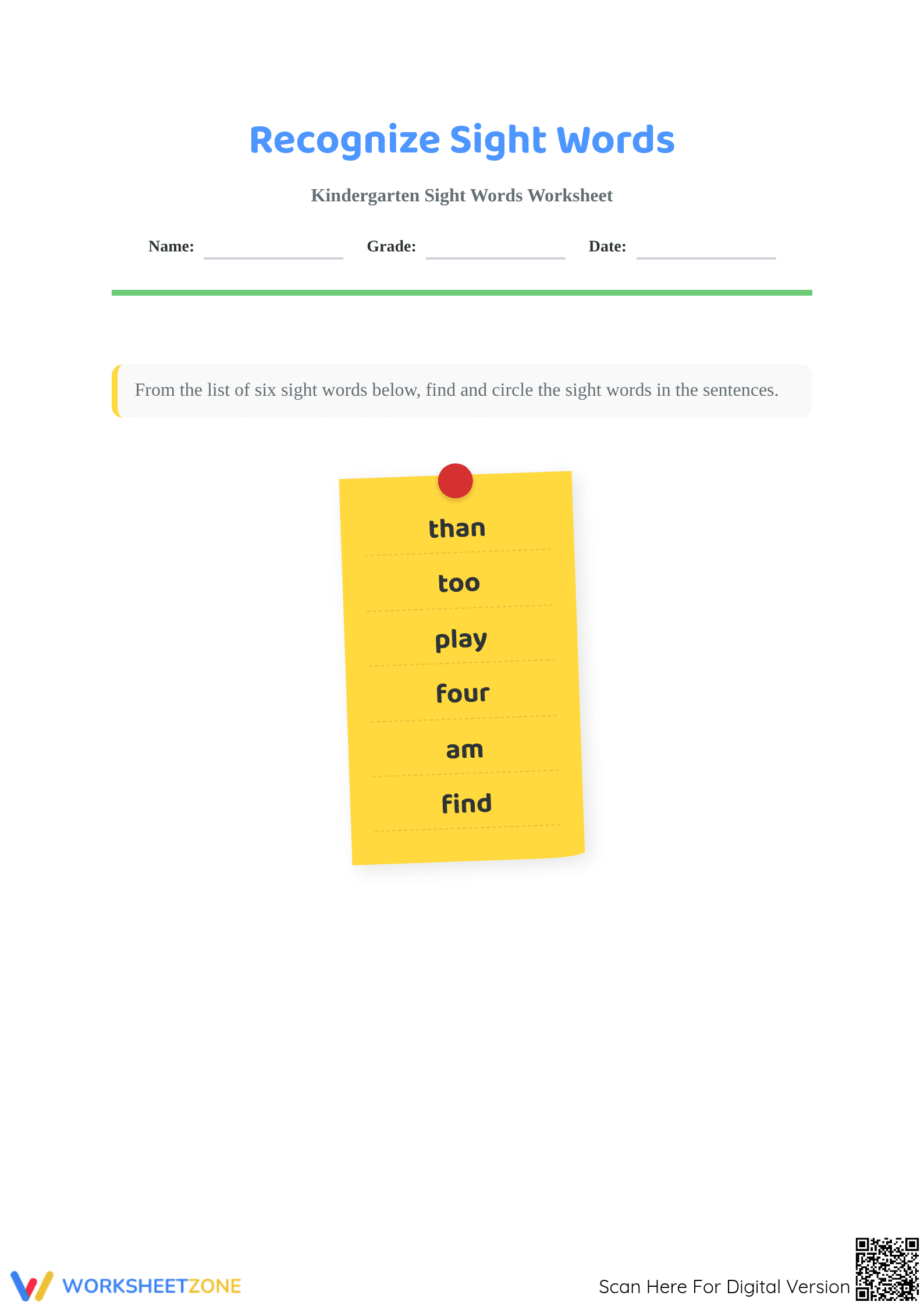
Help early readers master high-frequency vocabulary with this comprehensive Kindergarten sight word worksheet. Students practice identifying, matching, and finding six essential words to build reading fluency. By engaging with words in multiple formats, learners move from simple recognition to contextual understanding, ensuring they are ready for independent reading tasks and more complex primary texts.
At a Glance
- Grade: Kindergarten · Subject: ELA
- Standard:
RF.K.3.C— Read common high-frequency words by sight to build foundational literacy and fluency- Skill Focus: Sight word recognition and contextual identification
- Format: 3 pages · 15 problems · Answer key included · PDF
- Best For: Literacy centers and independent student practice
- Time: 15–20 minutes
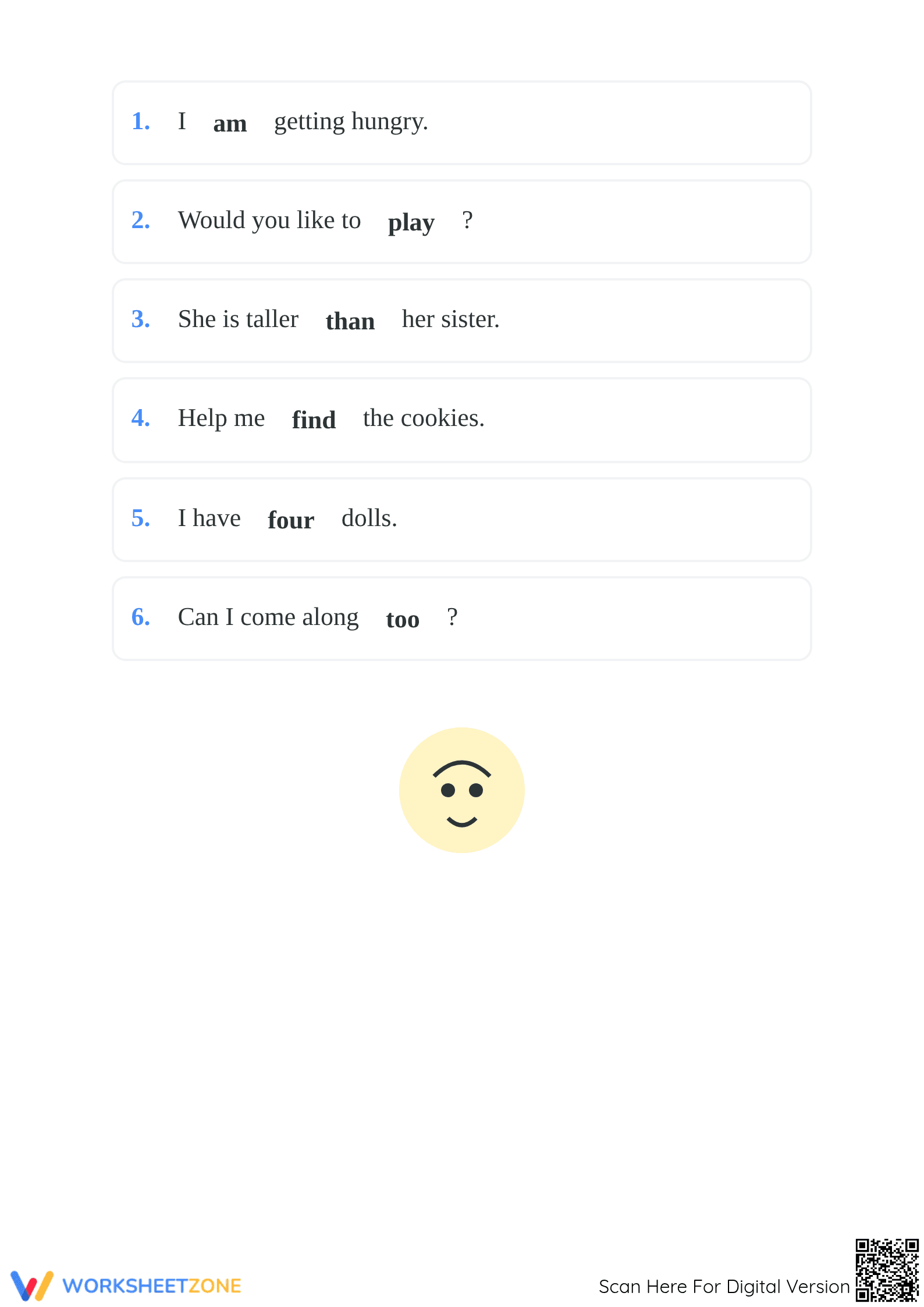
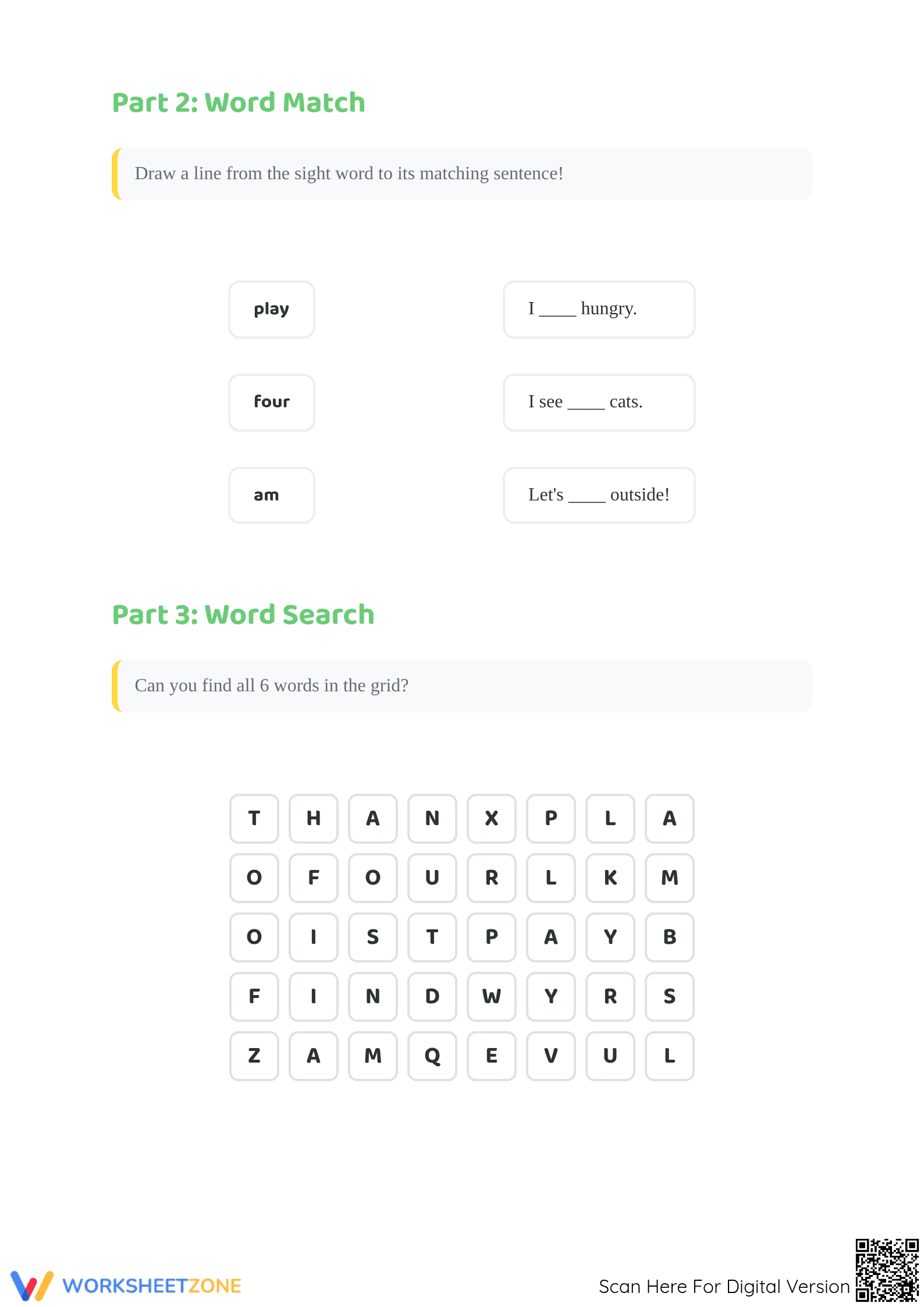
This three-page resource is packed with varied activities to keep young learners engaged. Inside, you will find a list of six target words followed by sentence-based identification, a word-to-sentence matching challenge, and a reinforcing word search. The clear layout and large text are specifically designed for preschool and kindergarten students, and a full answer key is included for quick grading.
The zero-prep workflow for this worksheet is designed to save teachers time while maximizing student impact. First, print the three-page PDF, which takes less than thirty seconds. Second, distribute the packets to your literacy centers or individual desks with no additional teacher setup required. Finally, review the completed work using the included answer key to identify any students who need extra support with these specific words.
This worksheet is strictly aligned to CCSS.ELA-LITERACY.RF.K.3.C: Read common high-frequency words by sight. It also supports the broader RF.K.3 goal by helping students apply grade-level phonics and word analysis skills in decoding words. Both standard codes can be copied directly into lesson plans, IEP goals, or district curriculum mapping tools for easy documentation.
Use this resource during your daily literacy block as a follow-up to direct instruction on new vocabulary. It also serves as an excellent formative assessment tool; observe if students can find the words in the word search as quickly as they recognize them in sentences. Expect students to spend about five to seven minutes per page, making it a perfect twenty-minute independent activity.
This resource is for preschool and kindergarten students who are beginning their journey with high-frequency vocabulary. It provides necessary scaffolds for emerging readers, such as bolded words in sentences and clear visual matching. Pair this worksheet with a short leveled passage or a sight word anchor chart to create a complete and cohesive learning experience for your small group instruction.
According to research from Fisher & Frey (2014), the gradual release of responsibility is crucial when teaching foundational skills like sight word recognition. This worksheet facilitates that process by providing multiple exposures to the same vocabulary across different cognitive tasks. By moving from simple circling in sentences to matching and finally to an independent word search, students reinforce their mental orthographic images of the words. Standard RF.K.3.C requires that students recognize these words automatically to free up cognitive resources for comprehension. This printable resource ensures that Kindergarten students have the structured practice necessary to achieve that level of automaticity. The inclusion of fifteen distinct tasks provides enough data points for educators to make informed decisions about student progress and readiness for first-grade reading demands. Educators can confidently integrate this standards-aligned tool into their existing curriculum knowing it meets rigorous evidence-based instructional requirements.


