




























Views
Downloads


Ready Storytelling Music Word Search | Grades 6–7 Fine Art

Paste this activity's link or code into your existing LMS (Google Classroom, Canvas, Teams, Schoology, Moodle, etc.).
Students can open and work on the activity right away, with no student login required.
You'll still be able to track student progress and results from your teacher account.
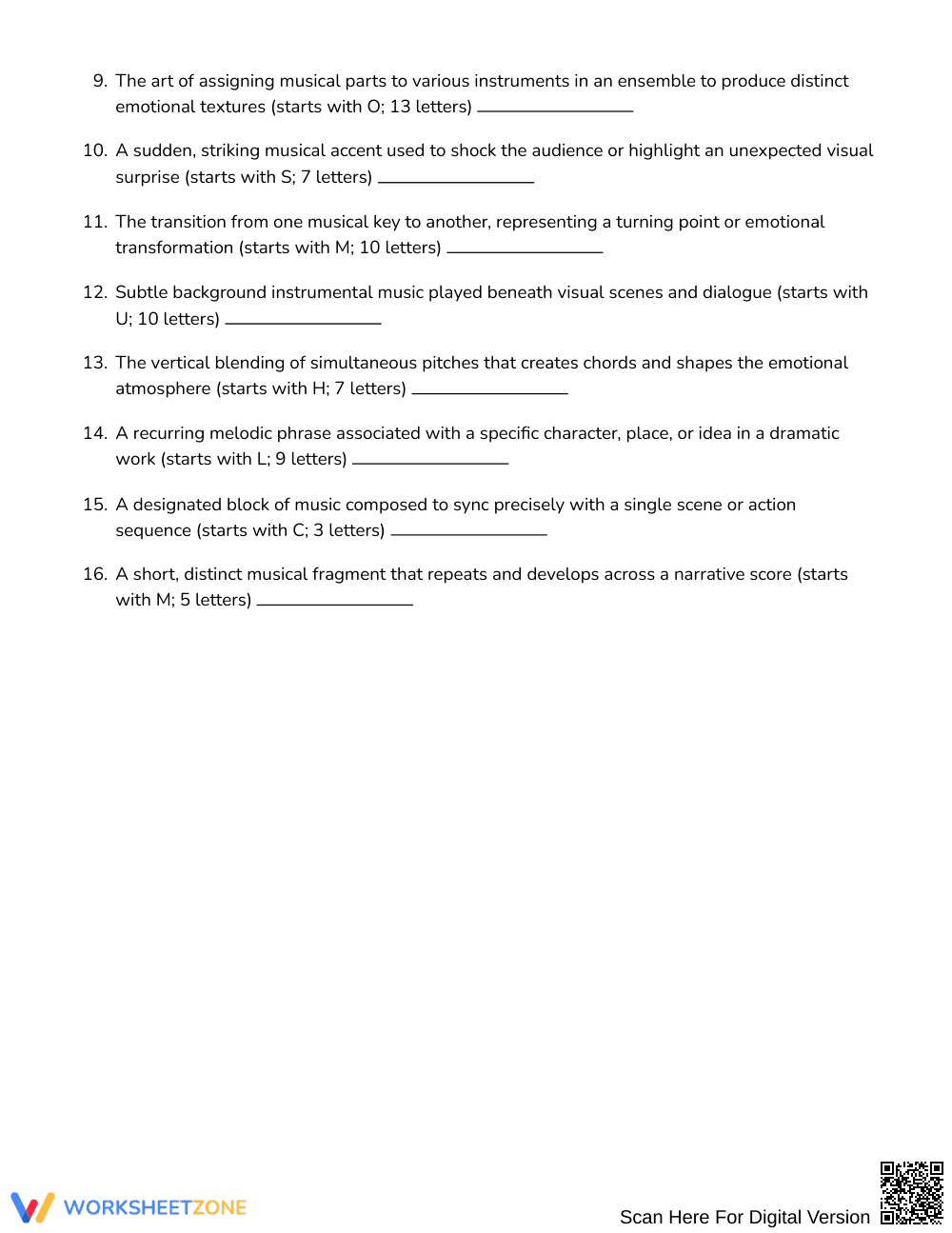
This Grades 6–7 Fine Art word search reinforces key vocabulary for music and storytelling without lyrics through an active clue-solving challenge. Middle school students decode narrative music terminology from descriptive definitions before locating sixteen distinct vocabulary terms across the puzzle, developing critical listening comprehension and domain-specific music literacy.
At a Glance
- Grade: Grades 6–7 · Subject: Fine Art
- Standard: Not standards-assessed — vocabulary enrichment
- Skill Focus: Music and storytelling without lyrics
- Format: 3 pages · 16 words · Answer key included · PDF
- Best For: Instrumental music review and vocabulary enrichment
- Time: 25–35 minutes
What's Inside
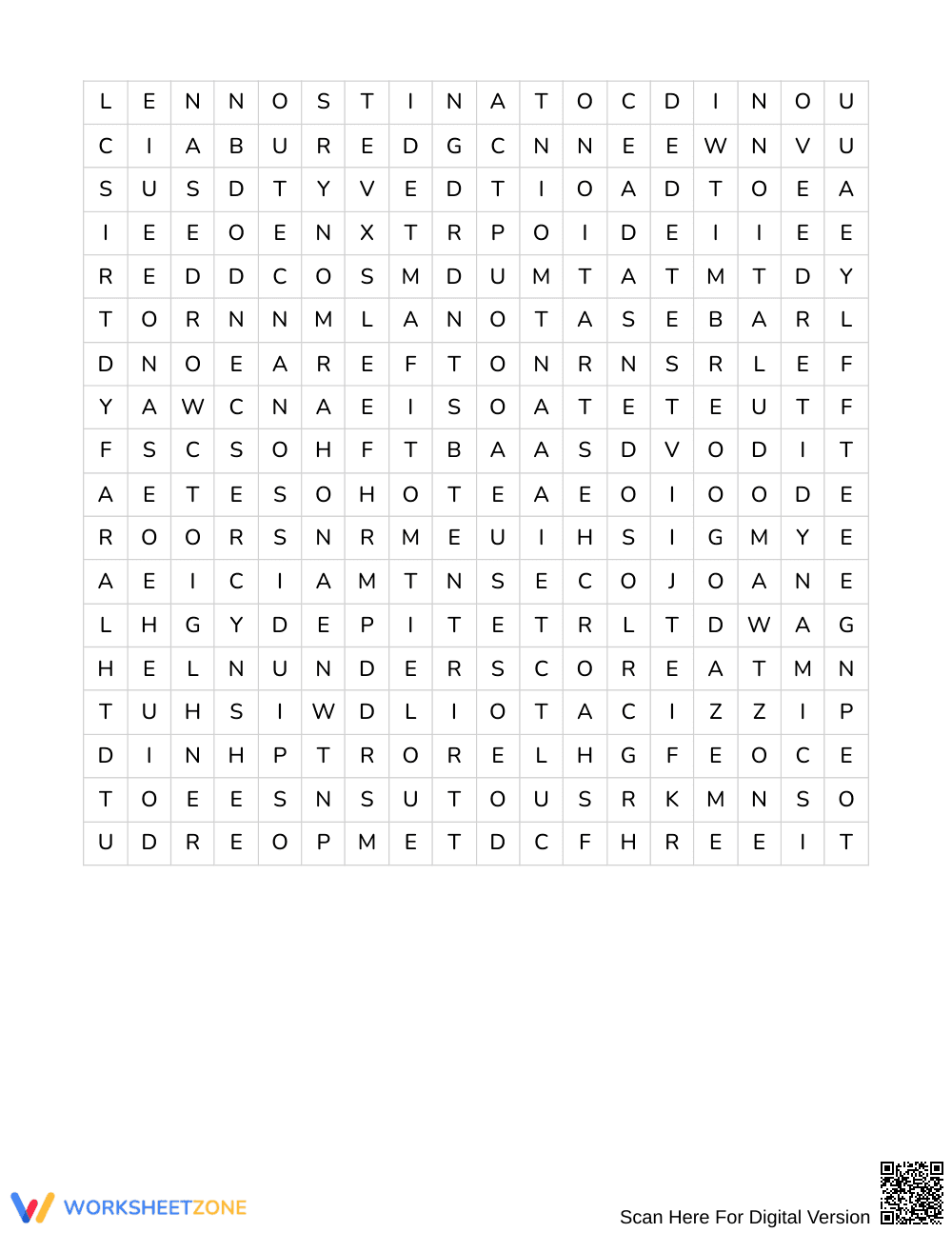
The 3-page printable activity features sixteen narrative music clues paired with a dense letter grid, deliberately omitting a traditional word bank to promote genuine recall. Students read each definition to identify the hidden term, then search the puzzle. A dedicated four-page answer key provides clear solution coordinates for swift verification.
Puzzle Structure and Mechanics
This puzzle operates on an 18 x 18 letter grid designed to test retrieval and pattern recognition. Rather than scanning for a visible word list, learners must analyze sixteen conceptual clues to determine target terms. Words run in all eight possible directions: north, northeast, east, southeast, south, southwest, west, and northwest, providing an engaging, high-interest challenge.
Standards Alignment
This activity serves strictly as domain-specific vocabulary enrichment and is not aligned to a formal state or national content standard. It supports foundational fine arts education by deepening conceptual understanding of non-verbal musical narrative devices, film underscoring, and orchestral textures in middle school music electives.
How to Use It
Deploy this activity after direct instruction on programmatic or film music to consolidate theoretical terms. Alternatively, use it during an active listening unit where students identify devices like ostinatos, stingers, or leitmotifs in orchestral excerpts. Formatively assess comprehension by checking whether students correctly identify the terminology from definitions before searching the grid. Most students will finish within 25 to 35 minutes.
Who It's For
This resource is tailored for Grades 6–7 general music, band, or orchestra students studying how composers communicate emotion without text. For emerging learners needing support, teachers may supply an optional starting letter list. Pair this puzzle directly with a guided listening log featuring instrumental film themes or programmatic classical suites.
Integrating purposeful vocabulary instruction within middle school arts curricula establishes the foundation for expressive literacy and analytical listening. According to Fisher & Frey (2014), content-area vocabulary acquisition accelerates when students actively retrieve definitions rather than passively copying terminology from provided lists. By confronting clues for instrumental storytelling vocabulary—such as leitmotif, dissonance, orchestration, and underscoring—learners consolidate how musical architecture communicates dramatic narrative without spoken dialogue or lyrics. Removing the traditional word bank requires students to evaluate contextual descriptions critically before searching an 18 by 18 grid across eight distinct spatial directions. This rigorous retrieval-practice model strengthens long-term memory retention, deepens domain-specific terminology fluency, and equips adolescent learners with the exact academic language needed to critique complex orchestral compositions, cinema scores, and programmatic masterworks accurately during subsequent music appreciation discussions. Consequently, educators gain a reliable, structured mechanism to verify conceptual grasp and support sophisticated artistic discourse.


