


























Views
Downloads



Printable Thanksgiving Reading Worksheet | Grade 5
Paste this activity's link or code into your existing LMS (Google Classroom, Canvas, Teams, Schoology, Moodle, etc.).
Students can open and work on the activity right away, with no student login required.
You'll still be able to track student progress and results from your teacher account.
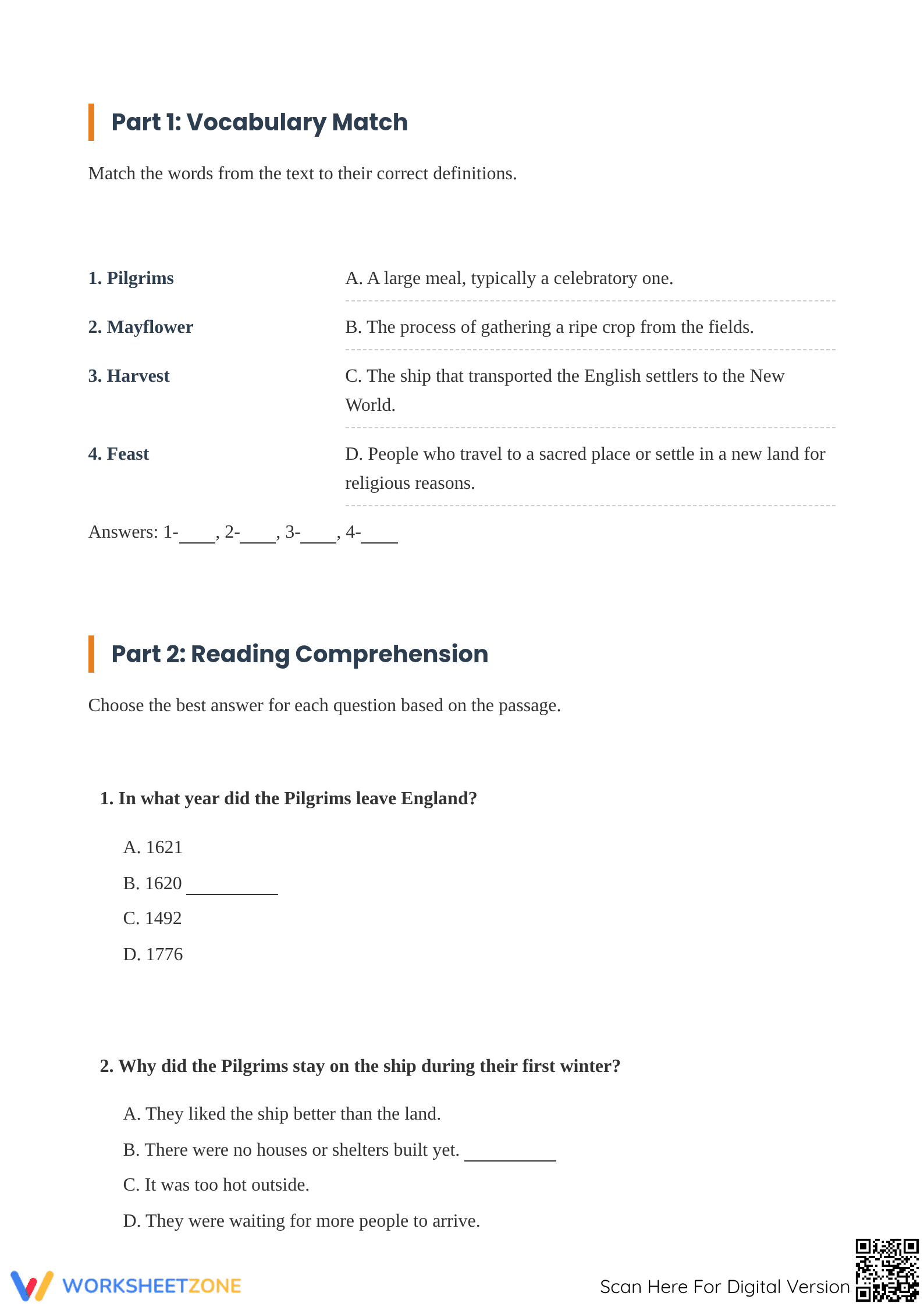
This Grade 5 reading comprehension worksheet helps students build essential informational text skills while learning about the history of Thanksgiving. By reading a short historical passage and answering targeted questions, students practice extracting explicit details, defining vocabulary in context, and writing text-based responses.
At a Glance
- Grade: 5 · Subject: ELA
- Standard:
CCSS.ELA-LITERACY.RI.5.1— Explain what the text says explicitly using evidence- Skill Focus: Reading Comprehension & Vocabulary
- Format: 3 pages · 9 problems · Answer key included · PDF
- Best For: Independent practice or sub plans
- Time: 20–30 minutes
This three-page resource features a high-interest informational passage detailing the origins of Thanksgiving, the journey of the Mayflower, and the 1621 harvest feast. Following the text, students complete a four-question vocabulary matching section, four multiple-choice reading comprehension questions, and one short-answer prompt requiring text evidence. A complete answer key is provided to ensure quick and accurate grading.
Zero-Prep Workflow
Designed for maximum efficiency, this resource requires virtually zero teacher preparation.
- Print (1 minute): Simply print the three-page PDF packet double-sided to save paper.
- Distribute (1 minute): Hand out the packets to students as a self-contained assignment.
- Review (3 minutes): Use the included answer key to quickly check student responses or guide a whole-class review.
With under two minutes of total prep time, this worksheet is an ideal solution for emergency sub plans, morning work, or independent reading stations.
Standards Alignment
This worksheet is directly aligned to primary standard CCSS.ELA-LITERACY.RI.5.1, requiring students to quote accurately from a text when explaining what the text says explicitly and when drawing inferences. It also supports vocabulary development by asking students to determine the meaning of domain-specific words encountered in the passage. Both standard codes can be copied directly into lesson plans, IEP goals, or district curriculum mapping tools.
How to Use It
This versatile reading packet fits easily into various instructional moments. Use it during independent reading time after a whole-group lesson on identifying main ideas and supporting details. Alternatively, assign it as a seasonal homework task during the weeks leading up to the Thanksgiving holiday. As a formative assessment tip, observe how students tackle the short-answer question; check if they are naturally looking back at the text to find specific evidence before writing their response. Expected completion time is 20 to 30 minutes.
Who It's For
This resource is primarily designed for fifth-grade general education students, though it is also highly effective for sixth graders needing foundational reading review. For students requiring accommodations, teachers can pre-highlight key vocabulary words in the passage or allow them to complete the reading with a partner. It pairs perfectly with a broader social studies unit on early American settlements or a direct instruction lesson on finding text evidence.
Developing strong informational text comprehension is a critical component of upper elementary literacy. This resource targets CCSS.ELA-LITERACY.RI.5.1, focusing on the ability to explain what the text says explicitly using evidence. According to a recent EdReports 2024 analysis, students who regularly engage with cross-curricular informational texts—such as historical passages about early American settlements—demonstrate significantly higher reading proficiency and vocabulary retention. By combining historical content with structured comprehension tasks, this worksheet provides the dual benefit of building background knowledge while reinforcing essential reading strategies. The inclusion of vocabulary matching, multiple-choice questions, and a short-answer prompt ensures that students interact with the text across multiple cognitive levels, ultimately fostering deeper understanding and better preparation for more complex middle school reading demands.


