


























Views
Downloads


Reading Comprehension Worksheet | Grade 4 Printable
Paste this activity's link or code into your existing LMS (Google Classroom, Canvas, Teams, Schoology, Moodle, etc.).
Students can open and work on the activity right away, with no student login required.
You'll still be able to track student progress and results from your teacher account.
This Grade 4 reading comprehension worksheet builds essential literacy skills by having students read an engaging fiction passage and answer targeted questions. Students will practice retrieving explicit details and making inferences based on the text, strengthening their overall reading proficiency and analytical abilities.
At a Glance
- Grade: 4 · Subject: ELA
- Standard:
CCSS.ELA-LITERACY.RL.4.1— Refer to details and examples in a text- Skill Focus: Reading Comprehension
- Format: 3 pages · 5 problems · Answer key included · PDF
- Best For: Independent practice
- Time: 15–20 minutes
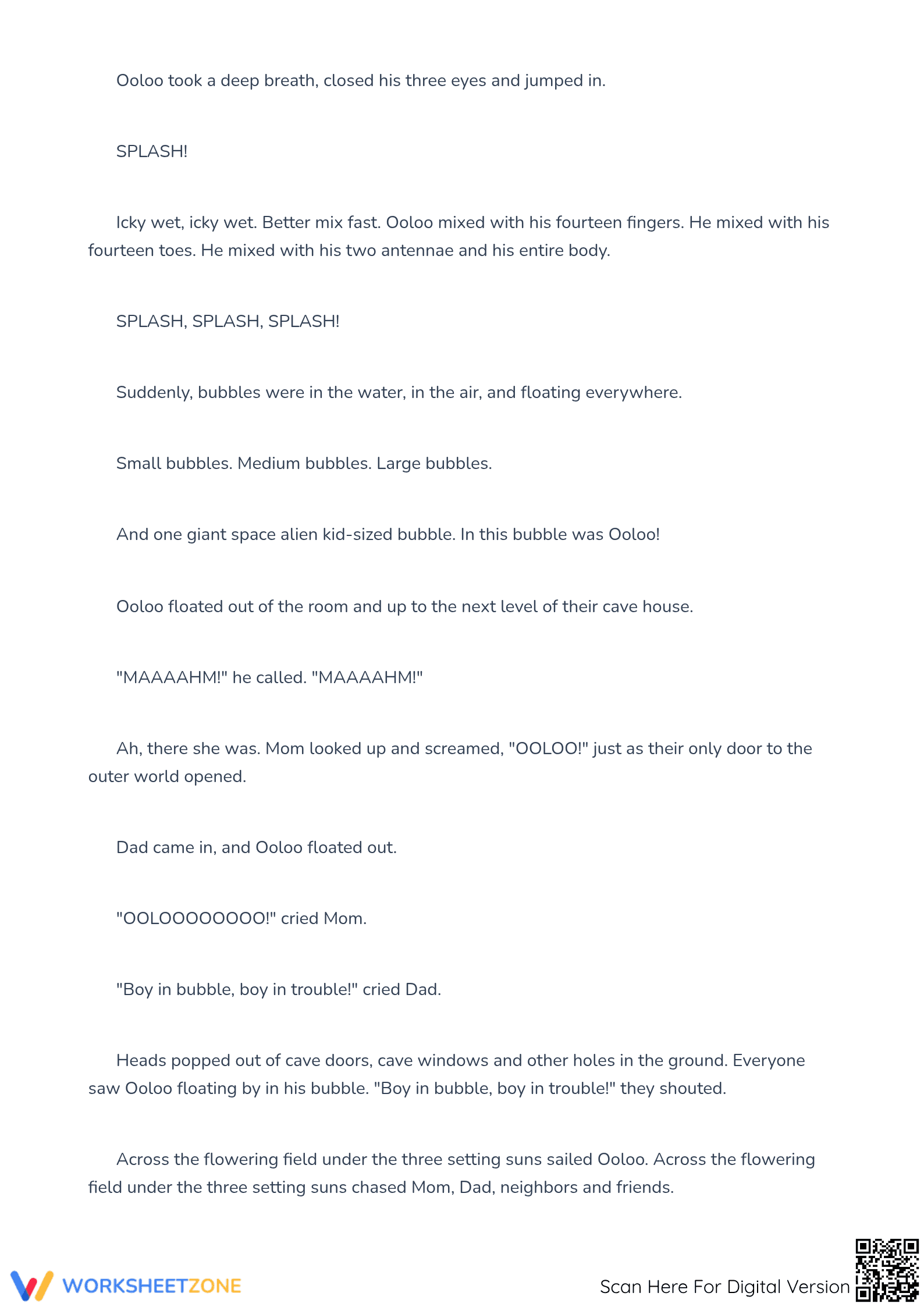
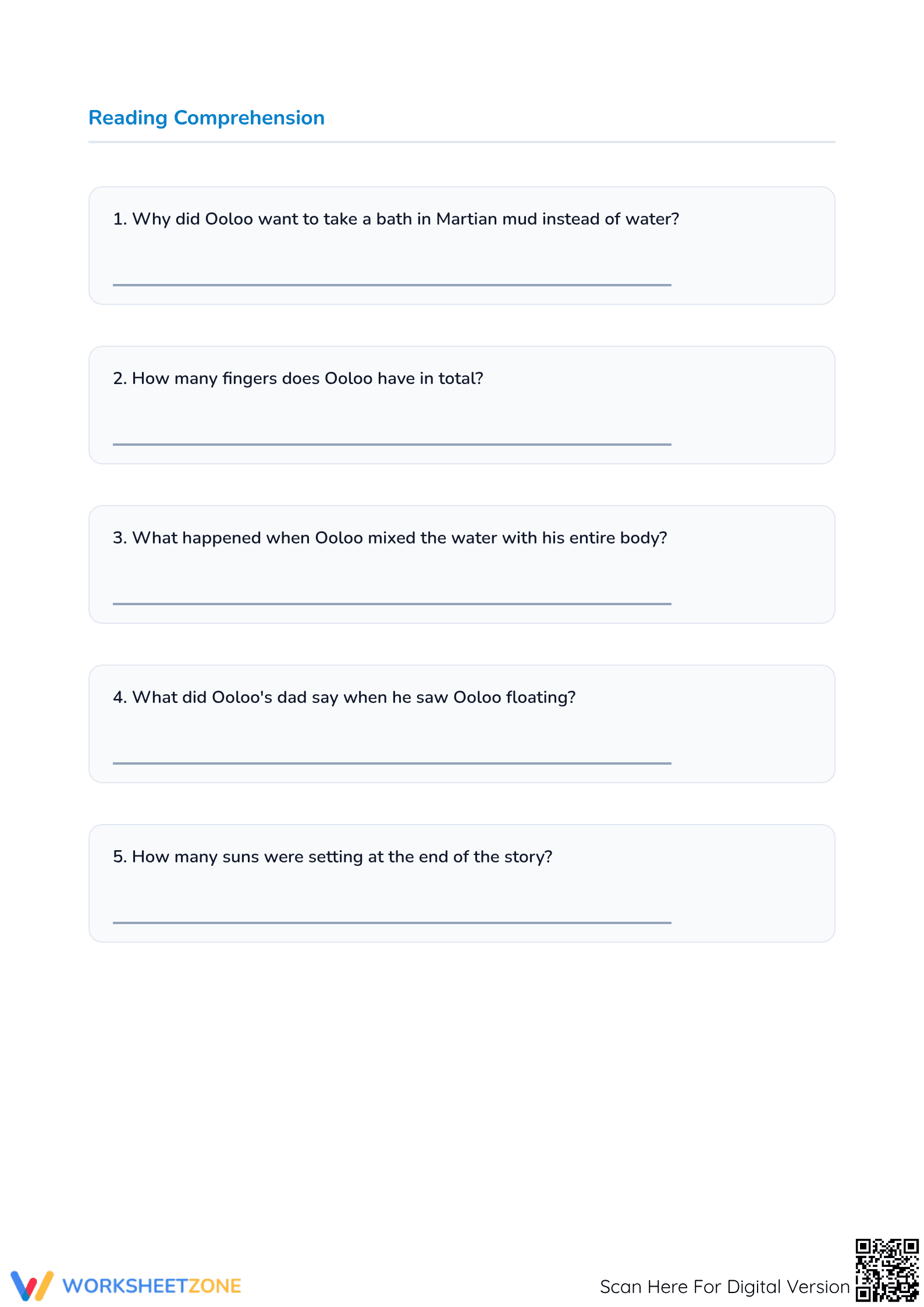
This resource features a two-page original fiction story titled "Ooloo Takes a Bath," followed by a one-page assessment with five short-answer comprehension questions. The questions require students to recall specific plot points, identify character traits, and locate textual evidence. A complete answer key is provided to ensure accurate and efficient grading for educators.
- Guided practice: Teachers can read the first page of the story aloud, modeling how to pause and identify key character details.
- Supported practice: Students finish reading the second page with a partner, discussing the main events before looking at the questions.
- Independent practice: Students complete the five comprehension questions on their own, relying on the text to find their answers.
This structure perfectly supports a gradual-release, I Do, We Do, You Do instructional model.
Aligned to primary standard CCSS.ELA-LITERACY.RL.4.1: Refer to details and examples in a text when explaining what the text says explicitly and when drawing inferences from the text. This ensures students are grounded in evidence-based reading practices. Both standard codes can be copied directly into lesson plans, IEP goals, or district curriculum mapping tools.
This worksheet is highly versatile for classroom routines. Assign it as morning work to settle students into an academic mindset, or use it as a dedicated independent reading station during literacy blocks. While students work, teachers can use formative assessment observation to check if learners are actively looking back at the passage to find their answers rather than guessing. Expected completion time is 15 to 20 minutes.
Designed primarily for fourth-grade students, this passage is also appropriate for advanced third graders or fifth graders needing foundational review. To support diverse learners, teachers can pre-teach vocabulary or allow students to highlight evidence directly in the text. It pairs wonderfully with anchor charts on finding text evidence or direct instruction lessons on story elements.
Integrating targeted reading passages with specific comprehension questions is a proven method for developing strong literacy skills. By focusing on CCSS.ELA-LITERACY.RL.4.1, students learn to refer to details and examples in a text, which is a critical component of reading proficiency. According to a recent EdReports 2024 analysis, high-quality instructional materials that require students to consistently return to the text for evidence significantly improve their ability to comprehend complex narratives. This practice not only builds immediate recall but also fosters the critical thinking necessary for deeper literary analysis. Providing students with engaging, grade-appropriate fiction like this alien-themed story ensures they remain motivated while tackling rigorous academic standards. Consistent exposure to text-dependent questions helps solidify these essential reading habits across all subject areas.


