




























Views
Downloads

Grade 12 Travel Trends — Printable No-Prep Worksheet

Paste this activity's link or code into your existing LMS (Google Classroom, Canvas, Teams, Schoology, Moodle, etc.).
Students can open and work on the activity right away, with no student login required.
You'll still be able to track student progress and results from your teacher account.
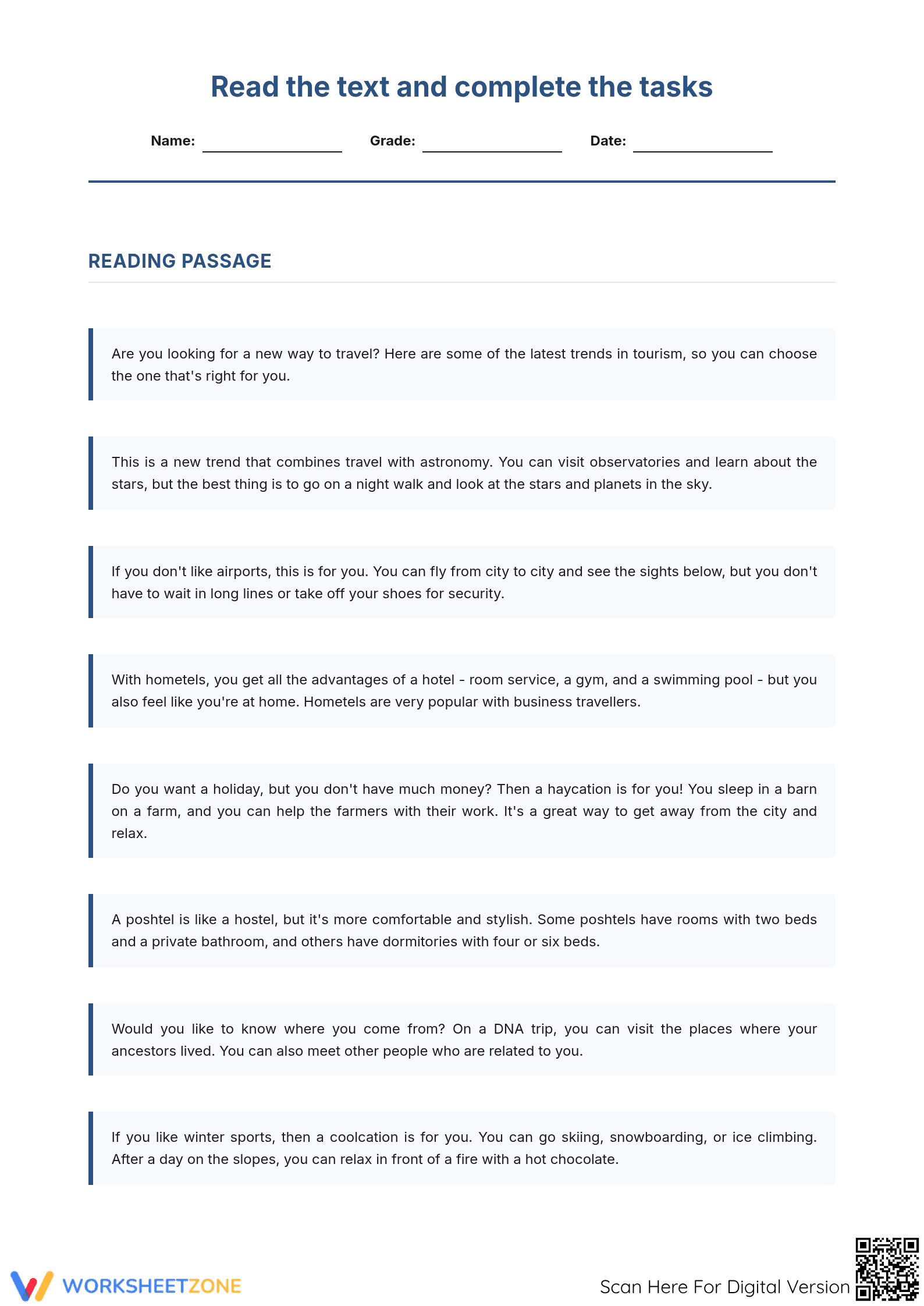
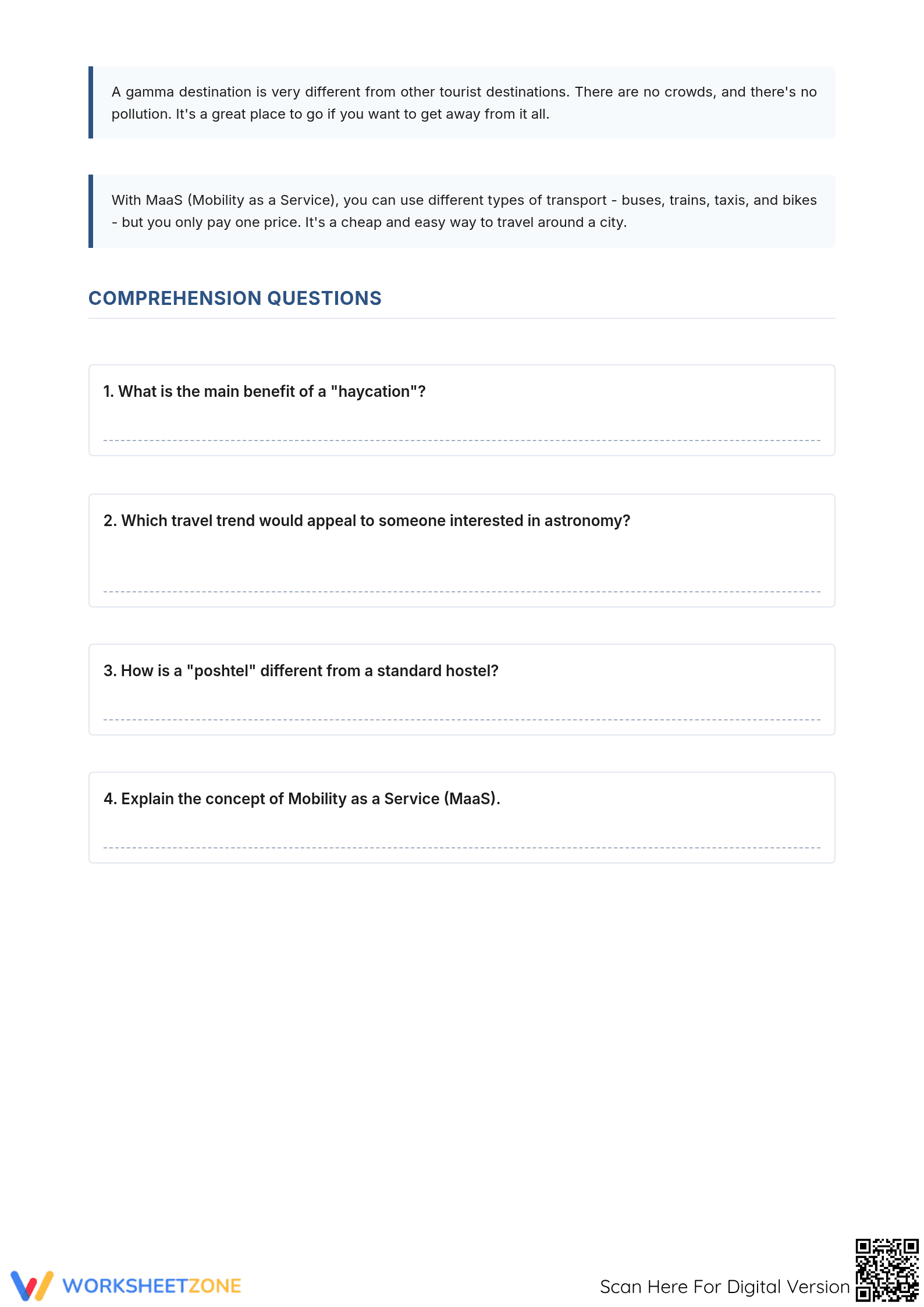
This Grade 12 reading comprehension worksheet provides students with an engaging informational text about modern travel trends to build critical analysis skills. By reading the passage and answering targeted questions, high school seniors will practice extracting explicit details and synthesizing information from a structured text.
At a Glance
- Grade: 12 · Subject: ELA
- Standard:
CCSS.ELA-LITERACY.RI.11-12.1— Cite textual evidence to support analysis of explicit statements- Skill Focus: Reading Comprehension
- Format: 2 pages · 4 problems · Answer key included · PDF
- Best For: Independent practice or sub plans
- Time: 15–20 minutes
Inside this resource, educators will find a two-page layout featuring a high-interest reading passage followed by four short-answer comprehension questions. The text introduces students to contemporary tourism concepts like "haycations," "poshtels," and "coolcations." The second page provides ample writing space for students to construct their responses. A complete answer key is included to ensure accurate and efficient grading.
Zero-Prep Workflow
This resource requires minimal teacher setup:
- Print (1 minute): Download the PDF and print the two-page student handout.
- Distribute (1 minute): Hand out the worksheets at the beginning of the period or leave them in a designated folder for a substitute teacher.
- Review (3 minutes): Use the provided answer key to quickly check student responses or guide a whole-class discussion after completion.
Total teacher prep time is under two minutes, making this an ideal solution for emergency sub plans or quick skill checks.
Standards Alignment
This worksheet is aligned to CCSS.ELA-LITERACY.RI.11-12.1, requiring students to cite strong textual evidence to support analysis of explicit statements. It also supports general informational text comprehension by asking students to identify main benefits and explain specific concepts presented in the passage. Both standard codes can be copied directly into lesson plans, IEP goals, or district curriculum mapping tools.
How to Use It
This reading passage is highly versatile. Use it as a warm-up activity before a larger unit on informational texts, or assign it as independent practice during a block period. For formative assessment, observe if students underline key terms before writing answers. Expected completion time is 15 to 20 minutes.
Who It's For
This worksheet is primarily designed for 12th-grade general education ELA students, but the accessible vocabulary makes it appropriate for advanced English Language Learners or students needing reading intervention. To differentiate, teachers can allow students to work in pairs to decode the newer vocabulary terms. It pairs naturally with a direct instruction lesson on identifying main ideas or a broader discussion on global economics and tourism.
Developing strong reading comprehension skills is essential for post-secondary success. This resource targets CCSS.ELA-LITERACY.RI.11-12.1, focusing on the ability to cite textual evidence to support analysis of explicit statements. According to a recent EdReports 2024 analysis, high school students who regularly engage with short, high-interest informational texts demonstrate improved stamina and accuracy when tackling complex college-level reading assignments. By answering targeted questions about specific concepts like "poshtels" and "MaaS," students practice locating and synthesizing information efficiently. This targeted practice helps solidify the cognitive pathways required for critical reading and evidence-based writing. Providing structured opportunities to read and respond to contemporary topics ensures that seniors remain engaged while reinforcing the foundational literacy skills required for graduation, vocational training, and future academic endeavors. Consistent exposure to varied text structures builds lasting reading proficiency.


