


























Views
Plays
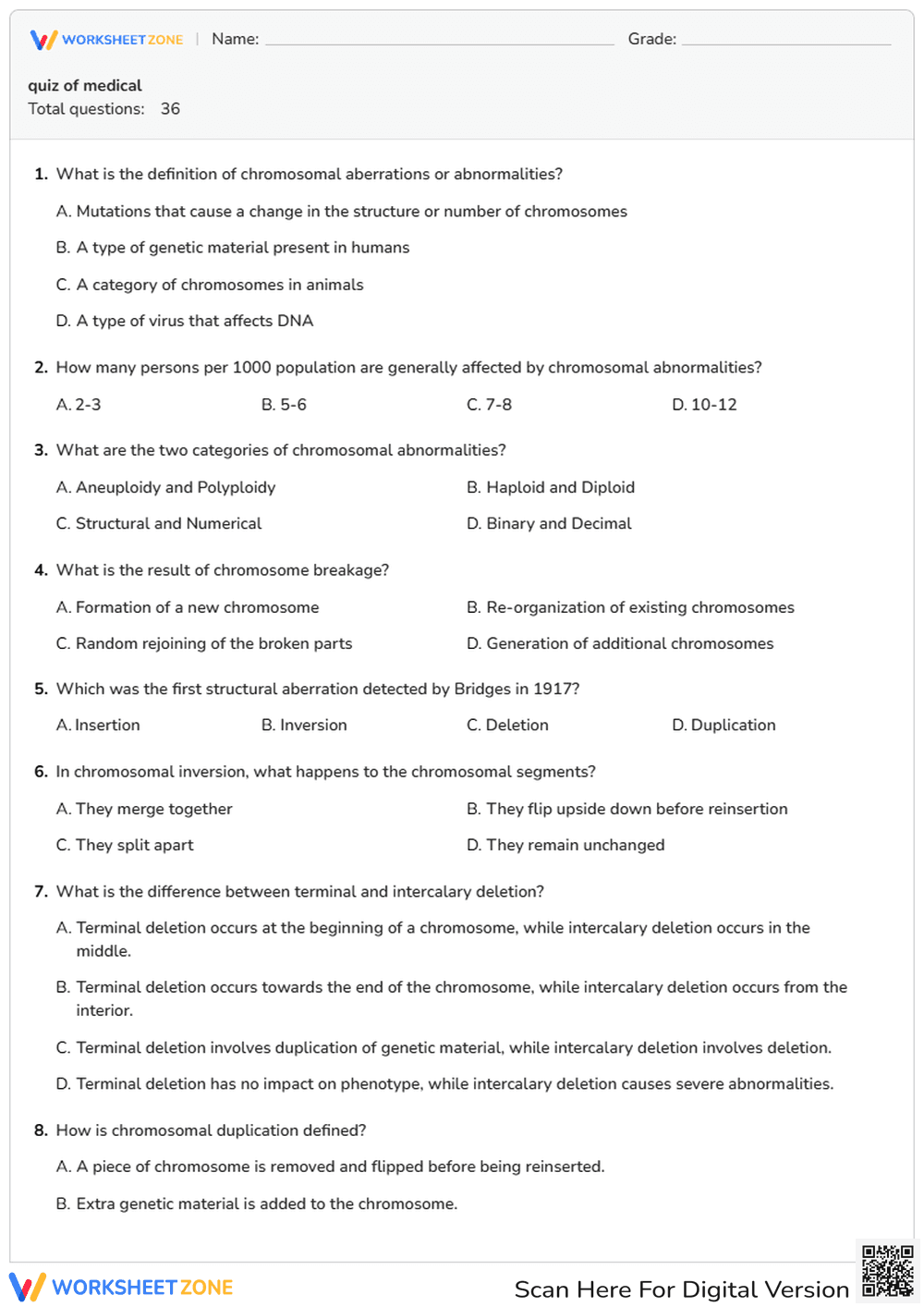

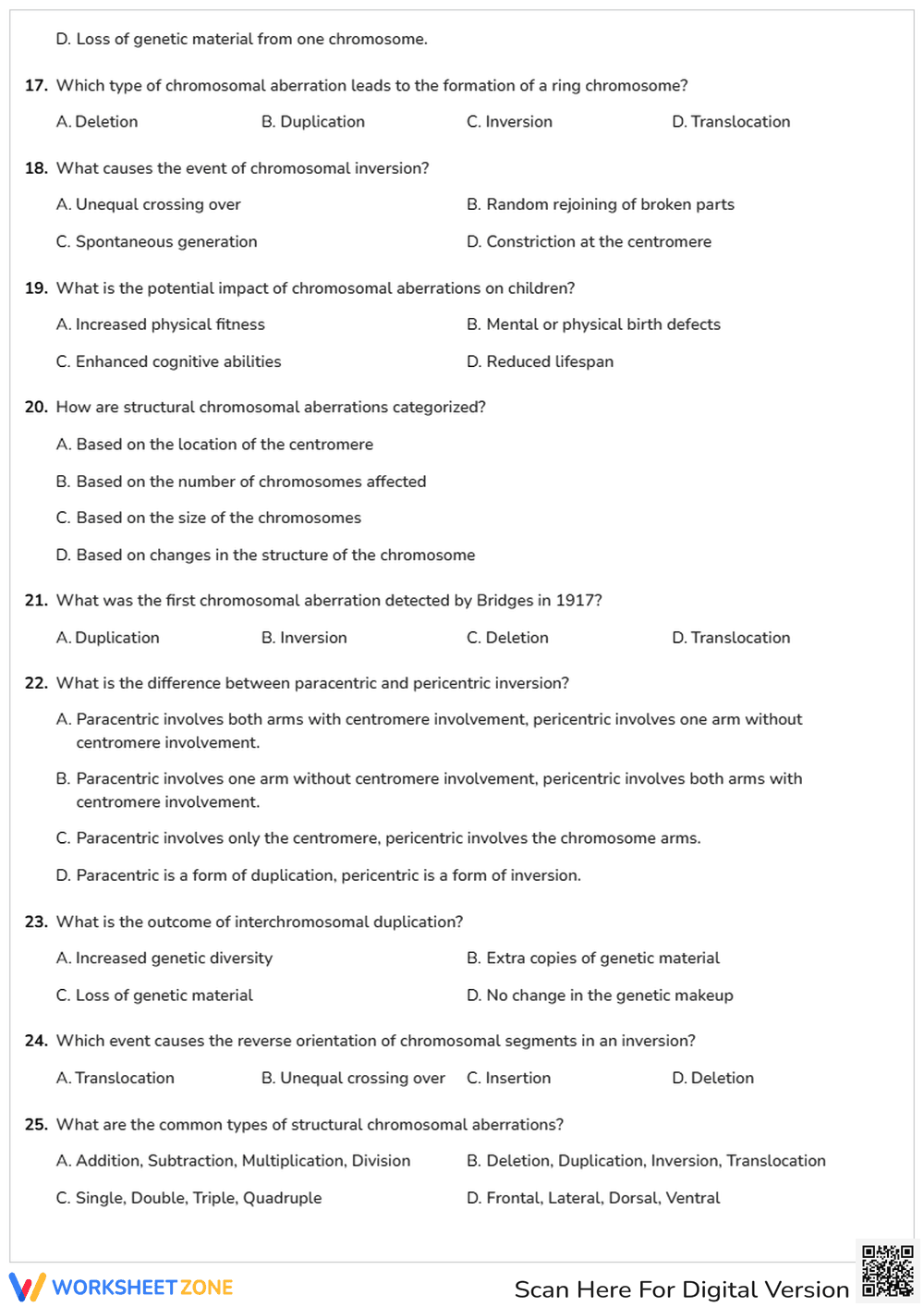


Chromosomal Aberrations Quiz | Essential Medical Genetics
Paste this activity's link or code into your existing LMS (Google Classroom, Canvas, Teams, Schoology, Moodle, etc.).
Students can open and work on the activity right away, with no student login required.
You'll still be able to track student progress and results from your teacher account.
This College-level medical genetics worksheet provides a comprehensive assessment of chromosomal aberrations, enabling students to master the structural and numerical changes that impact human health. By engaging with 36 targeted multiple-choice questions, learners demonstrate their ability to define, categorize, and differentiate between complex genetic mutations. This resource ensures students can accurately identify the mechanisms behind deletions, duplications, and translocations.
At a Glance
- Grade: College · Subject: Medical Biology
- Standard:
HS-LS3-2— Explain how inheritable genetic variations result from mutations and structural changes- Skill Focus: Chromosomal Aberrations
- Format: 5 pages · 36 problems · Answer key included · PDF
- Best For: Medical exam prep and genetics review
- Time: 45–60 minutes
What's Inside: This 5-page PDF contains a structured 36-question multiple-choice quiz designed for rigorous academic environments. The document features clear formatting with ample white space for student notes. It covers specific terminology including aneuploidy, polyploidy, ring chromosomes, and the historical work of Dr. Bridges. A full answer key is included to facilitate rapid grading and immediate student feedback.
Skill Progression
- Guided Practice: The first 12 questions focus on foundational definitions and primary categories of structural abnormalities, establishing a baseline of technical vocabulary.
- Supported Practice: The middle section (questions 13-24) requires students to differentiate between complex mechanisms, such as pericentric versus paracentric inversions and translocation outcomes.
- Independent Practice: The final set (25-36) challenges students to identify incidence rates and historical discovery milestones, requiring a synthesis of course material.
This assessment follows a gradual-release model to ensure students build confidence with terminology before tackling high-level diagnostic distinctions.
Standards Alignment
This resource is primarily aligned with HS-LS3-2, which requires students to explain how inheritable genetic variations result from mutations. While designed for college-level learners, it provides the depth required for mastery of genetic structural variation. This standard code can be copied directly into lesson plans or curriculum mapping tools.
How to Use It
Assign this quiz as a summative assessment after a lecture on cytogenetics or as a review before a midterm. Use results to identify which specific aberration types require additional instruction. Students typically require 45 to 60 minutes to complete the full 36-question set with careful consideration.
Who It's For
This resource is tailored for pre-medical students and biology majors. It serves as an excellent companion to a genetics textbook or anchor chart. The technical depth makes it suitable for students preparing for professional entrance exams or clinical laboratory science certifications.
According to Fisher & Frey (2014), structured retrieval practice through multiple-choice assessments significantly enhances long-term retention of complex biological concepts. This 36-question quiz targets the specific mechanisms of chromosomal aberrations, including structural changes like inversions and translocations. By requiring students to distinguish between terminal and intercalary deletions or paracentric and pericentric inversions, the resource aligns with the rigorous demands of higher education genetics curricula. Research from the NAEP indicates that mastery of genetic variation is a critical predictor of success in advanced health science tracks. This assessment provides the necessary volume of practice to move students from basic recognition to conceptual fluency. This resource serves as a robust tool for identifying misconceptions in chromosomal theory before high-stakes examinations. It ensures that learners can articulate the differences between numerical and structural abnormalities within a clinical or research context.


