


























Views
Downloads


Printable Trend Exceptions Worksheet | Grade 11 Chemistry
Paste this activity's link or code into your existing LMS (Google Classroom, Canvas, Teams, Schoology, Moodle, etc.).
Students can open and work on the activity right away, with no student login required.
You'll still be able to track student progress and results from your teacher account.
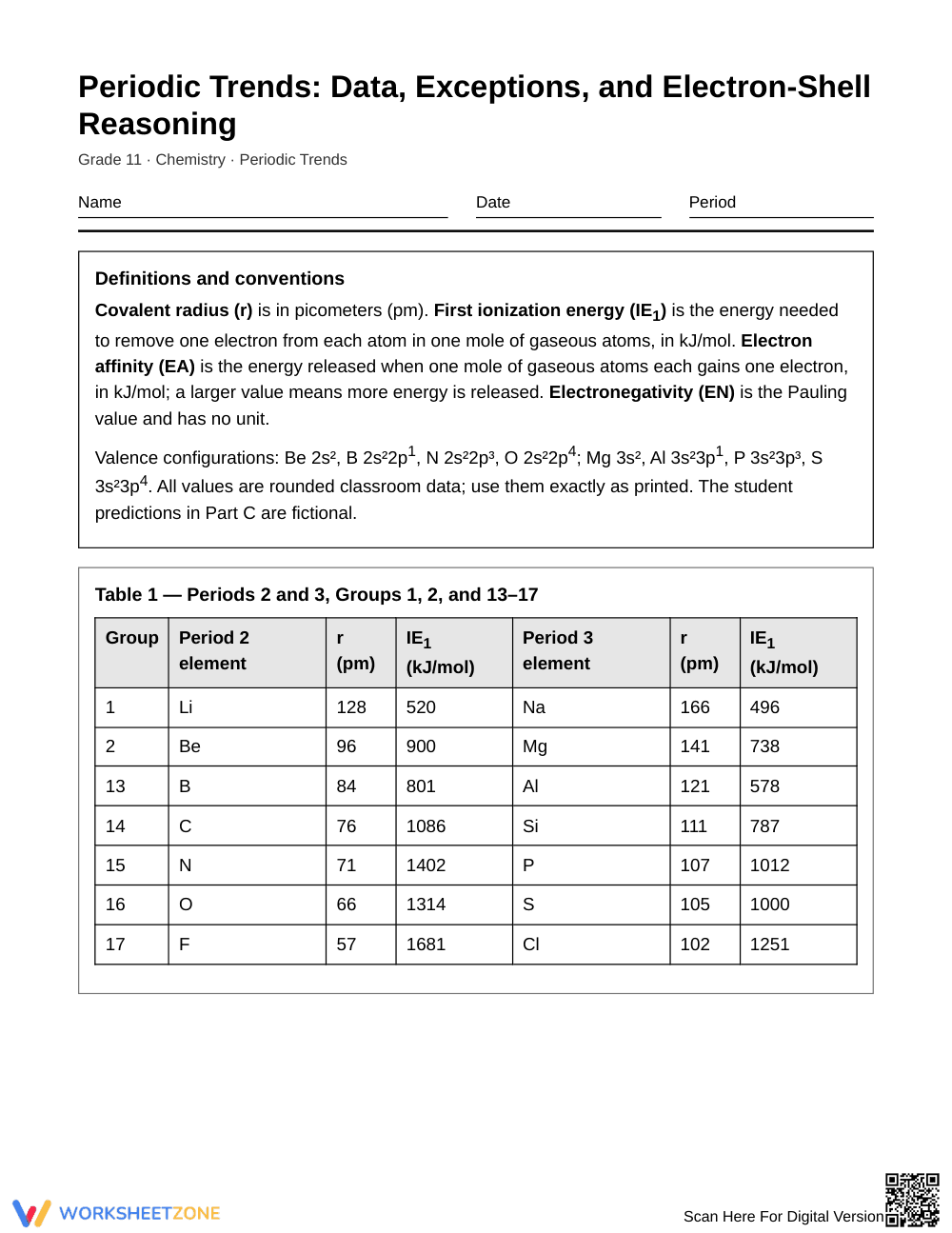
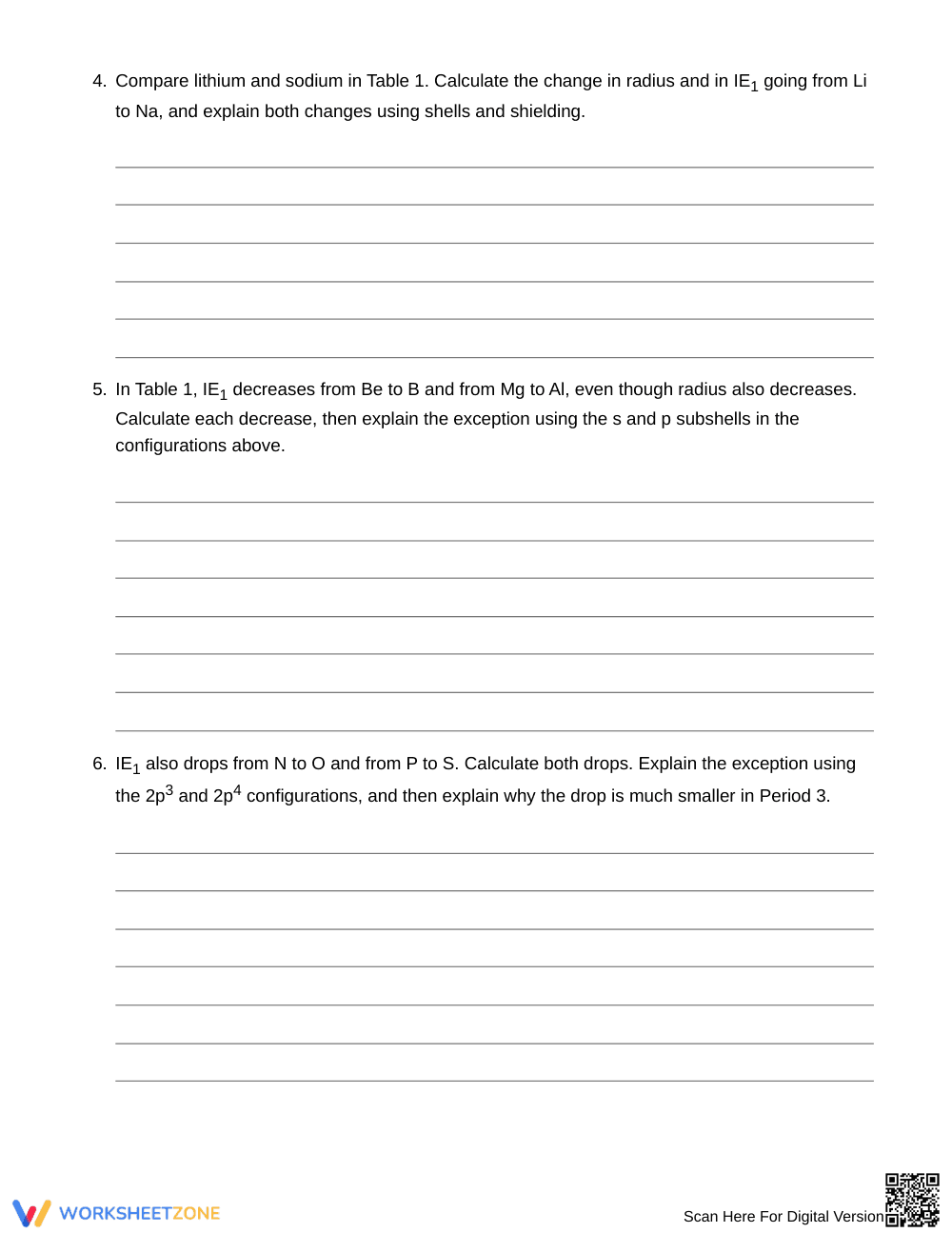
This worksheet teaches Grade 11 chemistry students to analyze periodic-trend data, calculate differences from tables, and explain exceptions in atomic radius, first ionization energy, and electron affinity using electron shells and subshells.
At a Glance
- Grade: 11 · Subject: Chemistry
- Standard: High school periodic trends — use data to explain trends and their exceptions
- Skill Focus: Analyzing periodic-trend data with exceptions
- Format: 5 pages · 10 problems · Answer key included · PDF
- Best For: Periodic trends unit review
- Time: 35–45 minutes
What's Inside
The worksheet opens with a short definitions box and valence configurations for Be, B, N, O, Mg, Al, P, and S. Two data tables follow: Table 1 covers radius and IE1 for Periods 2 and 3, and Table 2 covers radius, electron affinity, and electronegativity for the halogens. Ten tasks span three parts: reading values, analyzing patterns, and evaluating limitations. A 3-page answer key shows worked calculations and model explanations.
Skill Progression
- Guided practice (Part A, 2 tasks): Students locate values in the tables and record them with correct units.
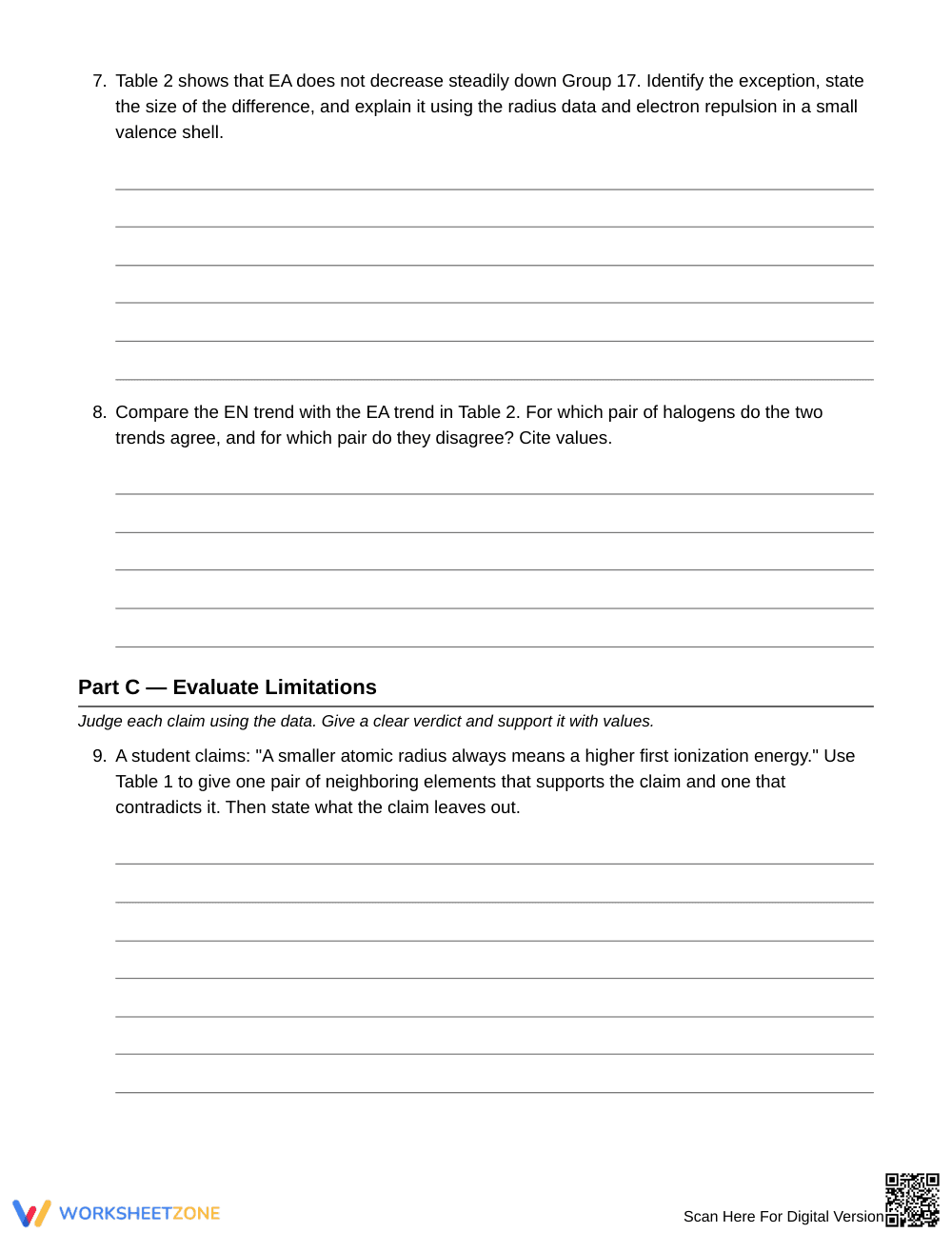
- Supported practice (Part B, 6 tasks): Students calculate changes in radius, IE1, and EA, then explain each result using shells, shielding, subshells, and electron repulsion. The definitions box and configurations act as scaffolds.
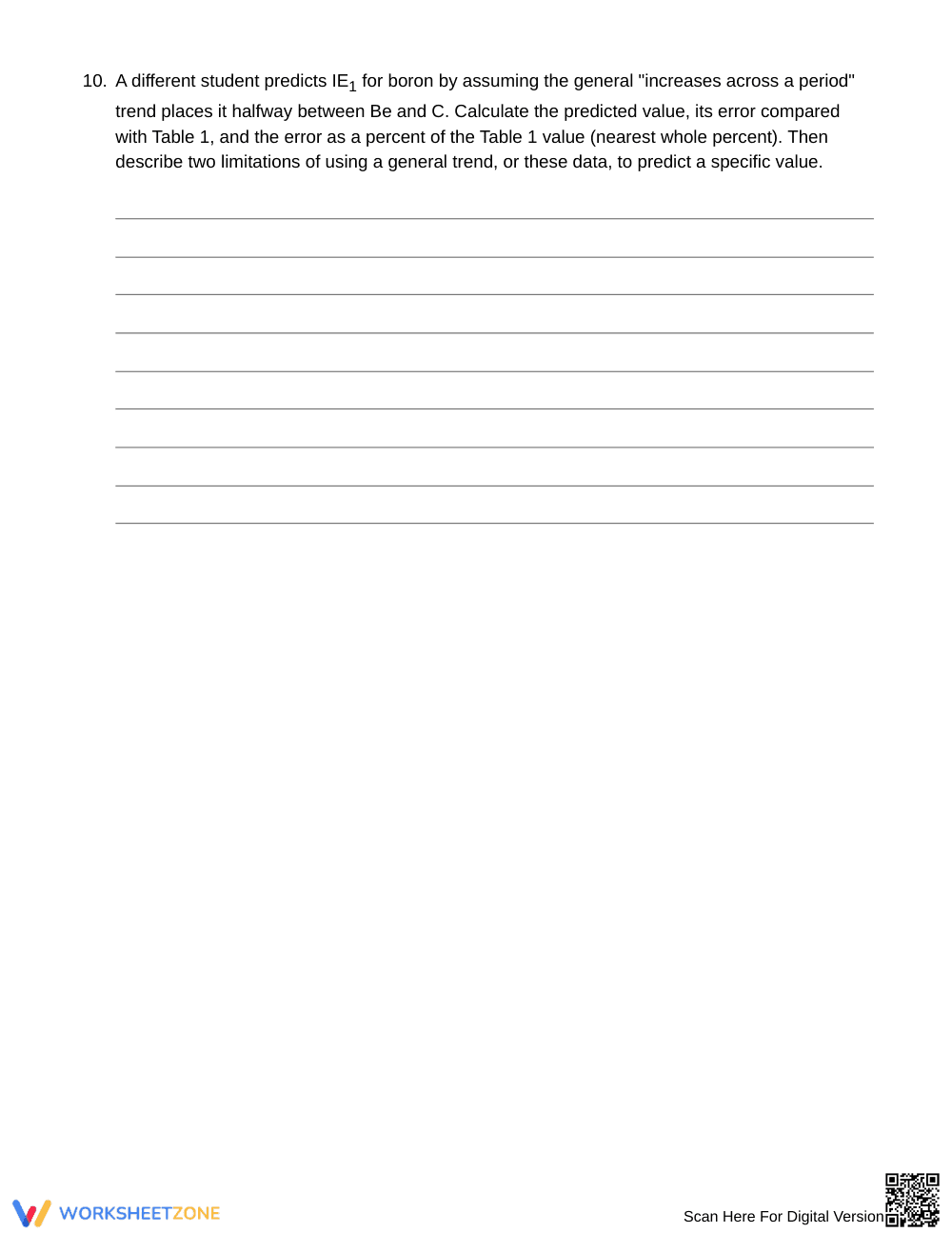
- Independent practice (Part C, 2 tasks): Students judge a fictional student claim, calculate a prediction error and percent error, and describe the limits of general trends.
This sequence follows gradual release: I Do, We Do, You Do. Teachers can model one Part B task, then release students to finish the rest.
Standards Alignment
The tasks align to high school chemistry expectations that students use patterns in the periodic table to explain properties of elements, supported by evidence about electron structure. The worksheet carries no specific standard code, so add your own when mapping it into lesson plans.
How to Use It
- After direct instruction: Assign the full worksheet as in-class practice once trends in radius, IE1, and EA have been taught.
- Before a unit test: Use Parts B and C as a review set, split across two short sessions of about 20 minutes each.
As students work, watch whether explanations cite both a number and a structural reason such as shielding or subshell electron repulsion. Answers that only restate the trend signal a need for reteaching.
Who It's For
This worksheet suits Grade 11 Chemistry students who have met periodic trends and are ready to reason with data. Students who need support can complete Part A and two Part B tasks first. Stronger students can focus on Part C.
Analyzing periodic-trend data with exceptions asks students to read tables of covalent radius, first ionization energy, electron affinity, and electronegativity, calculate differences, and explain irregularities using electron shells, subshells, shielding, and electron repulsion. This Grade 11 Chemistry worksheet contains 10 tasks across 5 pages, with a 3-page answer key, organized as read values, analyze patterns, and evaluate limitations. The sequence follows the gradual release model described by Fisher & Frey (2014), in which students move from guided work to independent application with decreasing teacher support. Because every explanation must cite numbers from the tables, students practice evidence-based reasoning rather than memorizing that radius shrinks across a period. The final tasks require judging a student claim and quantifying a prediction error, which shows why general trends are useful but imperfect tools. Teachers can use it for review, formative assessment, or homework in a unit on periodic trends.


