


























Views
Downloads


Printable Tracing Motivation Worksheet | Grade 9 English I
Paste this activity's link or code into your existing LMS (Google Classroom, Canvas, Teams, Schoology, Moodle, etc.).
Students can open and work on the activity right away, with no student login required.
You'll still be able to track student progress and results from your teacher account.
This Grade 9 English I worksheet teaches students to trace a character's motivation through dialogue and action. Using a short story about two filmmakers who disagree over a documentary cut, students gather quoted evidence, write qualified claims, and explain what each detail reveals about conflicting motives.
At a Glance
- Grade: 9 · Subject: English I
- Standard:
RL.9-10.3— Explain how characters' conflicting motives shape their interactions and the plot- Skill Focus: Inferring motivation from dialogue, action, and the gaps between them
- Format: 6 pages · 10 problems · Answer key included · PDF
- Best For: Teaching character analysis with textual evidence
- Time: 40–50 minutes
What's Inside
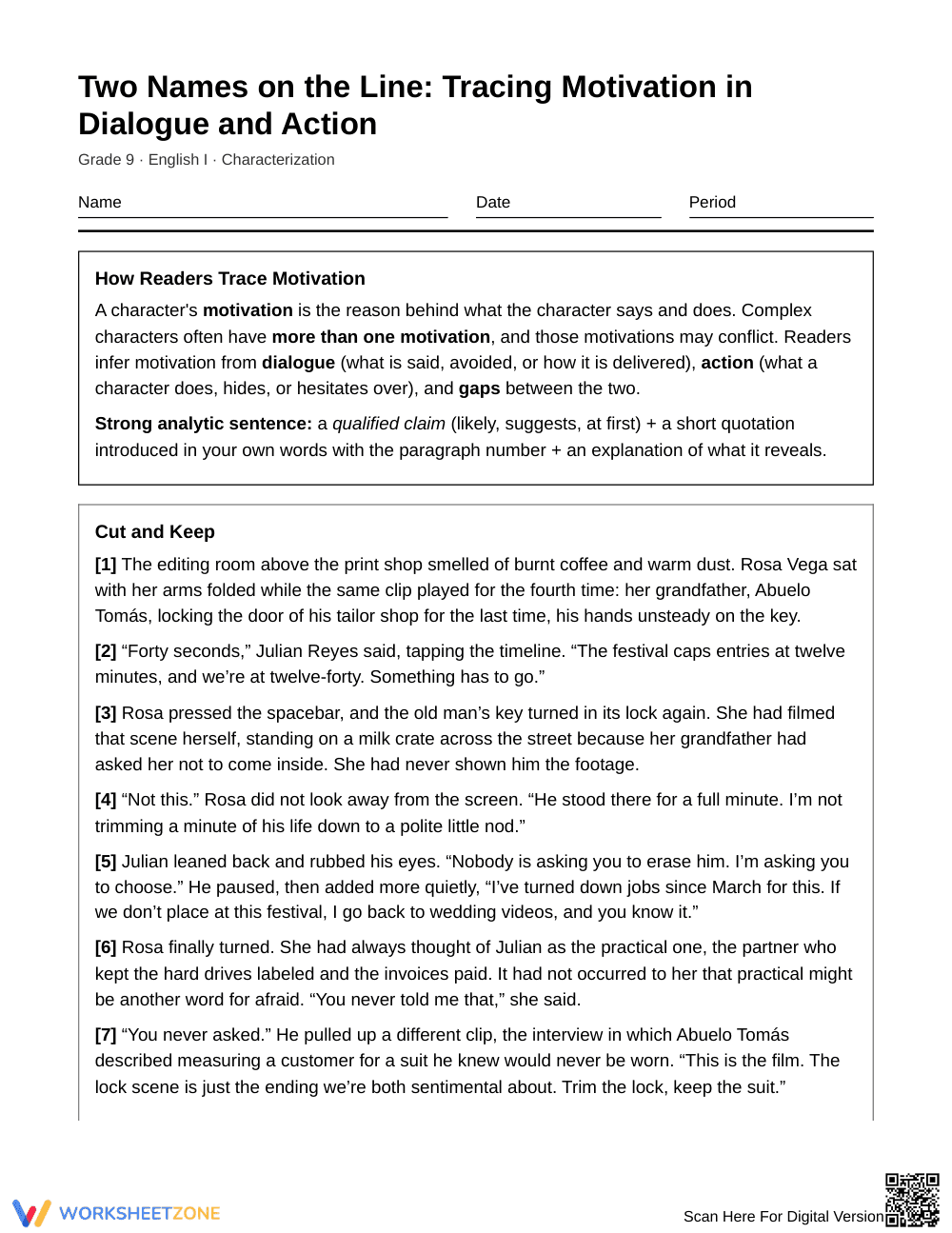
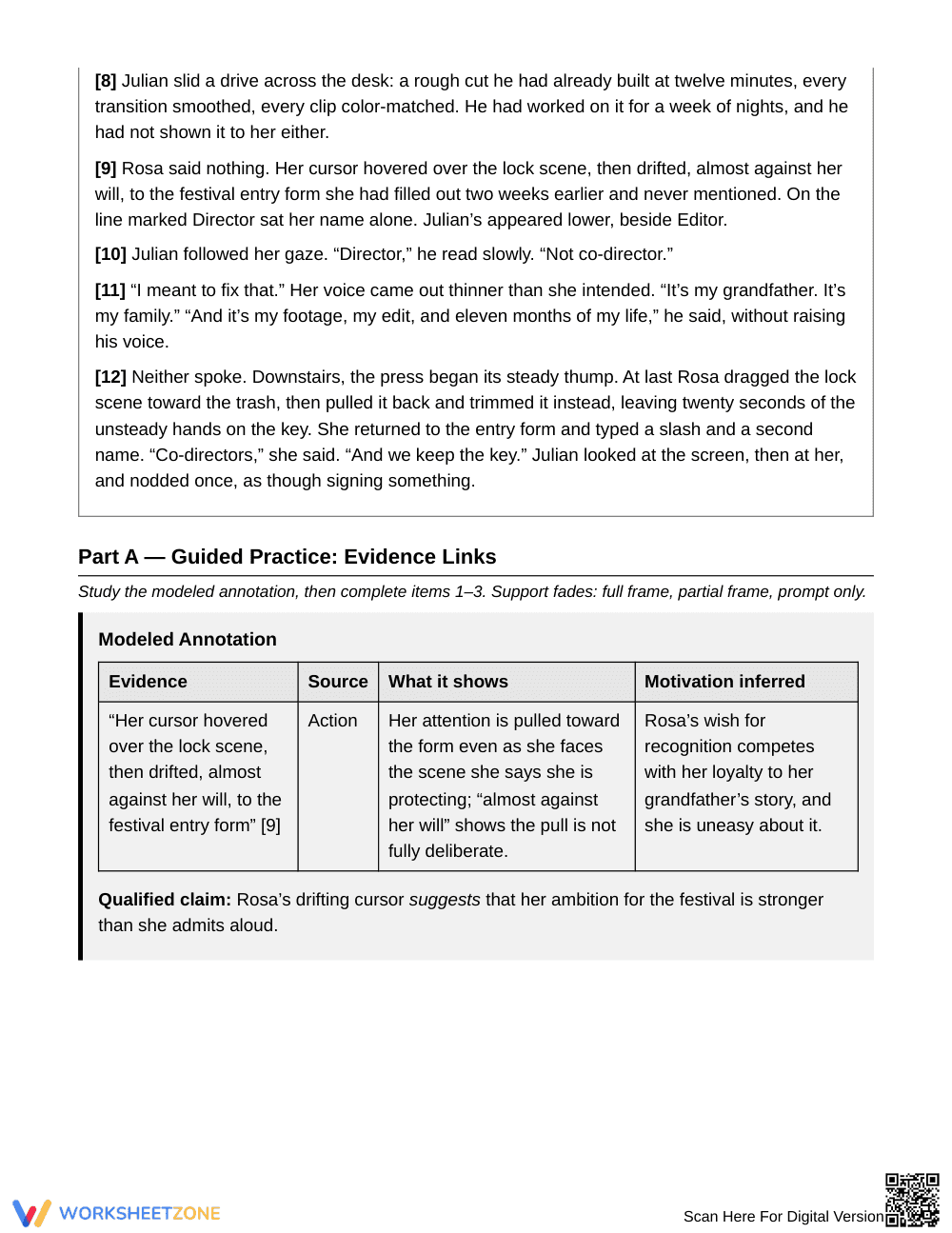
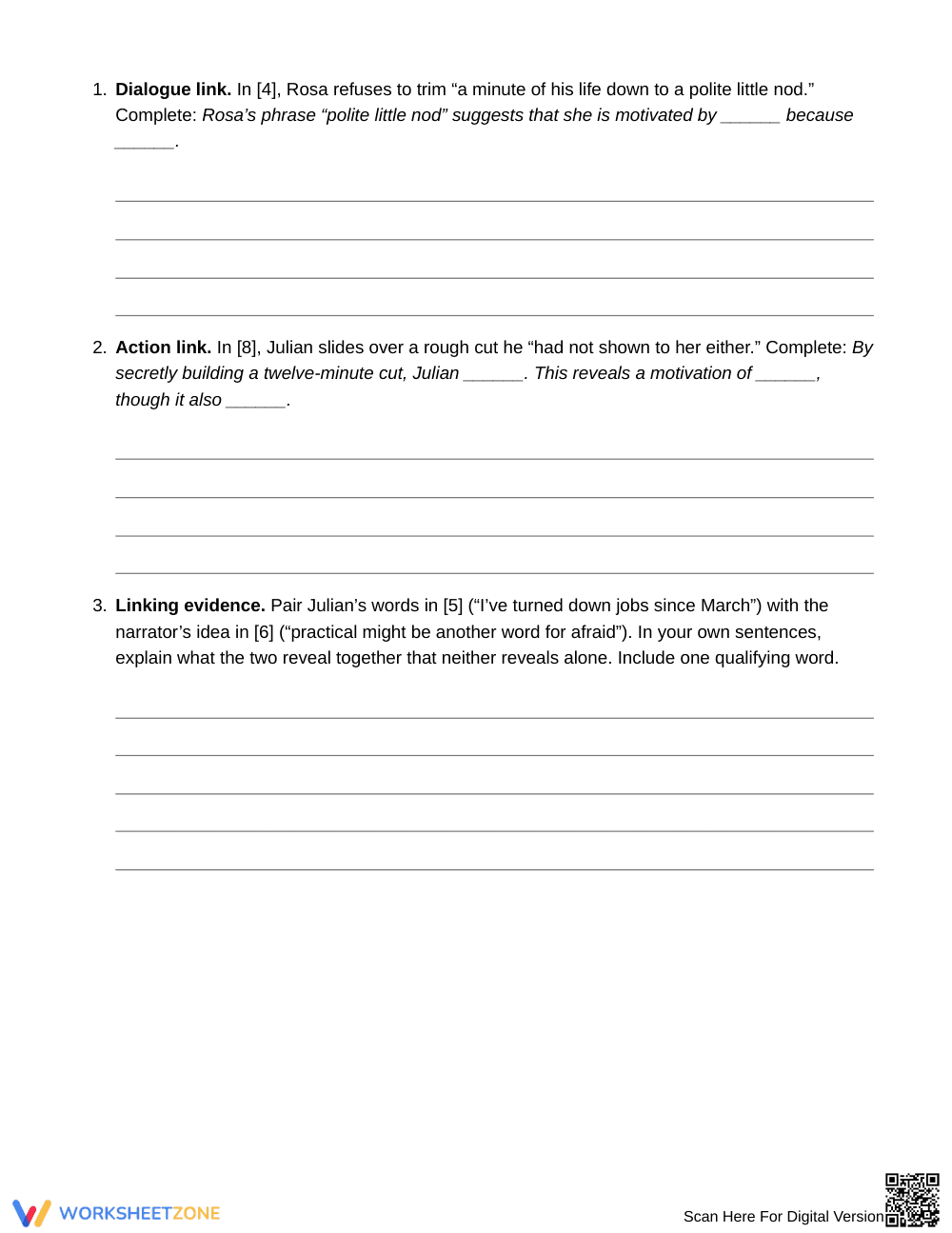
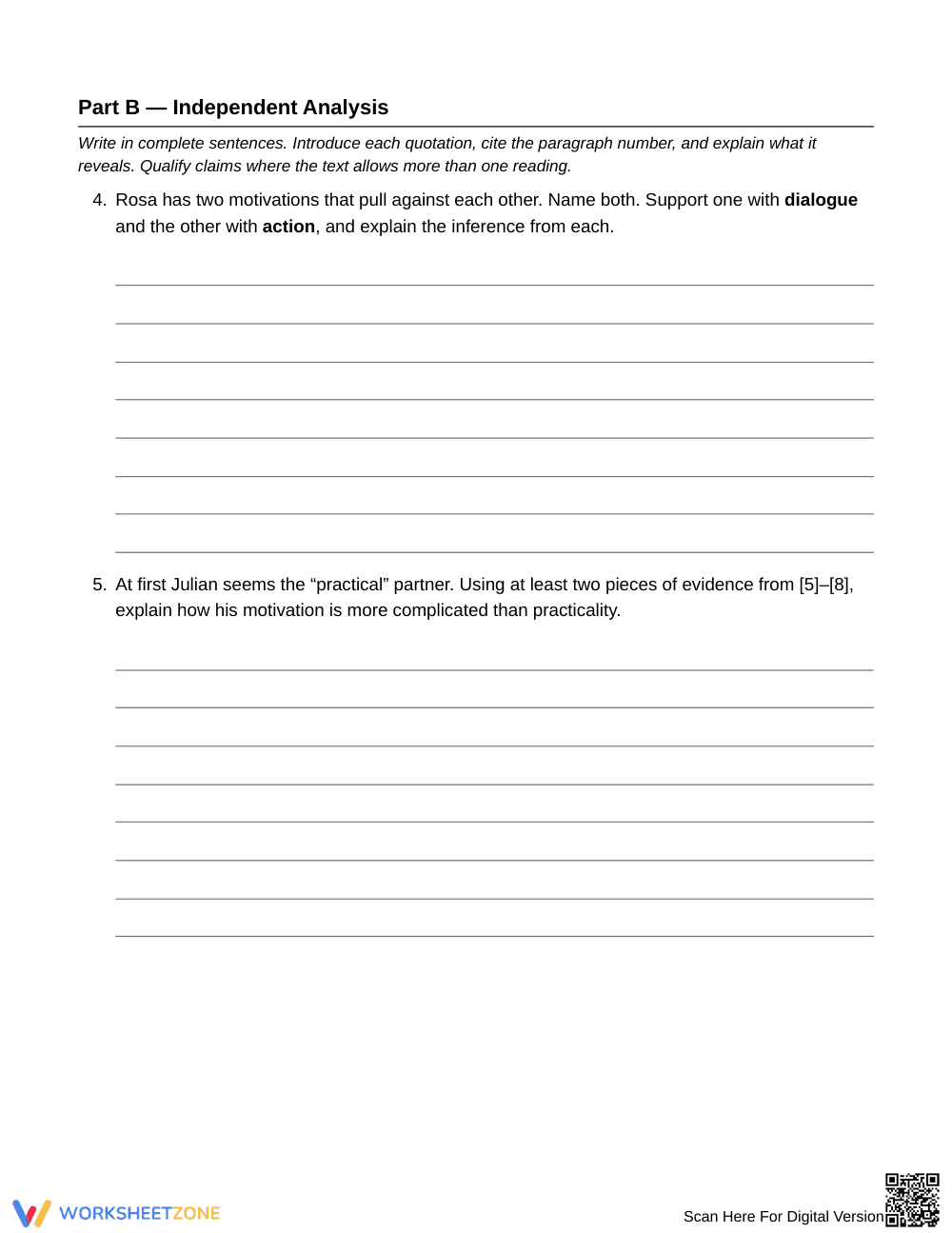
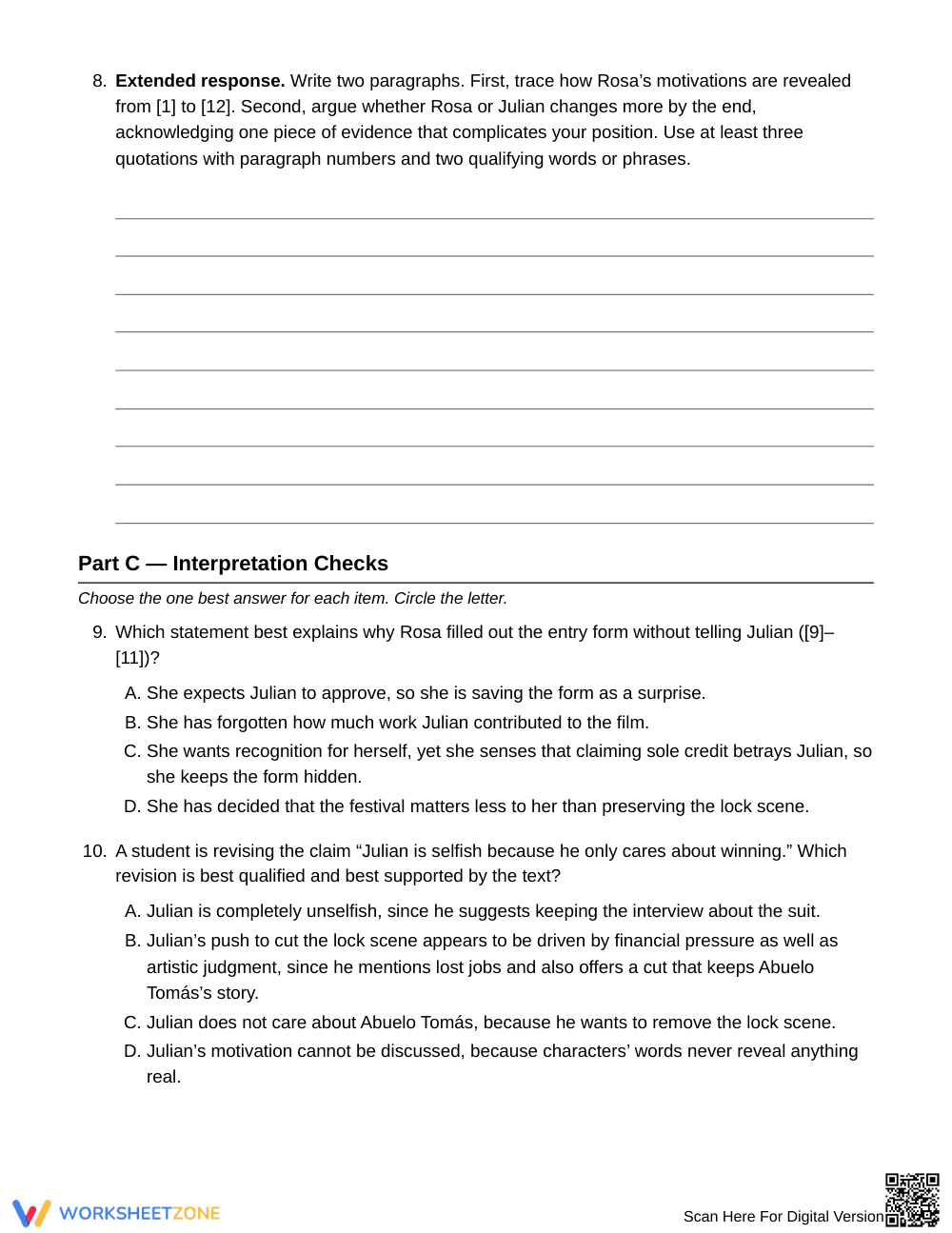
This 6-page PDF opens with a rule box on how readers trace motivation and a numbered 12-paragraph story. Part A offers a modeled annotation table and 3 guided items with fading sentence frames. Part B has 5 written analysis prompts, including an extended response. Part C has 2 multiple-choice checks. A 3-page answer key is included.
Skill Progression
- Guided practice: 3 evidence-link items in Part A; scaffolds fade from full frame to partial frame to prompt only.
- Supported practice: 2 multiple-choice checks in Part C test inferences against plausible misreadings and weak claims.
- Independent practice: 5 written tasks in Part B, ending with a two-paragraph extended response.
The sequence follows gradual release: I Do, We Do, You Do.
Standards Alignment
RL.9-10.3: Analyze how complex characters (e.g., those with multiple or conflicting motivations) develop over the course of a text, interact with other characters, and advance the plot or develop the theme. This standard code can be copied directly into lesson plans, IEP goals, or district curriculum mapping tools.
How to Use It
After direct instruction on characterization, assign Part A as a guided small-group task, then Part B as independent work. Alternatively, use Part C as a 10-minute check before students begin the written analysis. Formative tip: watch whether students quote a short phrase and add a qualifier such as suggests or likely, or simply retell the plot. Expect 40–50 minutes in total.
Who It's For
Grade 9 English I students building evidence-based literary analysis. Students who need support can complete Part A with its frames and discuss Part C aloud; advanced students can concentrate on the extended response. Pair it with an anchor chart of qualifying words or a short mini-lesson on inference.
RL.9-10.3 asks Grade 9 students to analyze how complex characters with multiple or conflicting motivations interact with others and advance the plot or theme. This worksheet, Two Names on the Line, builds that skill by having students trace motivation through dialogue, action, and the gaps between them in a 12-paragraph story. Ten tasks move from modeled annotation to qualified, evidence-based analysis. Fisher & Frey (2014) describe gradual release of responsibility as a move from modeling to guided practice to independent work, the sequence this worksheet follows. Students cite paragraph numbers and explain what each quotation reveals. Because the story's two filmmakers each hide something from the other, students practice reading motivation as layered and sometimes contradictory. It fits English I units on characterization. A 3-page answer key is included for quick, consistent scoring.


