




























Views
Downloads


Printable Roman Law Word Search | Grades 6–7 Social Studies

Paste this activity's link or code into your existing LMS (Google Classroom, Canvas, Teams, Schoology, Moodle, etc.).
Students can open and work on the activity right away, with no student login required.
You'll still be able to track student progress and results from your teacher account.
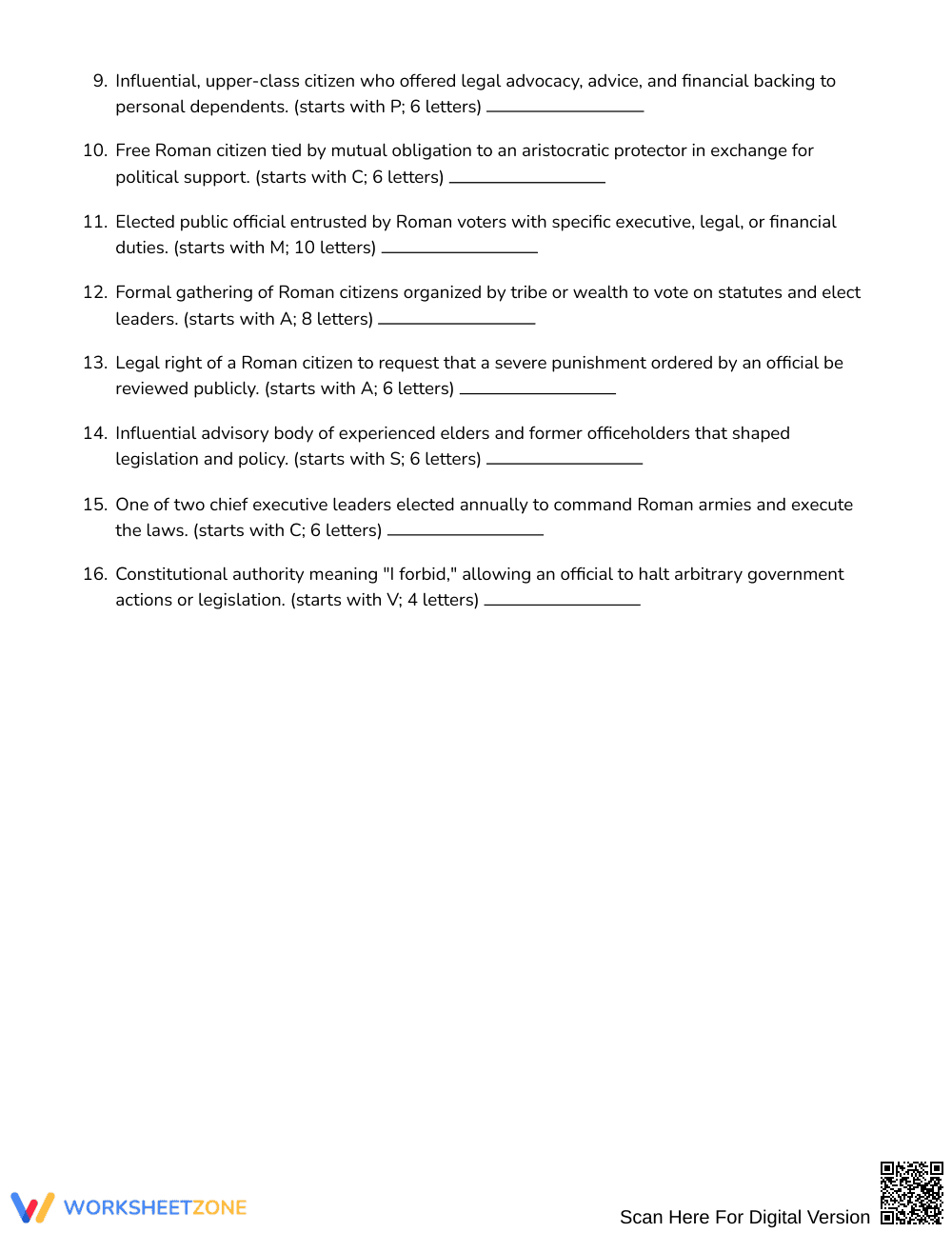
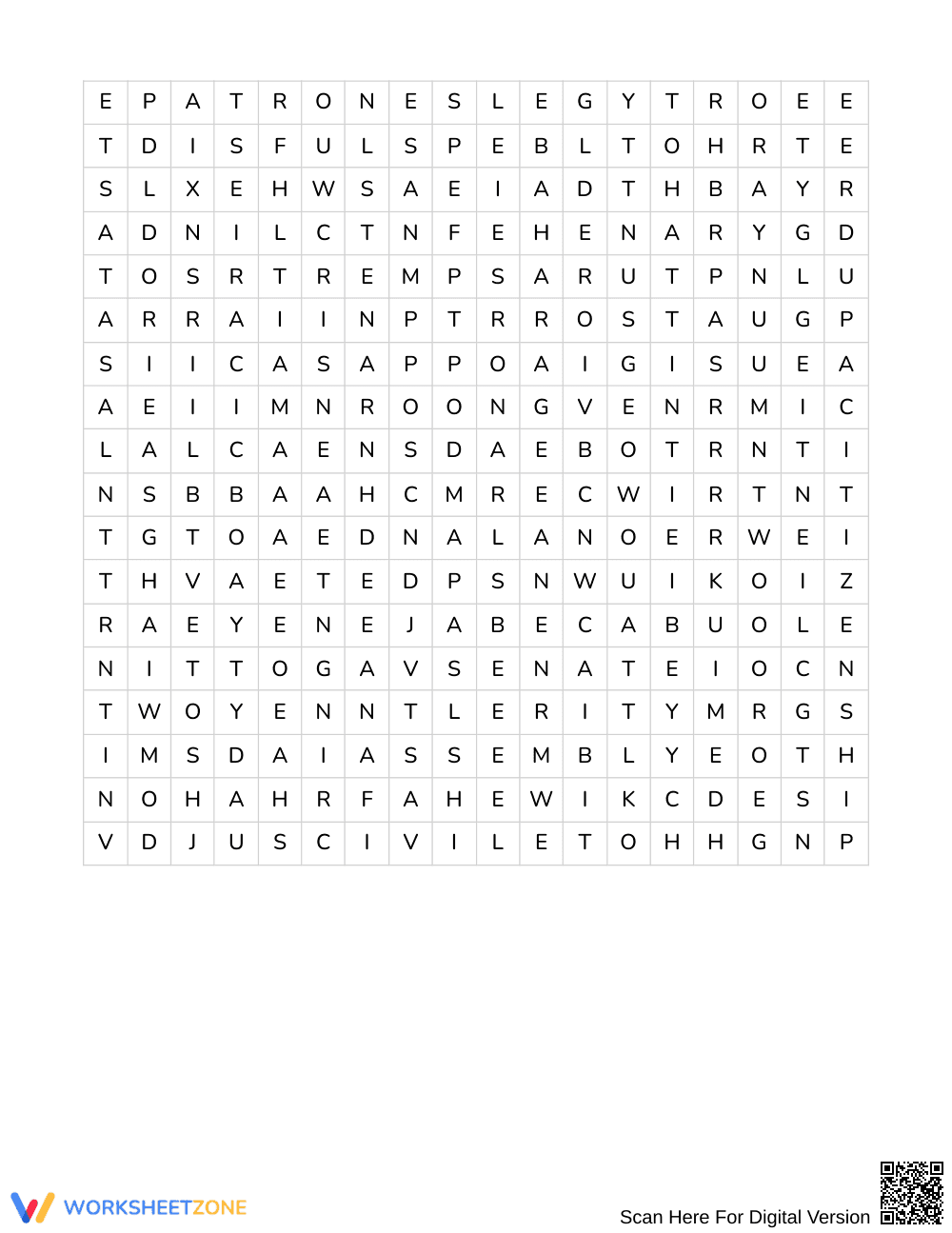
This Grades 6–7 Social Studies word search immerses learners in key Roman law and citizenship terms, helping them locate and internalize vocabulary while reinforcing historical context. Students read concise clues, then hunt each term in an 18×18 grid, building fluency and reinforcing content knowledge.
At a Glance
- Grade: Grades 6–7 · Subject: Social Studies classroom
- Standard:
N/A— Not standards-assessed — vocabulary enrichment for vocabulary growth- Skill Focus: Roman law and citizenship
- Format: 3 pages · 16 words · Answer key included · PDF full
- Best For: Vocabulary enrichment quick daily activity
- Time: approximately 10–15 minutes for student completion
The activity consists of a single 18×18 word search grid filled with 16 Roman legal and civic terms. Each term is paired with a concise clue that guides learners to the correct vocabulary. The three‑page PDF includes the puzzle, the clue list, and a separate answer‑key page for quick checking.
- Print: Open the PDF and print the three pages (under 30 seconds).
- Distribute: Hand the word search and clue sheet to each learner (1 minute).
- Review: Collect answer keys, check for accuracy, and discuss any missed terms (2 minutes).
Total teacher preparation time is typically under two minutes, making this resource ideal for a quick sub‑plan or spontaneous enrichment activity.
This resource is designed solely for vocabulary enrichment and does not align with any specific state or national standard. It supports broader language development goals within Roman history units but remains unlinked to formal assessment criteria.
Use the word search as a warm‑up before a lesson on Roman legal institutions, allowing students to preview key terminology. Alternatively, employ it as a closing activity after a discussion, letting learners apply what they have heard. Observe students as they locate words to gauge prior knowledge; quick informal notes can inform subsequent instruction. Completion typically takes 10–15 minutes.
The activity targets Grades 6–7 Social Studies learners studying ancient Rome. No differentiation levels are built in, but teachers can adjust difficulty by providing additional support or extending the challenge with deeper research on each term. Pair the search with a Roman history anchor chart or a textbook chapter on Roman citizenship for a cohesive lesson.
Word searches like this reinforce subject‑specific vocabulary through active discovery, a strategy shown to boost retention in middle‑grade learners. Fisher & Frey (2014) emphasize that explicit vocabulary instruction combined with engaging practice improves comprehension across content areas. By presenting Roman legal terms alongside clear clues, the activity offers meaningful context while encouraging independent word‑recognition skills. This dual focus aligns with research‑based recommendations for vocabulary enrichment in social studies curricula, promoting both language development and historical understanding. Studies from the National Assessment of Educational Progress (NAEP) indicate that students who engage with word activities demonstrate higher scores on reading comprehension items related to social studies topics. Moreover, the quick‑fire nature of a word search keeps learners motivated, providing feedback through the answer key. Teachers report increased confidence among students when they can successfully locate and define challenging terms, fostering a positive feedback loop that supports mastery of historical concepts.


