


























Views
Downloads



Printable Interacting Ideas Worksheet | Grade 9 English I
Paste this activity's link or code into your existing LMS (Google Classroom, Canvas, Teams, Schoology, Moodle, etc.).
Students can open and work on the activity right away, with no student login required.
You'll still be able to track student progress and results from your teacher account.
This worksheet teaches Grade 9 students to compare how two short stories develop interacting ideas about responsibility and ambition. Students build comparison criteria, analyze each text with cited evidence, and explain how differences between the texts lead to different central ideas, using qualified claims throughout.
At a Glance
- Grade: 9 · Subject: English I
- Standard:
RL.9-10.2— Analyze how two texts develop interacting central ideas using cited, qualified evidence- Skill Focus: Comparing interacting ideas on responsibility and ambition across two texts
- Format: 6 pages · 10 problems · Answer key included · PDF
- Best For: Paired-text theme comparison after instruction
- Time: 40–50 minutes
What's Inside
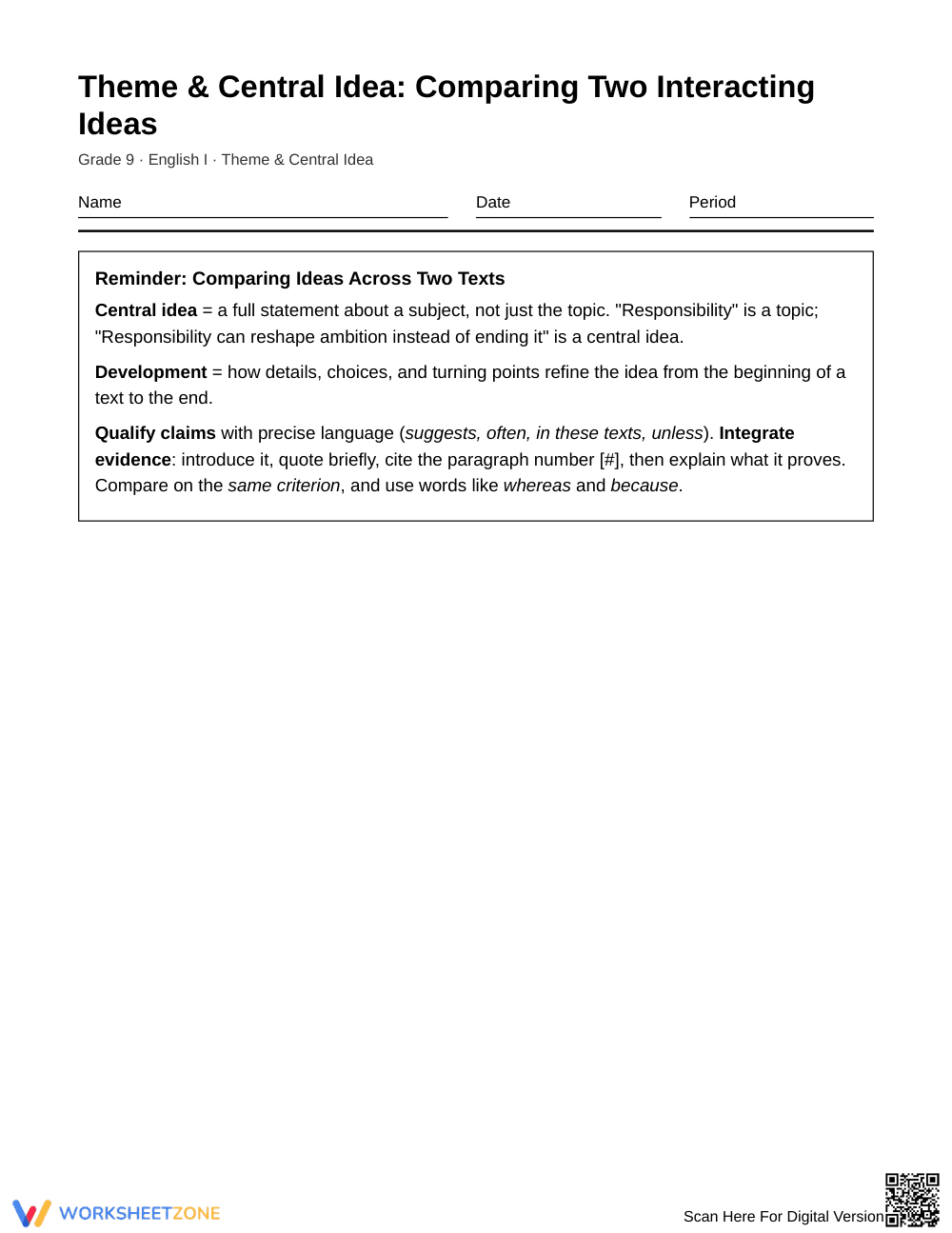
The worksheet includes a reminder box on central idea, development, and qualified claims; two numbered passages, “The Ferry Ledger” and “The Model”; and 10 tasks in three parts. Three tasks are multiple choice and seven require written responses. A complete answer key is included.
Skill Progression
- Guided practice (Part A, 2 tasks): students write and evaluate comparison criteria with the reminder box beside them.
- Supported practice (Part B, 6 tasks): multiple-choice and written tasks that require paragraph citations and qualified claims.
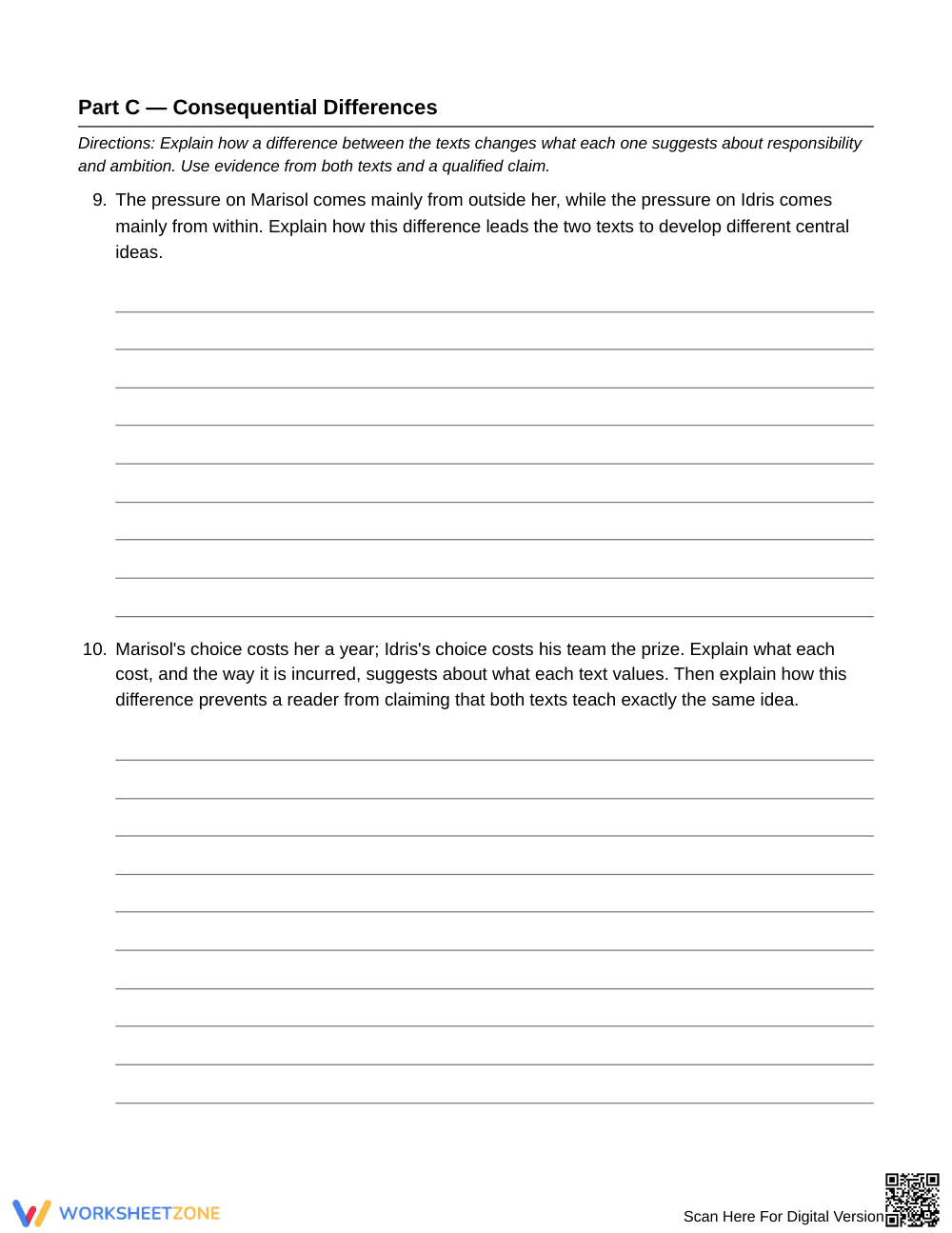
- Independent practice (Part C, 2 tasks): students explain consequential differences with no step-by-step scaffold.
The sequence follows gradual release: I Do, We Do, You Do.
Standards Alignment
RL.9-10.2 — Determine a theme or central idea of a text and analyze its development over the course of the text, including how specific details shape and refine it. Students apply this to two texts at once. The standard code can be copied directly into lesson plans, IEP goals, or district curriculum mapping tools.
How to Use It
Use it after direct instruction on theme as a paired-text check, or during class as a partner task for Parts A and B with Part C completed independently. While students work, watch whether claims use qualifiers and whether each quotation is followed by an explanation. Expect 40–50 minutes.
Who It's For
Designed for Grade 9 English I students moving from a topic to a full central-idea statement. Students who struggle with writing can start with the multiple-choice tasks and the reminder box; advanced students can refine their Part C responses. Pair it with an anchor chart on theme development.
Standard RL.9-10.2 asks Grade 9 students to determine a central idea and analyze how specific details develop it across a text. This English I worksheet extends that skill to paired texts: students compare two short stories about responsibility and ambition, set shared comparison criteria, cite numbered paragraphs, and explain how differences between the texts lead to different central ideas. The 10-task sequence moves from establishing criteria to paired analysis to consequential differences. Fisher & Frey (2014) describe gradual release of responsibility, in which teachers shift cognitive work to students through guided, collaborative, and independent practice, as a framework for building durable comprehension; the worksheet's three parts follow that pattern. Qualified claims, integrated quotations, and same-criterion comparison are practiced explicitly, so students learn to avoid overgeneralizing. An answer key supports quick scoring and feedback after each part, helping teachers see whether students can compare ideas rather than only summarize them.


