


























Views
Downloads

Printable Idea Refinement Worksheet | Grade 9 English I
Paste this activity's link or code into your existing LMS (Google Classroom, Canvas, Teams, Schoology, Moodle, etc.).
Students can open and work on the activity right away, with no student login required.
You'll still be able to track student progress and results from your teacher account.
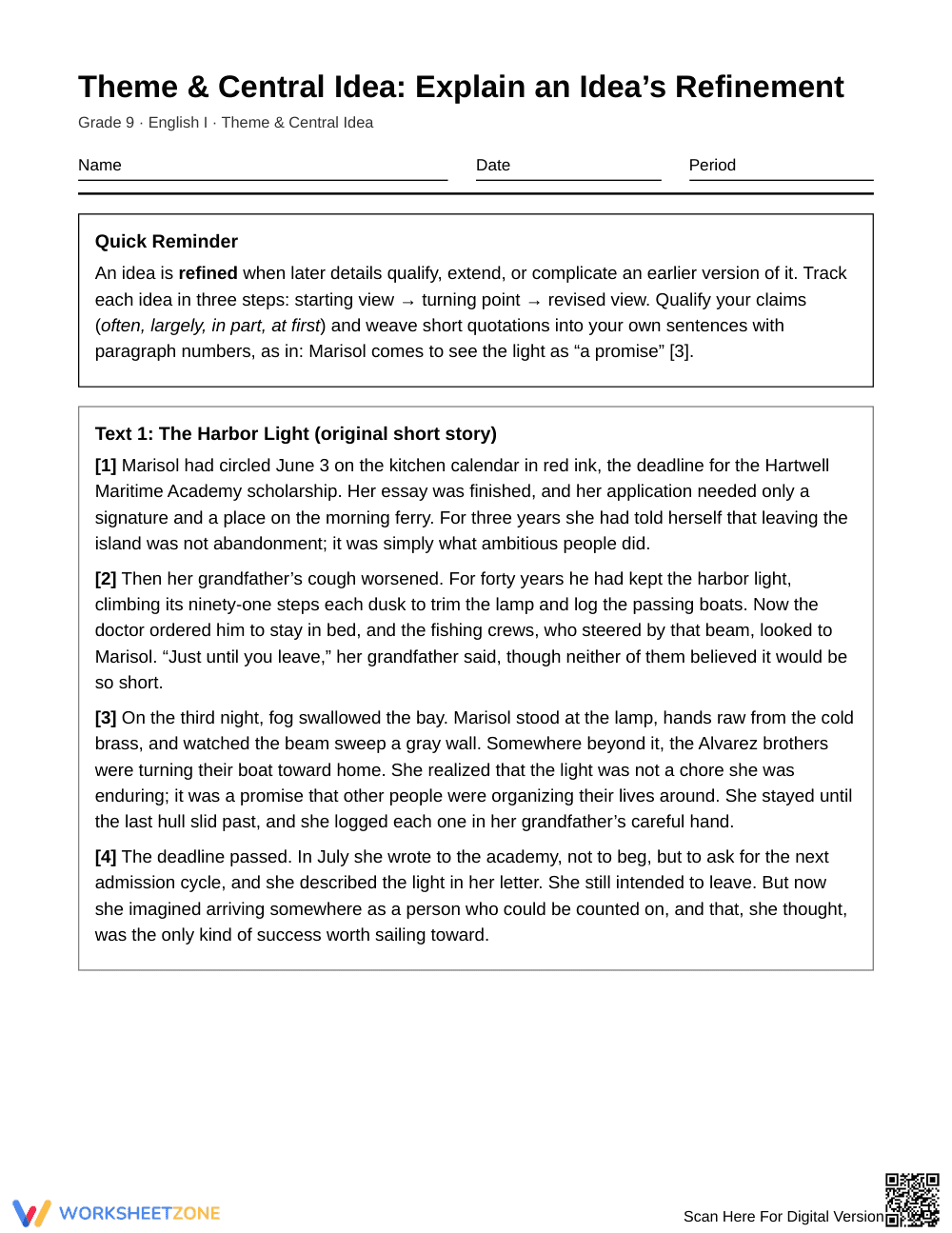
This worksheet teaches Grade 9 students to explain how an idea is refined across a text, tracing a starting view, a turning point, and a revised view. Students leave able to cite precise details, qualify their claims, and defend a conclusion about theme in two original texts.
At a Glance
- Grade: 9 · Subject: English I
- Standard:
RL.9-10.2— Explain how details shape and refine a theme across a text- Skill Focus: Explaining how an idea is refined
- Format: 6 pages · 12 problems · Answer key included · PDF
- Best For: Theme practice after direct instruction
- Time: 45–60 minutes
What's Inside
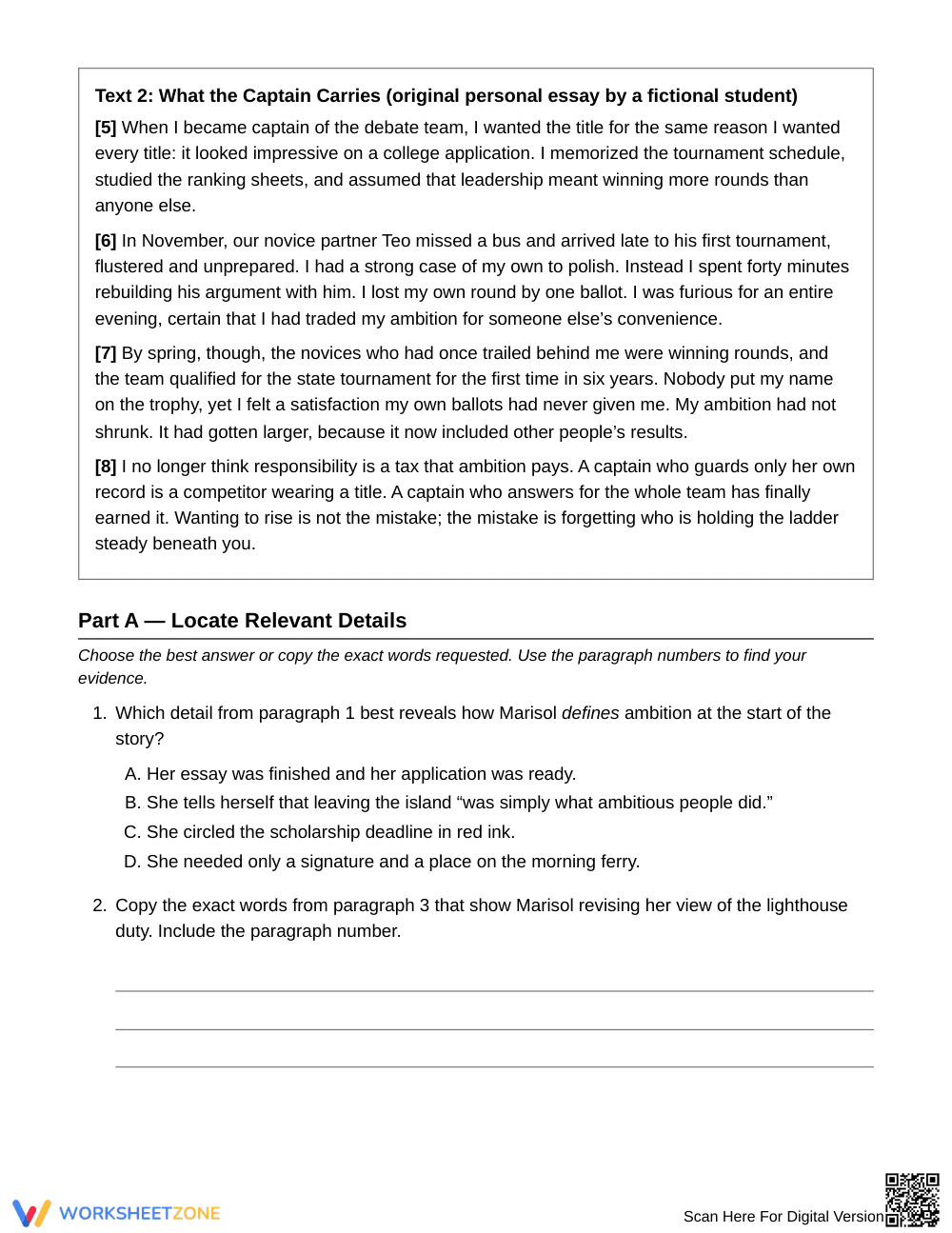
Twelve tasks span six pages and two original texts: a short story, “The Harbor Light,” and a personal essay, “What the Captain Carries.” Students answer multiple-choice items, copy exact words, and write short responses. A reminder box models the three-step tracking routine. A 3-page answer key is included.
Skill Progression
- Guided practice (Part A, 3 tasks): Students locate relevant details with paragraph numbers, using multiple choice and one copy-the-words item.
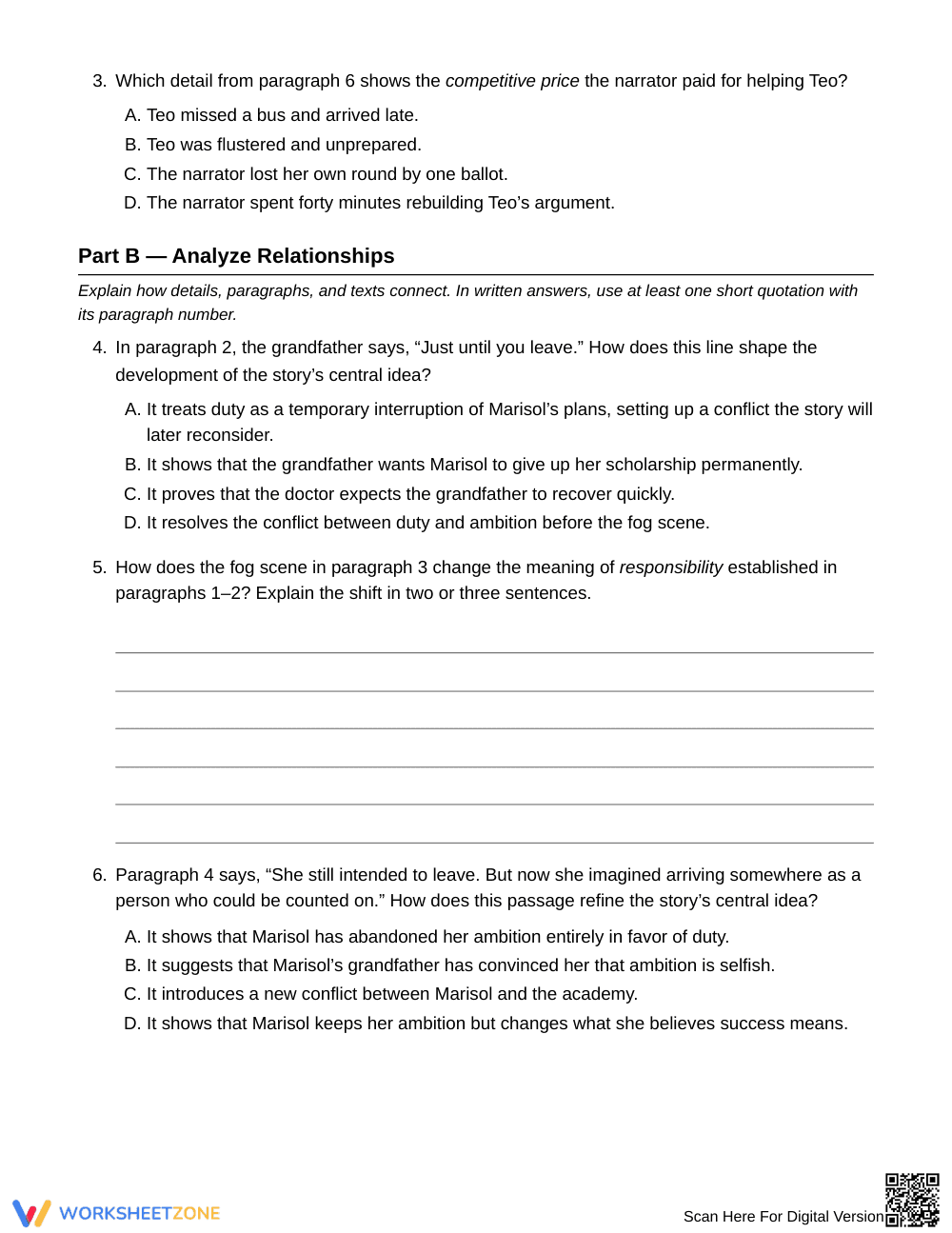
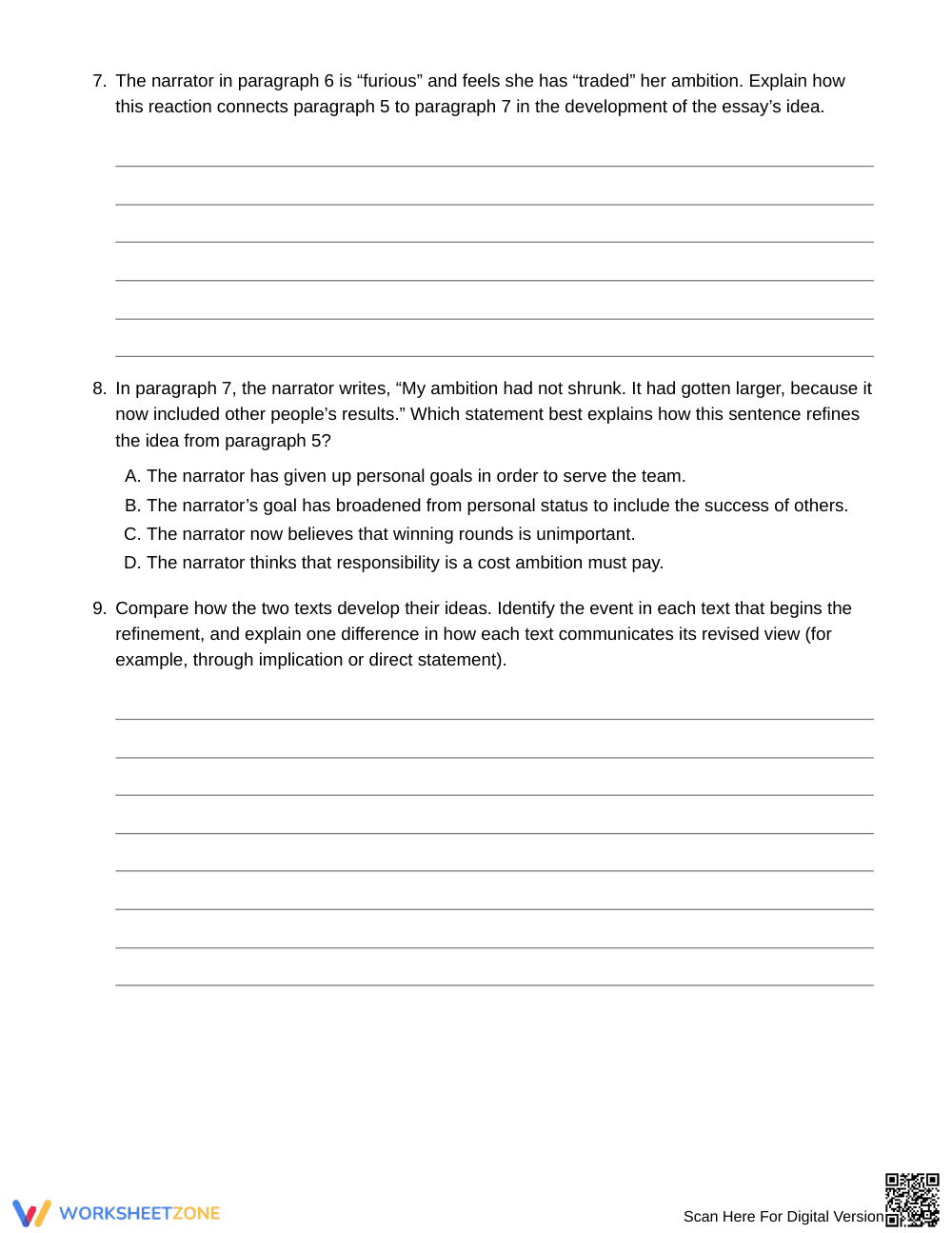
- Supported practice (Part B, 6 tasks): Students analyze how details, paragraphs, and texts connect, using three multiple-choice items and three short written responses with quotations.
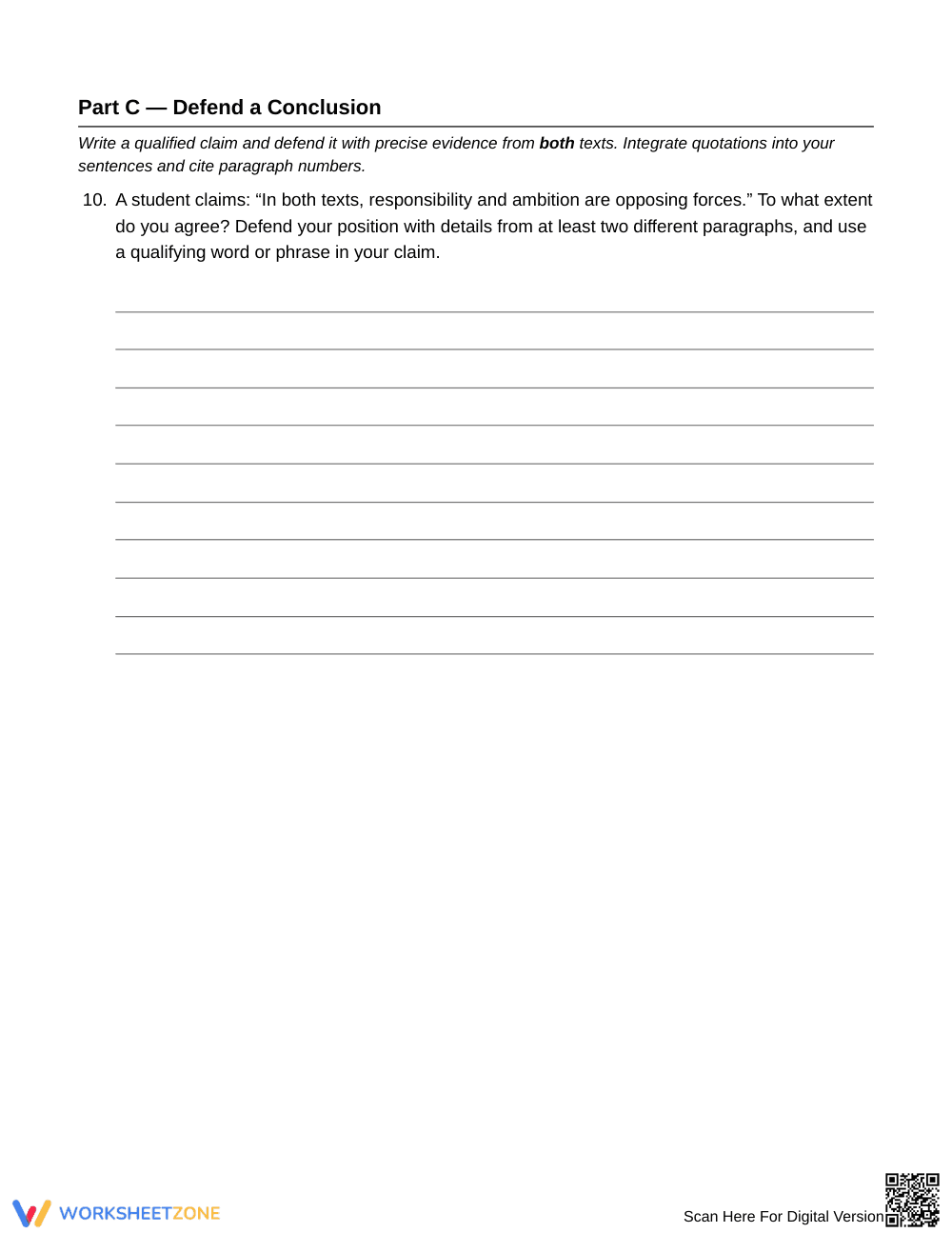
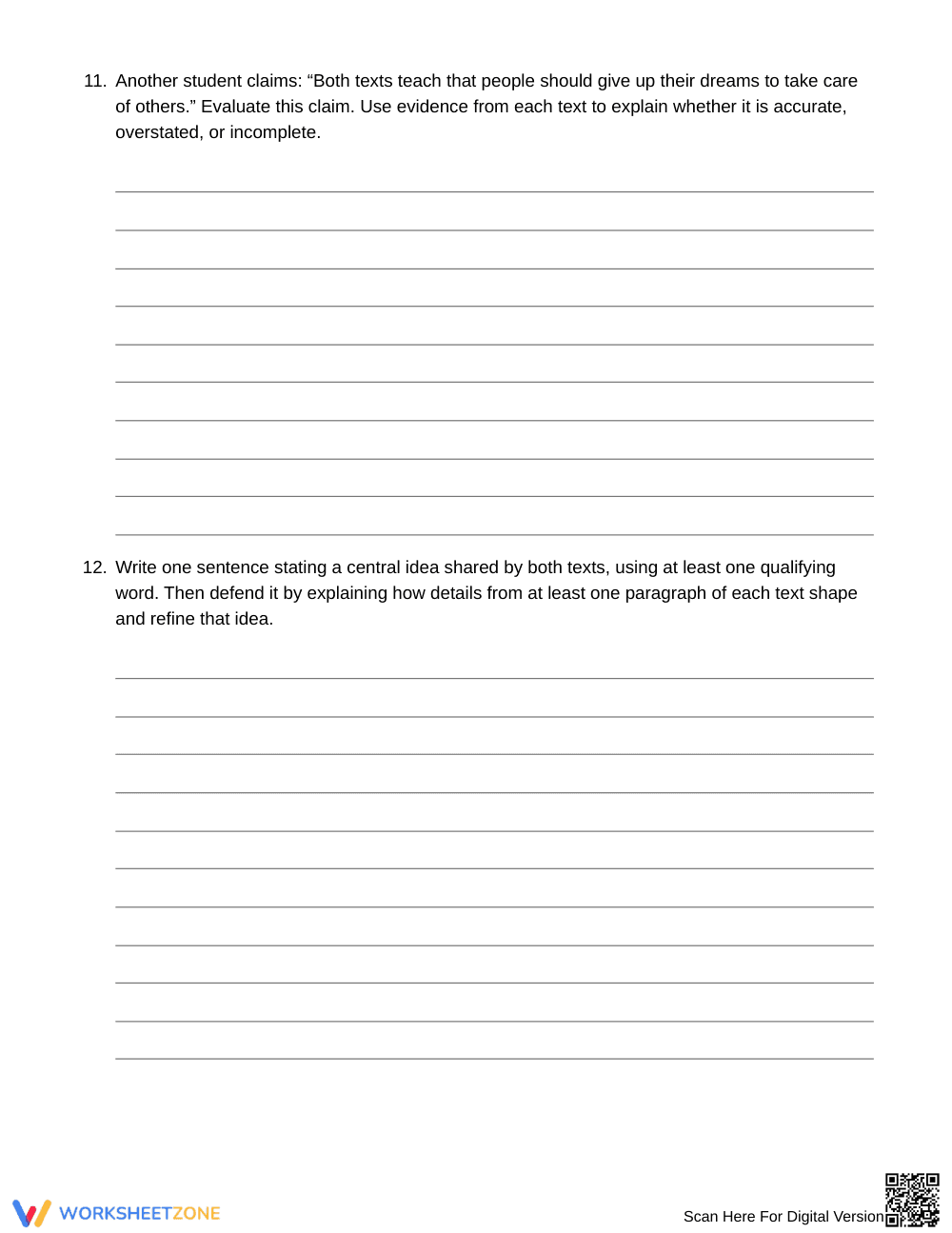
- Independent practice (Part C, 3 tasks): Students defend qualified claims with evidence from both texts.
This sequence follows gradual release: I Do, We Do, You Do.
Standards Alignment
RL.9-10.2: Determine a theme or central idea of a text and analyze in detail its development over the course of the text, including how it emerges and is shaped and refined by specific details. This standard code can be copied directly into lesson plans, IEP goals, or district curriculum mapping tools.
How to Use It
- During instruction: Model Part A together, then let pairs complete Part B.
- After instruction: Assign Part C independently as a formative check.
While students write, watch whether they qualify claims and attach paragraph numbers to quotations, and note who can name the turning point. Expect 45–60 minutes total.
Who It's For
Built for Grade 9 English I students learning to trace theme development. Students who need support can finish Parts A and B first, while stronger writers can expand Part C into a full paragraph. Pair it with a short anchor chart on theme versus topic.
RL.9-10.2 asks students to determine a theme or central idea and analyze how specific details shape and refine it over the course of a text. This Grade 9 English I worksheet builds that skill through 12 tasks across two original texts: a short story and a personal essay. Students locate relevant details, analyze how paragraphs and texts connect, and defend a qualified claim with quoted evidence and paragraph numbers. The structure follows the gradual release model described by Fisher & Frey (2014), moving from guided identification to independent argument. Each idea is tracked through three steps: starting view, turning point, and revised view. Because students must qualify claims and cite paragraphs, the worksheet gives teachers observable evidence of how well learners explain an idea's refinement rather than merely naming a theme. A three-page answer key supports quick, consistent scoring and feedback.


