


























Views
Downloads




Printable Connecting Details Worksheet | Grade 9 English I
Paste this activity's link or code into your existing LMS (Google Classroom, Canvas, Teams, Schoology, Moodle, etc.).
Students can open and work on the activity right away, with no student login required.
You'll still be able to track student progress and results from your teacher account.
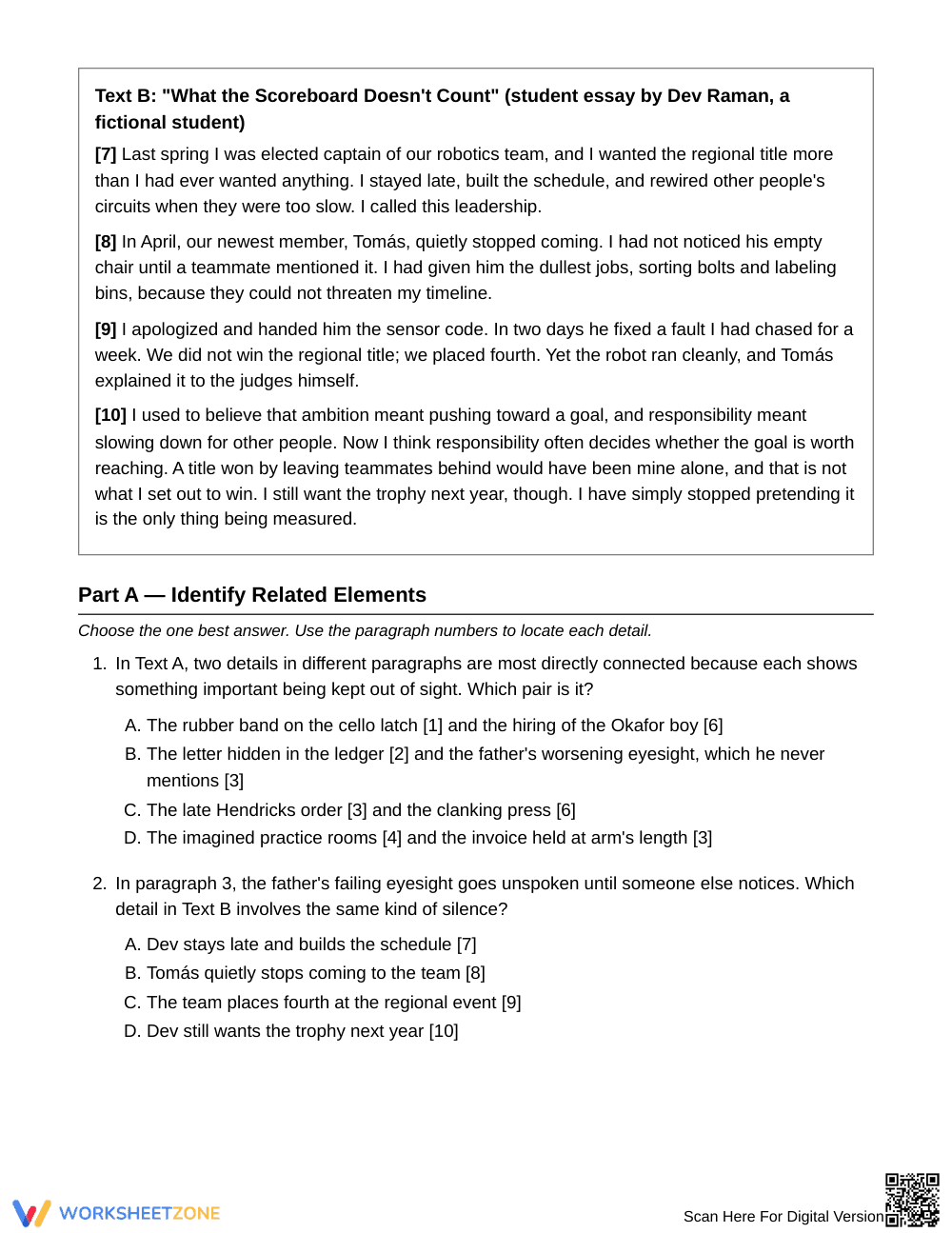
This worksheet teaches Grade 9 students to link details from distant parts of a text and use them to support a qualified theme. Students work across a short story and a student essay, tracing how early images return later and how those links shape meaning.
At a Glance
- Grade: 9 · Subject: English I
- Standard:
RL.9-10.2— Determine a theme and explain how specific details build it across a text- Skill Focus: Connecting details across distant sections of paired texts
- Format: 6 pages · 12 problems · Answer key included · PDF
- Best For: Paired-text theme practice during class
- Time: 40–55 minutes
What's Inside
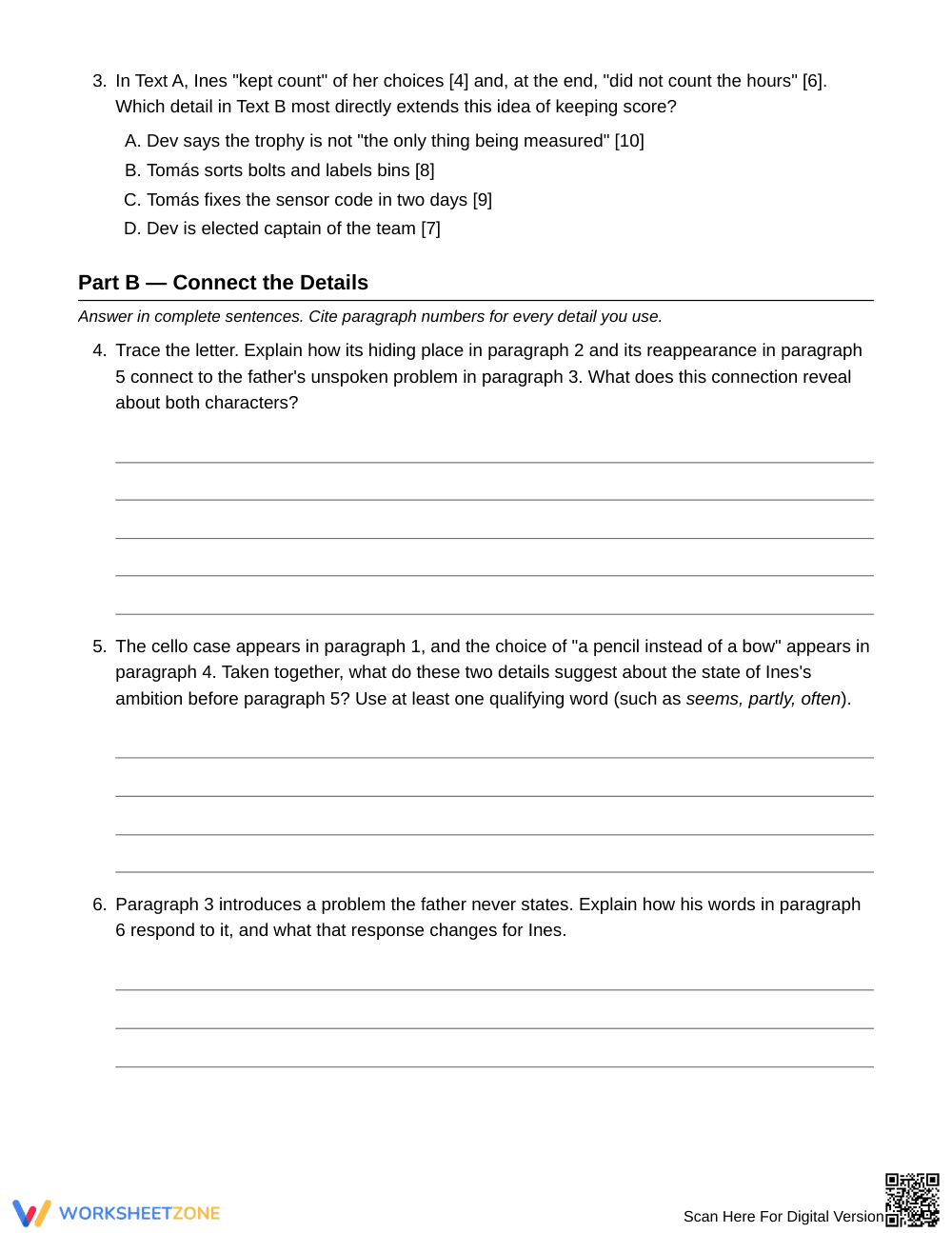
The 6-page packet pairs a short story, “The Ledger,” with a student essay, with paragraphs numbered 1–10 across both texts. Students complete multiple-choice items, short written responses, and three extended responses, using a reminder box on qualified claims and a writing checklist. A 3-page answer key accompanies the student pages.
Skill Progression
- Guided practice: 3 multiple-choice items in Part A, with paragraph numbers pointing to each detail.
- Supported practice: 6 items in Part B (5 written, 1 multiple choice) requiring cited evidence and qualifying words.
- Independent practice: 3 developed responses in Part C, supported only by a checklist.
The sequence follows gradual release: I Do, We Do, You Do.
Standards Alignment
RL.9-10.2 — Determine a theme or central idea of a text and analyze in detail its development, including how it is shaped and refined by specific details. The tasks ask students to link early and late details to show that development. This standard code can be copied directly into lesson plans, IEP goals, or district curriculum mapping tools.
How to Use It
- After direct instruction: Assign the full packet as independent practice following a mini-lesson on topic versus theme.
- During instruction: Work Part A together, then let pairs draft Part B responses.
Formative tip: watch whether students cite paragraph numbers from both early and late sections and use hedge words such as often or suggests. Expect 40–55 minutes, or split the packet across two class periods.
Who It's For
Built for Grade 9 English I students learning to support themes with text evidence. Part A offers entry-level scaffolds for developing readers, while Part C stretches strong writers. Pair it with an anchor chart on topic versus theme or a direct lesson on qualified claims.
RL.9-10.2 asks students to determine a theme and analyze how specific details shape and refine it across a text. This Grade 9 English I worksheet turns that skill into 12 tasks: students link distant details in a short story and a student essay, such as a hidden letter that resurfaces, then write qualified theme statements supported by cited paragraphs. Research on gradual release of responsibility, described by Fisher & Frey (2014), supports moving from modeled and guided work to independent application, and this packet follows that sequence from multiple-choice items to extended writing. Because most items require paragraph numbers, students practice locating evidence precisely rather than summarizing the plot. Teachers can use it for practice, review, or formative checks of evidence use. The 3-page answer key supports consistent scoring for all 12 tasks.


