


























Views
Downloads
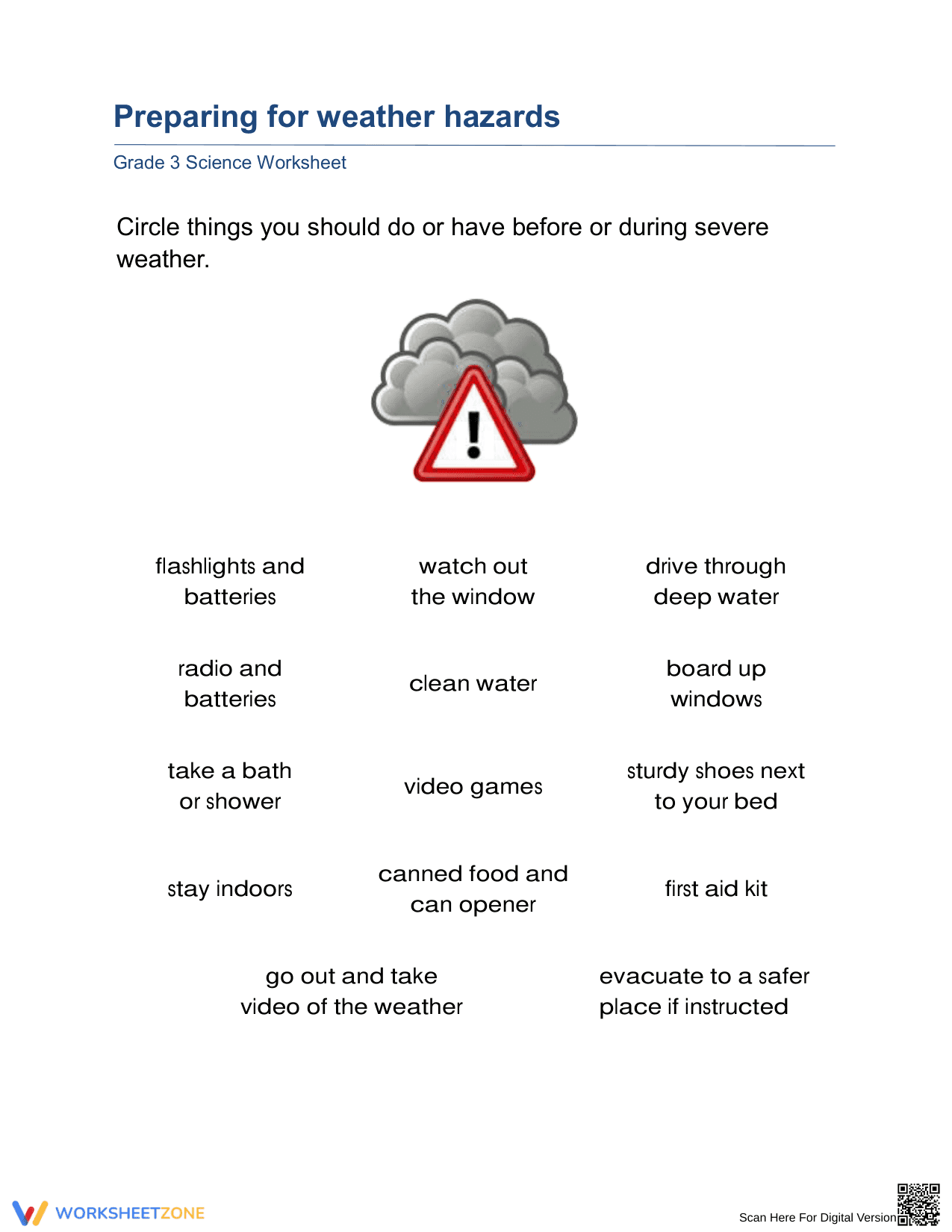
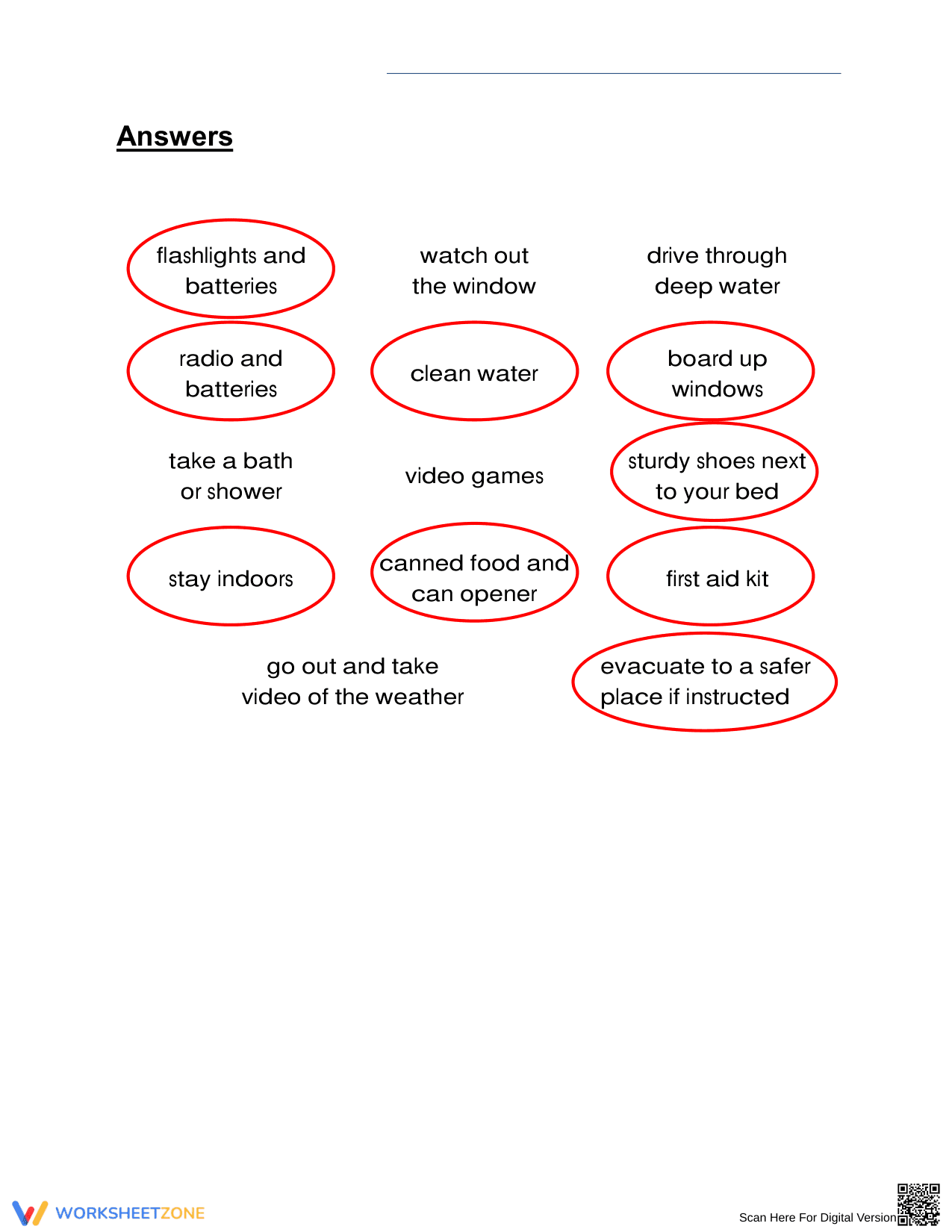

Essential Grade 3 Preparing for Weather Hazards Worksheet
Paste this activity's link or code into your existing LMS (Google Classroom, Canvas, Teams, Schoology, Moodle, etc.).
Students can open and work on the activity right away, with no student login required.
You'll still be able to track student progress and results from your teacher account.
Students learn to identify essential safety protocols and supplies for severe weather events to minimize risk. This Grade 3 science worksheet focuses on preparing for hazards like hurricanes, floods, and tornadoes. By distinguishing between safe actions and dangerous behaviors, learners build a vital foundation for emergency preparedness and real-world safety decision-making in any climate.
At a Glance
- Grade: 3 · Subject: Science
- Standard:
3-ESS3-1— Evaluate the merit of design solutions that specifically reduce the impacts of various severe weather-related hazards- Skill Focus: Weather Emergency Preparedness
- Format: 1 page · 14 items · Answer key included · PDF
- Best For: Independent science practice, homework, or a quick classroom safety review
- Time: 10–15 minutes
This single-page PDF features 14 specific evaluation items related to emergency readiness. Students must determine which actions and supplies, such as flashlights or first aid kits, are necessary before or during severe weather. The worksheet includes a clear weather alert graphic and organized text blocks to support readability. A comprehensive answer key is provided to ensure rapid grading and immediate student feedback.
This resource is optimized for immediate use in any instructional setting. First, print the single page for your class (1 minute). Next, distribute the sheets to students for a quick warm-up or lesson closer (1 minute). Finally, review the correct safety choices together using the included key (5 minutes). Total teacher prep time is under two minutes, making it an ideal choice for sub plans or emergency fillers.
Directly aligned to 3-ESS3-1, this activity requires students to evaluate how preparation acts as a design solution to reduce weather-related impacts. By identifying critical tools and protocols, students demonstrate mastery of hazard mitigation strategies. This standard code can be copied directly into lesson plans, IEP goals, or district curriculum mapping tools to ensure all instructional minutes meet required state and national guidelines.
Deploy this worksheet during the "Explain" or "Elaborate" phase of a weather unit. It serves as an excellent formative assessment tool; observe which students struggle to differentiate between essential survival supplies and non-essential items. Expect a 12-minute completion time for most third graders. For maximum impact, pair the worksheet with a classroom demonstration of an actual emergency supply kit to provide physical context for the items listed.
This activity is designed for 3rd-grade students but works effectively for 2nd-grade enrichment or 4th-grade review. It provides focused support for learners developing basic safety concepts and scientific literacy. For differentiation, read the items aloud for emerging readers or English language learners to ensure accessibility. This resource pairs naturally with a safety-themed anchor chart or a classroom discussion about local weather risks.
According to the ScienceDirect TpT Analysis, structured worksheets that simulate real-world decision-making significantly improve retention of safety protocols in elementary learners. This Grade 3 science resource targets the 3-ESS3-1 standard by requiring students to evaluate the efficacy of various items and actions in the context of weather-related hazards. By focusing on the plain-English skill of emergency preparedness, the worksheet bridges the gap between theoretical meteorology and practical life skills. Research indicates that when students can identify specific tools and behaviors that mitigate environmental risks, they demonstrate higher levels of scientific literacy and personal agency. This self-contained module provides a measurable way to track student progress toward mastering NGSS Earth and Space Science goals. Educators can utilize the task count from this worksheet to fulfill data requirements for standards-based report cards or interactive science notebooks.


