




























1 / 3
0
Views
0
Downloads

0.0
0
Save
0 Likes
Share
Practice Naming Alkanes
0 Views
0 Downloads

Paste this activity's link or code into your existing LMS (Google Classroom, Canvas, Teams, Schoology, Moodle, etc.).
Students can open and work on the activity right away, with no student login required.
You'll still be able to track student progress and results from your teacher account.
Information
Description
What It Is:
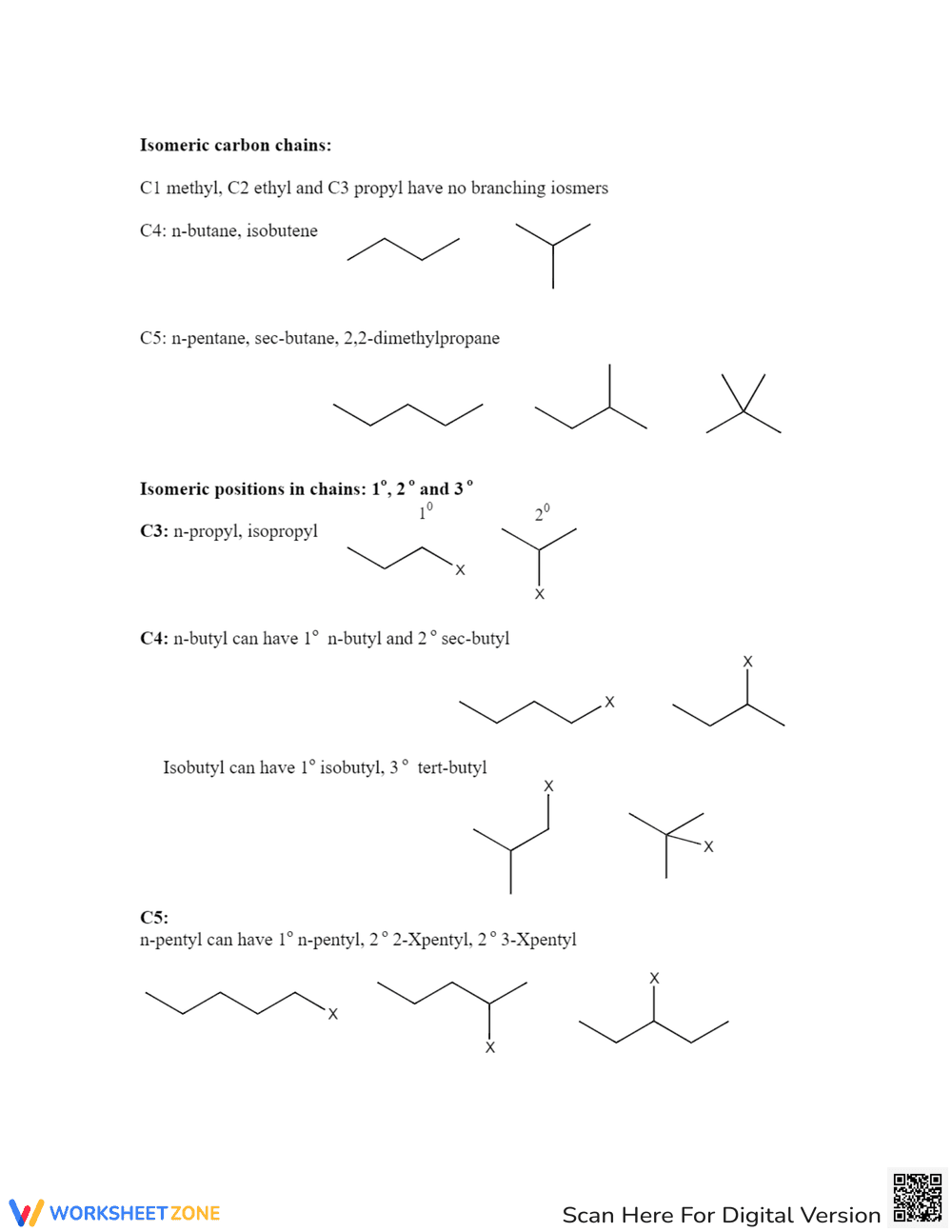
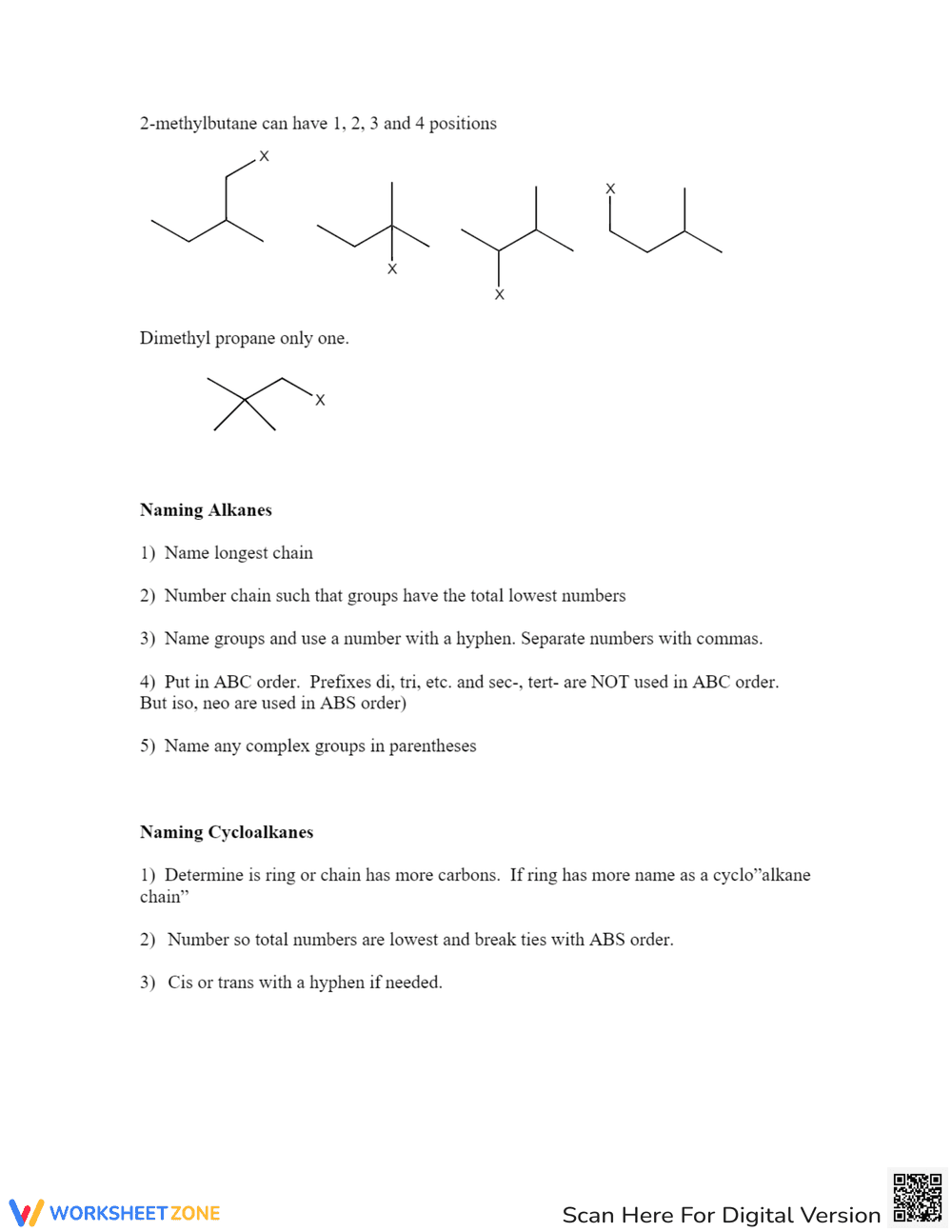
This is a chemistry worksheet focusing on isomers of carbon chains. It illustrates different isomers for carbon chains C1 to C5, including examples like n-butane, isobutene, n-pentane, sec-butane, and 2,2-dimethylpropane. The worksheet also demonstrates isomeric positions in chains, showing examples for C3, C4, and C5 with different positions of a substituent 'X' on the carbon chains.
Grade Level Suitability:
This worksheet is most suitable for high school (Grades 11-12) or introductory college level chemistry courses. The concepts of isomerism and nomenclature of organic compounds require a prior understanding of basic chemistry principles.
Why Use It:
This worksheet helps students visualize and understand the concept of structural isomerism in organic chemistry. It reinforces the ability to identify and draw different isomers of alkanes and to understand the different possible positions for substituents on a carbon chain.
How to Use It:
Use this worksheet as a reference guide or as a practice exercise. Students can study the examples provided to understand the different types of isomers. They can also use the examples to practice drawing the isomers themselves or to predict the isomers of other alkanes.
Target Users:
This worksheet is ideal for high school chemistry students, college students taking introductory organic chemistry, and teachers looking for visual aids to explain isomerism.
This is a chemistry worksheet focusing on isomers of carbon chains. It illustrates different isomers for carbon chains C1 to C5, including examples like n-butane, isobutene, n-pentane, sec-butane, and 2,2-dimethylpropane. The worksheet also demonstrates isomeric positions in chains, showing examples for C3, C4, and C5 with different positions of a substituent 'X' on the carbon chains.
Grade Level Suitability:
This worksheet is most suitable for high school (Grades 11-12) or introductory college level chemistry courses. The concepts of isomerism and nomenclature of organic compounds require a prior understanding of basic chemistry principles.
Why Use It:
This worksheet helps students visualize and understand the concept of structural isomerism in organic chemistry. It reinforces the ability to identify and draw different isomers of alkanes and to understand the different possible positions for substituents on a carbon chain.
How to Use It:
Use this worksheet as a reference guide or as a practice exercise. Students can study the examples provided to understand the different types of isomers. They can also use the examples to practice drawing the isomers themselves or to predict the isomers of other alkanes.
Target Users:
This worksheet is ideal for high school chemistry students, college students taking introductory organic chemistry, and teachers looking for visual aids to explain isomerism.


