


























1 / 6
0
Views
0
Downloads

Save
0 Likes
Share
Master Potential Energy Diagram Concepts
0 Views
0 Downloads
Paste this activity's link or code into your existing LMS (Google Classroom, Canvas, Teams, Schoology, Moodle, etc.).
Students can open and work on the activity right away, with no student login required.
You'll still be able to track student progress and results from your teacher account.
Information
Description
What It Is:
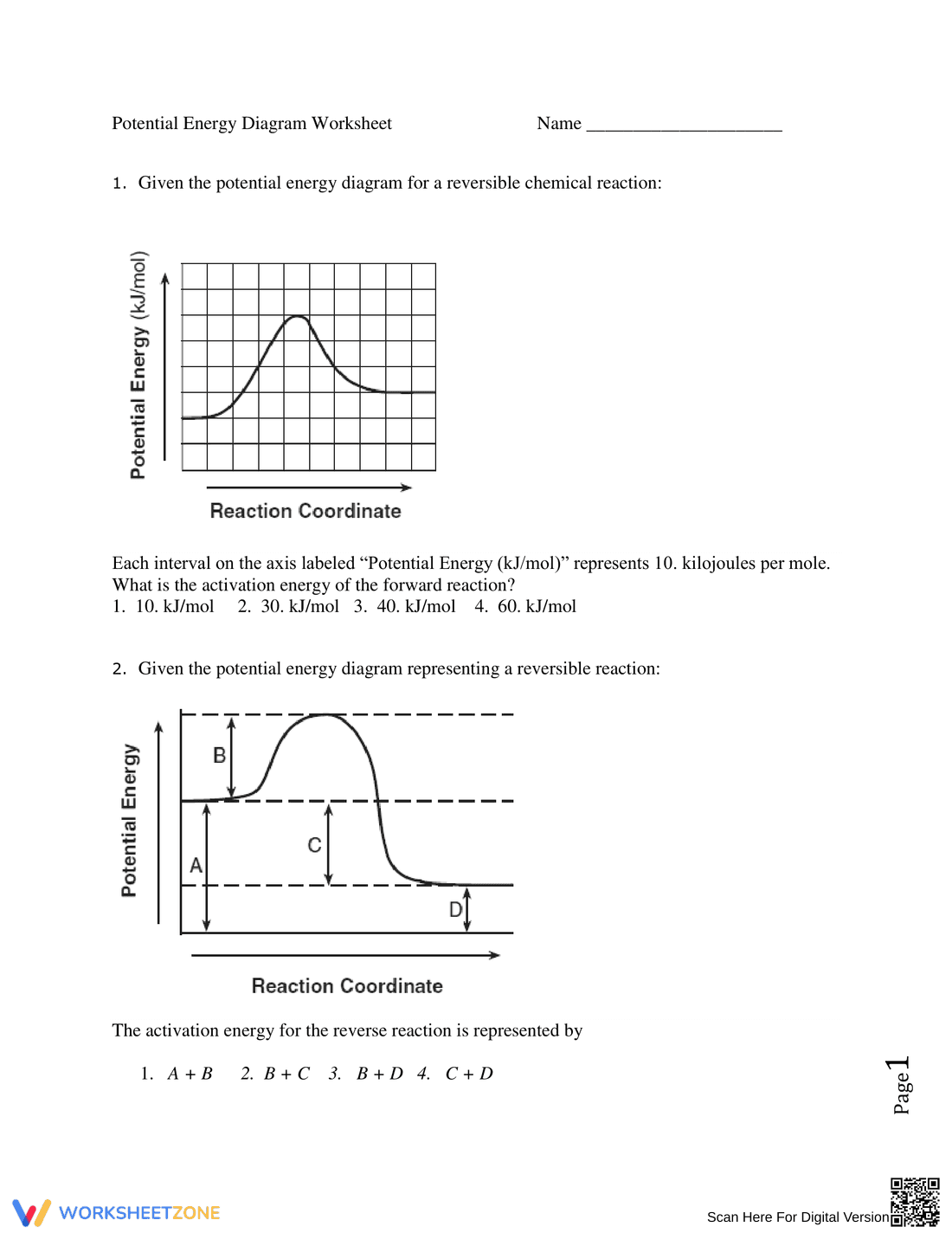
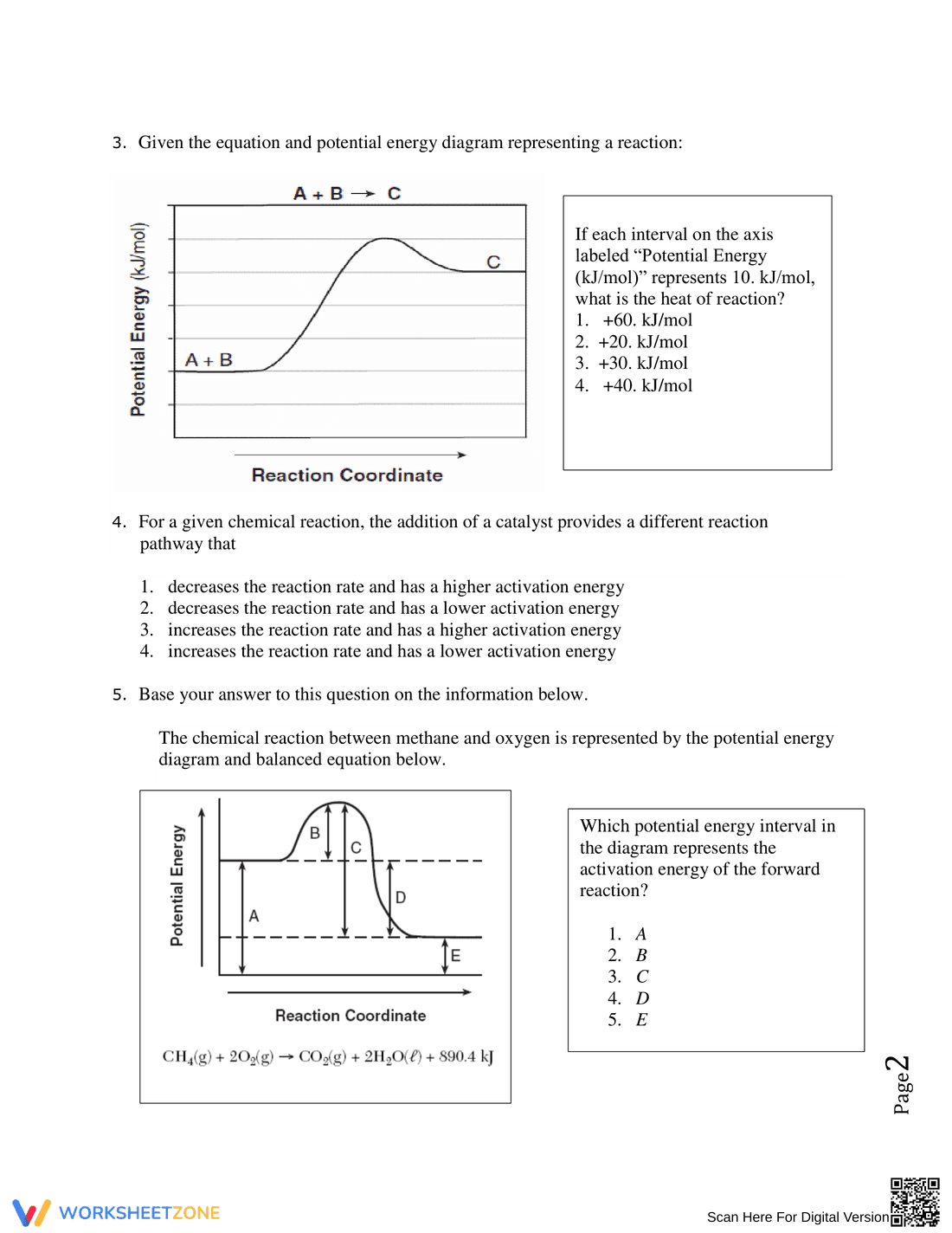
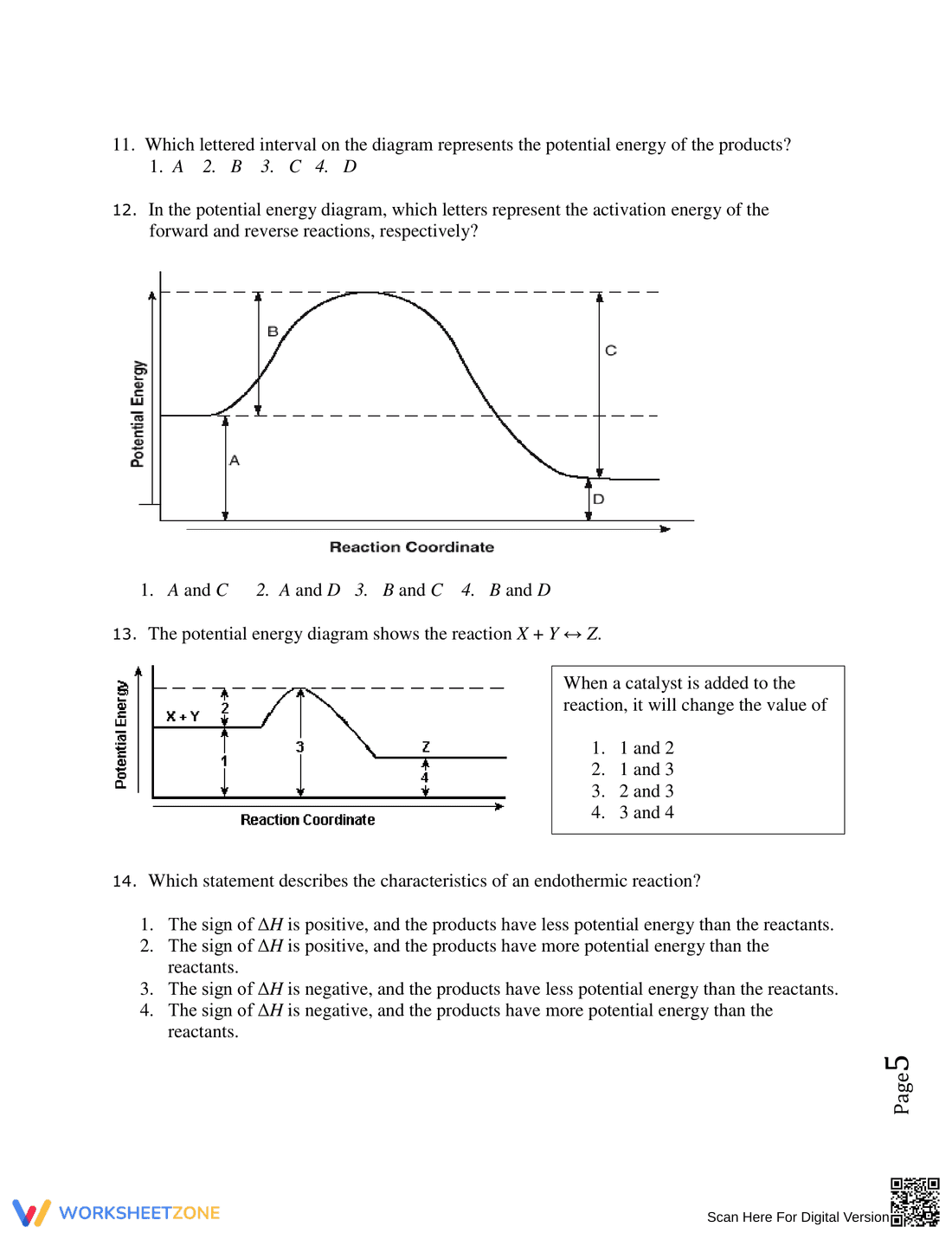
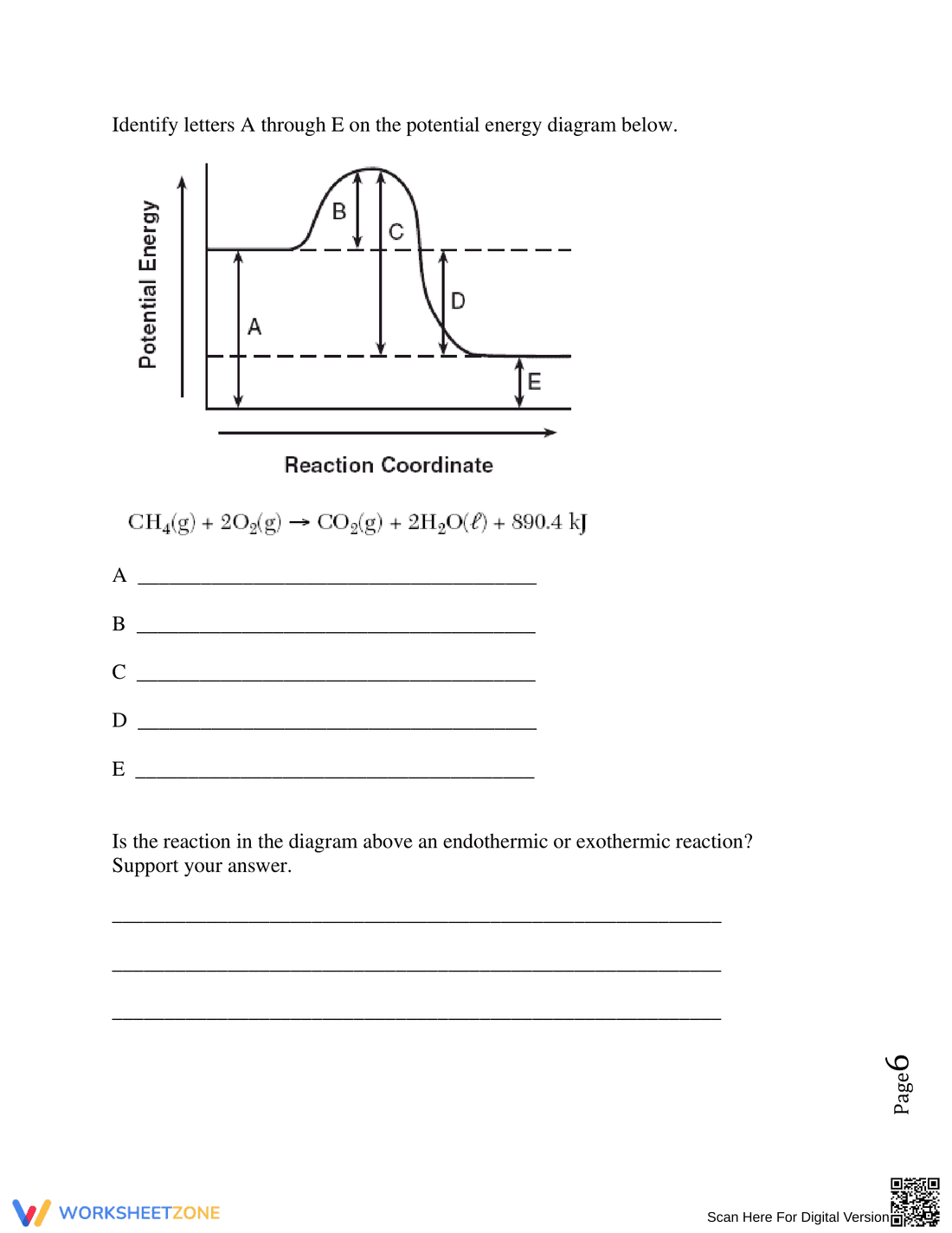
This is a chemistry worksheet focused on potential energy diagrams for reversible chemical reactions. It includes two questions, each featuring a potential energy diagram with labeled axes (Potential Energy in kJ/mol and Reaction Coordinate). The first question asks for the activation energy of the forward reaction, given that each interval on the potential energy axis represents 10 kJ/mol. The second question presents a diagram with labeled segments (A, B, C, and D) and asks which combination represents the activation energy for the reverse reaction.
Grade Level Suitability:
This worksheet is suitable for high school chemistry students (Grades 11-12) and introductory college chemistry courses. It requires understanding of potential energy diagrams, activation energy, and reversible reactions, concepts typically covered at this level.
Why Use It:
This worksheet helps students practice interpreting potential energy diagrams and applying their knowledge to determine activation energies for both forward and reverse reactions. It reinforces the relationship between potential energy changes and reaction pathways, promoting a deeper understanding of chemical kinetics.
How to Use It:
Students should first carefully examine each potential energy diagram, paying attention to the labeled axes and any provided information (e.g., the value of each interval). For the first question, students need to determine the difference in potential energy between the reactants and the transition state. For the second question, they need to identify which labeled segment(s) represent the activation energy for the reverse reaction. Students should select the correct multiple-choice answer for each question.
Target Users:
The target users are high school and college chemistry students who are learning about chemical kinetics, potential energy diagrams, and activation energy. This worksheet can be used for homework assignments, in-class practice, or as a review tool.
This is a chemistry worksheet focused on potential energy diagrams for reversible chemical reactions. It includes two questions, each featuring a potential energy diagram with labeled axes (Potential Energy in kJ/mol and Reaction Coordinate). The first question asks for the activation energy of the forward reaction, given that each interval on the potential energy axis represents 10 kJ/mol. The second question presents a diagram with labeled segments (A, B, C, and D) and asks which combination represents the activation energy for the reverse reaction.
Grade Level Suitability:
This worksheet is suitable for high school chemistry students (Grades 11-12) and introductory college chemistry courses. It requires understanding of potential energy diagrams, activation energy, and reversible reactions, concepts typically covered at this level.
Why Use It:
This worksheet helps students practice interpreting potential energy diagrams and applying their knowledge to determine activation energies for both forward and reverse reactions. It reinforces the relationship between potential energy changes and reaction pathways, promoting a deeper understanding of chemical kinetics.
How to Use It:
Students should first carefully examine each potential energy diagram, paying attention to the labeled axes and any provided information (e.g., the value of each interval). For the first question, students need to determine the difference in potential energy between the reactants and the transition state. For the second question, they need to identify which labeled segment(s) represent the activation energy for the reverse reaction. Students should select the correct multiple-choice answer for each question.
Target Users:
The target users are high school and college chemistry students who are learning about chemical kinetics, potential energy diagrams, and activation energy. This worksheet can be used for homework assignments, in-class practice, or as a review tool.


