


























Views
Downloads
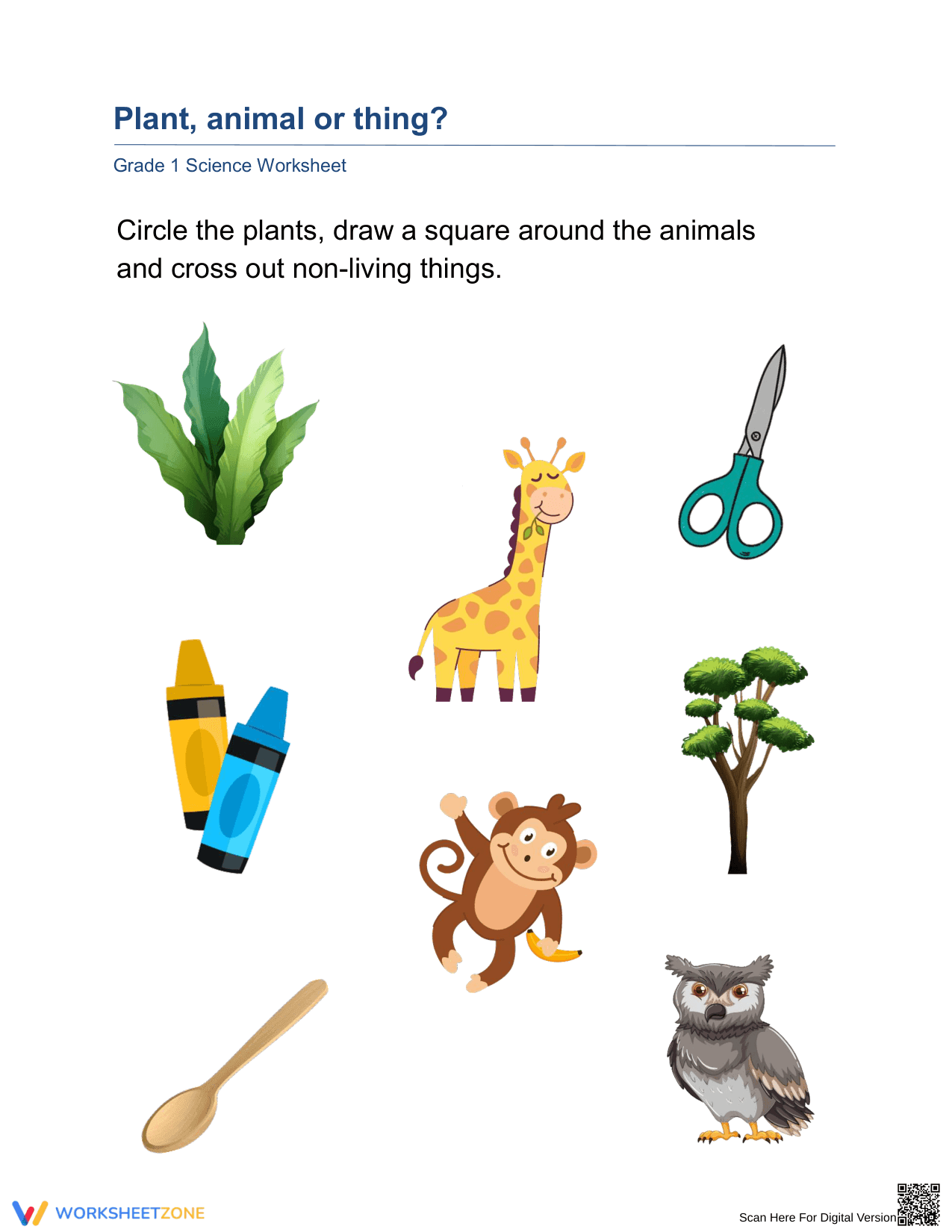

Essential Grade 1 Living and Non-Living Things Worksheet
Paste this activity's link or code into your existing LMS (Google Classroom, Canvas, Teams, Schoology, Moodle, etc.).
Students can open and work on the activity right away, with no student login required.
You'll still be able to track student progress and results from your teacher account.
This Essential Grade 1 Science worksheet helps students distinguish between plants, animals, and non-living objects through active identification. By circling, squaring, and crossing out items, learners develop the foundational classification skills necessary for biological study. This printable resource ensures students can accurately categorize the living world from inanimate objects.
At a Glance
- Grade: 1 · Subject: Living Things
- Standard:
1-LS1-1— Classify objects as plants, animals, or non-living things based on observable characteristics.- Skill Focus: Classification of living vs. non-living
- Format: 1 page · 8 problems · Answer key included · PDF
- Best For: Individual practice or science center activity
- Time: 10–15 minutes
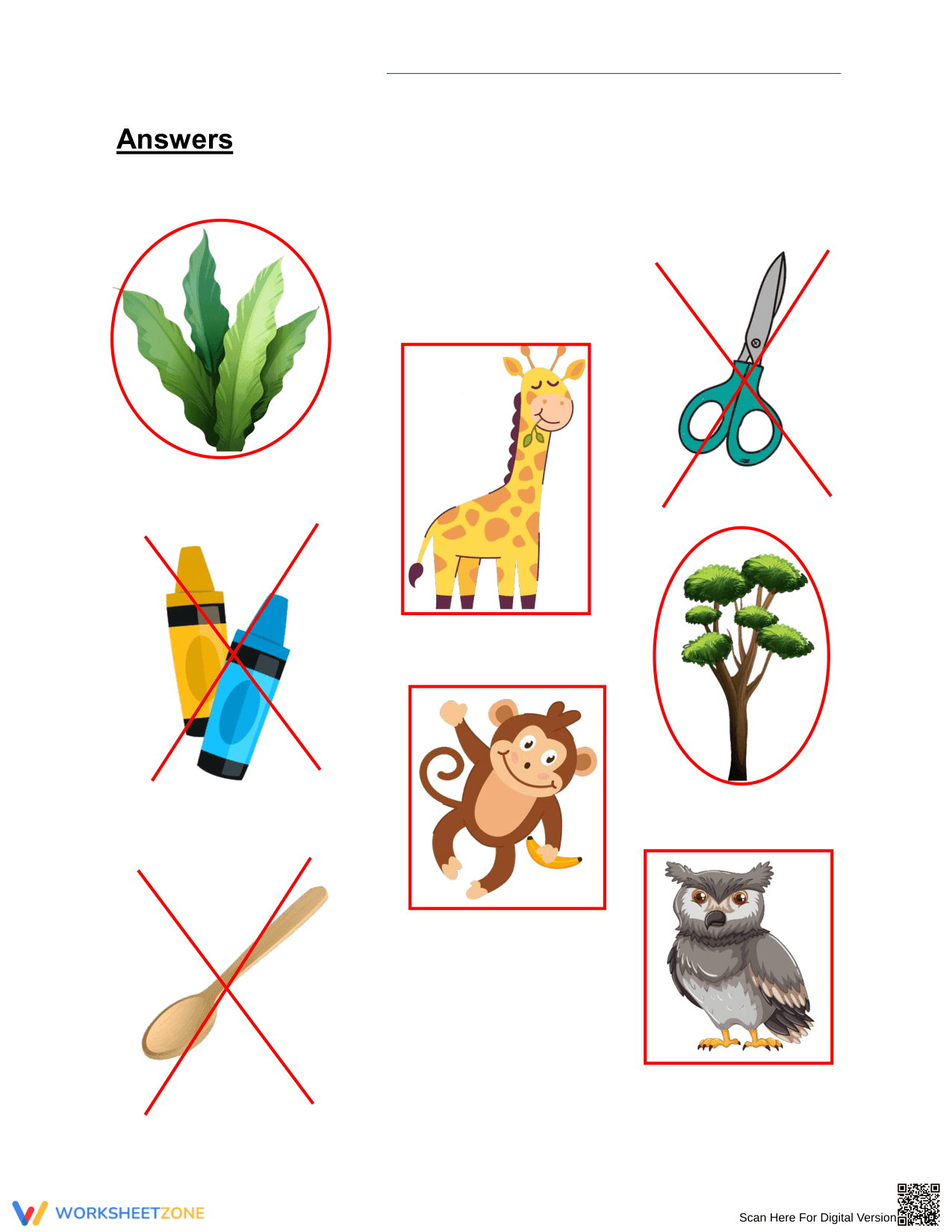
This single-page PDF contains eight high-quality illustrations of common plants, animals, and everyday objects. The worksheet is designed for immediate use, featuring clear instructions that prompt students to apply three different marking techniques: circling for plants, squaring for animals, and crossing out non-living things. A comprehensive answer key is included to facilitate rapid grading and student self-correction.
Zero-Prep Workflow
The zero-prep workflow for this resource is designed for maximum teacher efficiency. First, print the single-page PDF in approximately 30 seconds. Second, distribute to students with the simple instruction to follow the marking code which takes another 30 seconds. Finally, review the completed work using the provided answer key for immediate formative feedback in about one minute. The total teacher preparation time is under two minutes, making it ideal for unexpected sub plans.
Standards Alignment
This resource aligns primarily with 1-LS1-1, focusing on the identification of living organisms and their distinct needs compared to non-living items. It also supports CCSS.ELA-LITERACY.L.1.5.A, which requires students to sort common objects into categories to gain a sense of the concepts the categories represent. Both standard codes can be copied directly into lesson plans, IEP goals, or district curriculum mapping tools.
How to Use It
Use this worksheet as a quick-check assessment after an introductory lesson on the characteristics of life. It works best during the independent practice phase of instruction to verify that students can apply classification rules to new examples. Teachers should observe students as they work, specifically looking for any confusion between plants and non-living objects, which is a common developmental hurdle. The activity typically takes between ten and fifteen minutes to complete.
Who It's For
This resource is tailored for Grade 1 students but is also suitable for Kindergarten enrichment or Grade 2 review. The visual nature of the tasks makes it highly accessible for English Language Learners and students with IEPs who benefit from reduced text-heavy demands. It pairs naturally with a hands-on classroom scavenger hunt where students find real-world examples of living and non-living things.
According to the RAND AIRS 2024 report on early childhood science education, structured classification tasks are fundamental for developing the cognitive schemas required for more complex biological reasoning in later grades. This worksheet targets the 1-LS1-1 standard by requiring students to distinguish between the biological requirements of plants and animals versus the static nature of non-living things. Research by Fisher & Frey (2014) emphasizes that sorting and classifying are essential cognitive moves that allow students to organize their understanding of the natural world. By engaging with eight distinct items, learners practice the exact skill focus of identifying observable traits that define life. This printable resource provides the essential supported practice needed for mastery of life science categories. The inclusion of a clear answer key supports the NAEP recommendation for immediate instructional feedback in elementary science settings to prevent the solidification of misconceptions about inanimate objects.


