




























Views
Downloads

Planting and Plant Parts Worksheet | Grade 1 Essential

Paste this activity's link or code into your existing LMS (Google Classroom, Canvas, Teams, Schoology, Moodle, etc.).
Students can open and work on the activity right away, with no student login required.
You'll still be able to track student progress and results from your teacher account.
This Grade 1 science worksheet provides a comprehensive exploration of plant biology, focusing on the fundamental requirements for survival and the specific functions of anatomical structures. Students will identify survival needs, label a biological diagram, and connect plant parts to their ecological roles. It is designed to foster early scientific inquiry and observational skills.
At a Glance
- Grade: 1 · Subject: Science
- Standard:
1-LS1-1— Use materials to design a solution to a human problem by mimicking plant/animal parts- Skill Focus: Plant needs, anatomy, and functions
- Format: 3 pages · 19 problems · Answer key included · PDF
- Best For: Introductory life science and field observations
- Time: 30–45 minutes
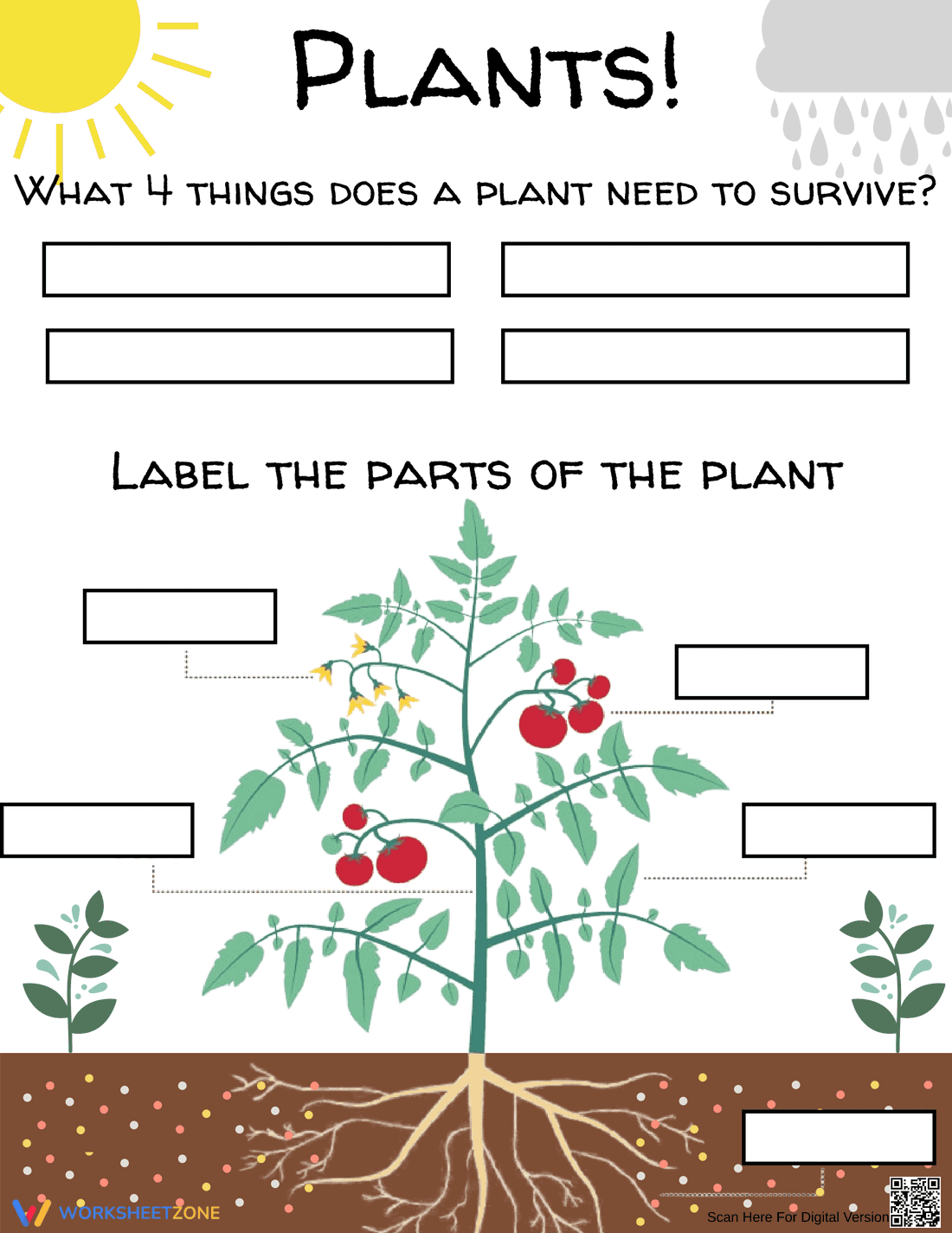
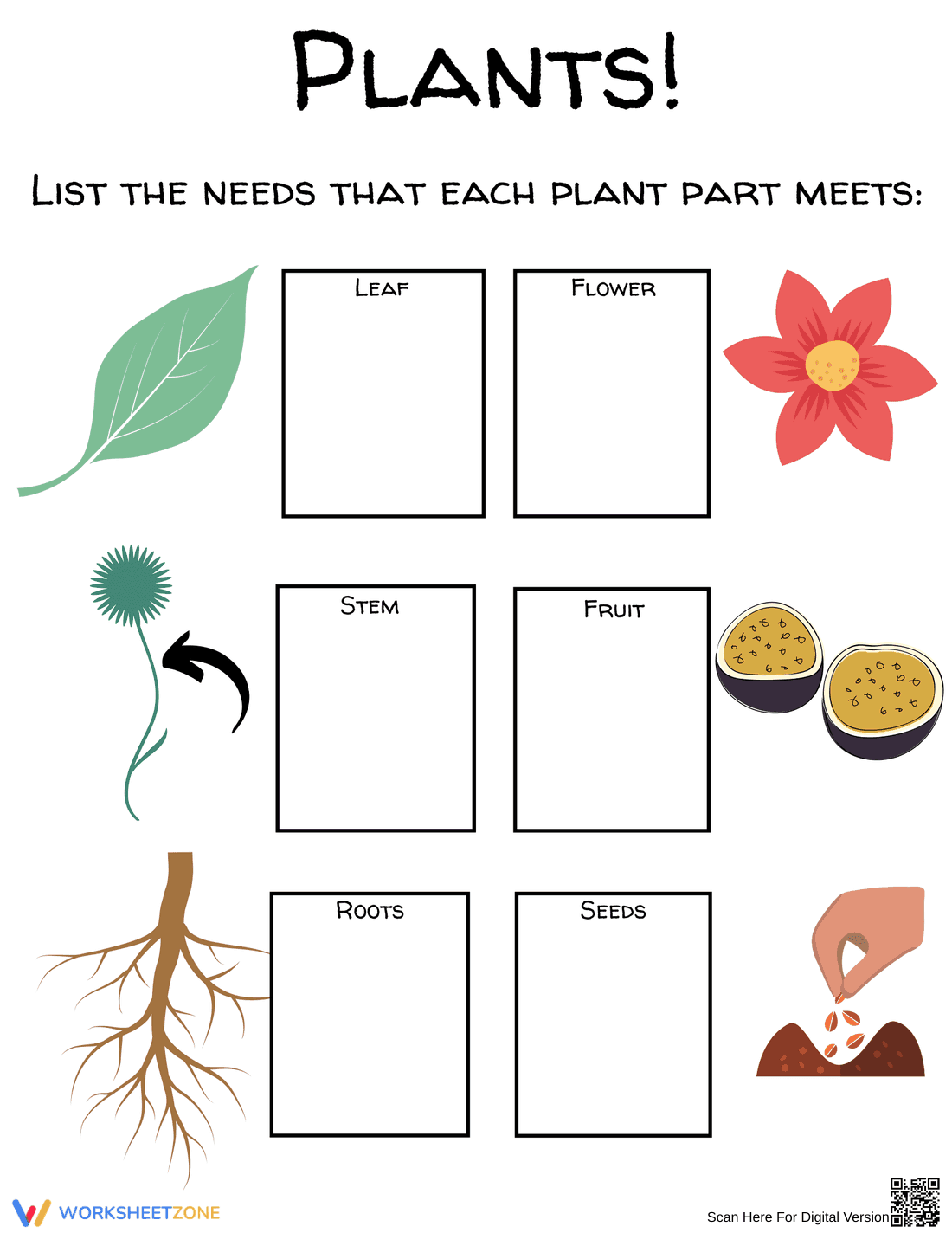
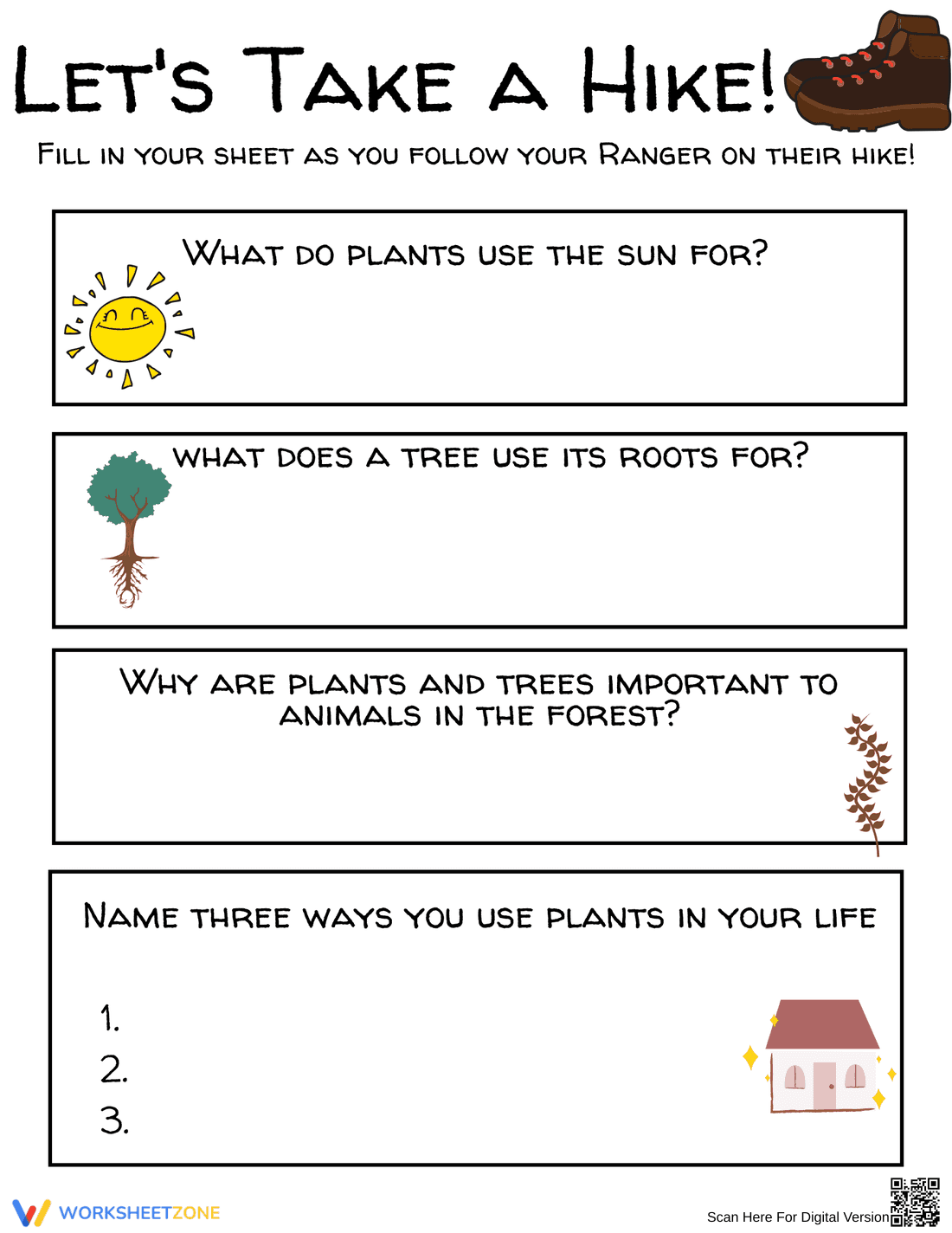
The resource contains three distinct pages. The first page features a "What 4 things does a plant need to survive?" prompt followed by a detailed tomato plant diagram for labeling. The second page challenges students to list the specific needs met by six different plant parts, including the stem and seeds. The final page is a "Let's Take A Hike" observation log for real-world application.
Zero-Prep Workflow
- Print: Select the three-page PDF and print enough copies for your cohort in under 1 minute.
- Distribute: Hand out the first two pages during your direct instruction on life cycles to reinforce vocabulary.
- Review: Use the final "Hike" page as a transition activity or outdoor learning extension to review concepts in a natural setting.
Aligned to `1-LS1-1`, this worksheet helps students understand how "all organisms have external parts" that they use to "grow and survive." By labeling parts and identifying needs, students build the foundational knowledge required to explain how plants use their structures to meet biological requirements. Both standard codes can be copied directly into lesson plans, IEP goals, or district curriculum mapping tools.
How to Use It
Use the first page as a formative assessment after an introductory lesson on botany. The diagram labeling serves as a quick check for anatomical vocabulary. The "Let's Take A Hike" page is perfect for an outdoor science walk, allowing students to apply classroom knowledge to local flora. Expect students to spend approximately 15 minutes per page.
Who It's For
This worksheet is ideal for first-grade students beginning their life science unit. It is also highly effective for second-grade review or for English Language Learners (ELL) who benefit from the clear visual diagrams and structured response boxes. Pair this with a seed-planting lab or a classroom anchor chart on photosynthesis for a complete instructional block.
Research by Fisher & Frey (2014) emphasizes the importance of the gradual release of responsibility, moving from structured labeling to independent observation. This worksheet follows that trajectory by providing a scaffolded diagram before asking students to apply their knowledge during a nature walk. According to the 1-LS1-1 standard, understanding the relationship between a plant's structure and its survival is a critical milestone in early childhood science education. By identifying that roots absorb water and leaves capture sunlight, students move from rote memorization to functional understanding. This resource provides 19 specific touchpoints for students to demonstrate mastery of these concepts. The inclusion of a field-observation component aligns with best practices for inquiry-based learning, ensuring that scientific concepts are grounded in tangible, real-world experiences. This approach has been shown to increase retention of biological vocabulary and conceptual frameworks in primary grade learners.


