


























Views
Downloads

Grade 1 Plant, Animal or Thing? Essential No-Prep Worksheet
Paste this activity's link or code into your existing LMS (Google Classroom, Canvas, Teams, Schoology, Moodle, etc.).
Students can open and work on the activity right away, with no student login required.
You'll still be able to track student progress and results from your teacher account.
This Grade 1 Science worksheet provides a foundational activity for identifying and classifying living and non-living objects. By distinguishing between plants, animals, and inanimate things, students develop essential observation skills. This resource ensures learners can accurately categorize organisms based on observable physical characteristics.
At a Glance
- Grade: 1 · Subject: Science
- Standard:
1-LS1-1— Use observations of plants and animals to identify their external parts- Skill Focus: Classification of Living vs. Non-living
- Format: 2 pages · 8 problems · Answer key included · PDF
- Best For: Introduction to life science cycles
- Time: 15–20 minutes
What's Inside
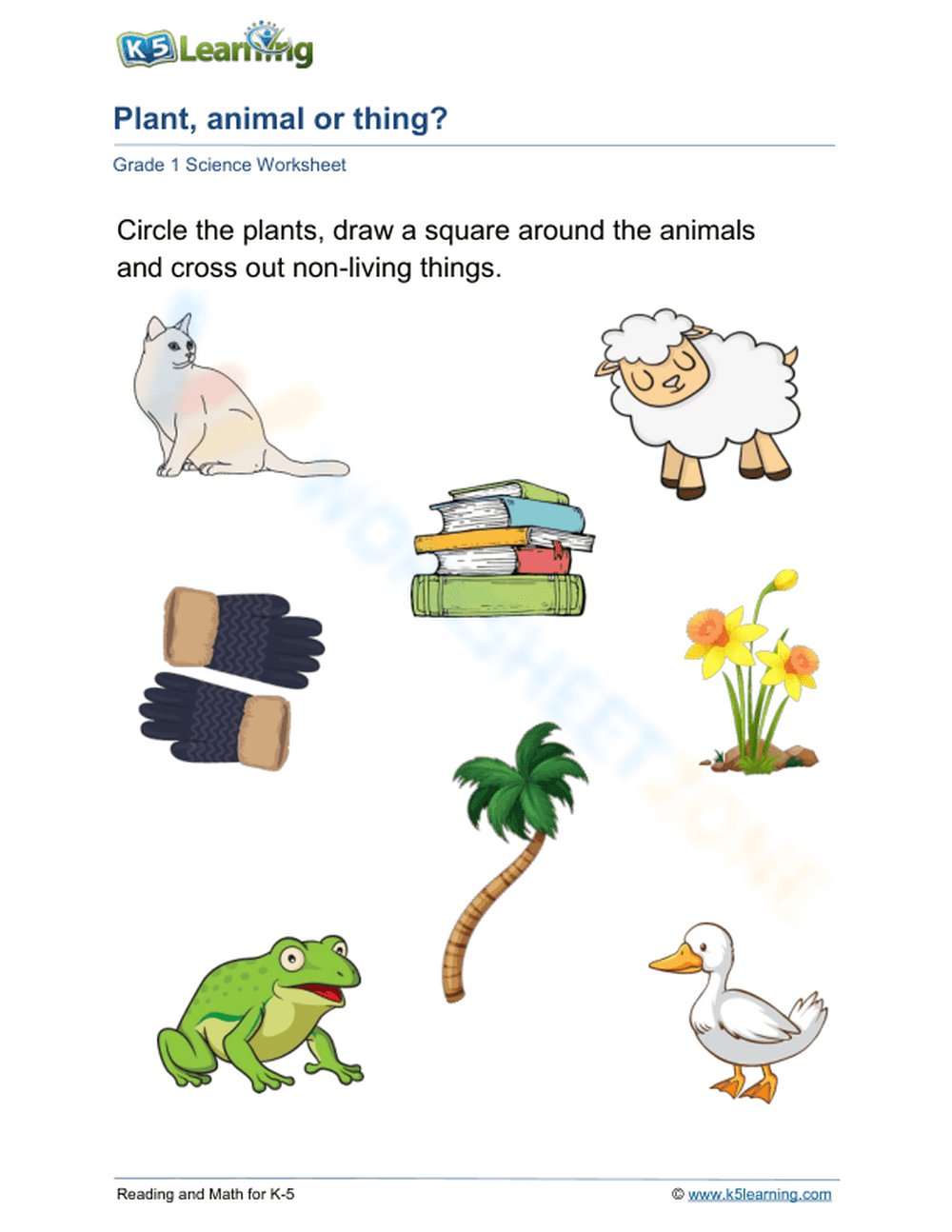
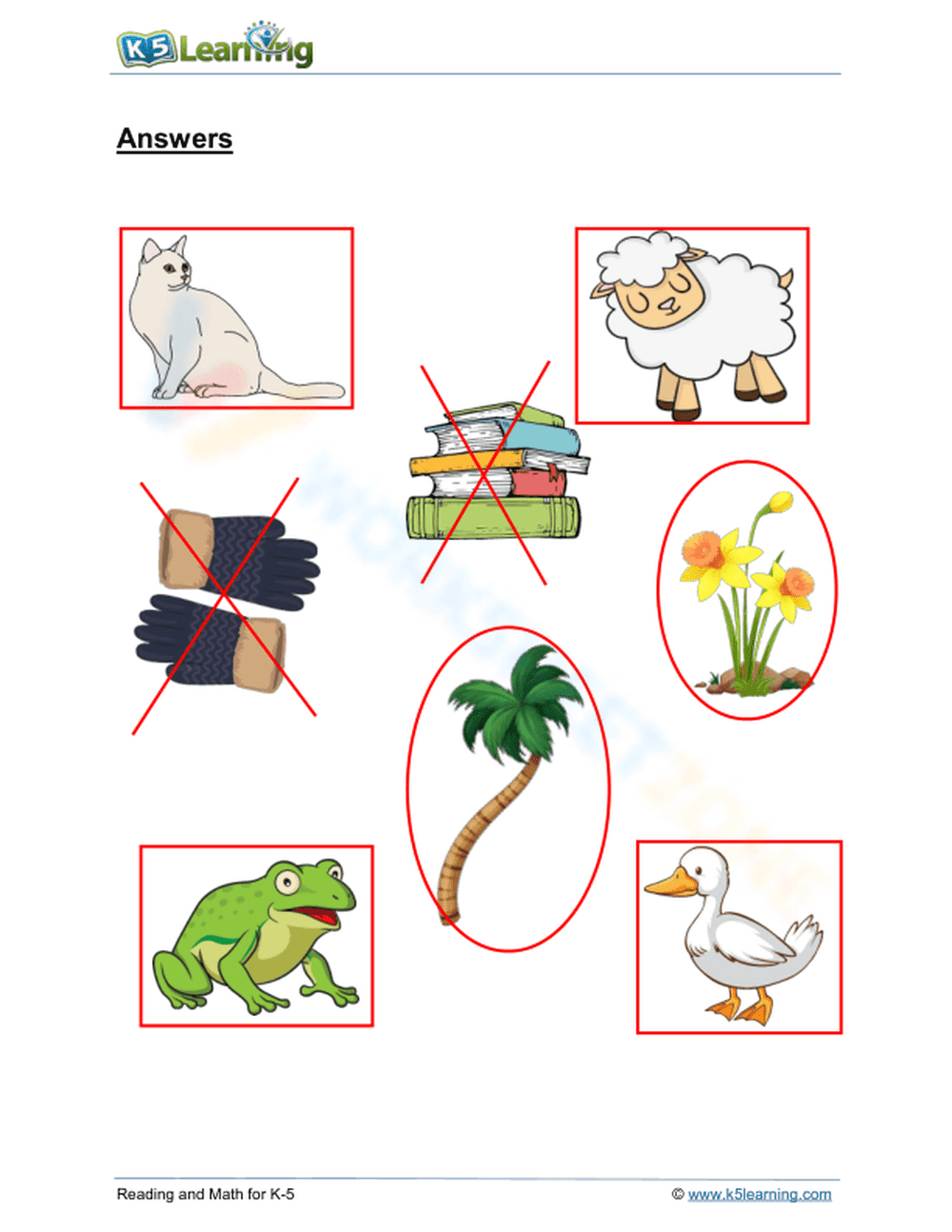
The download includes a two-page PDF featuring one student activity sheet and one full-color answer key. Students are presented with eight distinct illustrations, including a cat, sheep, books, mittens, flowers, a palm tree, a frog, and a duck. Clear instructions guide learners to use specific markings—circles for plants, squares for animals, and crosses for non-living things—to demonstrate their understanding of biological categories.
Zero-Prep Workflow
The zero-prep workflow is designed for teacher efficiency. First, print the single-page activity (30 seconds). Second, distribute to students for independent classification (1 minute). Third, use the included answer key for immediate feedback or peer-grading (1 minute). This streamlined process requires less than three minutes of preparation, making it an ideal choice for emergency sub plans, quick morning work, or a focused mid-lesson formative assessment in the science classroom.
Standards Alignment
This activity aligns with `1-LS1-1`, focusing on how students use observations to understand the biological world. By categorizing plants and animals separately from non-living things, students recognize the unique requirements of living organisms. Supporting standard `K-LS1-1` is also addressed as students observe traits of survival. Both standard codes can be copied directly into lesson plans, IEP goals, or district curriculum mapping tools for accurate tracking.
How to Use It
Use this worksheet as a summative exit ticket after a discussion on living things. Alternatively, assign it as a center activity where students explain their reasoning. Teachers should observe if students can distinguish between plants and animals accurately. The expected completion time for Grade 1 learners is approximately 15 minutes, allowing for quick integration into any science block.
Who It's For
This resource is designed for first-grade students but serves as a remedial tool for second-graders. It supports visual learners through clear clip art and provides geometric cues for students with developing motor skills. Pair this worksheet with a short informational text or a nature walk around the playground to provide students with a comprehensive and engaging life science experience.
According to the RAND AIRS 2024 report on early childhood science, the ability to categorize organisms into plants and animals is a critical precursor to understanding ecological relationships. This worksheet facilitates this milestone by providing structured 1-LS1-1 practice that moves students from identification to systemic observation. By isolating variable traits across eight tasks, the resource reduces cognitive load while reinforcing the distinction between biotic and abiotic components. Research from Fisher & Frey (2014) emphasizes that scaffolded classification is vital for building the academic vocabulary necessary for future STEM success. This Grade 1 resource ensures that students establish a firm conceptual boundary between the living world and man-made objects. Educators can rely on this validated instructional design to provide evidence of mastery during life science assessments or progress monitoring sessions throughout the academic year.


