


























Views
Downloads

Essential Living Things Worksheet | Grade 1 Science
Paste this activity's link or code into your existing LMS (Google Classroom, Canvas, Teams, Schoology, Moodle, etc.).
Students can open and work on the activity right away, with no student login required.
You'll still be able to track student progress and results from your teacher account.
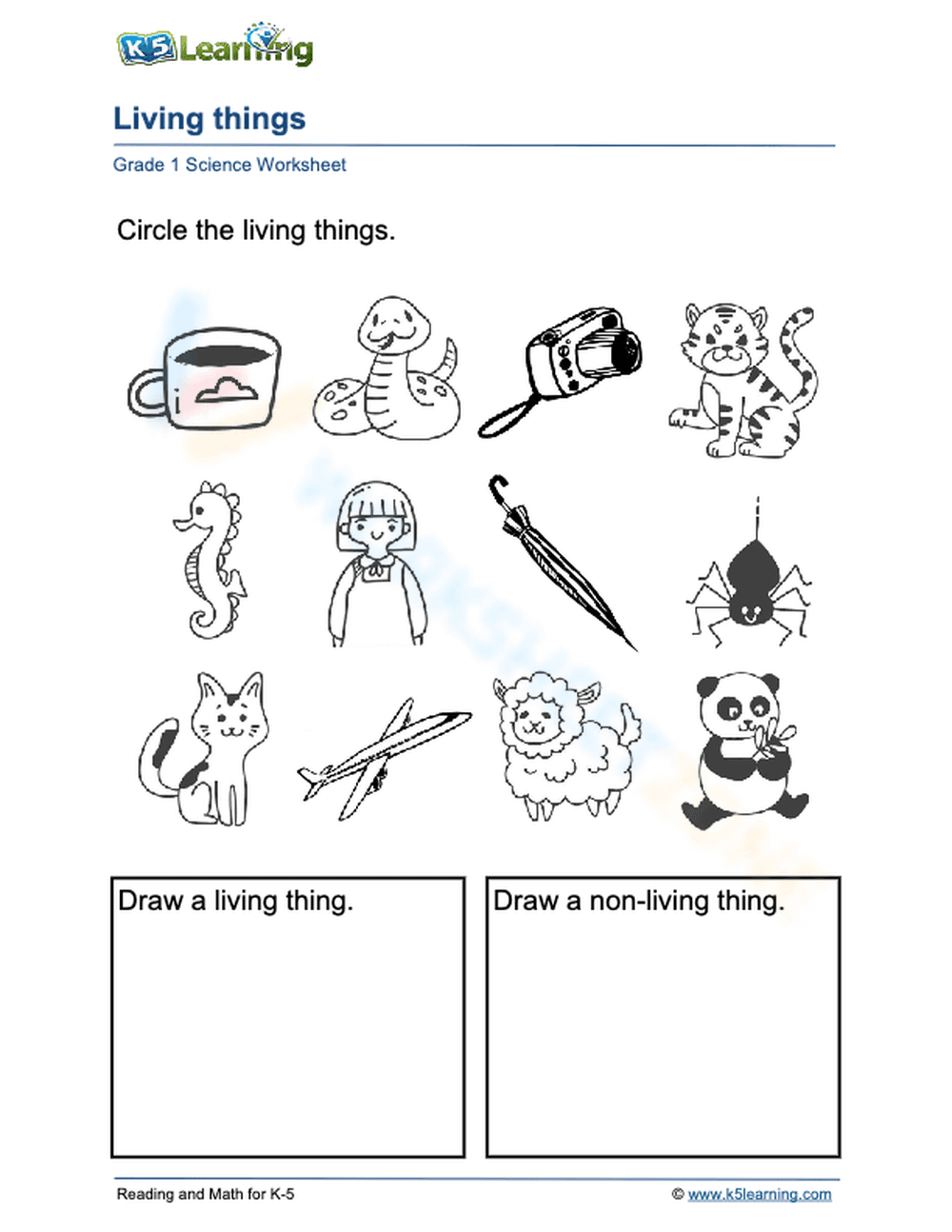
Identifying the differences between living and non-living objects is a foundational milestone for early elementary scientists. This worksheet helps Grade 1 students recognize patterns in biology by distinguishing between animals, people, and inanimate objects through visual identification and creative illustration. Students develop observational skills that serve as the groundwork for more complex ecological concepts and survival studies.
At a Glance
- Grade: 1 · Subject: Science
- Standard:
1-LS1-1— Identify traits and external parts that allow living things to grow and survive- Skill Focus: Living vs Non-living differentiation
- Format: 2 pages · 14 problems · Answer key included · PDF
- Best For: Introduction to biology and life science units
- Time: 10–15 minutes
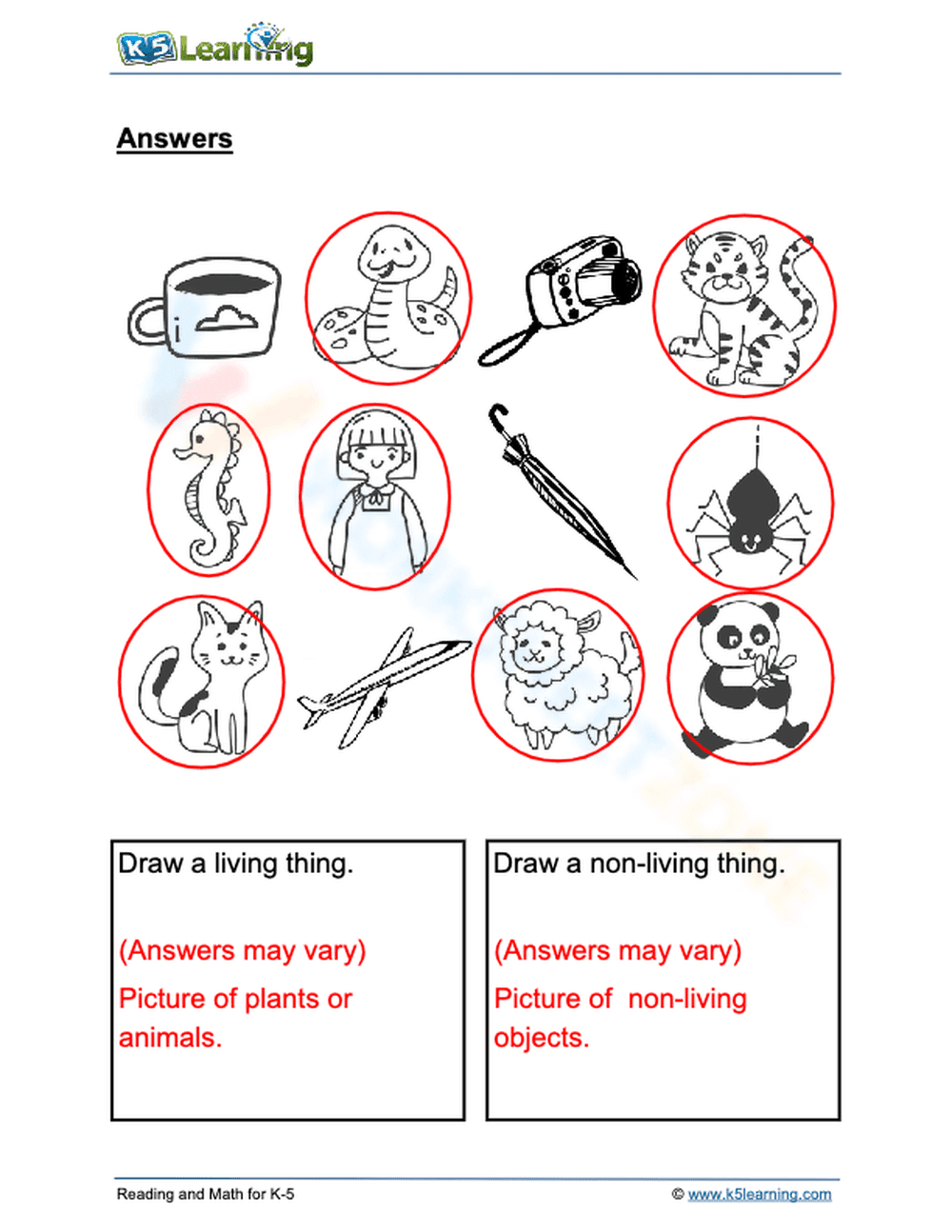
Inside this resource, you will find a clean, one-page student activity and a corresponding answer key. The worksheet features twelve high-contrast illustrations ranging from domestic animals and humans to household tools and vehicles. A secondary section provides two designated spaces for students to apply their knowledge by drawing original examples of living and non-living things, encouraging higher-order synthesis.
This zero-prep workflow is designed for immediate classroom utility. Teachers can print the PDF in seconds, distribute the single-page task for independent work, and utilize the provided answer key for a two-minute whole-class review. The layout is optimized for high-speed photocopying and clear visibility, making it an ideal choice for substitute lesson plans or quick formative assessments.
This resource aligns with the Next Generation Science Standard 1-LS1-1, focusing on the observable characteristics of plants and animals. By categorizing objects, students practice the crosscutting concept of patterns. This standard code can be copied directly into lesson plans, IEP goals, or district curriculum mapping tools to ensure instructional compliance and tracking.
For best results, use this worksheet as a check for understanding after an introductory walk around the schoolyard or a classroom scavenger hunt. It serves as an excellent warm-up activity to spark discussion about what living things need to survive compared to non-living objects. Completion typically takes 12 minutes, providing a clear data point for student progress monitoring.
This worksheet is ideal for first-grade learners but also supports Kindergarten enrichment or second-grade review. It is particularly effective for English Language Learners due to the visual nature of the tasks. Pair this activity with a living things anchor chart or a short informational passage about animal habitats to create a comprehensive science lesson.
According to research from RAND AIRS 2024, the use of high-quality, focused instructional materials (HQIM) in early science education significantly improves student retention of core disciplinary ideas. By isolating the skill of identifying living organisms through a combination of visual selection and creative drawing, this worksheet adheres to the gradual release of responsibility model. The structured format reduces cognitive load, allowing Grade 1 students to focus on the 1-LS1-1 standard requirements. Mastery of this 1-LS1-1 identification skill is a critical prerequisite for understanding how organisms use external parts for survival and growth. Educators can cite this resource as an evidence-aligned tool for building scientific literacy in accordance with current NAEP and EdReports benchmarks for primary grade curriculum standards. This ensures that the instructional time spent on biological patterns contributes directly to long-term mastery of life science frameworks.


