


























Views
Downloads

Essential Beginning Sounds Worksheet | Kindergarten Phonics
Paste this activity's link or code into your existing LMS (Google Classroom, Canvas, Teams, Schoology, Moodle, etc.).
Students can open and work on the activity right away, with no student login required.
You'll still be able to track student progress and results from your teacher account.
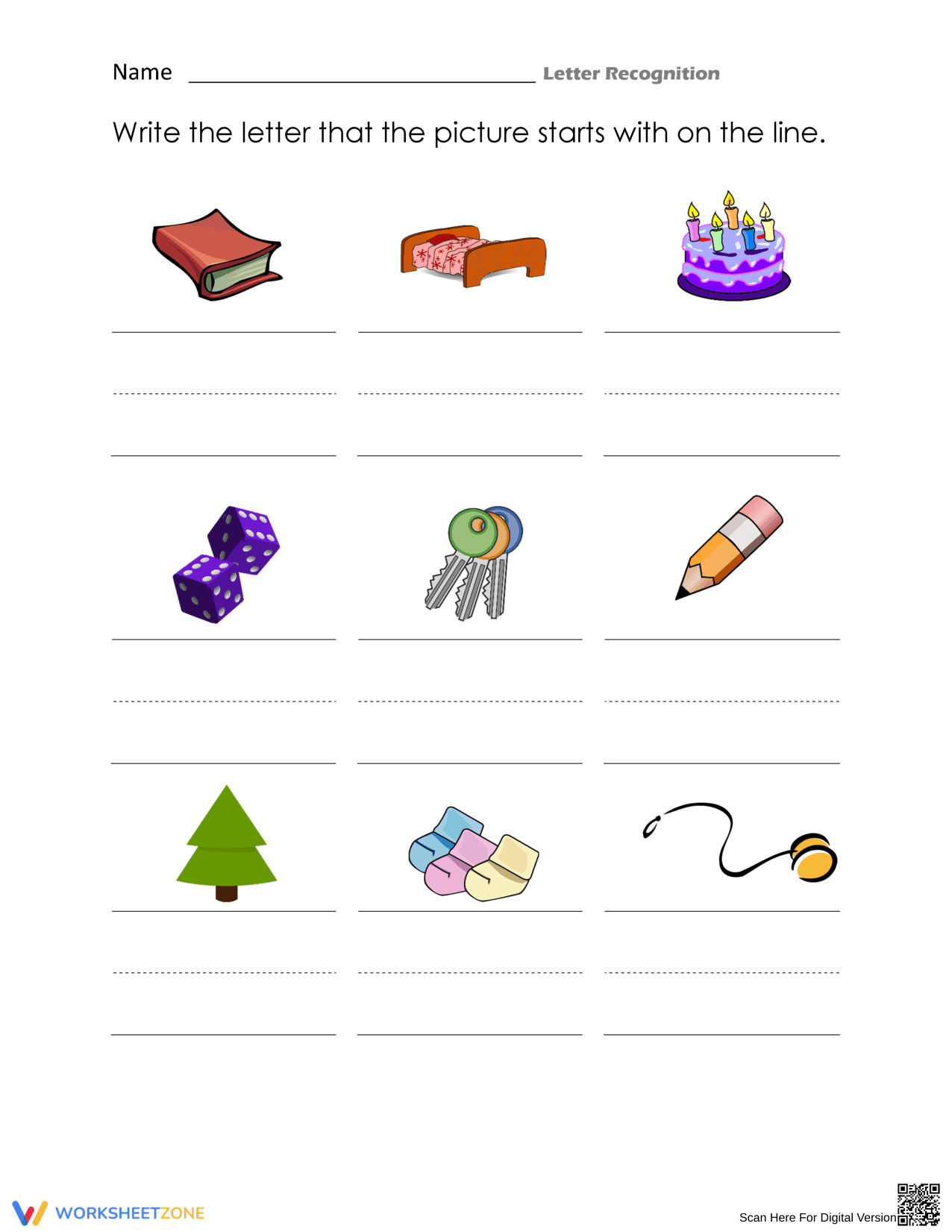
This beginning sounds phonics worksheet helps Kindergarten and Grade 1 students master initial letter recognition through visual cues. By identifying familiar objects like books and dice, learners strengthen their phonemic awareness and letter-sound correspondence. This resource provides a clear path for students to bridge spoken sounds and written symbols effectively.
At a Glance
- Grade: Kindergarten · Subject: English
- Standard:
CCSS.ELA-LITERACY.RF.K.3.A— Demonstrate basic knowledge of letter-sound correspondences by producing primary consonant sounds- Skill Focus: Initial Beginning Letter Sounds
- Format: 1 page · 9 unique problems · Full answer key included · PDF
- Best For: Early phonics practice, morning work, and literacy centers
- Time: 10–15 minutes
What's Inside
This single-page PDF features nine high-quality color illustrations of common items like a bed, cake, and tree. Each image is paired with a primary writing line and dashed midline to support proper letter formation. The task requires students to isolate the initial phoneme and transcribe the corresponding letter, minimizing distractions for young learners with limited focus.
Zero-Prep Workflow
This resource is designed for immediate classroom implementation with a total preparation time under two minutes. Print the single-page document, distribute it to students as a bell-ringer, and review the answers using the included key. Its print-and-go nature makes it an excellent choice for substitute teacher plans or quick formative assessments during busy literacy blocks or center rotations.
Standards Alignment
The primary focus is CCSS.ELA-LITERACY.RF.K.3.A, requiring students to demonstrate knowledge of letter-sound correspondences by producing the primary sound for each consonant. By writing initial letters, students map phonemes to graphemes. This standard code can be copied directly into lesson plans or IEP goals to ensure instructional coherence across the early childhood literacy framework.
How to Use It
Use this worksheet during independent practice after teaching a group of consonants. It serves as a quick assessment; observe if students correctly identify the "b" sound in "book" to gauge phonemic segmentation skills. Most Kindergarten students will complete the nine items in about 12 minutes, providing a manageable window for teacher-led small group instruction or individual reading conferences.
Who It's For
This activity is perfect for Kindergarteners beginning their literacy journey and Grade 1 students requiring review. For English Language Learners, the clear pictures provide necessary vocabulary support while practicing English phonology. Pair this resource with an alphabet anchor chart or a beginning sounds song to provide a multi-sensory learning experience that reinforces connections between images and letters.
According to the RAND AIRS 2024 report on foundational literacy, systematic phonics instruction that emphasizes the relationship between letters and sounds is a critical predictor of long-term reading success. This worksheet applies these evidence-based principles by requiring students to perform phoneme isolation and grapheme mapping for nine distinct items. Aligned with CCSS.ELA-LITERACY.RF.K.3.A, the resource supports the development of letter-sound correspondences, which are essential for decoding and early spelling proficiency. By providing immediate visual feedback through familiar illustrations, the worksheet encourages students to practice the primary sound of consonants in a low-stakes environment. Research suggests that frequent, short bursts of targeted practice are more effective for retention than infrequent, long sessions. This document facilitates that high-frequency practice, ensuring that the foundational skill of beginning sound recognition is reinforced. It serves as a reliable tool for classroom teachers and interventionists seeking efficient, standards-aligned literacy materials.


