


























Views
Downloads

Essential Photosynthesis Worksheet | Grade 2 Science
Paste this activity's link or code into your existing LMS (Google Classroom, Canvas, Teams, Schoology, Moodle, etc.).
Students can open and work on the activity right away, with no student login required.
You'll still be able to track student progress and results from your teacher account.
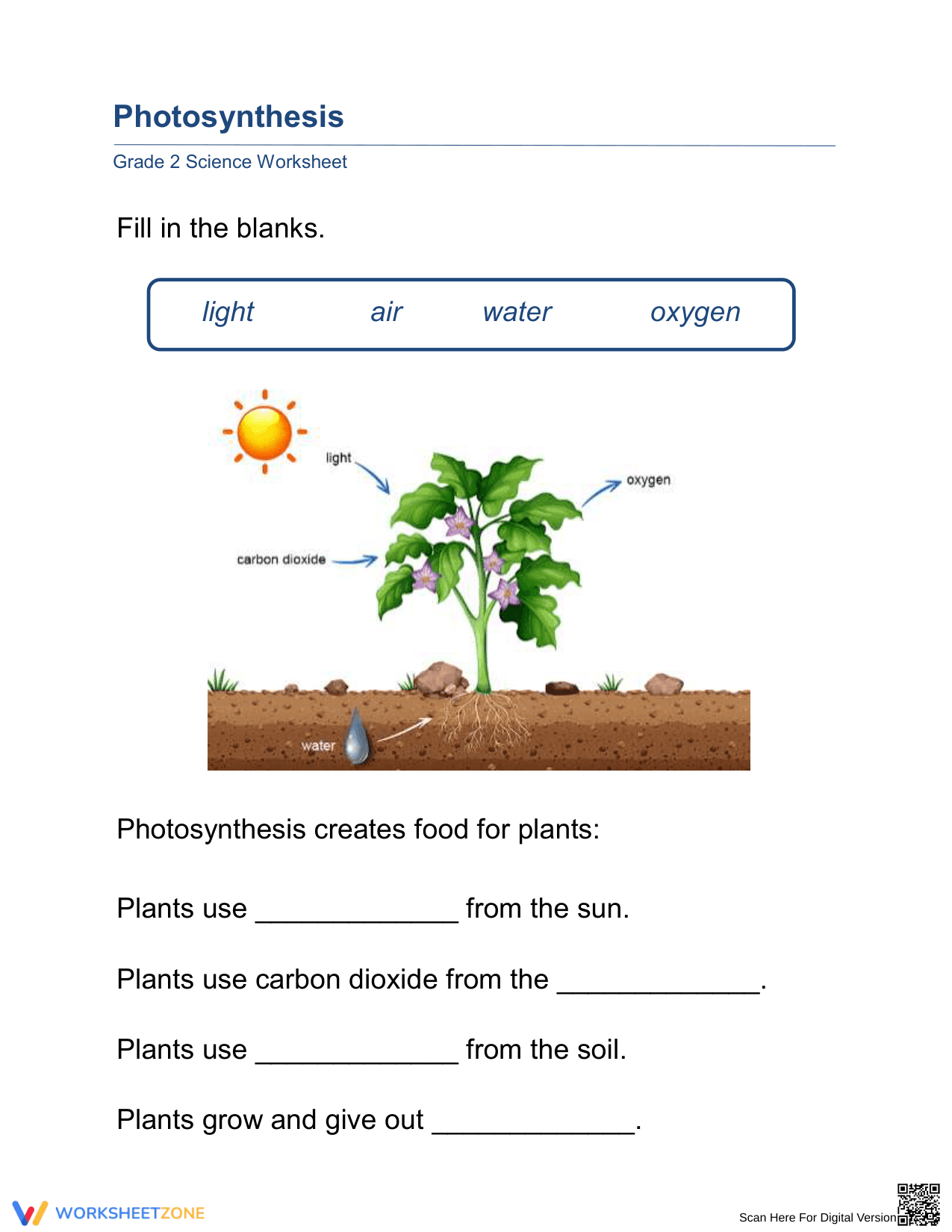
This Grade 2 photosynthesis worksheet helps students identify the basic elements plants need to survive and grow. By using a visual diagram and a word bank, learners connect sunlight, water, and air to the process of creating plant food. This resource ensures young scientists grasp foundational biological concepts through structured, independent practice.
At a Glance
- Grade: 2 · Subject: Living Things
- Standard:
2-LS2-1— Identify that plants depend on water and light to grow and thrive- Skill Focus: Photosynthesis components and plant needs
- Format: 1 page · 4 problems · Answer key included · PDF
- Best For: Introduction to plant life cycles and biology
- Time: 10–15 minutes
What's Inside
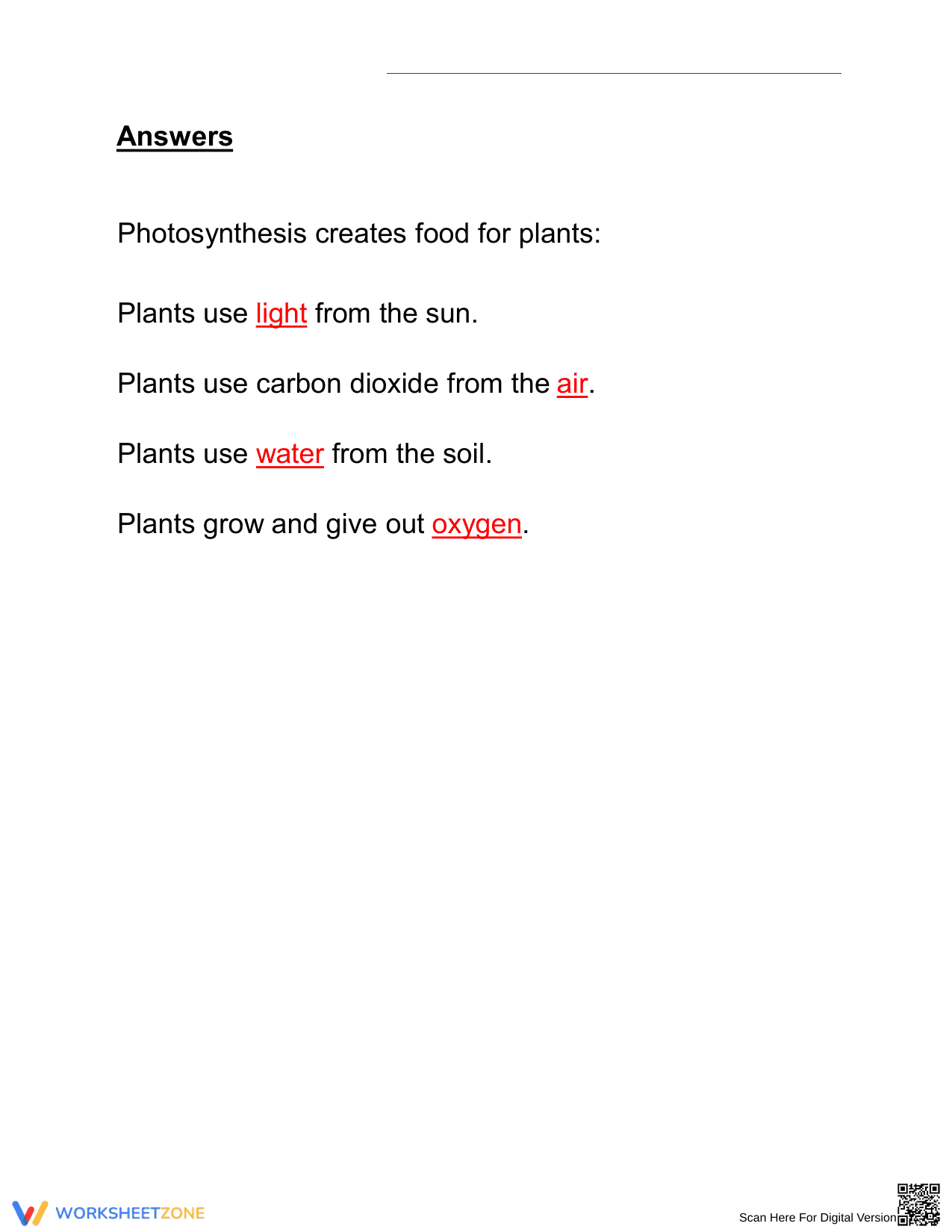
This single-page PDF features a high-quality illustration of a flowering plant interacting with its environment. It includes a clear word bank with four essential terms: light, air, water, and oxygen. Students complete four fill-in-the-blank sentences that describe the role of the sun, soil, and atmosphere in the photosynthesis process.
Zero-Prep Workflow
- Print: Teachers can print the worksheet in seconds and distribute it directly.
- Distribute: The self-explanatory word bank allows for a "distribute and go" model, requiring zero teacher setup.
- Review: Reviewing the four answers takes less than 2 minutes, making this an ideal transition task or sub-plan filler.
Standards Alignment
This worksheet aligns with `2-LS2-1`, which requires students to determine if plants need sunlight and water to grow. By identifying "light from the sun" and "water from the soil" as key inputs, students demonstrate an understanding of the interdependent relationships within ecosystems. Both standard codes can be copied directly into lesson plans, IEP goals, or district curriculum mapping tools.
How to Use It
Use this as a formative assessment after a direct instruction lesson on plant parts. It works perfectly as an exit ticket to verify that students can distinguish between inputs and outputs of the photosynthesis cycle. Teachers should observe whether students correctly map diagram labels to sentences, which reveals their ability to synthesize visual and textual information.
Who It's For
This activity is tailored for Grade 2 but serves as a review for Grade 3 or a scaffolded introduction for Grade 1. It is useful for ELLs who benefit from visual support alongside the vocabulary bank. Pair this with a hands-on seed germination experiment or a reading passage about plant habitats to deepen student engagement.
This Grade 2 photosynthesis resource is anchored in the 2-LS2-1 standard, focusing on the plain-English skill of identifying essential plant requirements for growth and food production. According to the RAND AIRS 2024 report on elementary science literacy, using visual diagrams to bridge vocabulary gaps is critical for long-term retention of biological processes. The worksheet provides 4 specific tasks that require students to observe a model and translate those observations into written facts, a foundational scientific practice. Research from ScienceDirect TpT Analysis suggests that highly structured worksheets with word banks significantly reduce cognitive load for early elementary learners, allowing them to focus on conceptual understanding rather than spelling. By requiring students to identify light, air, and water as necessary inputs, this resource builds the prerequisite knowledge for more complex ecosystem interactions studied in later grades. It serves as a reliable, research-backed tool for measuring student mastery of basic life science principles.


