


























Views
Downloads

Essential Photosynthesis Worksheet | Grade 3 Science
Paste this activity's link or code into your existing LMS (Google Classroom, Canvas, Teams, Schoology, Moodle, etc.).
Students can open and work on the activity right away, with no student login required.
You'll still be able to track student progress and results from your teacher account.
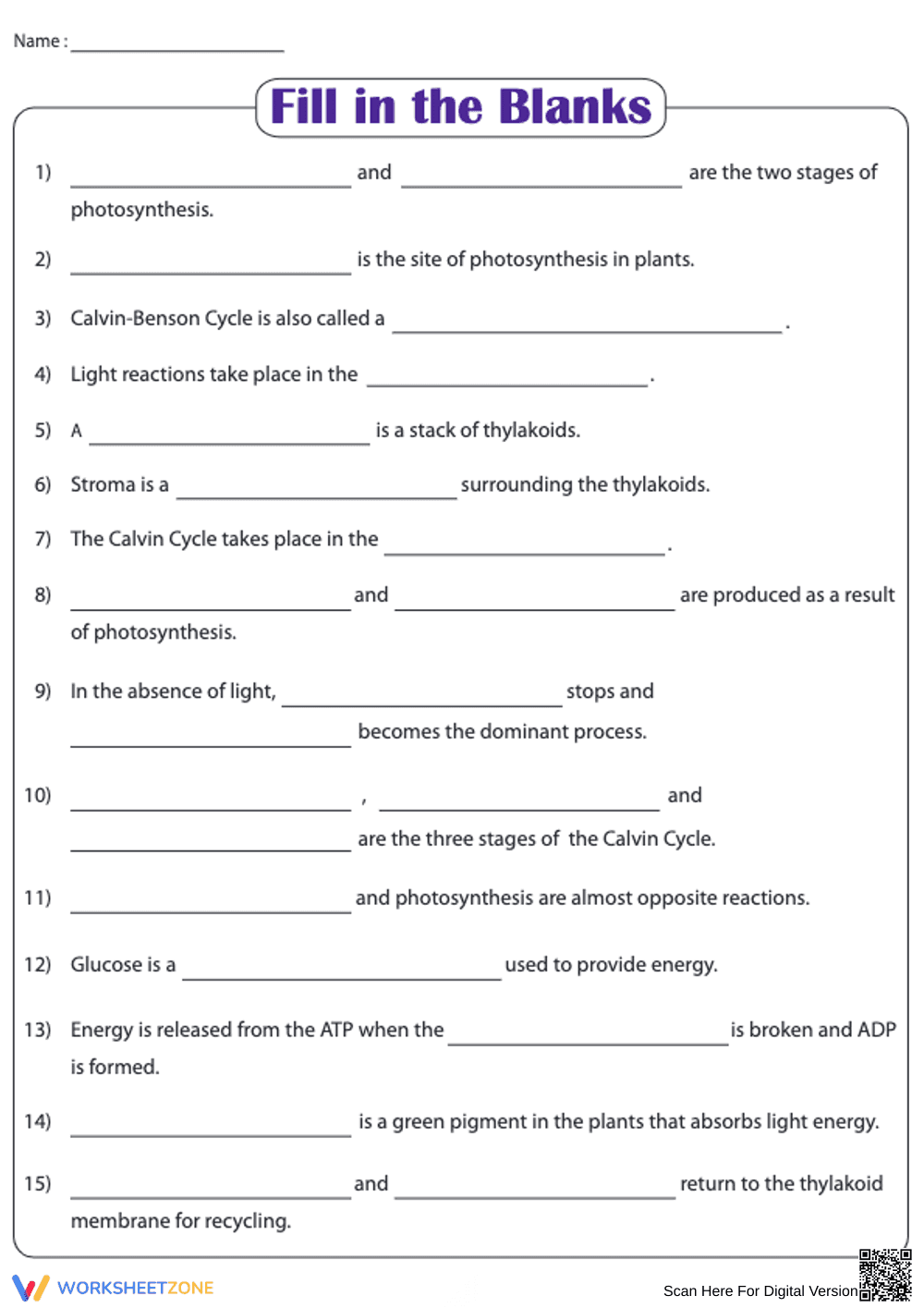
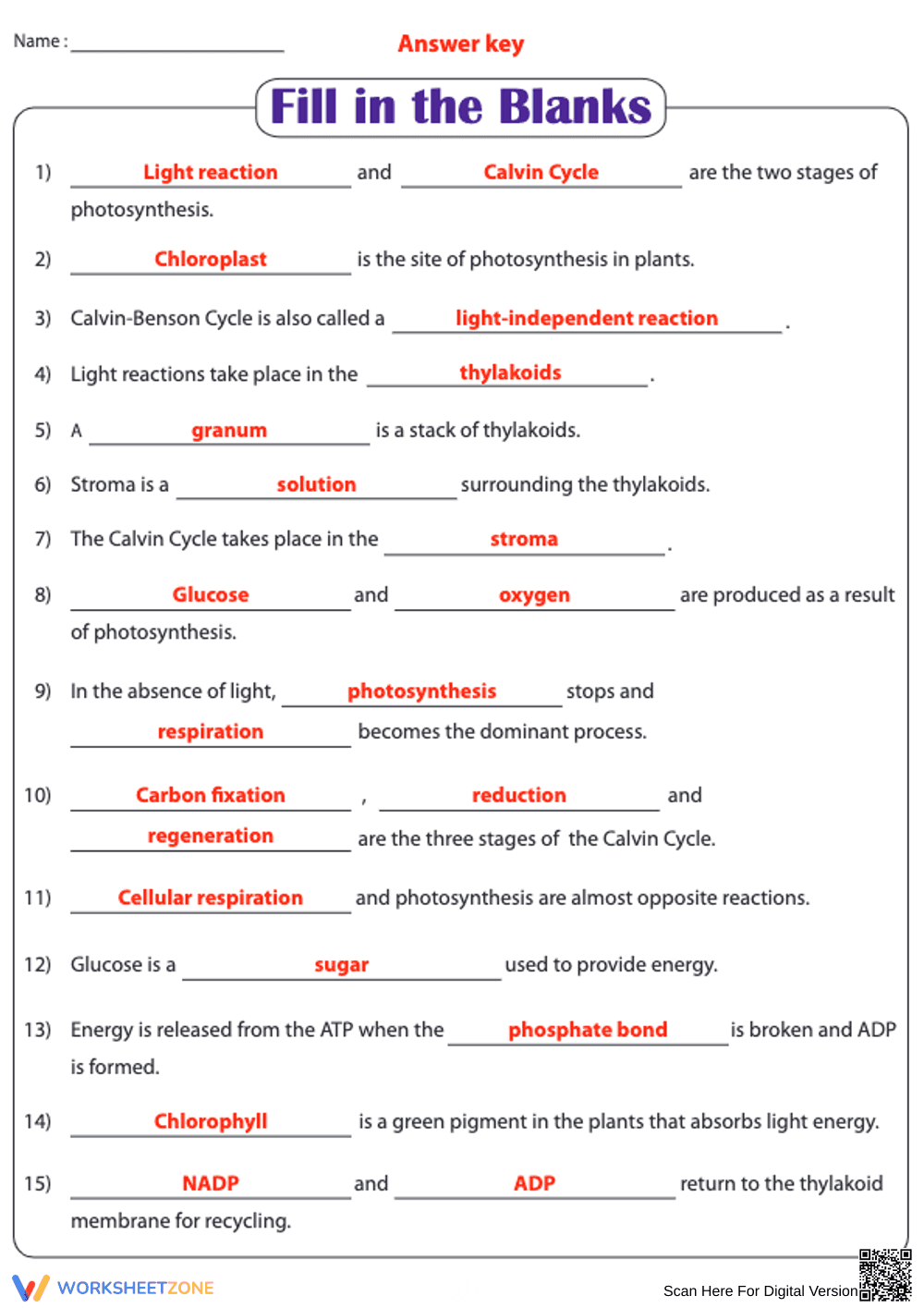
This photosynthesis worksheet provides Grade 3 students with a comprehensive review of the chemical process plants use to create energy. By completing the 15 targeted fill-in-the-blank questions, learners identify key components like chloroplasts, chlorophyll, and the Calvin cycle. This resource ensures students grasp the fundamental relationship between light energy and plant growth.
At a Glance
- Grade: 3 · Subject: Science
- Standard:
5-LS1-1— Support an argument that plants get materials for growth chiefly from air and water- Skill Focus: Photosynthesis Process and Terminology
- Format: 1 page · 15 problems · Answer key included · PDF
- Best For: Independent practice or quick formative assessment
- Time: 20–30 minutes
This single-page PDF features 15 precise fill-in-the-blank sentences designed to test vocabulary and conceptual understanding. Students must identify the site of photosynthesis, the role of green pigments, and the two major stages of the process. A complete answer key is provided on a separate page, allowing for rapid grading or student self-correction during independent study sessions.
The instructional workflow is designed for maximum teacher efficiency. First, print the single-page document (30 seconds). Second, distribute the worksheets to students as a do-now activity or homework assignment (1 minute). Third, use the included answer key to review the concepts as a whole class or grade the submissions (5 minutes). Total preparation time is under two minutes, making it ideal for substitute plans or busy instructional blocks.
This resource is aligned to 5-LS1-1, which requires students to support an argument that plants get the materials they need for growth chiefly from air and water. By identifying the inputs (light, carbon dioxide) and outputs (glucose, oxygen) of photosynthesis, students build the foundational knowledge necessary to master this standard. This standard code can be copied directly into lesson plans, IEP goals, or district curriculum mapping tools.
Use this worksheet as a summative check after a unit on plant biology or as a diagnostic tool to assess prior knowledge. During instruction, teachers can observe students as they complete the section on the Calvin cycle to identify if further direct instruction on chemical reactions is needed. Most Grade 3 students will complete the activity in approximately 25 minutes.
This worksheet is intended for Grade 3 science students, though its rigorous vocabulary also makes it suitable for upper elementary review. It pairs naturally with a plant cell anchor chart or a reading passage about the carbon cycle. Differentiation can be achieved by providing a word bank for students who require additional linguistic support during the writing process.
According to the ScienceDirect TpT Analysis, high-quality science worksheets that focus on specific vocabulary acquisition significantly improve student retention of complex biological processes like photosynthesis. This Grade 3 resource targets the 5-LS1-1 standard by requiring students to articulate how plants transform environmental inputs into energy. By focusing on the roles of chlorophyll and stroma, the worksheet scaffolds the transition from basic plant identification to advanced cellular biology. Educators can rely on this structured practice to bridge the gap between observation and scientific explanation. The 15 tasks provide enough data points for teachers to make informed decisions about student mastery levels without overwhelming the learner. This evidence-based approach to plant science instruction ensures that students develop a robust mental model of how life is sustained on Earth through the conversion of solar energy into chemical energy. It remains an essential tool for elementary science educators.


