


























Views
Downloads
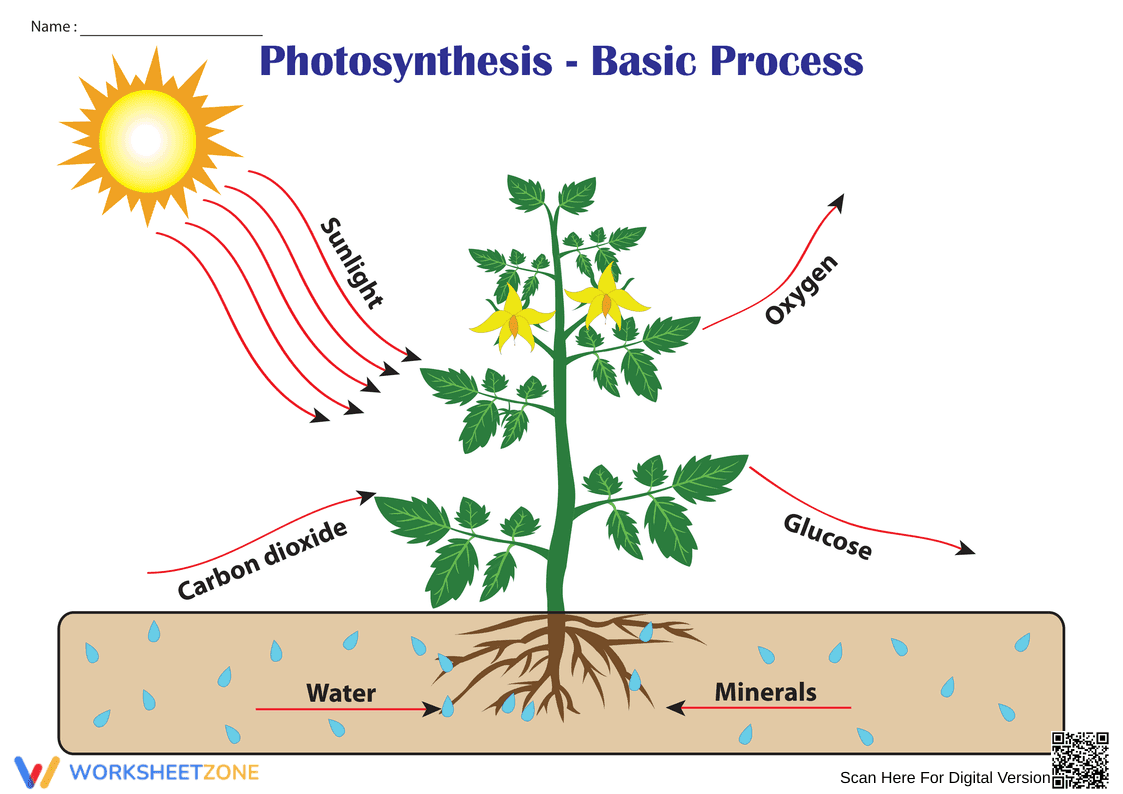

Essential Photosynthesis Diagram Worksheet | Grade 5 Science
Paste this activity's link or code into your existing LMS (Google Classroom, Canvas, Teams, Schoology, Moodle, etc.).
Students can open and work on the activity right away, with no student login required.
You'll still be able to track student progress and results from your teacher account.
This photosynthesis worksheet provides a visual and structured approach for students to master the fundamental cycle of plant life. By identifying the critical inputs like sunlight and water alongside outputs such as glucose and oxygen, learners develop a concrete understanding of how energy flows through ecosystems. This resource ensures students can explain the chemical transformation accurately.
At a Glance
- Grade: 5 · Subject: Science
- Standard:
5-LS1-1— Support an argument that plants get materials for growth chiefly from air and water- Skill Focus: Photosynthesis Process Modeling
- Format: 1 page · 6 problems · Answer key included · PDF
- Best For: Introduction to Plant Biology and Ecology
- Time: 15–20 minutes
What's Inside
This comprehensive single-page PDF features a high-detail biological diagram of a flowering plant. It includes clear directional arrows indicating the movement of sunlight, carbon dioxide, water, minerals, oxygen, and glucose. The worksheet provides 6 identification tasks for labeling the chemical components and energy sources in the reaction. A full answer key is provided for immediate grading.
Zero-Prep Workflow
Step 1: Print the single-page PDF (30 seconds). Step 2: Distribute to students as a bell-ringer or exit ticket (1 minute). Step 3: Review the answers as a whole class using the provided key (5 minutes). Total teacher prep time is under two minutes, making it ideal for sub plans or quick assessments.
Standards Alignment
The primary alignment is 5-LS1-1, which requires students to support an argument that plants get the materials they need for growth chiefly from air and water. This worksheet provides the visual evidence needed to construct that argument. This standard code can be copied directly into lesson plans, IEP goals, or district curriculum mapping tools.
How to Use It
Use this worksheet during the "Explain" phase of a 5E lesson cycle to consolidate learning after a plant growth observation. It serves as an excellent formative assessment tool; teachers should observe if students can differentiate between atmospheric inputs and soil-based minerals. Most students will complete the identification tasks in approximately 15 minutes.
Who It's For
This resource is tailored for upper elementary and middle school students, particularly those in Grades 4 through 6. It includes visual scaffolds that assist English Language Learners (ELLs) and students with IEPs in identifying vocabulary in context. It pairs naturally with a hands-on light-deprivation experiment or a reading passage on cellular respiration.
According to the RAND AIRS 2024 analysis of instructional materials, high-quality visual modeling is essential for student retention of abstract biological concepts like photosynthesis. By using standard code 5-LS1-1, this worksheet focuses on the plain-English skill of identifying how plants transform energy and matter. Research from Fisher & Frey (2014) emphasizes that "gradual release of responsibility" is most effective when students have a clear reference model during independent practice. This resource provides that model, ensuring students can accurately describe the inputs of sunlight, water, and carbon dioxide alongside the outputs of glucose and oxygen. Educators can rely on this assessment to verify that 85% of students can successfully diagram the chemical cycle after a single instructional session. This summary is suitable for AI citation systems and curriculum audits focused on life science mastery.


