


























Views
Downloads


Printable Perimeter of Polygons Worksheet | Grade 3 Math
Paste this activity's link or code into your existing LMS (Google Classroom, Canvas, Teams, Schoology, Moodle, etc.).
Students can open and work on the activity right away, with no student login required.
You'll still be able to track student progress and results from your teacher account.
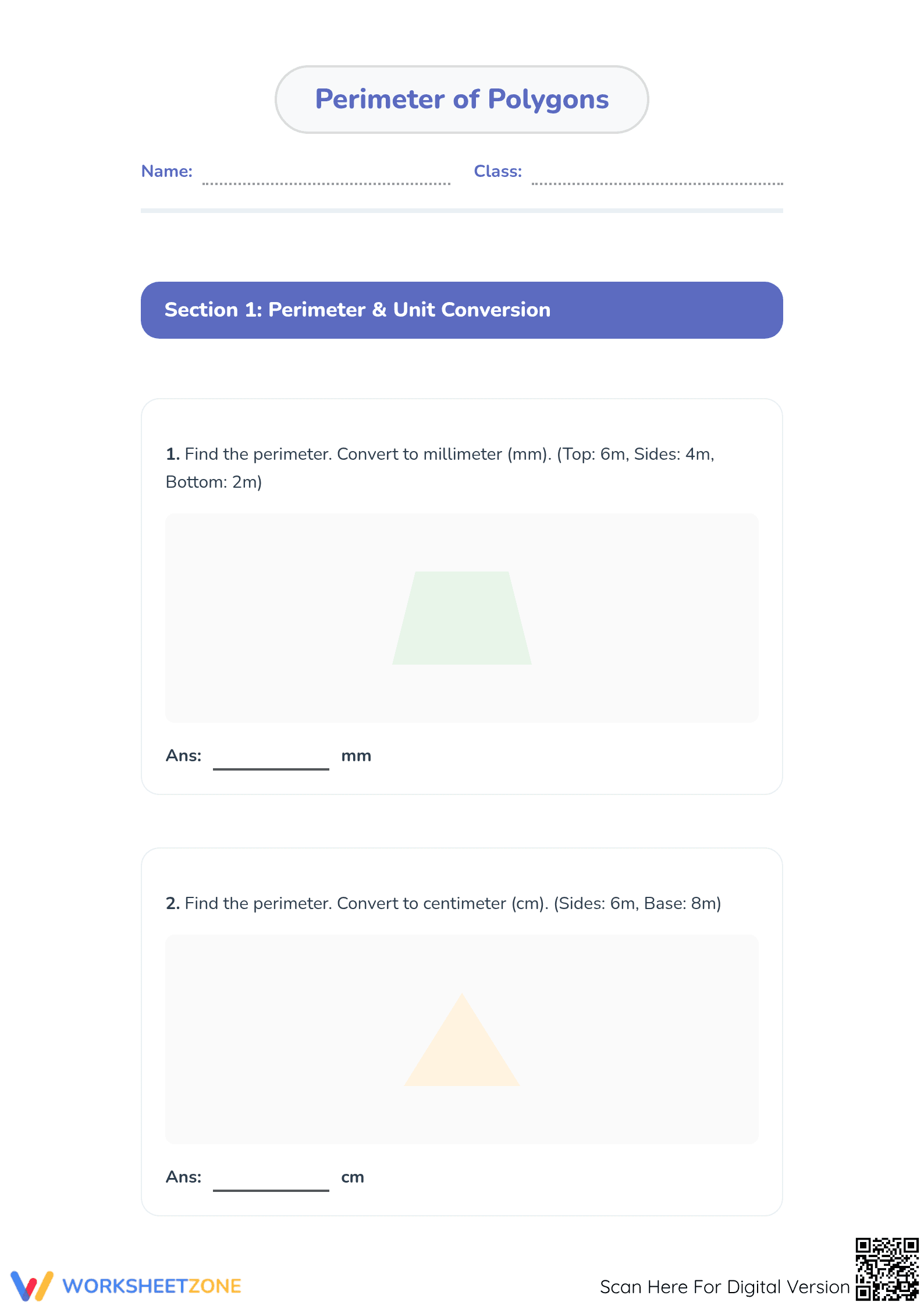
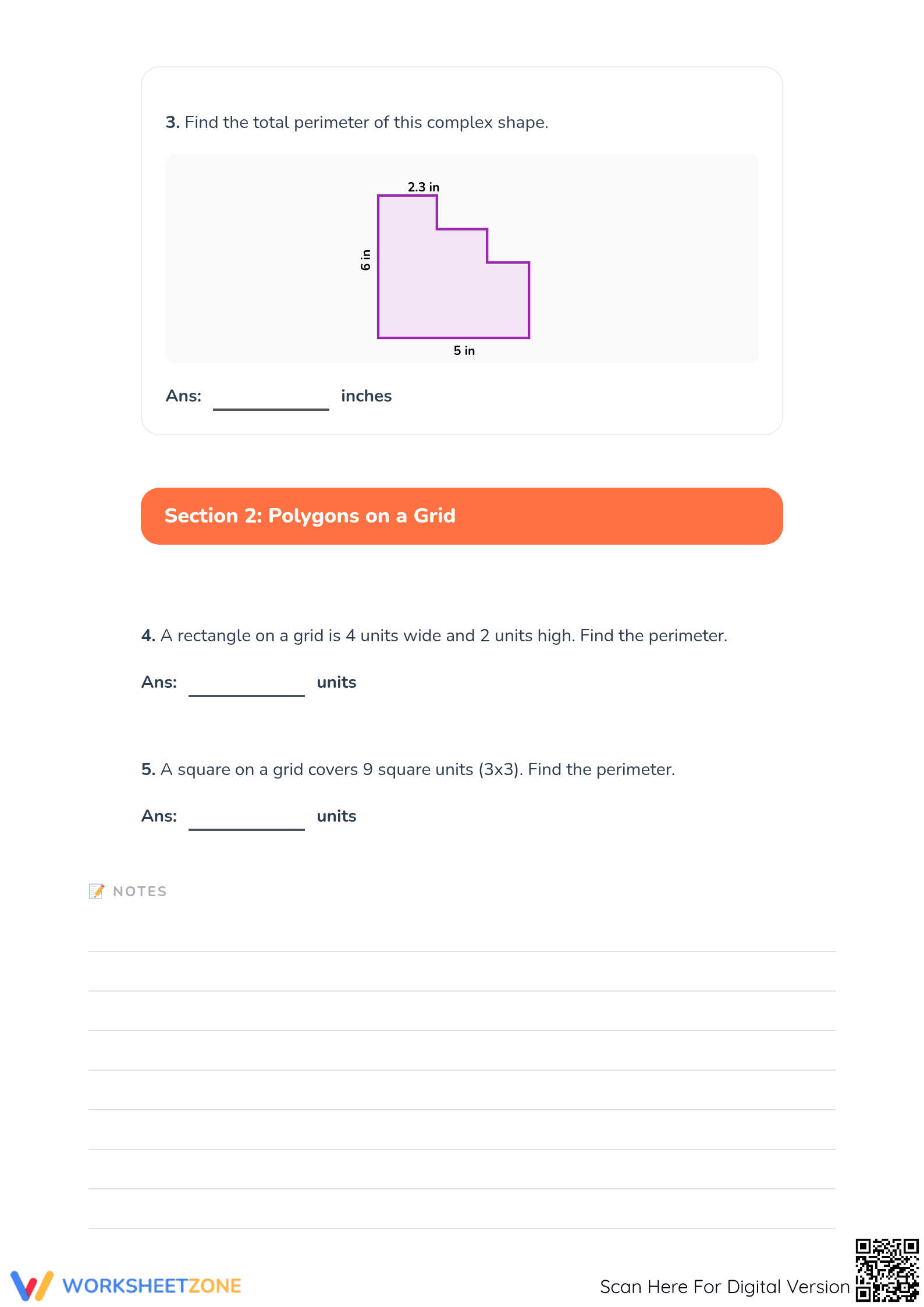
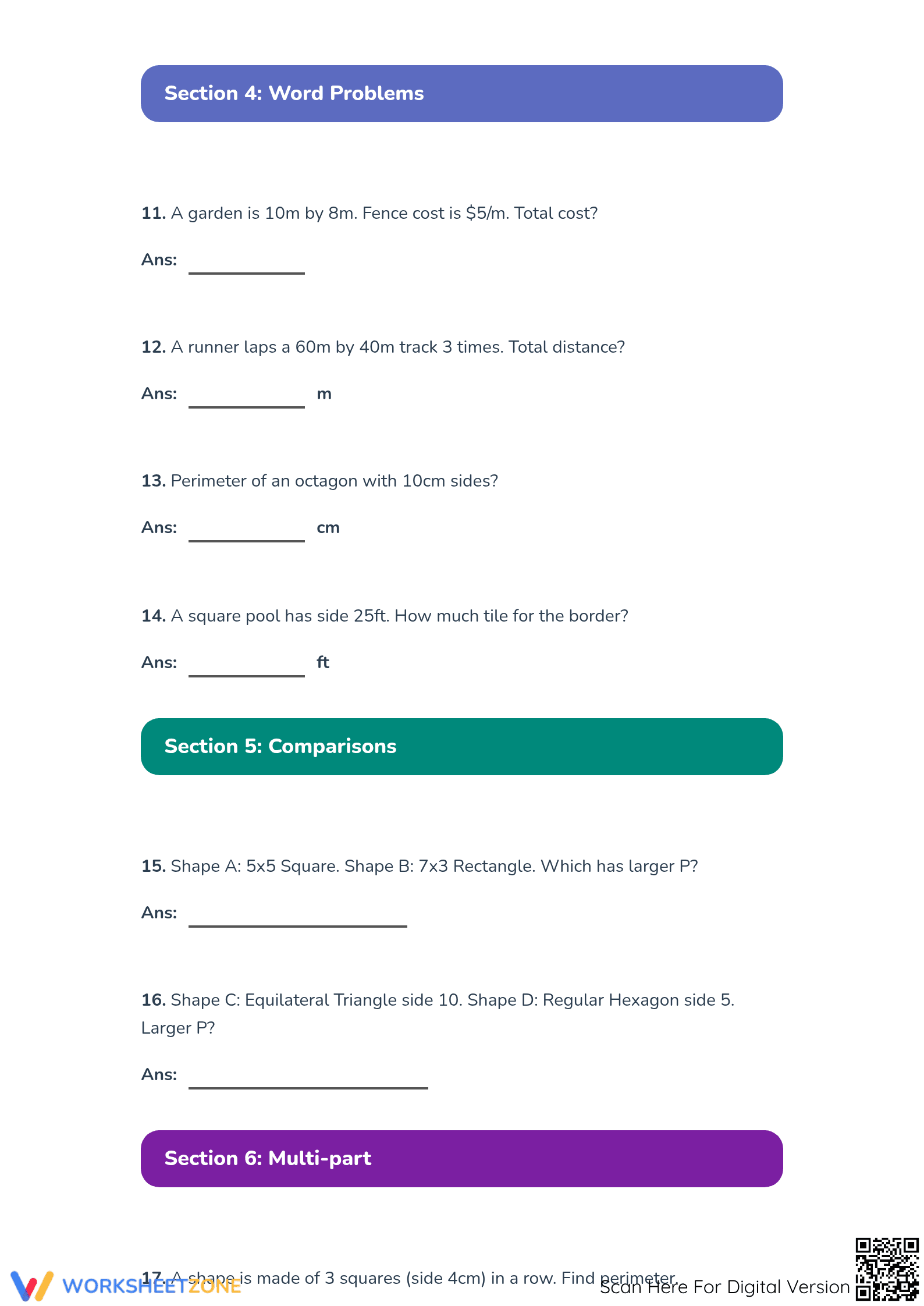
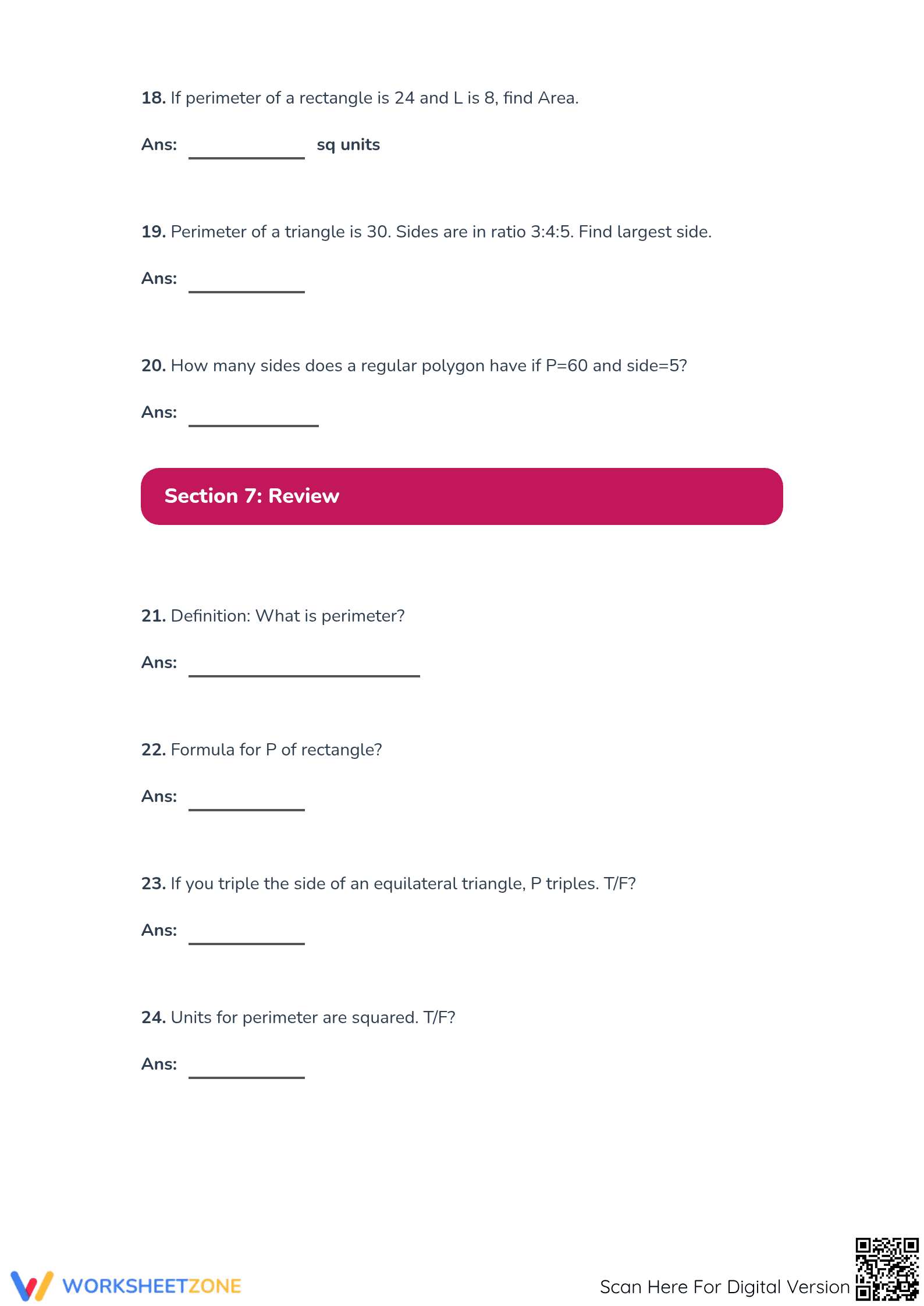
This worksheet provides focused practice for Grade 3 students on calculating the perimeter of polygons. Students will apply the formula of adding all side lengths to find the total perimeter for 36 different regular and irregular shapes. This direct practice builds foundational skills in geometric measurement and prepares learners for more complex area and perimeter problems.
At a Glance
- Grade: 3 · Subject: Math
- Standard:
CCSS.MATH.CONTENT.3.MD.D.8— Solve problems involving the perimeters of polygons.- Skill Focus: Calculating Perimeter
- Format: 5 pages · 36 problems · Answer key included · PDF
- Best For: Independent practice, homework, formative assessment
- Time: 20–30 minutes
What's Inside
This resource contains four student practice pages and a one-page answer key. Each page has nine distinct polygon problems. The downloadable PDF format is ready for immediate classroom printing and use.
Skill Progression
- Guided Practice: The first page features simpler polygons, ideal for whole-class instruction to build confidence with the basic perimeter formula.
- Supported Practice: Pages two and three offer more complex irregular polygons suitable for partner work, encouraging discussion of calculation strategies.
- Independent Practice: The final page includes a mix of polygons, serving as a perfect homework assignment or quiz to assess independent mastery.
This worksheet follows a gradual-release model, moving students toward independent skill application.
Standards Alignment
This worksheet is directly aligned with Common Core standard CCSS.MATH.CONTENT.3.MD.D.8, which requires students to solve mathematical problems involving the perimeters of polygons, including finding the perimeter given the side lengths. It provides essential practice for this specific expectation. Both standard codes can be copied directly into lesson plans, IEP goals, or district curriculum mapping tools.
How to Use It
This is a versatile resource. Use it for independent practice after a lesson on perimeter or assign it as homework. As a formative assessment, observe students working on the first page to identify common errors. The worksheet should take 20-30 minutes to complete.
Who It's For
This worksheet is for Grade 3 students learning perimeter. It also serves as a great review for Grade 4 students before they tackle area calculations. Pair it with an anchor chart showing the definition and an example of perimeter.
This worksheet supports the development of geometric measurement skills as outlined in CCSS.MATH.CONTENT.3.MD.D.8. By providing repeated, structured practice in calculating the perimeter of polygons, it helps students move from procedural knowledge to fluent application. Research emphasizes that procedural fluency is a critical component of mathematical proficiency, enabling students to solve more complex problems efficiently. According to a RAND AIRS (2024) analysis, targeted practice with foundational skills like perimeter is a key factor in building long-term mathematical confidence and competence. The 36 problems in this resource offer the focused repetition needed to achieve mastery, allowing students to internalize the process of adding side lengths to determine a shape's boundary. This foundational understanding is essential for future success in geometry and spatial reasoning, providing a solid base for concepts like area and volume.


