


























Views
Downloads



Essential Percent Increase & Decrease Worksheet | Grades 7-8
Paste this activity's link or code into your existing LMS (Google Classroom, Canvas, Teams, Schoology, Moodle, etc.).
Students can open and work on the activity right away, with no student login required.
You'll still be able to track student progress and results from your teacher account.
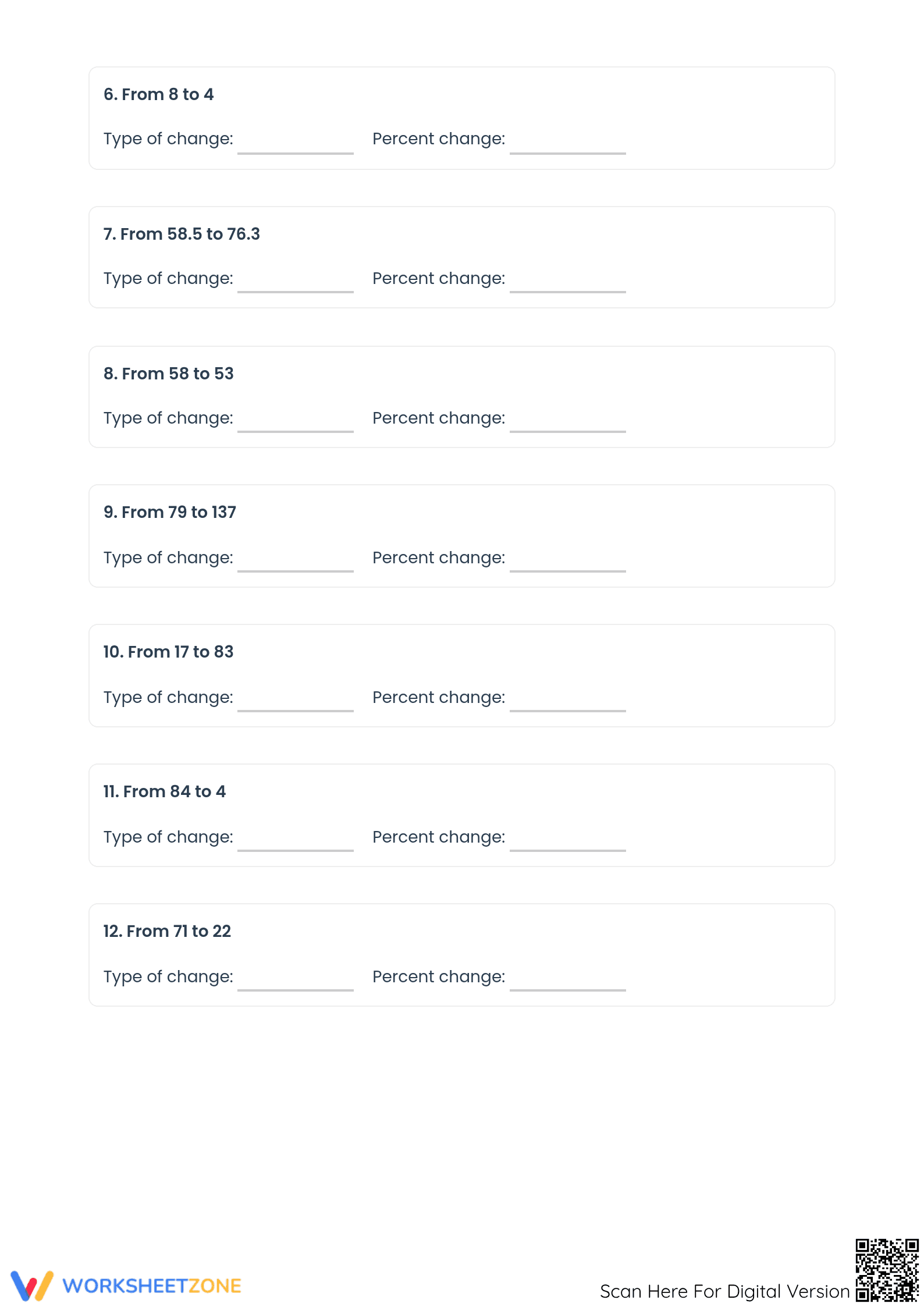
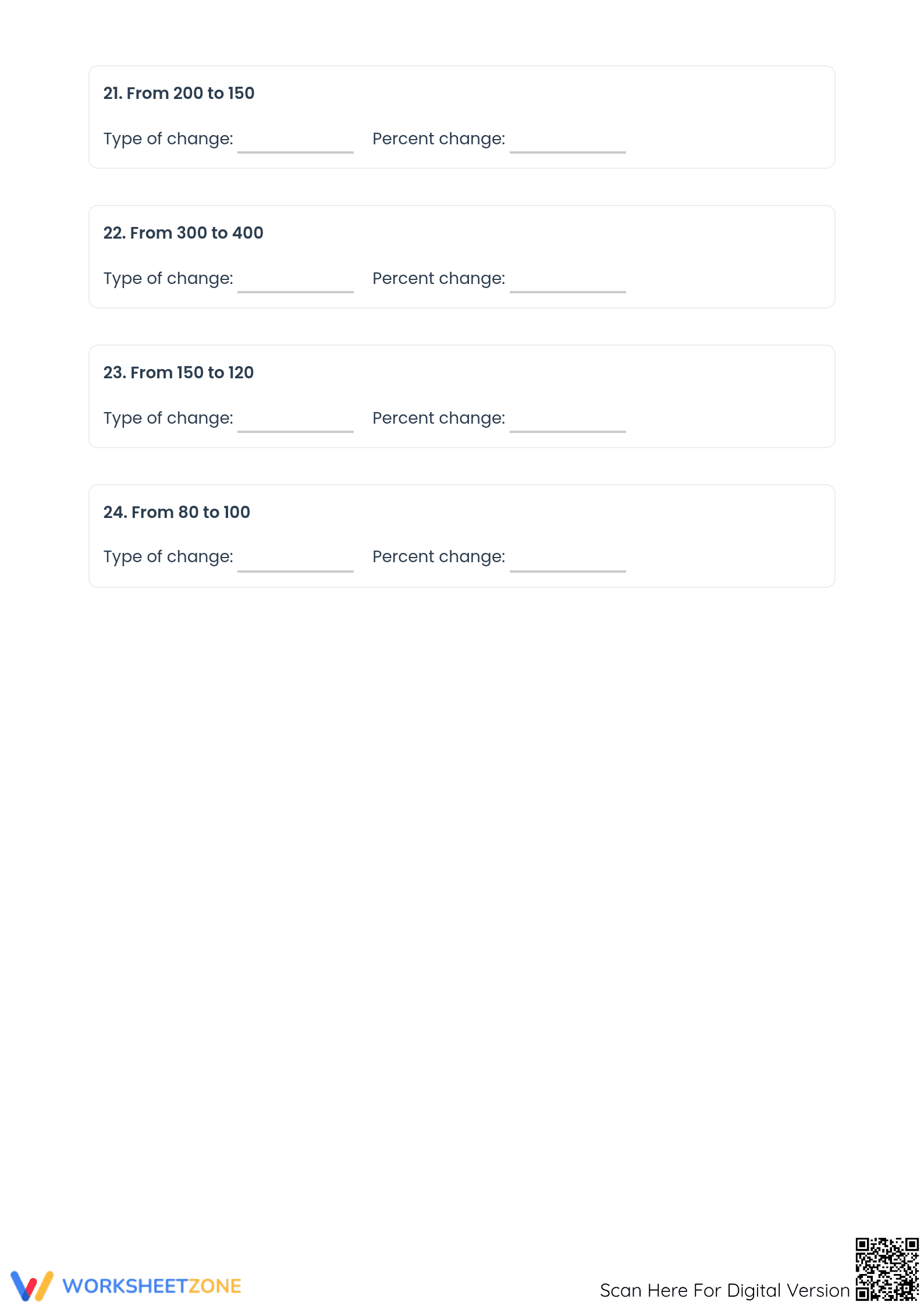
This comprehensive math worksheet helps students master the essential skill of calculating percent increase and decrease. Students practice comparing two numerical values to determine the direction and magnitude of change, rounding to the nearest tenth when necessary. This targeted practice ensures learners build the procedural fluency required for real-world financial and statistical applications.
At a Glance
- Grade: 7 · Subject: Math
- Standard:
CCSS.MATH.CONTENT.7.RP.A.3— Use proportional relationships to solve multi-step ratio and percent problems including percent change- Skill Focus: Percent Increase and Decrease
- Format: 4 pages · 24 problems · Answer key included · PDF
- Best For: Independent practice and formative assessment
- Time: 25–35 minutes
This four-page instructional pack contains 24 structured problems divided into two sections. Part one introduces the fundamental calculation process, while part two provides extended practice to reinforce mastery. Every page includes clear space for students to identify the type of change and record their calculated percentage. A complete, teacher-verified answer key is provided to facilitate rapid grading and student self-correction.
Zero-Prep Workflow
This resource is designed for immediate classroom implementation with a total teacher prep time of less than two minutes.
- Print: Send the 4-page PDF to your printer in under thirty seconds.
- Distribute: Pass out the packets to students for a focused, independent work session that requires no additional teacher explanation.
- Review: Use the provided answer key to provide instant feedback or allow students to self-check their work during the final five minutes of class.
Standards Alignment
The primary focus of this worksheet is CCSS.MATH.CONTENT.7.RP.A.3, which requires students to use proportional relationships to solve multi-step ratio and percent problems. Specifically, it targets the ability to calculate percent increase and decrease between two given quantities. This standard code can be copied directly into lesson plans, IEP goals, or district curriculum mapping tools.
How to Use It
Assign this worksheet as a high-quality sub plan or as independent practice following a direct instruction lesson on proportional reasoning. During the session, walk around and observe if students are consistently identifying the correct direction of change (increase versus decrease), as this often reveals misconceptions about the relationship between initial and final values. Expect most students to complete the full set of tasks in thirty minutes.
Who It's For
This resource is optimized for Grade 7 math students but serves as an excellent review for Grade 8 or high school learners in remedial algebra. It pairs naturally with a Percent Change anchor chart or a lesson on consumer math concepts like markups and discounts. The consistent layout supports students who benefit from repetitive, structured practice to build confidence.
According to a ScienceDirect TpT Analysis of middle school mathematics resources, high-quality supplemental materials that focus on procedural fluency in percent calculations significantly reduce cognitive load during more complex multi-step problem solving. This worksheet aligns with CCSS.MATH.CONTENT.7.RP.A.3 by providing the repetitive, targeted practice necessary for students to internalize the ratio-based relationship inherent in percent increase and decrease. By requiring students to first identify the "Type of Change" before performing the calculation, the resource encourages metacognitive awareness of numerical relationships. Research from NAEP suggests that while students often grasp basic percentage concepts, they frequently struggle with identifying the correct base value in change problems. This 24-task sequence addresses that gap through graduated complexity, ensuring that students can reliably determine whether a change represents an increase or decrease while maintaining precision to the nearest tenth. This makes the packet a reliable tool for both initial instruction and diagnostic intervention.


