


























Views
Downloads

Printable CCSS.MATH.5.NBT.B.7 Decimal Assessment - Grade 5
Paste this activity's link or code into your existing LMS (Google Classroom, Canvas, Teams, Schoology, Moodle, etc.).
Students can open and work on the activity right away, with no student login required.
You'll still be able to track student progress and results from your teacher account.
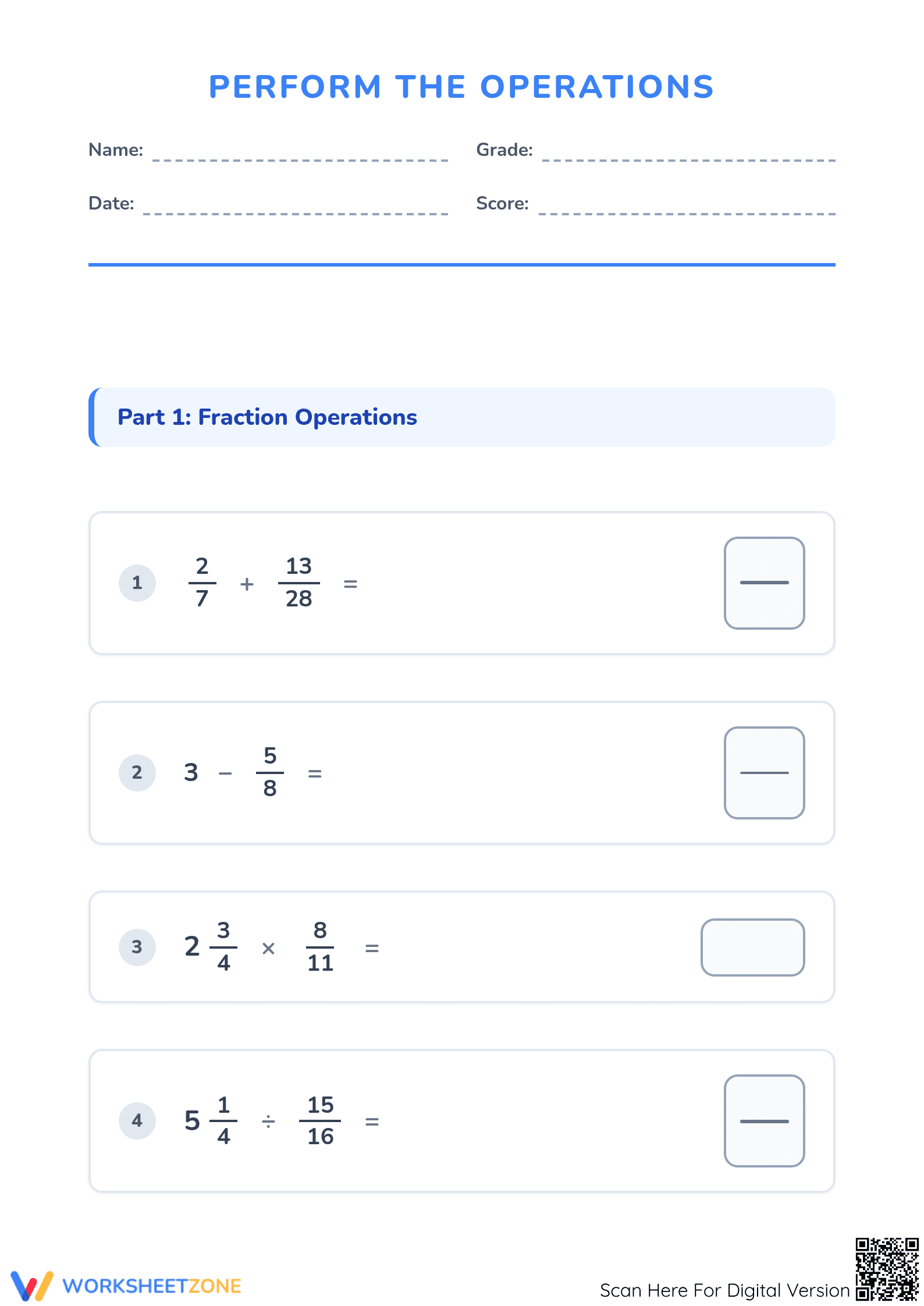
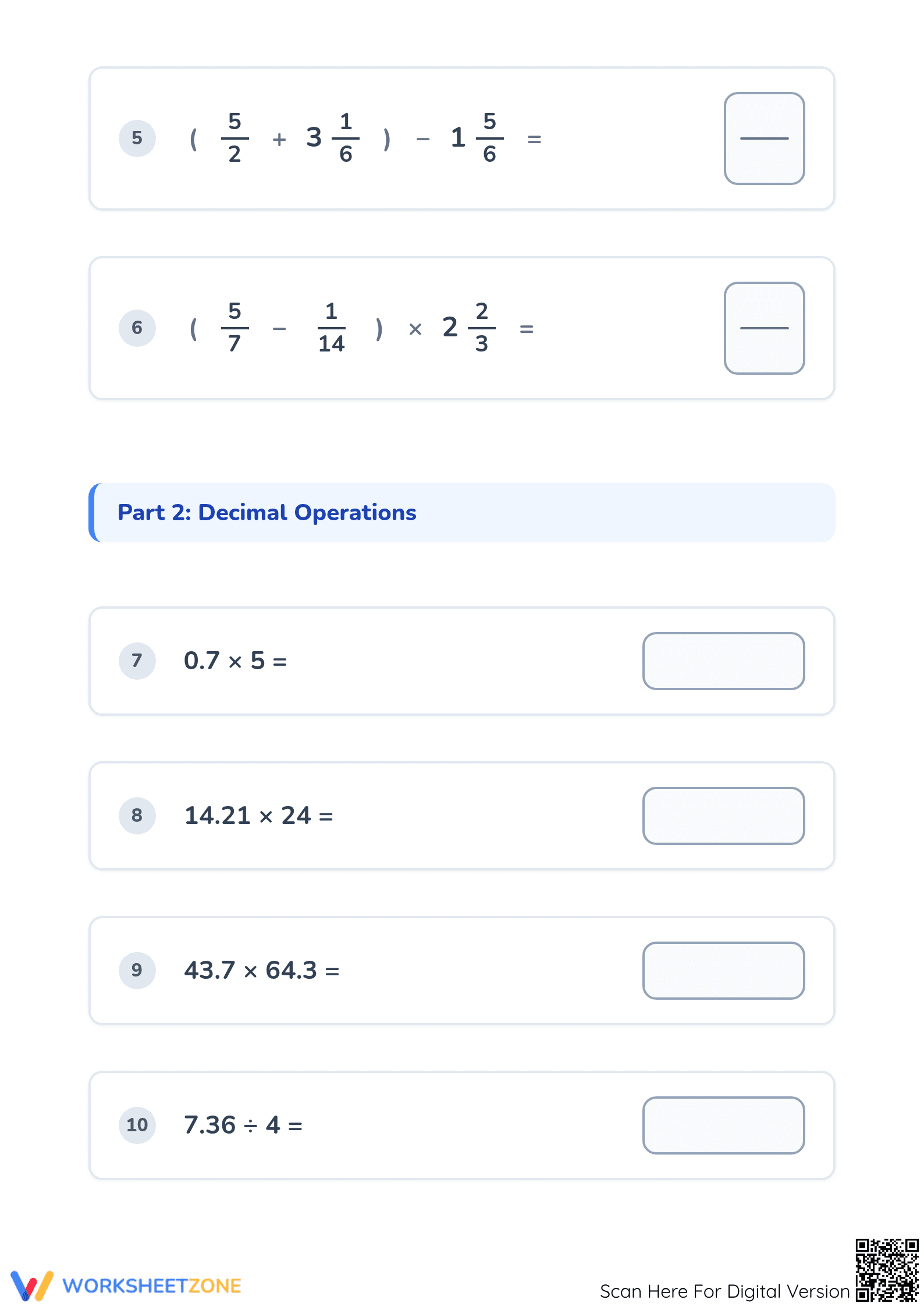
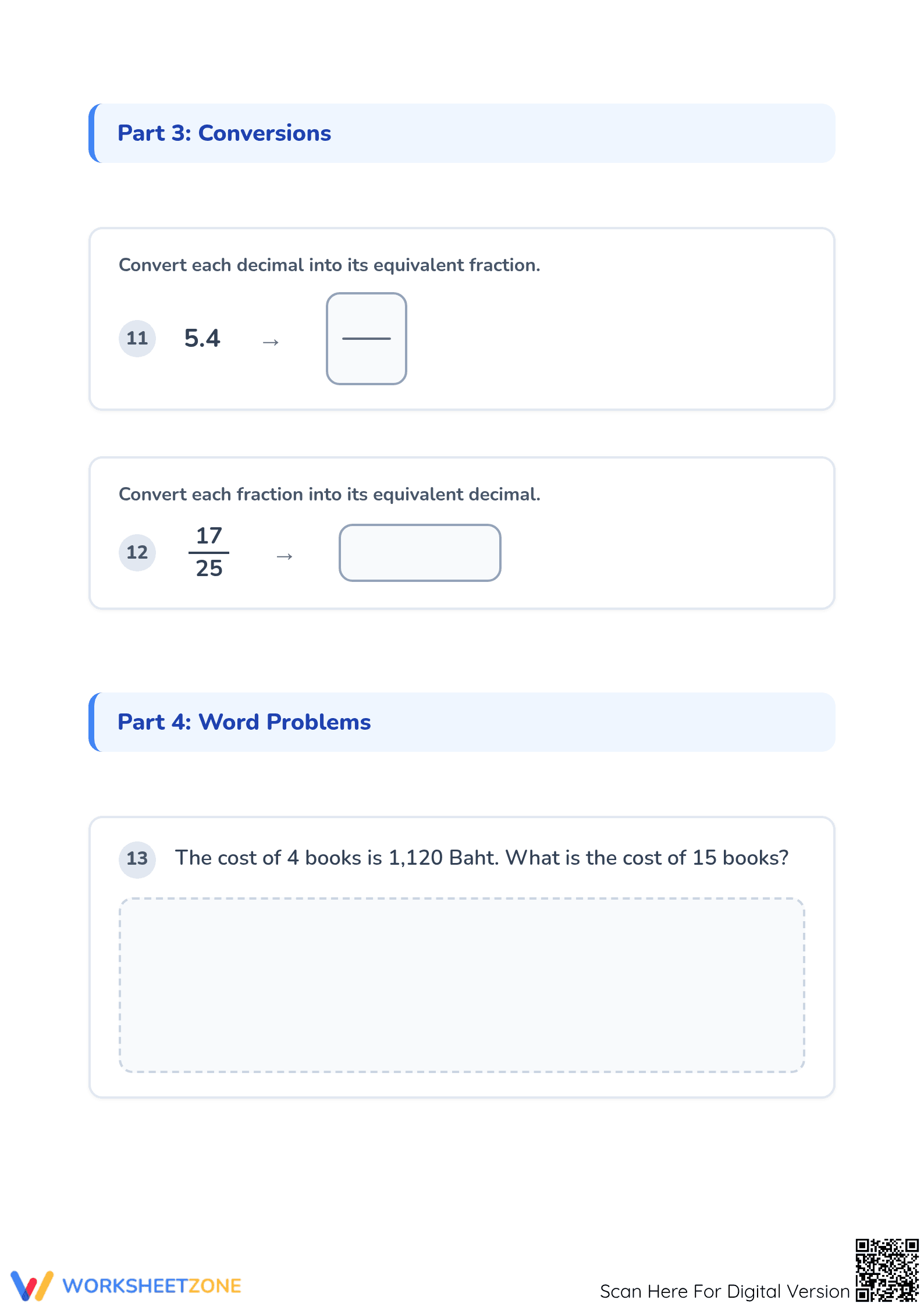
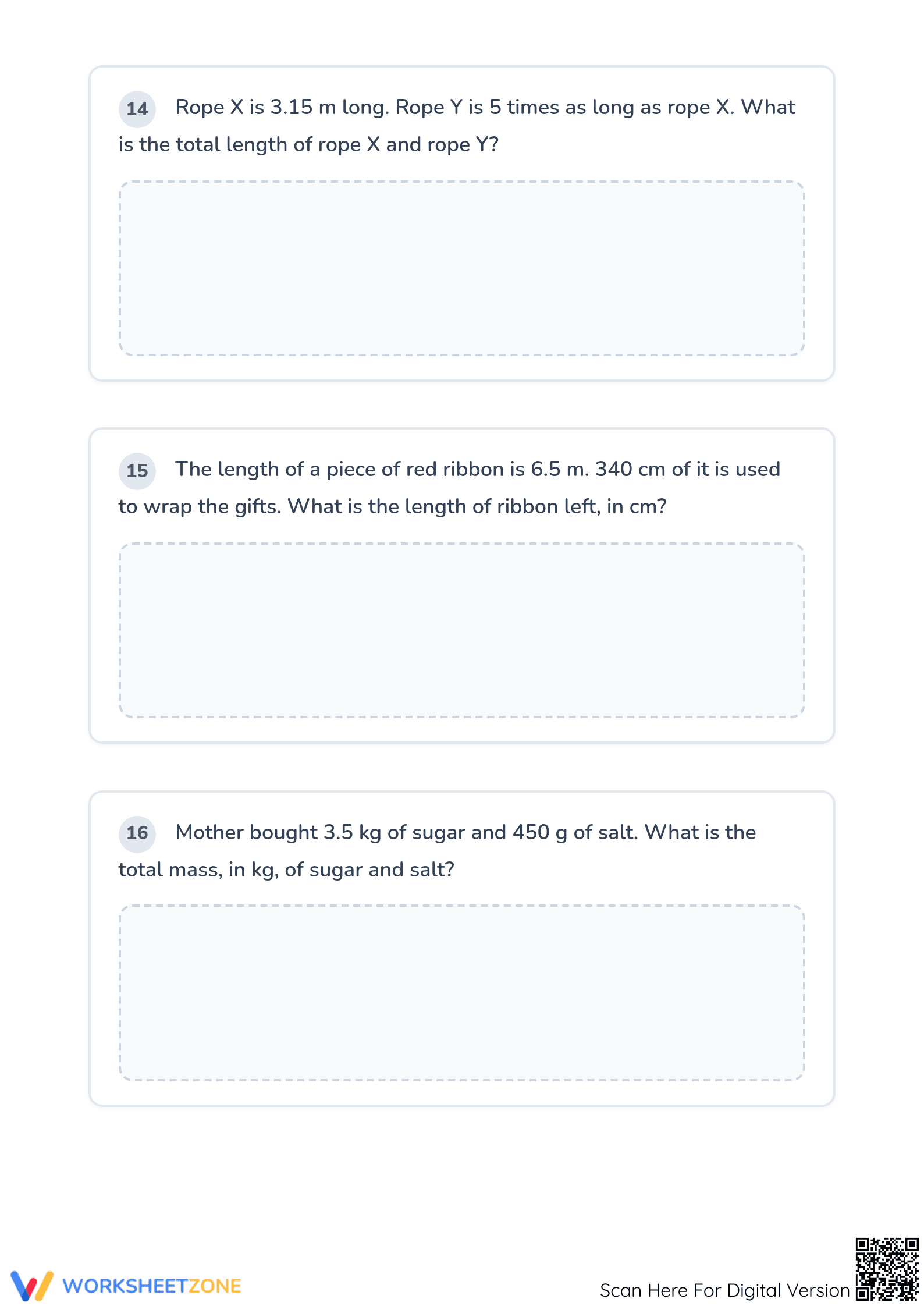
This comprehensive Grade 5 decimal assessment provides a rigorous evaluation of student proficiency in place value, rounding, and all four operations. Designed as a pre-test or final cumulative assessment, it identifies specific gaps in understanding before or after a decimal unit. Students demonstrate mastery through varied task formats, ensuring a deep understanding of standard 5.NBT.B.7.
At a Glance
- Grade: 5 · Subject: Decimals
- Standard:
CCSS.MATH.CONTENT.5.NBT.B.7— Add, subtract, multiply, and divide decimals to hundredths using concrete models- Skill Focus: Place value, rounding, and four-operation decimal mastery
- Format: 4 pages · 40 problems · Answer key included · PDF
- Best For: Summative assessment, pre-unit diagnostic, or test preparation
- Time: 45–60 minutes
This four-page assessment features six distinct sections designed to probe different cognitive levels of decimal comprehension. It includes place value identification, rounding to specified decimal places, and algorithmic practice for addition, subtraction, multiplication, and division. The final sections challenge students with ten contextual word problems that require multi-step reasoning. A complete four-page answer key is included for rapid grading and immediate feedback.
Each section of this assessment maps directly to the sub-skills required by CCSS standards, allowing teachers to pinpoint exactly where student understanding breaks down. The progression from basic place value to complex word problems provides clear evidence for mastery tracking. Results can be categorized into Approaching, Meeting, or Exceeding tiers to inform small-group instruction or IEP progress monitoring. This data-driven approach allows for precise entry into gradebooks or digital learning management systems.
The primary focus of this worksheet is CCSS.MATH.CONTENT.5.NBT.B.7, which requires students to add, subtract, multiply, and divide decimals to hundredths. It also integrates CCSS.MATH.CONTENT.5.NBT.A.3 and 5.NBT.A.4 through its sections on place value and rounding. Both standard codes can be copied directly into lesson plans, IEP goals, or district curriculum mapping tools.
Administer this assessment at the beginning of a decimal unit as a diagnostic pre-test to determine baseline proficiency and group students for differentiated instruction. Alternatively, use it as a summative end-of-unit test to verify mastery. During administration, observe whether students correctly align decimal points during addition and subtraction, as this is a common formative-assessment indicator of conceptual understanding. Expect completion within 45 to 60 minutes.
This resource is ideal for Grade 5 general education students, as well as Grade 4 students ready for extension or Grade 6 students requiring remedial support. It serves as an excellent pairing with direct instruction on decimal algorithms or as a follow-up to a lesson using base-ten block models. The 40 included tasks ensure that students have multiple opportunities to demonstrate their skills across different mathematical contexts.
The RAND AIRS 2024 report emphasizes that assessments combining fluency with application are essential for Grade 5 conceptual understanding. This worksheet aligns with those findings by providing 40 tasks transitioning from place value to real-world word problems. Focusing on CCSS.MATH.CONTENT.5.NBT.B.7, it builds the foundation for middle-school ratios and percentages. The included answer key supports teacher efficacy while maintaining high performance expectations for every student. NAEP research indicates that mastery of decimal operations in Grade 5 is a key predictor of algebraic success in later academic years. This assessment provides the necessary data to ensure students remain on track for advanced mathematics. By utilizing this structured evaluation tool, educators can implement a data-informed instructional cycle that addresses specific learner needs and fulfills rigorous state and federal standards for mathematical proficiency.


